Facing a bottleneck in your Embedded Display Project?
Don’t let complex integration or supply chain issues slow your time-to-market. Book a free consultation with the RJY expert team for tailored design and manufacturing support.

In the evolving landscape of modern mobility, automotive-grade displays have become the heartbeat of next-generation vehicles. No longer just passive screens, these advanced displays serve as command centers, safety tools, and lifestyle companions. From sleek digital dashboards to high-brightness infotainment systems, they are redefining how drivers and passengers interact with their cars.For automakers, investing in true automotive-grade displays is not a luxury—it is a competitive necessity. Let’s explore why these displays stand apart, how they power today’s vehicles, and why they are central to tomorrow’s driving experience.
Modern vehicles are becoming increasingly digital. Instrument clusters, infotainment systems, head-up displays, passenger entertainment screens, and intelligent cockpit interfaces are replacing traditional mechanical controls with connected display systems.
However, a vehicle display is not simply a larger consumer screen installed inside a car. Automotive-grade displays are designed for long operating hours, changing temperatures, vibration, sunlight exposure, electrical noise, and strict reliability requirements.
For automotive manufacturers and Tier-1 suppliers, selecting the right display means balancing visibility, durability, lifecycle support, safety requirements, customization capability, and integration complexity.
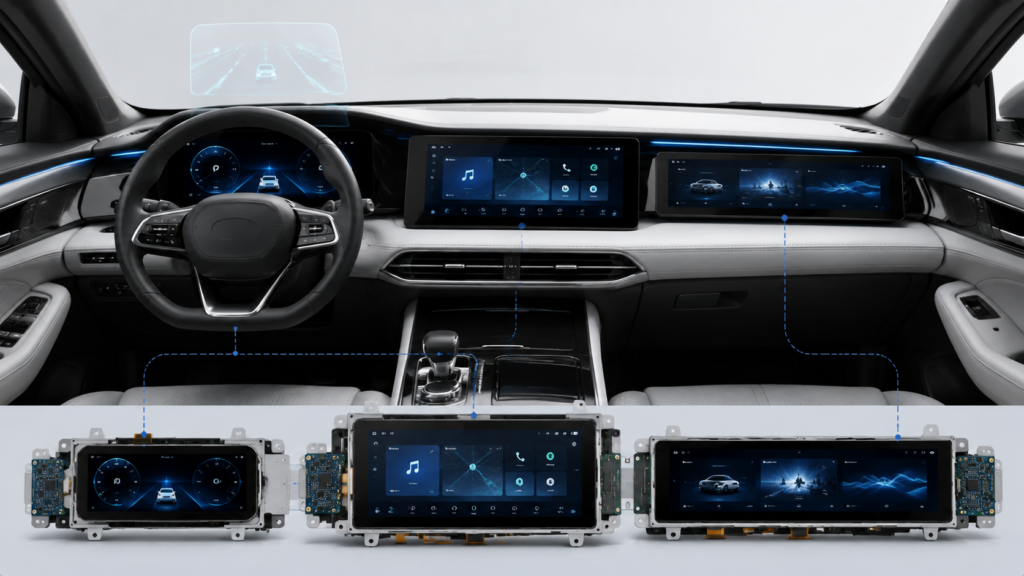
An automotive-grade display is engineered specifically for vehicle environments. Unlike consumer displays that are usually optimized for short product cycles and controlled indoor conditions, automotive displays must maintain stable performance throughout years of operation.
Key characteristics typically include:
Vehicle electronic systems often require functional safety consideration. ISO 26262 defines processes and requirements for safety-related electrical and electronic systems used in production road vehicles, including hardware and software development activities.:contentReference[oaicite:1]{index=1}
For this reason, automotive displays are evaluated not only as visual components but also as parts of a larger vehicle information system.
A consumer tablet display may provide excellent resolution and color performance, but vehicle applications introduce additional challenges.
| Requirement | Automotive Challenge |
|---|---|
| Temperature | Vehicle cabins experience hot summer temperatures, cold winter conditions, and rapid thermal changes. |
| Vibration | Displays must withstand continuous mechanical movement from roads and vehicle operation. |
| Sunlight readability | The screen must remain visible under direct sunlight and reflections. |
| Lifecycle | Vehicle platforms require longer availability than consumer electronics products. |
| Integration | Displays must work with vehicle electronics, software, and mechanical structures. |
This is why automotive display selection focuses on reliability over short-term specifications alone.
Drivers need information to remain readable during daytime sunlight, nighttime driving, and changing environmental conditions.
Automotive displays often use technologies such as high-brightness backlights, optical bonding, anti-glare surfaces, and improved contrast designs to maintain readability.
The goal is not simply maximum brightness. Excessive brightness can increase power consumption and thermal load. The correct display balances visibility, efficiency, and long-term stability.
Vehicle displays are part of the human-machine interface. Poor readability, slow response, or incorrect information presentation can negatively affect user experience and potentially safety.
Important design factors include:
Automotive production cycles are typically much longer than consumer electronics cycles. A display selected for a vehicle platform may need stable supply and controlled revisions for many years.
This makes lifecycle management an important supplier capability. OEM customers usually evaluate not only display specifications but also production stability, replacement strategy, and engineering support.
Modern vehicles increasingly use displays as design elements. Curved screens, large panoramic displays, integrated touch surfaces, and customized shapes allow manufacturers to create differentiated cockpit experiences.
Display customization may include:
Digital instrument clusters replace traditional mechanical gauges with configurable display systems showing speed, vehicle status, navigation information, warnings, and driving assistance information.
Central displays provide navigation, entertainment, vehicle settings, connectivity functions, and smart cockpit interaction.
Rear-seat displays and passenger screens support connected entertainment experiences while allowing vehicle manufacturers to create differentiated interior designs.
HUD systems project important information into the driver’s viewing area, helping reduce the need to look away from the road. Research and development in HUD technology continues as vehicles become more connected and intelligent.:contentReference[oaicite:2]{index=2}
For vehicle manufacturers, a display supplier must provide more than a panel.
A complete automotive display solution requires:
Common automotive interfaces include MIPI, LVDS, eDP, RGB, and other customized connections depending on the vehicle electronics architecture.
The display becomes a critical interaction point between passengers, drivers, and vehicle systems. Therefore, display reliability directly influences user experience and brand perception.
The automotive display market is moving toward larger, smarter, and more integrated interfaces.
Instrument clusters, infotainment systems, and passenger displays are increasingly combined into larger connected cockpit architectures.
OLED, Mini-LED, and Micro-LED technologies continue to attract attention because of their potential advantages in contrast, design flexibility, and brightness performance.
Future vehicles are expected to combine displays with real-time vehicle information, navigation data, and intelligent assistance features to create more immersive driving experiences.
When selecting an automotive display supplier, engineers should evaluate more than screen size and resolution.
Important questions include:
A suitable supplier should understand both display technology and product integration challenges.
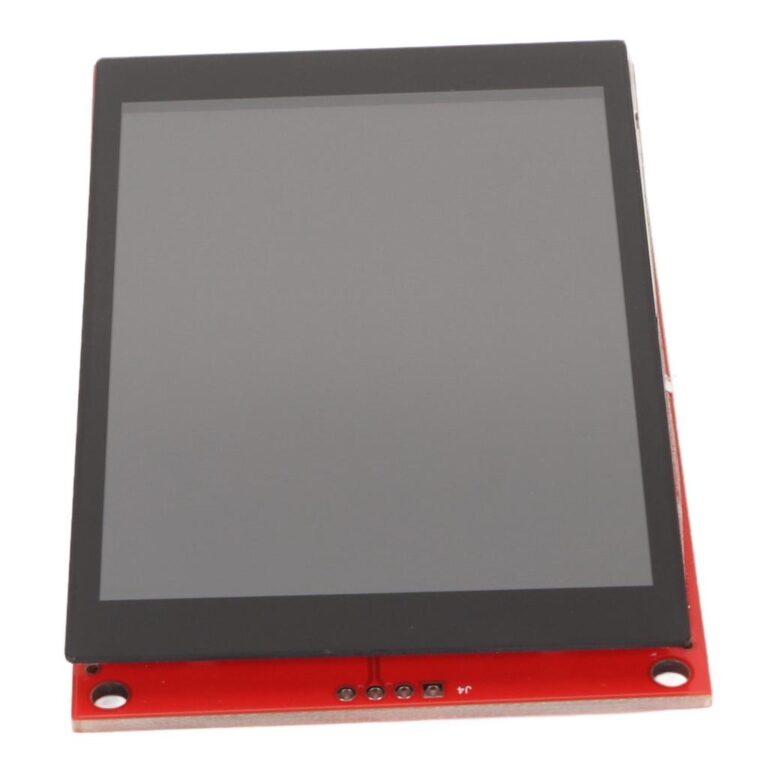
RJY Display provides TFT LCD displays, controller boards, and customization support for industrial and embedded display projects.
For automotive-related applications, RJY Display can support display selection, interface matching, touch integration, brightness optimization, FPC customization, controller solutions, and mechanical integration requirements.
Whether you are developing a vehicle control panel, smart cockpit interface, industrial vehicle terminal, or custom embedded display system, the right display solution should be selected based on the complete application environment.
An automotive-grade display is a display designed for vehicle environments with requirements such as reliability, temperature tolerance, vibration resistance, lifecycle support, and stable optical performance.
Consumer displays are usually optimized for indoor environments and shorter product cycles. Vehicle applications require stronger environmental resistance, longer availability, and more controlled integration.
Automotive cockpits may use TFT LCD, OLED, Mini-LED, or other display technologies depending on cost, performance, design, and reliability requirements.
Common interfaces include MIPI, LVDS, eDP, RGB, and customized display connections depending on the vehicle electronics architecture.
Yes. Automotive displays can be customized in areas such as size, brightness, touch panel, cover glass, interface, FPC, mechanical structure, and controller solutions.
Share your display size, resolution, interface, brightness, touch requirement, controller board requirement, and application environment.
Continue reading related display technology guides and application references.
Talk to RJY’s engineering team for display matching, controller board review, and customization discussion.