Facing a bottleneck in your Embedded Display Project?
Don’t let complex integration or supply chain issues slow your time-to-market. Book a free consultation with the RJY expert team for tailored design and manufacturing support.

Let’s be honest: hardware is hard. It is called "hardware" precisely because you cannot fix a physically ill-fitting component with an over-the-air (OTA) software patch on a Friday afternoon. When you are designing a new electronic device—whether it is a rugged industrial control panel, a sleek medical ventilator, or the next wildly over-engineered smart coffee maker—the display is the undisputed "face" of your product. It is the first thing your users see, touch, and inevitably complain about if it doesn't work perfectly.At the heart of modern display integration lies a critical, fork-in-the-road decision for your engineering and procurement teams: Do you buy standard, off-the-shelf TFT Modules, or do you invest the time and capital into designing custom TFT Modules?
Standard TFT Modules are the workhorses of the display industry. These are pre-engineered, mass-produced screens designed by display manufacturers to appeal to the broadest possible market. They come with a fixed resolution, a fixed brightness, a predefined Flexible Printed Circuit (FPC) pinout, and a rigid, “take-it-or-leave-it” datasheet.
If standard displays are off-the-rack suits, custom TFT Modules are the bespoke Savile Row tailoring of the electronics world. You get exactly what you want, fitting your product’s mechanical and electrical constraints flawlessly—but you are going to pay for the privilege, both in time and money.
However, “custom” is not a binary switch. It is a spectrum. Let’s break down the layers of customization, from mild tweaks to total overhauls.
This is where 80% of European and American industrial designers end up. You take a standard piece of LCD glass and modify the peripherals around it.
The actual LCD remains standard, but the glass the user touches is entirely yours.
You want an LCD panel shaped like a triangle, or an ultra-wide 21:3 aspect ratio that doesn’t exist anywhere in the world.
The battle between custom and standard TFT Modules usually takes place in the CFO’s office. It boils down to a classic ROI (Return on Investment) calculation.
Let’s say you need a display with a very specific, slightly longer ribbon cable (FPC).
The Math:
If you are only building 500 units, Option A costs you $750 in extra parts. Option B costs you $2,000 in NRE. Go standard.
If you are building 10,000 units, Option A costs you $15,000 in extra parts and assembly time. Option B still only costs the one-time $2,000 NRE. Go custom.
Customization requires upfront cash, but at scale, it almost always reduces the per-unit BOM cost, eliminates points of failure (fewer connectors), and drastically simplifies your assembly line.
In product development, time is often more expensive than components.
If you choose Standard TFT Modules, your timeline looks like this:
If you choose Custom TFT Modules, you are entering the world of mechanical tooling and validation.
Going custom adds a minimum of 2 to 3 months to your product development cycle. If your marketing team has already promised investors a launch date that is exactly 90 days from today, your decision has been made for you: buy standard.
Still on the fence? Let’s look at how specific industries in the North American and European markets handle the Custom vs. Standard debate.
To summarize, bring this checklist to your next engineering and procurement alignment meeting:
| Decision Factor | Lean Toward Standard TFT Modules | Lean Toward Custom TFT Modules |
| Annual Volume (EAU) | Low (< 1,000 units/year) | Medium to High (> 5,000 units/year) |
| Time to Market | Launching in < 3 months | Launching in 6+ months |
| Mechanical Design | Enclosure can be designed around the screen | Screen must fit a strict, pre-designed enclosure |
| Operating Environment | Indoor, room temperature, clean hands | Outdoor, extreme temps, water, gloves, thick glass |
| Budget Constraints | Zero budget for NRE tooling fees | Capital available for NRE to lower long-term BOM cost |
Choosing between custom and standard TFT Modules is not a question of which technology is “better.” It is a calculated exercise in risk management, budget allocation, and engineering philosophy.
If you are a scrappy startup trying to prove product-market fit, or an industrial manufacturer building low-volume, highly complex machinery, Standard TFT Modules are your fastest, safest route to revenue.
However, if you are building a product where the user experience defines the brand, where extreme environments dictate survival, or where manufacturing volumes allow you to optimize every penny out of the BOM, Custom TFT Modules are not an expense—they are a strategic investment in your product’s competitive advantage.
A: It depends heavily on the layer of customization.
A: It can actually make it easier if done correctly. A major issue with standard displays is Electromagnetic Interference (EMI) radiating from the generic FPC. When you design a custom FPC, you can add specific grounding layers, EMI shielding tape, and optimized trace routing to ensure your device passes European CE and North American FCC emissions testing on the first try.
A: Optical bonding is the process of injecting a layer of optical-grade resin (OCA or OCR) between the TFT LCD and the touch glass, removing the air gap. Yes, this is generally considered a custom assembly process. It dramatically improves sunlight readability and physical durability. If your product goes outdoors, you need it.
A: You cannot change the native interface of the raw TFT glass itself (that is determined by the driver IC mounted on the glass). However, a manufacturer can design a custom “bridge board” (a small PCB attached to the back of the module) that converts the display’s native LVDS or MIPI signal into HDMI, making it plug-and-play for systems like a Raspberry Pi or industrial PC.
A: You do. A reputable display manufacturer will sign a Non-Disclosure Agreement (NDA) and a tooling agreement stating that the custom FPC, backlight, or touch panel designed for you will not be sold to your competitors.
Share your display size, resolution, interface, brightness, touch requirement, controller board requirement, and application environment.
Continue reading related display technology guides and application references.
Explore product pages related to this article topic.
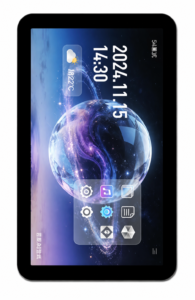
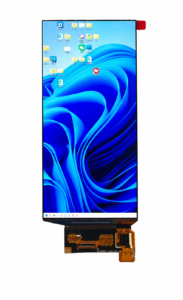
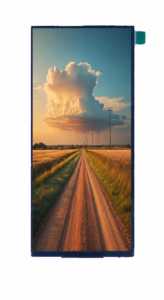
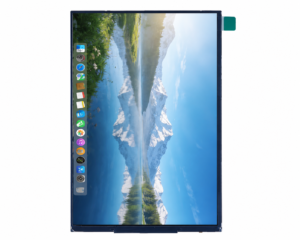
Talk to RJY’s engineering team for display matching, controller board review, and customization discussion.