Stehen Sie bei Ihrem Embedded-Display-Projekt vor einer Herausforderung?
Lassen Sie nicht komplexe Integration oder Lieferkettenprobleme Ihre Markteinführung verzögern. Vereinbaren Sie eine kostenlose Beratung mit dem RJY-Expertenteam für maßgeschneiderte Design- und Fertigungsunterstützung.
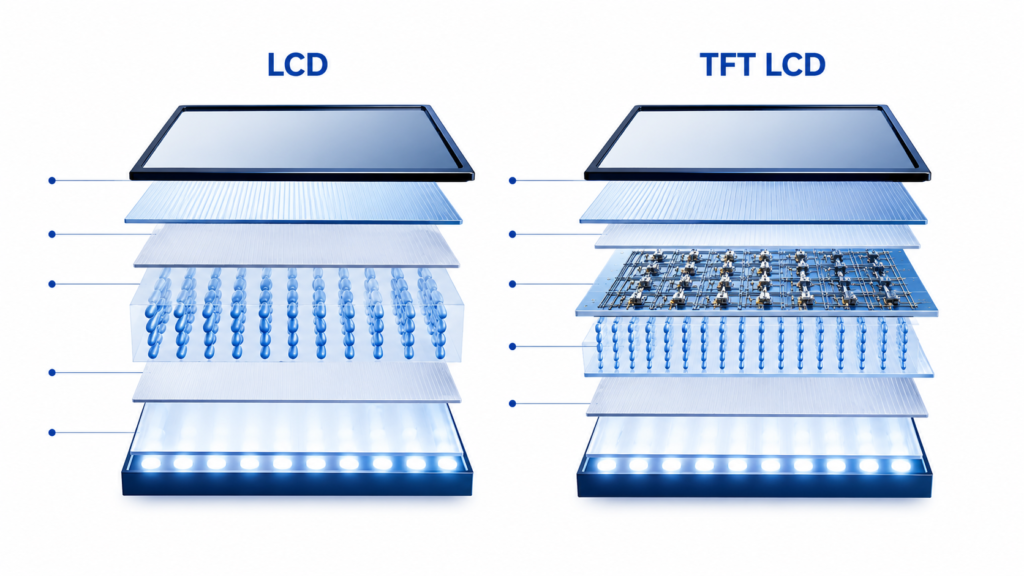
Bei der Betrachtung von Displays für Umgebungen mit hohem Umgebungslicht ist es wichtig, die grundlegenden Unterschiede zwischen Standard-LCDs und TFT-LCDs zu verstehen. Ein Standard-LCD (Flüssigkristallanzeige) basiert auf einer Hintergrundbeleuchtung und einer einfachen Matrix aus Flüssigkristallen, um die Lichtdurchlässigkeit zu steuern. Diese Anordnung funktioniert in Innenräumen gut, leidet jedoch oft unter ausgewaschenen Bildern bei direkter Sonneneinstrahlung, da die Hintergrundbeleuchtungsintensität begrenzt ist und das Panel keine pixelgenaue Steuerung bietet.
Welches ist besser: LCD oder TFT bei Sonnenlicht? 3
TFT (Dünnschichttransistor-LCD) fügt jedem Pixel eine aktive Matrixschicht hinzu, die eine präzise Steuerung von Helligkeit und Farbe auf Pixelebene ermöglicht. Dies führt zu höherem Kontrast, schnelleren Reaktionszeiten und einem größeren Potenzial für die Verwaltung der Hintergrundbeleuchtungshelligkeit. Obwohl sowohl LCD als auch TFT ähnliche Flüssigkristalltechnologie verwenden, bietet TFT technische Flexibilität, die bei sonnenlichtlesbaren Anwendungen entscheidend wird.
Faktoren, die die Lesbarkeit im Freien beeinflussen
Die Sichtbarkeit eines Displays bei Sonnenlicht wird durch mehrere voneinander abhängige Faktoren bestimmt. Die Hintergrundbeleuchtungsintensität legt die Basis dafür fest, wie hell ein Display erscheinen kann, aber Umgebungslicht und Reflexionen auf der Glasoberfläche beeinträchtigen die wahrgenommene Klarheit erheblich. Die reflektierenden Eigenschaften eines Displays können die Lesbarkeit drastisch reduzieren, wenn sie nicht durch Antireflexbeschichtungen oder optische Verklebung gemildert werden.
Was ist besser: LCD oder TFT bei Sonnenlicht? 4
Auch der Betrachtungswinkel spielt eine Rolle. TFT-Displays behalten in der Regel Kontrast und Farbtreue über größere Winkel bei, was für Geräte, die von mehreren Benutzern aus verschiedenen Positionen betrachtet werden können, unerlässlich ist. Darüber hinaus beeinflussen Panel-Oberflächenbehandlungen und die Displaygeometrie die Reduzierung von Blendung und die Lichtstreuung, was die Leistung im Freien weiter beeinträchtigt.
Praktischer Vergleich: LCD vs. TFT bei Sonnenlicht
Wenn beide Technologien Sonnenlicht ausgesetzt sind, übertreffen TFT-Displays in der Regel Standard-LCDs in Bezug auf Kontrast, Farbgenauigkeit und Helligkeitskonsistenz. Standard-LCDs können ausgewaschen oder aus bestimmten Winkeln schwer lesbar erscheinen, während die aktive Matrix von TFT eine gleichmäßigere Pixelbeleuchtung und schärfere Bilder gewährleistet.
Diese Vorteile gehen jedoch mit Kompromissen einher. Höhere Helligkeitsstufen in TFT-Panels können den Stromverbrauch erhöhen, was bei batteriebetriebenen Geräten oder Systemen mit begrenztem Energiebudget berücksichtigt werden muss. Ingenieure, die Displays bewerten, müssen Sichtbarkeitsanforderungen mit Energieeffizienz und Wärmemanagement abwägen.
Auswahl des richtigen Displays für Außenanwendungen
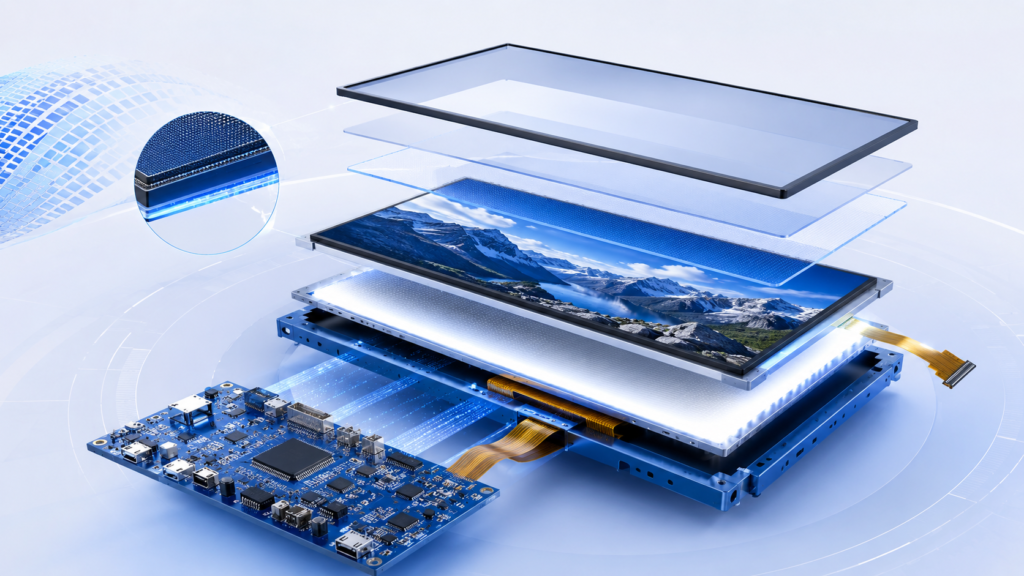
Die Auswahl eines sonnenlichtlesbaren Displays umfasst mehr als nur die Entscheidung zwischen LCD und TFT. Hochhelligkeitsmodule, optische Verklebung, Antireflexbeschichtungen und mechanische Integration beeinflussen alle die Leistung. Für industrielle oder OEM-Anwendungen stellt die Auswahl eines kundenspezifischen TFT-LCD-Moduls, das zur Hardware und Software des Systems passt, eine optimale Benutzerfreundlichkeit bei gleichzeitiger langfristiger Zuverlässigkeit sicher.
RJY unterstützt OEMs bei der Bewertung dieser Faktoren und bietet kundenspezifische TFT-LCD-Lösungen, die für Umgebungen mit hohem Umgebungslicht ausgelegt sind. Durch die Berücksichtigung sowohl optischer als auch elektronischer Anforderungen hilft RJY Herstellern, Integrationsrisiken zu reduzieren und Displays zu liefern, die unter rauen Sonnenlichtbedingungen lesbar bleiben.
Wie RJY Außendisplayprojekte unterstützt
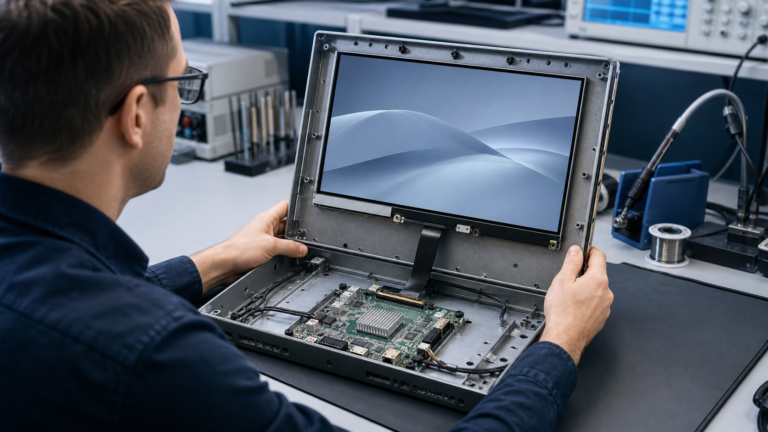
RJY-Ingenieure unterstützen Kunden von der Konzeptphase bis zur Serienproduktion. Für Außendisplayprojekte umfasst die Unterstützung:
Integration mit eingebetteten Steuerplatinen und HMI-Systemen
Prototypentests unter simulierten Sonnenlichtbedingungen
Empfehlungen zum mechanischen Design zur Minderung von Blendung und Reflexion
Dieser umfassende Ansatz stellt sicher, dass Displays funktionale und kommerzielle Anforderungen erfüllen und gleichzeitig eine hohe Zuverlässigkeit gewährleisten.
Fazit und Empfehlungen
Für Anwendungen, die Sonnenlicht ausgesetzt sind, bieten TFT-Displays im Allgemeinen eine überlegene Lesbarkeit und visuelle Konsistenz im Vergleich zu Standard-LCDs. Eine ordnungsgemäße Bewertung von Helligkeit, Kontrast, Antireflexbeschichtungen und Integrationsanforderungen ist für eine optimale Leistung unerlässlich. OEMs und Industriedesignern wird empfohlen, mit Engineering-Partnern zusammenzuarbeiten, um TFT-Module auszuwählen oder anzupassen, die auf ihre Systemarchitektur und Umgebungsbedingungen zugeschnitten sind.
Sprechen Sie mit einem RJY-Ingenieur, um Ihr Außendisplayprojekt zu besprechen, einschließlich Modulgröße, Schnittstelle, Touch-Integration, Helligkeit und Anwendungsumgebung, um maximale Sichtbarkeit bei hohen Umgebungslichtbedingungen sicherzustellen.
↗
Planen Sie ein Display-Projekt?
Teilen Sie Ihre Display-Größe, Auflösung, Schnittstelle, Helligkeit, Touch-Anforderung, Controllerplatinen-Anforderung und Anwendungsumgebung mit.