Pourquoi la stratification compte : une valeur réelle que vous remarquerez
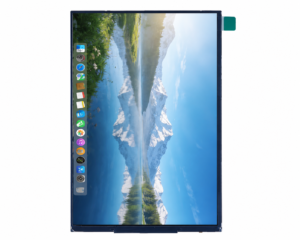
Lorsque vous assemblez la vitre de couverture, le panneau tactile et l’écran LCD en un ensemble solide et sans interstice, quelque chose de magique se produit. Vous cessez de perdre du contraste à cause des réflexions internes. Votre affichage devient plus résistant à la poussière et à l’humidité. L’écran résiste aux chocs qui auraient fissuré une vitre non collée. Et la réactivité tactile s’améliore — particulièrement dans des environnements extrêmes ou en extérieur.
Le collage optique, l’une des méthodes de stratification les plus courantes, permet de réduire les réflexions internes jusqu’à 65 %, améliorant ainsi le contraste et la lisibilité en conditions lumineuses — le tout sans augmenter la puissance du rétroéclairage. Il empêche même la condensation entre les couches (adieu la buée !) en éliminant totalement l’humidité.
Comprendre les couches : du LCD à l’ensemble vitré final
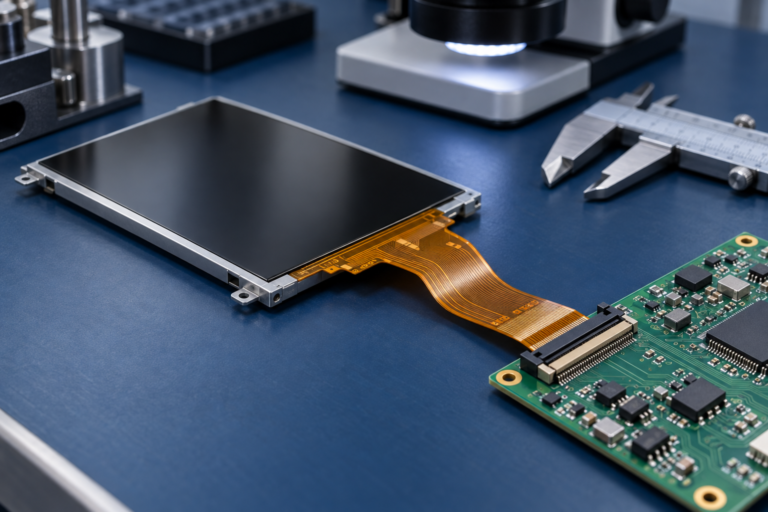
Un écran TFT LCD stratifié comprend généralement :
- Vitre de couverture ou lentille
- Couche tactile optionnelle (ex. PCAP)
- Adhésif optiquement transparent (OCA ou LOCA)
- panneau LCD TFT
Chaque micron d’alignement compte. Un adhésif mal positionné ou une pression inégale peut entraîner des distorsions optiques visibles ou des imprécisions tactiles.
Types de stratification : OCA, LOCA ou espace d’air
Stratification à sec – Film OCA
Un film adhésif pré-découpé est placé entre la vitre et l’affichage, puis collé sous chaleur et pression. Rapide, reproductible et adapté à la production de grand volume — bien qu’il peine à compenser les légères irrégularités de surface.
Stratification humide – Résine LOCA / OCR
L’adhésif liquide est déposé avec précision, s’écoule pour combler les interstices, puis est polymérisé (souvent par UV). Cela permet un collage sans bulles d’air, même avec des formes de verre complexes et des composants tactiles. Le LOCA offre une meilleure tolérance aux écarts et une plus grande facilité de retouche, mais nécessite des opérations propres et contrôlées. Les premières sources sur les forums de réparation mobile mettent en garde contre la manipulation délicate du LOCA et soulignent qu’il est de plus en plus délaissé au profit de l’OCA en raison de problèmes de fiabilité à long terme.
Espace d’air (pas de stratification)
Approche simple à base d’entretoises — rapide, économique et facile à retoucher. Mais elle laisse place aux réflexions internes, réduit la netteté tactile et la durabilité, et ne convient pas aux environnements sévères.
Le processus de stratification décortiqué : un déroulement étape par étape
- Nettoyage et pré-alignement : La vitre et le panneau sont nettoyés dans une solution, puis alignés par des systèmes robotisés ou visuels en salle blanche.
- Application de l’adhésif : Le film OCA est placé et collé ; le LOCA est déposé via seringue ou équipement de dosage.
- Collage et compression : Les couches sont uniformément compressées sous vide ou sous chaleur pour éliminer l’air et assurer l’adhésion.
- Polymérisation : Les films utilisent la chaleur ou la pression ; le LOCA est généralement polymérisé sous lumière UV.
- Contrôle qualité : Vérification des bulles, du mauvais alignement, de la force d’adhésion, de l’humidité résiduelle ou des anomalies tactiles.
Ces étapes nécessitent un contrôle rigoureux : même une seule poussière peut altérer la clarté optique. C’est pourquoi des environnements de classe 1000 (ISO 6) ou supérieure sont courants en production.
Avantages réellement appréciés par les ingénieurs
Sans espace d’air, la lumière ambiante ne rebondit pas entre les couches. Résultat : des images plus lumineuses, un contraste renforcé et une lisibilité même en plein soleil — sans augmenter l’intensité du rétroéclairage.
Meilleure précision tactile
Supprimer la parallaxe (le décalage visuel lors d’un toucher à travers un interstice) permet une réponse tactile plus précise et immédiate. Idéal pour les interfaces tactiles médicales ou industrielles.
Résistance mécanique accrue
La couche adhésive collée absorbe les chocs et empêche l’entrée de poussière ou d’humidité. C’est un renfort structurel, pas seulement une protection esthétique.
Réduction du risque de buée
La condensation entre les couches d’air est éliminée. Cela résout un problème courant de fiabilité à long terme dans les environnements humides et à température variable.
Considérations techniques et compromis
Quel adhésif utiliser ?
- Film OCA : Rapide, peu de déchets, régulier — mais peine avec les surfaces irrégulières.
- Résine LOCA/OCR : Souple et comble les écarts — mais la polymérisation UV et la manipulation doivent être précises pour éviter les défauts.
Un LOCA de qualité évite le jaunissement (fréquent avec les adhésifs époxy ou polyuréthane), et dure plus longtemps dans des conditions de fort UV ou de température élevée.
Gestion des bulles
Les adhésifs liquides comme le LOCA présentent un risque de formation de bulles si la polymérisation est inégale ou si des contaminants pénètrent. Une seule bulle peut créer des artefacts visibles ou une sensibilité tactile faible.
Précision d’alignement
Un décalage ou une inclinaison de seulement 10 µm peut provoquer une distorsion visuelle ou un toucher décalé. Des dispositifs d’alignement de haute précision et des outils de collage sous vide sont essentiels en production.
Retouche et réparation
Retirer les couches collées (surtout le LOCA) est difficile. Le retrait de l’OCA est un peu plus simple mais reste risqué. La plupart des surfaces sont considérées comme permanentes après collage.
Tendances et nouvelles frontières
- Écrans flexibles et incurvés utilisent de plus en plus des résines de type LOCA qui tolèrent la flexion tout en conservant la clarté.
- Revêtements nanotexturés et antireflets sont désormais combinés à la stratification pour réduire les reflets sans sacrifier la fidélité des couleurs.
- Adhésifs flexibles en silicone résistants aux UV prolongent la durée de vie des écrans et réduisent les problèmes de rétraction courants avec les systèmes de collage à base d’acrylique.
Problèmes et écueils courants
- Délaminage provient souvent d’une contamination de surface ou d’un mauvais alignement lors du collage.
- Jaunissement peut apparaître avec un adhésif de basse qualité au fil du temps, surtout dans des environnements riches en UV.
- Dérive tactile ou effet fantôme peut survenir lorsque des bulles ou une répartition inégale de la colle compromettent la réactivité du capteur.
- Réparations: les modules collés ne peuvent souvent pas être démontés sans dommage — il est préférable de réussir du premier coup.
Cas d'utilisation réels : la stratification en action
- Écrans automobiles utilisent le collage LOCA pour la résistance aux vibrations et la lisibilité en plein soleil.
- IHM industrielles s'appuient sur un collage étanche pour résister à la poussière, à l'humidité et à la condensation dans les environnements industriels difficiles.
- Moniteurs médicaux emploient un collage de haute qualité pour une image nette, une réponse tactile uniforme et une étanchéité hygiénique.
- Signalétique numérique & bornes interactives bénéficient d'une réduction des reflets et d'une résistance au vandalisme grâce au collage.
FAQ
Quelle est la différence entre la stratification OCA et LOCA ?
L'OCA est un film adhésif solide — rapide, propre, uniforme ; le LOCA est une résine liquide — comble les surfaces irrégulières, offre une meilleure tolérance aux pentes mais nécessite un durcissement minutieux.
La stratification est-elle toujours nécessaire ?
Pas toujours. Pour les écrans d'intérieur, à bas coût, sans tactile ni exposition au soleil, les méthodes à lame d'air peuvent suffire. Mais le collage améliore significativement les performances pour la plupart des applications robustes ou interactives.
Les écrans stratifiés résistent-ils en extérieur ?
Absolument — avec un traitement antireflet et un choix approprié d'adhésif, les écrans stratifiés offrent de bien meilleures performances en plein soleil et dans des températures extrêmes que leurs équivalents non collés.
La stratification améliore-t-elle la précision tactile ?
Oui — le collage élimine la parallaxe, rapprochant le capteur tactile de l'utilisateur et améliorant la réactivité.
La stratification rend-elle les écrans plus chers ?
Elle ajoute effectivement un coût de fabrication, mais les gains en utilisabilité, fiabilité et qualité visuelle compensent généralement la dépense supplémentaire.