Facing a bottleneck in your Embedded Display Project?
Don’t let complex integration or supply chain issues slow your time-to-market. Book a free consultation with the RJY expert team for tailored design and manufacturing support.

In the world of display technology, "TFT vs OLED vs LCD" is a common comparison that confuses many. Whether you're choosing a screen for a smartphone, television, industrial panel, or digital signage, it's crucial to understand the core differences between these technologies. This article explores how TFT LCDs, OLED displays, and LED-backlit LCDs stack up in terms of performance, cost, viewing angle, and more.
TFT LCD, OLED, and LED are three common terms buyers encounter when comparing display technologies. They are often used as if they belong to the same category, but technically they do not mean the same type of thing. TFT LCD refers to an active-matrix LCD technology. OLED refers to a self-emissive display technology. LED, in most monitor and TV discussions, usually means an LED-backlit LCD rather than a display where each pixel is an LED.
This distinction matters for product development. A display used in an industrial control panel, smart home terminal, medical device interface, vehicle-related display, or consumer product should not be selected only by image quality claims. Engineers and buyers also need to evaluate brightness, viewing angle, lifetime, power consumption, interface compatibility, cost, supply stability, touch integration, controller board support, and operating environment.
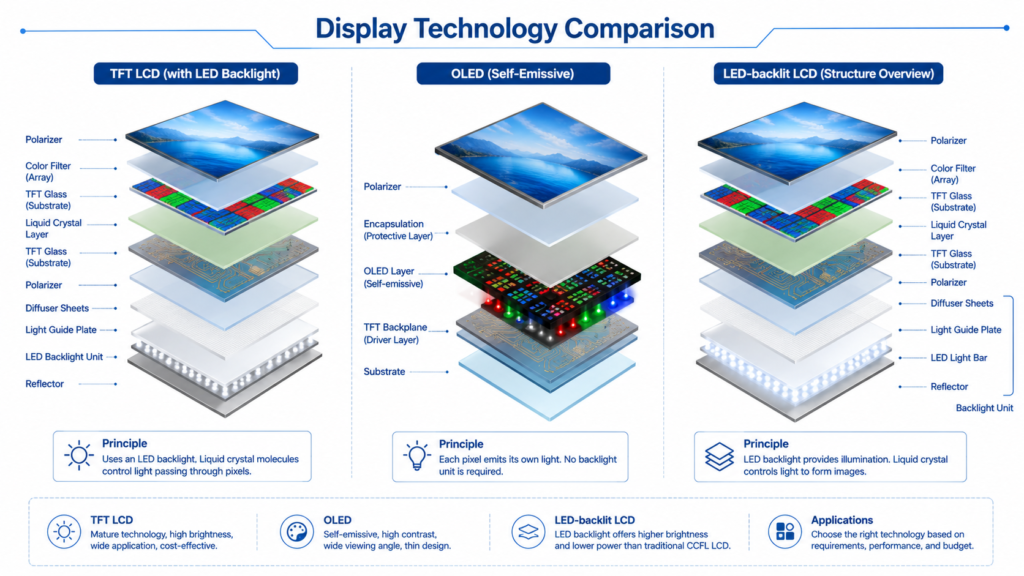
This guide explains the practical differences between TFT LCD, OLED, and LED-backlit LCD displays, with a focus on embedded devices and B2B display selection.
TFT LCD stands for thin-film transistor liquid crystal display. It is a type of LCD that uses thin-film transistors to control individual pixels in an active matrix. Compared with older passive-matrix LCDs, TFT LCDs provide better image control, faster response, improved contrast, and better suitability for high-resolution displays.
A TFT LCD does not emit light by itself. It needs a backlight, usually an LED backlight, to make the image visible. The liquid crystal layer controls how much light passes through each pixel, while color filters create red, green, and blue subpixels.
In industrial and embedded applications, TFT LCD remains one of the most widely used display technologies because it offers a practical balance of performance, cost, availability, size range, interface options, and customization flexibility.
OLED stands for organic light-emitting diode. Unlike TFT LCD, OLED does not require a separate backlight. Each pixel emits its own light. When a pixel needs to display black, it can be turned off or driven very low, which gives OLED its well-known deep black and high contrast performance.
OLED is often used in premium smartphones, high-end televisions, wearables, VR devices, and applications where slim structure, wide viewing angle, high contrast, and strong visual impact are important.
However, OLED is not automatically the best choice for every display project. Its cost, lifetime behavior, brightness requirements, static image risk, and supply conditions must be considered carefully, especially in embedded devices that show fixed UI elements for long periods.
The word LED can be confusing in display discussions. In many consumer markets, “LED display” often means an LED-backlit LCD. This is still an LCD panel. The LED part refers to the backlight source behind or around the LCD panel.
An LED-backlit LCD uses LEDs to illuminate the liquid crystal panel. The LCD layer controls the light, and the LED backlight provides brightness. This replaced older CCFL backlighting in many display products because LED backlights can be thinner, more energy-efficient, easier to control, and suitable for higher brightness designs.
There are also direct-view LED displays and Micro LED technologies, where LEDs themselves form the image pixels. These are different from ordinary LED-backlit LCDs. In this article, “LED” mainly refers to LED-backlit LCD, because that is the most common meaning when people compare TFT LCD, OLED, and LED for monitors, embedded displays, and commercial screens.
| Feature | TFT LCD | OLED | LED-Backlit LCD |
|---|---|---|---|
| Basic technology | Active-matrix liquid crystal display | Self-emissive organic diode display | LCD panel using LED backlight |
| Light source | Requires backlight | Each pixel emits light | Requires LED backlight |
| Black level | Limited by LCD light blocking and backlight leakage | Excellent, because pixels can turn off | Depends on LCD panel and backlight control |
| Contrast | Moderate to good, depending on panel type | Very high | Moderate to high, depending on panel and backlight design |
| Viewing angle | Depends on TN, IPS, or VA panel type | Generally wide | Depends on LCD panel type |
| Brightness | Depends on backlight design | Strong in many premium products, but full-screen brightness can vary | Can be designed for high brightness |
| Thickness | Requires backlight, usually thicker than OLED | Can be very thin | Requires backlight, thickness depends on design |
| Static image suitability | Generally suitable | Needs burn-in risk review | Generally suitable |
| Cost | Usually cost-effective | Usually higher | Cost-effective across many sizes |
| Best fit | Embedded, industrial, HMI, controller-board-based displays | Premium visual products and thin consumer devices | Monitors, signage, high-brightness LCD applications |
A common mistake is treating TFT LCD and LED as completely separate display categories. In many products, they are actually connected. A TFT LCD module often uses an LED backlight. That means a display can be both a TFT LCD and an LED-backlit display.
For example, many industrial TFT LCD modules use LED backlights. The TFT layer controls the pixels, while the LED backlight provides illumination. Calling this type of product “TFT LCD” emphasizes the active-matrix LCD technology. Calling it “LED-backlit LCD” emphasizes the light source.
This is why the phrase “TFT vs LED” can be misleading unless LED is clearly defined. If LED means LED-backlit LCD, then it is not a direct competitor to TFT LCD. If LED means direct-view LED or Micro LED, then it refers to a very different display architecture.
OLED usually provides better black level, higher contrast, wider viewing angles, and a thinner structure. For premium visual products, OLED can deliver a more impressive image than standard TFT LCD.
However, TFT LCD is often better for applications that need cost control, stable supply, long-term static UI display, broad size availability, high-brightness backlight customization, and controller board integration. This is especially relevant for industrial equipment, smart control panels, vehicle-related displays, security devices, and embedded products.
In other words, OLED may be better for premium image quality, while TFT LCD may be better for many B2B engineering projects where availability, cost, customization, and practical integration matter more.
The comparison between TFT LCD and LED-backlit LCD is often not a true one-to-one comparison. TFT describes how the LCD pixels are actively controlled. LED-backlit describes how the LCD is illuminated.
A modern TFT LCD usually uses an LED backlight. Therefore, many TFT LCD displays are also LED-backlit LCDs. The more useful comparison is not TFT LCD vs LED, but rather:
These comparisons are more useful for engineers because they affect product fit directly.
OLED and LED-backlit LCD differ mainly in how light is produced. OLED pixels emit light individually. LED-backlit LCD panels use LEDs behind or around the LCD panel to provide light for the whole display area or zones of the display.
OLED performs well in dark scenes because black pixels can be turned off. LED-backlit LCDs can perform well in bright environments when designed with a strong backlight. Advanced LCD products may use local dimming, Mini LED backlights, or optical films to improve contrast and brightness, but they still operate differently from OLED.
For static industrial interfaces, LED-backlit LCDs are often a practical choice. For premium consumer visuals, OLED is often preferred. For outdoor or high-brightness applications, a properly designed high-brightness TFT LCD may be more suitable than a standard OLED module.
For many industrial and embedded products, TFT LCD remains the most practical choice. The reasons are not limited to cost. TFT LCD modules are available in many sizes, support many interfaces, can be combined with touch panels and cover glass, and can be matched with controller boards for different system inputs.
OLED can be used in embedded products, but it should be selected carefully if the application shows static icons, dashboards, menus, warning areas, or fixed UI elements for long periods. Burn-in risk, lifetime expectations, brightness requirements, and supply availability should be reviewed.
LED-backlit LCD is often the standard form of modern TFT LCD. If high brightness is needed, the backlight design becomes especially important. For example, an industrial HMI or vehicle-related display may need stronger brightness and better readability than a consumer indoor product.
The right display technology depends on the project requirements. Instead of asking which technology is best in general, ask which one fits the product environment, user interface, cost target, and production plan.
| Project Requirement | Recommended Direction | Reason |
|---|---|---|
| Cost-sensitive embedded product | TFT LCD or LED-backlit TFT LCD | Good availability and practical integration cost |
| Premium visual experience | OLED | Excellent contrast, black level, and thin structure |
| Static UI for long periods | TFT LCD or LED-backlit LCD | Lower burn-in concern than OLED |
| Outdoor or bright environment | High-brightness TFT LCD | Backlight can be designed for stronger visibility |
| Thin wearable product | OLED or compact TFT LCD, depending on requirements | OLED can support very thin designs, but cost and lifetime should be reviewed |
| Industrial HMI | TFT LCD with suitable interface and controller board | Supports practical customization and system integration |
| Custom cover glass or touch design | TFT LCD with touch and cover glass customization | Common path for embedded display product development |
For B2B buyers, display technology is only one part of the decision. The final display must match the complete product design. Before choosing between TFT LCD, OLED, and LED-backlit LCD, buyers should review the following factors:
A display with excellent image quality can still be the wrong choice if it does not match the interface, mechanical structure, power design, touch requirement, or production conditions.
RJY Display provides TFT LCD products, controller boards, and custom display support for engineering-driven projects. For many B2B applications, the key is not only selecting a display technology, but matching the display module with the right interface, touch panel, cover glass, backlight, controller board, and firmware requirements.
If your project requires a TFT LCD module, high-brightness display, touch display, controller board, custom cover glass, backlight customization, or interface adaptation, RJY Display can help review the practical fit based on your application requirements.
Send Your Display Requirements
TFT LCD, OLED, and LED are often compared together, but they do not describe the same type of display category. TFT LCD is an active-matrix LCD technology. OLED is a self-emissive display technology. LED, in most LCD product discussions, usually means an LED-backlit LCD.
Choose TFT LCD when you need a practical balance of cost, availability, customization, interface options, static UI suitability, and controller board integration.
Choose OLED when premium contrast, deep black, thin design, and strong visual impact are more important than cost and static image concerns.
Choose LED-backlit LCD when you need the advantages of LCD technology with LED backlight performance, especially for brightness, cost control, and broad product availability.
For industrial, embedded, and B2B product development, the best choice is the one that fits the complete system: display size, resolution, brightness, interface, touch, controller board, firmware, mechanical structure, operating environment, and production plan.
TFT LCD is a type of LCD. It uses thin-film transistors to control pixels in an active matrix. Most modern color LCD modules used in embedded and industrial products are TFT LCDs.
This comparison can be misleading. Many TFT LCDs already use LED backlights. If LED means LED-backlit LCD, then it is not the opposite of TFT LCD. If LED means direct-view LED or Micro LED, it refers to a different display architecture.
OLED usually provides better black level, contrast, viewing angle, and thinness. However, TFT LCD is often more practical for industrial and embedded products because of cost, availability, static UI suitability, customization options, and controller board compatibility.
Yes. TFT LCDs do not emit light by themselves. They need a backlight, usually an LED backlight, to make the image visible.
OLED can have burn-in or image retention risk when static content is displayed for long periods. The actual risk depends on brightness, usage pattern, content, panel technology, and mitigation features.
A high-brightness TFT LCD or LED-backlit LCD is often a practical choice for outdoor or semi-outdoor use. However, the final selection should also consider cover glass, reflection, viewing angle, operating temperature, and enclosure design.
TFT LCD is commonly used for industrial HMI because it offers broad availability, interface flexibility, touch support, controller board options, and customization potential. The exact display should be selected based on size, resolution, brightness, interface, and operating environment.
Share your display size, resolution, interface, brightness, touch requirement, controller board requirement, and application environment.
Continue reading related display technology guides and application references.
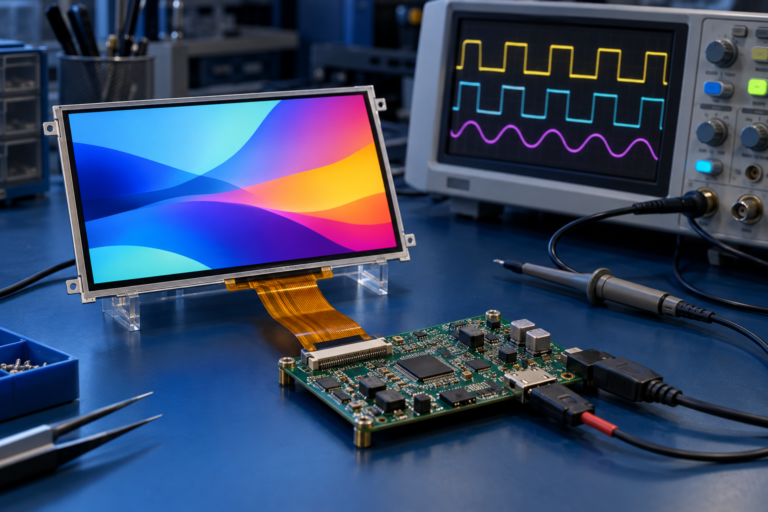
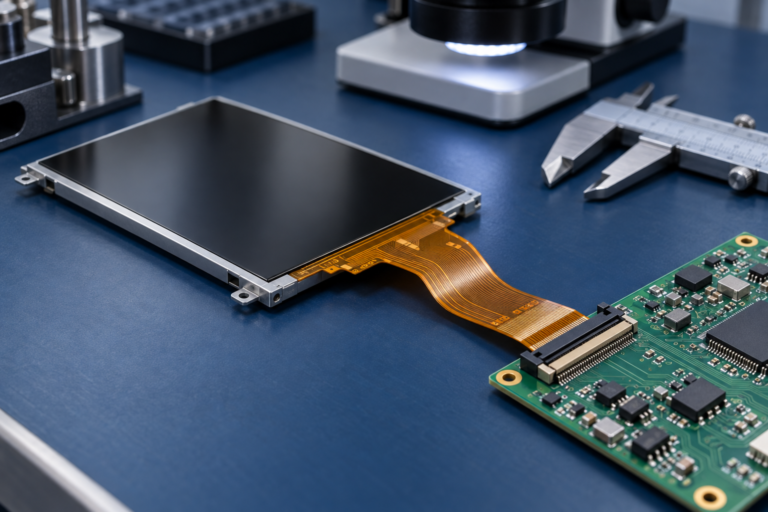
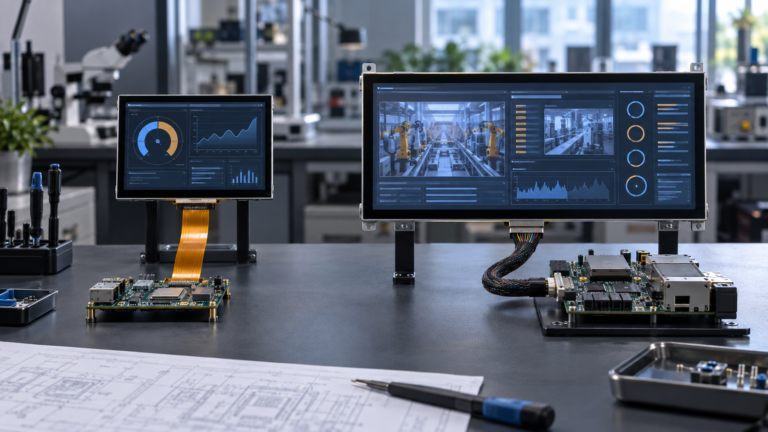
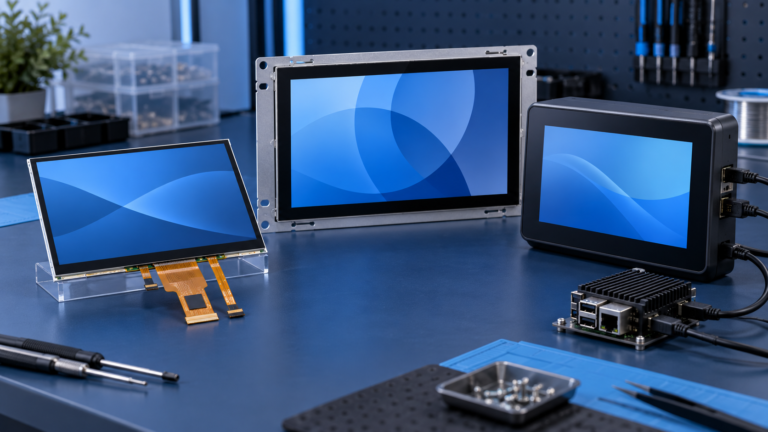
Explore product pages related to this article topic.
Talk to RJY’s engineering team for display matching, controller board review, and customization discussion.