








Introduction – The “Deep Water” Behind the Screen
If you are a hardware product manager, a procurement director, or an electronics engineer, you have likely experienced the specific frustration of sourcing display components. You type “lcd panel manufacturers” into Google or Alibaba, hoping to find a direct, reliable factory. Instead, you are bombarded with tens of thousands of seemingly identical listings. Every company claims to be the “original factory,” every profile boasts pictures of pristine cleanrooms, and every sales representative promises the lowest prices.
This is the “deep water” of the global display supply chain. The reality is that the display industry is incredibly fragmented and highly specialized. Finding the right partner is not merely about finding a facility that can tighten screws or solder wires. It is a strategic alignment of technological roadmaps, supply chain stability, and risk mitigation capabilities.
Clarifying the Definitions: Who Are You Actually Talking To?
Before you sign a Non-Disclosure Agreement (NDA) or issue a Purchase Order (PO), you must understand the distinct identities within the display ecosystem:
- The Panel Maker (TFT Glass Factory): These are the true giants of the industry (often referred to as the top 10 display companies globally, such as BOE, LG Display, AUO, Innolux, etc.). They invest billions of dollars in massive fabrication plants (Fabs) to manufacture the raw TFT glass (the “cell”). They rarely deal with small orders or bespoke module designs for mid-sized clients.
- The LCM Plant (Liquid Crystal Module Manufacturer): These are the true lcd display manufacturers for most businesses. They purchase the raw glass cells from the Panel Makers and assemble them with backlights, polarizing films, driver ICs, and Flexible Printed Circuits (FPCs) to create a usable display module. They offer significant customization.
- The Distributor / Trader / Supplier: Un lcd supplier or trader does not manufacture. They hold inventory, manage logistics, and often act as a financial buffer. They buy in bulk from LCM plants or Panel Makers and sell in smaller quantities to the market.
The Core Thesis: Searching for manufacturers of lcd is not a one-size-fits-all endeavor. The choice between a direct manufacturer and a specialized supplier depends entirely on your project’s scale, your need for customization, and your tolerance for supply chain risk.
Perspective 1: The Brand Owner (OEM/ODM) – “We Demand Customization and Control”
For Tier 1 and Tier 2 brand owners, Original Equipment Manufacturers (OEMs), and Original Design Manufacturers (ODMs), the procurement strategy is entirely driven by product differentiation and lifecycle security. When these giants look for lcd screen manufacturers, they are bypassing the middlemen and seeking direct relationships with robust LCM plants or even the Panel Makers themselves.
The Core Demands of the OEM
1. Deep Customization Capabilities:
Consumer electronics and specialized industrial medical equipment cannot rely on standard off-the-shelf screens. OEMs require profound customization. They ask questions like: Can you design a custom FPC layout that fits our proprietary motherboard? Can you achieve a 1500-nit high-brightness backlight for our outdoor kiosk? Can you engineer an ultra-narrow bezel for our flagship tablet? A direct manufacturer has the in-house R&D and engineering (FAE) teams to design these bespoke solutions from the ground up.
2. Technological Roadmap Alignment:
When an OEM designs a product intended to be on the market for 3 to 5 years, they need to know their display partner’s technology roadmap aligns with theirs. Will the manufacturer continue to support mature a-Si (Amorphous Silicon) lines for cost-effective industrial panels? Are they transitioning heavily to IGZO or LTPS for higher resolution and lower power consumption? Furthermore, as the market shifts, OEMs look closely at the capabilities of an oled screen company to ensure they have a path to upgrade their next-generation devices.
3. Supply Chain Penetration and BOM Transparency:
Brands demand absolute control over their Bill of Materials (BOM). When dealing directly with lcd display panel manufacturers, OEMs require transparency regarding which specific driver IC brand is being used, what brand of polarizer is applied, and the exact specifications of the LED backlight chips. This penetration ensures consistent quality and allows the OEM to manage End-of-Life (EOL) notices proactively. If a specific IC is discontinued, the OEM and the manufacturer can qualify a replacement together without disrupting production.
The Pain Points for OEMs
- Extreme Minimum Order Quantities (MOQs): Direct manufacturers operate on economies of scale. To justify pausing a production line to set up a custom run, they require massive MOQs—often in the tens or hundreds of thousands of units.
- Lengthy Development Cycles: Designing a custom LCM from scratch involves Non-Recurring Engineering (NRE) fees, tooling, multiple prototype iterations (EVT, DVT, PVT), and rigorous reliability testing. This process can take 3 to 6 months before mass production begins.
Perspective 2: Small/Medium Projects and Distributors – “We Need Flexibility and Stock”
Not every company is Apple or Samsung. Thousands of brilliant hardware startups, mid-sized industrial equipment builders, and regional hardware integrators operate on completely different business models. For these entities, engaging directly with massive lcd panel makers is often an exercise in futility. Instead, they rely heavily on the lcd panel supplier and specialized distributors.
The Core Demands of SMEs and Integrators
1. MOQ Elasticity and Agility:
A startup building a niche piece of laboratory equipment might only need 500 screens for their first production run. A direct manufacturer will likely reject this order or quote an exorbitant price. An agile lcd supplier, however, can break down bulk orders. They act as a demand aggregator, buying 10,000 units from the factory and distributing them among 20 different smaller clients.
2. Spot Inventory and Working Capital Relief:
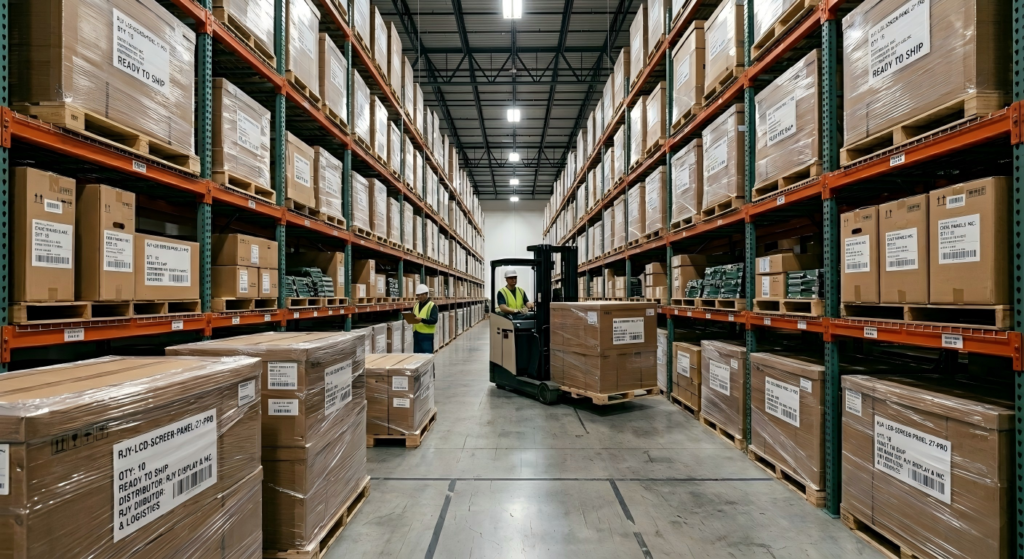
In the electronics industry, lead times from direct factories can easily stretch to 8-12 weeks, or even longer during global semiconductor shortages. For a mid-sized project, waiting three months for components can kill cash flow and delay product launches. A reliable supplier maintains warehouses filled with spot inventory. They are the lifesavers when an unexpected surge in demand requires parts immediately.
3. Turnkey and Value-Added Solutions:
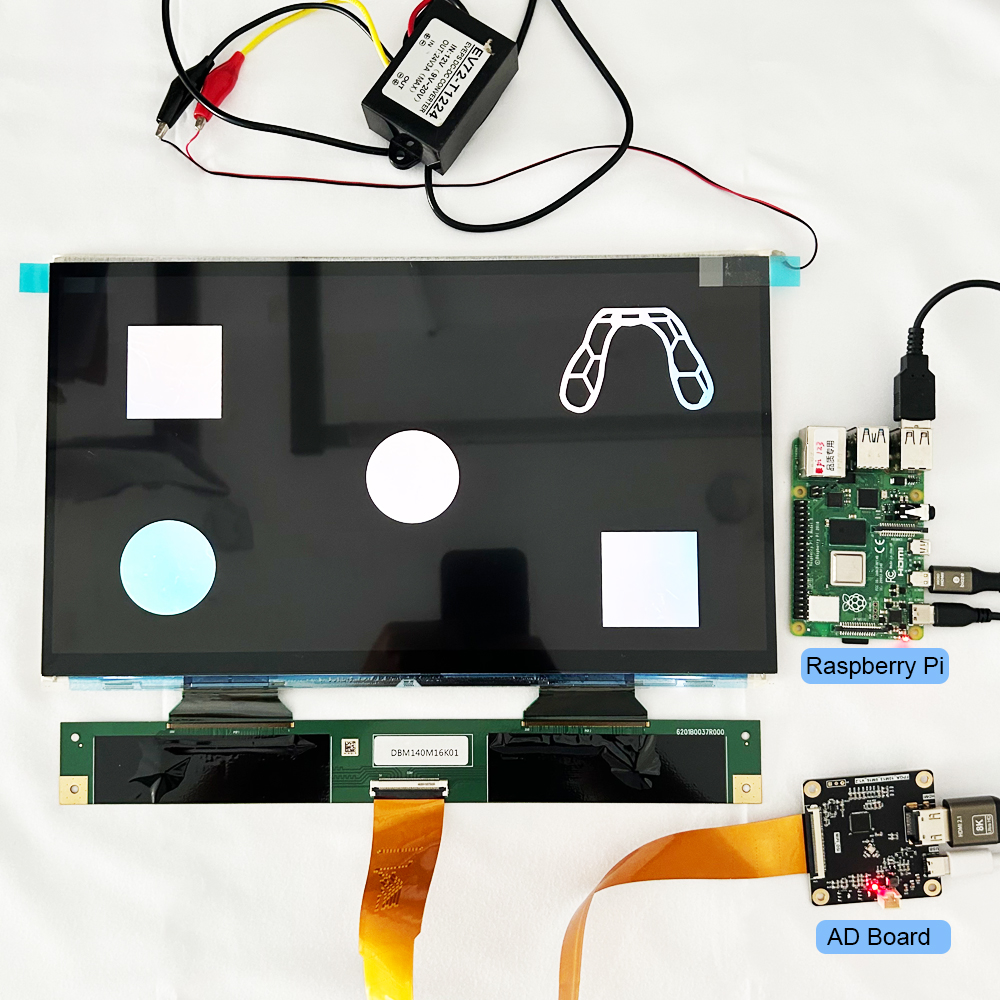
While a raw panel maker provides only the glass or the basic module, SMEs often lack the deep engineering resources to integrate it. Specialized suppliers often provide “one-stop-shop” solutions. They bundle the LCD module with compatible HDMI/VGA driving boards, pre-laminated Touch Panels (TP), custom cables, and even basic structural housing, drastically reducing the engineering burden on the client.
The Pain Points for SMEs using Suppliers
- Severe Price Volatility: Suppliers are exposed to the spot market. If there is a sudden shortage of a specific screen size, the supplier will mark up the price significantly. You are trading cost for convenience and speed.
- The “Grade A” vs. “Grade B” Risk: This is the darkest corner of the display trade. Panel makers grade their glass (A-grade has zero dead pixels; B-grade might have minor blemishes). Less scrupulous traders might purchase B-grade panels at a discount and sell them to unsuspecting clients as A-grade. Without direct factory traceability, QA becomes a massive headache.
Manufacturer vs. Supplier: A Deep Dive Comparison
To make the best procurement decision, you must objectively weigh the structural differences between these two entities. Here is a definitive comparison matrix to guide your sourcing strategy.
| Dimension | Direct LCD/OLED Manufacturer (Factory) | Specialized LCD Supplier / Trader |
| Pricing Structure | Factory Floor Cost: The lowest possible unit price, but requires massive volume commitments and potential NRE tooling fees. | Premium Pricing: Includes a markup for their inventory holding costs and risk, but ideal for low-volume procurement. |
| Assistance Technique | Deep Engineering: Direct access to Field Application Engineers (FAE) for firmware tuning, EMI debugging, and custom design. | Application Guidance: Basic integration advice. They cannot alter the internal design of the display. |
| Delivery & Lead Time | Rigid Production Schedules: Lead times are typically 8 to 12+ weeks. You are subject to the factory’s production queue. | Immediate / Spot: Often have inventory ready to ship in 24-48 hours, saving critical project timelines. |
| Risk Mitigation | Systemic Quality Guarantees: Strict ISO standards. In the event of a batch defect, the factory handles failure analysis (FA) and mass replacements. | Credit-Dependent: Quality assurance relies heavily on the trader’s reputation and financial stability. Returns can be complex. |
| Best Suited For | High-volume OEMs, highly customized products, long-term stable product lifecycles. | Startups, urgent spot buys, high-mix/low-volume (HMLV) manufacturing, prototyping. |
The New Normal in 2026: What Are We Truly Looking For?
The global supply chain has experienced seismic shifts over the last few years. Searching for an oled producers or LCD factory in 2026 is vastly different than it was a decade ago. Procurement managers are no longer just looking at the Price-Per-Unit. They are evaluating partners based on a new set of critical metrics.
1. Supply Chain Security and Regionalization
Geopolitical tensions and logistics disruptions have forced a paradigm shift. Buyers are increasingly nervous about having 100% of their display procurement tied to a single geographic region. We are now looking for lcd panel manufacturers who have diversified their manufacturing footprint—perhaps maintaining raw glass production in East Asia but establishing LCM assembly plants in Southeast Asia, Mexico, or Eastern Europe to ensure tariff compliance and localized delivery.
2. The ESG Threshold (Environmental, Social, and Governance)
Modern procurement is heavily regulated. For European and North American brands, a manufacturer’s carbon footprint is now a strict qualifying criterion. We are looking for factories that can provide transparent Scope 1, 2, and 3 emissions data, utilize renewable energy in their cleanrooms, and comply with strict labor laws. A factory with cheap prices but poor ESG compliance is now considered a toxic asset to a major brand.
3. Technological Foresight: OLED and Micro LED Transition
The LCD market is mature, but innovation never stops. Forward-thinking companies are evaluating their LCD partners based on their ability to transition to next-generation technologies. Are you partnering with an oled display manufacturers or an amoled screen manufacturers? While AMOLED is dominating smartphones and wearables, the enterprise market is watching the commercialization of Micro LED. A reliable manufacturing partner in 2026 must have dedicated R&D labs proving they can guide you through the transition from traditional backlit LCDs to self-illuminating display technologies.
Conclusion – There is No “Best,” Only the “Most Suitable”
The journey to find the perfect display partner is fraught with misconceptions. The biggest mistake a hardware team can make is assuming that “going direct to the factory” is always the optimal choice.
The Ultimate Avoidance Guide (How Not to Get Burned)
- Do Not Chase the Factory if You Lack the Volume: If your annual demand is 2,000 units, do not waste months trying to negotiate with top-tier lcd display panel manufacturers. They will either ignore you, de-prioritize your production, or drop you the moment a larger client places an order. Embrace a reputable, value-added supplier.
- Verify Channel “Hard Power,” Not Just Fancy Websites: Many traders build beautiful websites making them look like massive oled manufacturers. Demand video tours of their LCM assembly lines, ask for their ISO certificates, and verify their authorized distribution letters if they claim to represent major panel brands.
- Audit the BOM, Not Just the Price: If a quote is 20% cheaper than the market average, they are cutting corners. They might be using B-grade glass, unbranded driver ICs, or inferior backlights that will degrade after 6 months in the field.
In summary, sourcing lcd panel manufacturers or suppliers is fundamentally a complex game of resource matching. It is about balancing Scale, Risk, and Speed. Understand your own company’s position in the ecosystem, define your true technical and logistical requirements, and choose a partner whose business model is intrinsically designed to support yours.
Foire aux questions (FAQ)
Q1: How do I verify if a company is a true LCM manufacturer or just a trading company?
A : Ask for a live video tour of their cleanroom facility and request their ISO9001/ISO14001 certificates. Furthermore, request an engineering meeting. A true manufacturer will have dedicated FAEs (Field Application Engineers) who can discuss low-level driver IC programming and optical bonding techniques, whereas a trader usually relies entirely on standard spec sheets.
Q2: Are the “top 10 display” companies willing to work with startups?
A : Generally, no. Tier 1 panel makers (who manufacture the raw TFT glass) deal almost exclusively with global brands ordering millions of units. Startups and mid-sized OEMs should seek out mid-tier LCM manufacturers who buy glass from the top 10 makers but specialize in custom assembly and lower MOQs.
Q3: Why are amoled screen manufacturers primarily focused on consumer electronics rather than industrial applications?
A : AMOLED technology offers incredible contrast and flexibility but has historically faced challenges with “burn-in” when displaying static images for prolonged periods (a common scenario in industrial HMIs or kiosks). Additionally, the tooling cost for custom AMOLED sizes is astronomically high, making it better suited for mass-market consumer devices like smartphones.
Q4: If my project is delayed, can an lcd panel supplier really save my production schedule?
A : Yes. This is their primary value proposition. While factory lead times can be 10-12 weeks, a robust supplier acts as a buffer. They forecast market trends, hold millions of dollars in spot inventory, and can often ship standard display modules to your assembly line within days, albeit usually at a slight premium over factory-direct pricing.
Q5: What does “EOL Management” mean when working with lcd display panel manufacturers?
A : End of Life (EOL) management is crucial. Display components (especially specific driver ICs or glass generations) are eventually discontinued. A responsible manufacturer will give you a 6-to-12-month advance warning (a Product Change Notification or PCN) and assist your engineering team in migrating to and testing a suitable replacement component, ensuring your product line does not suddenly halt.