Facing a bottleneck in your Embedded Display Project?
Don’t let complex integration or supply chain issues slow your time-to-market. Book a free consultation with the RJY expert team for tailored design and manufacturing support.

Choosing the right display interface is more than just picking a connector—it shapes your board layout, performance, system behavior, and integration cost. Let’s walk through each interface in a natural, engineer-friendly way, highlighting where each shines and what to watch out for.
An interface is how two electronic parts—like a microcontroller and an LCD—physically connect and share data. It defines the wires, the voltages, and the timing rules but not what those parties say to each other (that’s the protocol).
Think of it this way:
In embedded systems, we often pick an interface (SPI, I²C, LVDS, etc.) first—then apply the right protocol (e.g., Display Command Set or DCS for MIPI, or SSD1306 commands).
In this article, we’ll explore popular LCD interfaces, explain where they shine, and show how to quickly identify them without other tools.
| Interface | Speed | Wires | Typical Use |
|---|---|---|---|
| SPI | Low–mid | 4–6 | Smartwatches, small TFT screens |
| I²C | Very Low | 2 | Touch controllers, configs |
| UART | Low | 2 | Serial LCD modules, debugging |
| RGB/TTL | Medium | 20–28 | DIY HMI, MCU-driven panels |
| LVDS | High | 6–10 | Industrial monitors, laptops |
| MIPI DSI | High | 4–6 | Phones, tablets, embedded Linux |
| eDP | Very High | 20+ | Laptops, medical displays |
| HDMI/DP | Very High | Standard | External monitors, demos |
SPI (Serial Peripheral Interface) is the go-to for small displays (under 3.5″), thanks to its simplicity: you run just 4–8 lines (CLK, MOSI, MISO, CS, possibly D/C and Reset). With QSPI’s quadruple data lanes, you get faster throughput—though still capped around 50 Mbps. For a smart thermostat updating its display 5–10 times a second, SPI is fast enough, super low on pin usage, low EMI, and wallet-friendly.
SCLK, MOSI, CS, D/C, plus optional MISO, RESET, BLExample wiring (esp8266 or STM32):
SCLK → SPI SCLK
MOSI → SPI MOSI
CS   → chip select
D/C  → data/command distinction
RESET → optional reset
BL    → backlight via PWM
VCC, GND → power
You’ll often load libraries (e.g., Adafruit_GFX) to draw graphics after init.
I²C is a two-wire bus (SDA + SCL) ideal for touch controllers or simple display control. Though slower (up to 400 kbps), it’s perfect where you need just configuration or occasional data updates—like adjusting backlight, querying touch state, or setting color palettes. It’s standard on embedded touchscreens and works well when you want minimal wiring and low power.While SPI handles images, I²C is perfect for low-bandwidth tasks:
SCL (clock), SDA (data)Since I²C is slow, it’s never used for full-frame updates—but it’s great to carry control signals cleanly and with few pins.
UART is universal, simple, and asynchronous, requiring just TX and RX (plus ground). Many smart modules embed a small MCU so you can control graphics via textual commands. Ideal for prototypes, vending machines, or basic HMIs, these modules handle fonts, icons, and sometimes touch without much coding or board overhead. UART (or RS‑232 in industrial gear) is handy for:
Wiring is simple: TX, RX, VCC, and GND. Just match the baud rate—usually 115200 or 9600.
RGB/TTL uses wide parallel buses (24-bit data + sync lines) to deliver extremely low latency—perfect for real-time video or camera overlays. There’s no controller IC, and timing is precise, but it demands tons of PCB traces and struggles in EMI-heavy environments. It works well where speed matters more than board complexity, like industrial preview stations or embedded CCTV monitors. RGB interface, often referred to as TTL (Transistor-Transistor Logic), is one of the earliest display connections used in embedded systems. It transmits pixel color data in parallel—usually 16-bit or 24-bit RGB—synchronized by control signals like HSYNC, VSYNC, and DE.
PCLK, HSYNC, VSYNC, DEEach pixel’s color data is sent across multiple lines at once. A pixel clock (PCLK) ticks with every pixel. Synchronization is managed by:
LVDS is a workhorse in industrial and automotive environments. Using differential signaling, it’s robust over 1–5 m cable runs and resistant to EMI. You’ll need to route 4 pairs, control impedance, and pick high-quality connectors, but you get reliable, stable image delivery even in noisy conditions. It’s ideal for dashboards, kiosks, factory HMIs. LVDS (Low Voltage Differential Signaling) is a robust interface widely used in industrial, medical, and automotive displays.
Instead of sending each bit on its own wire like RGB, LVDS uses differential pairs to transmit high-speed serial data. This enables longer cable runs and lower noise.
Designed for mobile and compact embedded devices, MIPI DSI offers high speed over just 4 differential lanes. It suits modern Android panels, tablets, and medical touchscreens. But it demands precision: length-matched lanes, driver support, and compatible SoC firmware. Its payoff? Sleek, thin, low-power panels with snappy refresh rates and wide bandwidth. MIPI DSI (Display Serial Interface) is the most common internal display interface in smartphones, tablets, and some embedded Linux boards.
It transmits image data at gigabit speeds using low-pin-count differential pairs. It supports two modes:
eDP is essentially LVDS’s big brother—designed for laptops and panel PCs. It supports high resolutions (up to 4K+), uses differential signaling, includes hot-plug and self-refresh features, and caters to x86 and ARM Linux platforms. It’s pricier and requires careful board layout, but if you’re building high-end or industrial PCs, eDP is a strong choice. eDP (Embedded DisplayPort) is common in modern laptops and high-end industrial PCs.
Based on DisplayPort, eDP is designed for internal panel connections and supports:
HDMI (High-Definition Multimedia Interface) is the most widely used interface in consumer electronics and development kits. It transmits both video and audio over a single cable.
Pros:
Cons:
DisplayPort (DP) is a professional-grade display interface that supports higher resolutions and refresh rates than HDMI.
Pros:
Cons:
USB‑C can carry video (DisplayPort Alt Mode), regular USB data, and power—all in one reversible connector. It’s fantastic for portable monitors or integrated systems. But both devices must support Alt Mode, and the design requires power rules, signal integrity, and USB spec compliance. Done right, though, it’s the gold standard for simplicity and usability. USB-C has rapidly become the standard for modern devices, capable of carrying data, video, and power in one reversible connector.
Pros:
Cons:
Being able to identify the type of LCD interface you’re working with is key to integration and debugging.
| Interface | Typical Clues | Labeling |
|---|---|---|
| SPI | 6–8 pins, often labeled CS, MOSI, CLK, DC | ILI9341, ST7735 |
| LVDS | 6–10 differential pairs, twisted pairs in FFC | “LVDS”, “D+” / “D-“ |
| MIPI DSI | 4–6 differential lanes, small pitch | “DSI”, Toshiba/Nova drivers |
| eDP | 20+ pins, includes AUX signal | “eDP”, Intel x86 platforms |
| HDMI/DP/USB-C | Standard port shapes | Silkscreen “HDMI”, “DP”, “Type-C” |
Matching the right interface to your project depends on size, performance, MCU/SBC resources, and environment.
| Application | Recommended Interface | Reason |
|---|---|---|
| Small MCU-based systems | SPI | Easy to use, minimal GPIO required |
| Wearables / IoT displays | SPI + onboard framebuffer | Simple + good UI flexibility |
| Embedded Linux SBCs | MIPI DSI | Fast, compact, native support |
| Industrial HMIs | LVDS / eDP + I²C | Long-distance, robust signal |
| Prototyping / media devices | HDMI / USB-C | Plug-and-play convenience |
| Multi-display systems | DisplayPort | Daisy-chaining and high resolution |
| Interface | Bandwidth | Max Resolution | Pin Count | Strengths | Limitations |
|---|---|---|---|---|---|
| SPI | ≤50 Mbps | 800×480 | 6–8 | Low cost, easy to use | Slow, small displays only |
| I²C | ≤3 Mbps | – | 2 | Very low pin count | Not for image data |
| RGB (TTL) | ≤100 Mbps | 1024×768 | 20+ | Predictable timing | EMI issues, lots of wires |
| LVDS | ≥1 Gbps | 1080p | 6–10 | Stable, EMI-resistant | Layout complexity |
| MIPI DSI | ≥1–6 Gbps | 4K | 4–6 | High performance, compact | Harder to debug |
| eDP | ≥2–8 Gbps | 4K+ | 20+ | High resolution, low EMI | Not MCU compatible |
| HDMI | ≥18 Gbps | 4K | Standard port | Widely supported | Requires bridge ICs |
| USB-C | ≤40 Gbps | 8K | Minimal | Unified video + power | Requires Alt Mode support |
Share your display size, resolution, interface, brightness, touch requirement, controller board requirement, and application environment.
Continue reading related display technology guides and application references.
Explore product pages related to this article topic.
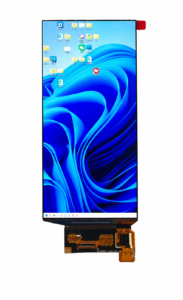
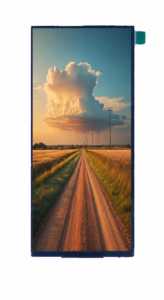
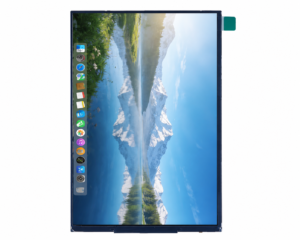
Talk to RJY’s engineering team for display matching, controller board review, and customization discussion.