








1. The “Off-the-Rack” Suit: Standard TFT Modules
표준 TFT Modules are the workhorses of the display industry. These are pre-engineered, mass-produced screens designed by display manufacturers to appeal to the broadest possible market. They come with a fixed resolution, a fixed brightness, a predefined Flexible Printed Circuit (FPC) pinout, and a rigid, “take-it-or-leave-it” datasheet.
The Brilliant Advantages of Going Standard
- Speed to Market (The “Need it Yesterday” Factor): If your engineering team needs a display to start prototyping this week, standard TFT Modules are your best friend. Distributors generally have them in stock, allowing you to bypass the agonizing weeks of mechanical design and tooling.
- Zero NRE Fees: NRE stands for “Non-Recurring Engineering.” It’s the upfront fee manufacturers charge to design and build custom tools (like glass cutting masks or injection molds). With standard modules, the NRE is exactly zero. The factory has already absorbed the R&D costs.
- Low Minimum Order Quantities (MOQs): Because the manufacturer is likely selling this exact same display to forty other companies, they don’t care if you only want to buy 500 units for your initial pilot run.
- Proven Reliability: A standard module has likely been in the field for years. The bugs in the driver IC have been ironed out, the backlight thermal dissipation is well-understood, and the failure rates are mathematically predictable.
The Painful Reality of Standard Modules
- The “Square Peg, Round Hole” Dilemma: You have a brilliant, sleek, curved industrial design for your new IoT thermostat. But the only standard display that fits your budget is a chunky rectangle with a bezel that looks like it belongs in 2012. If you choose a standard display, your mechanical engineers must design the entire product enclosure around the screen.
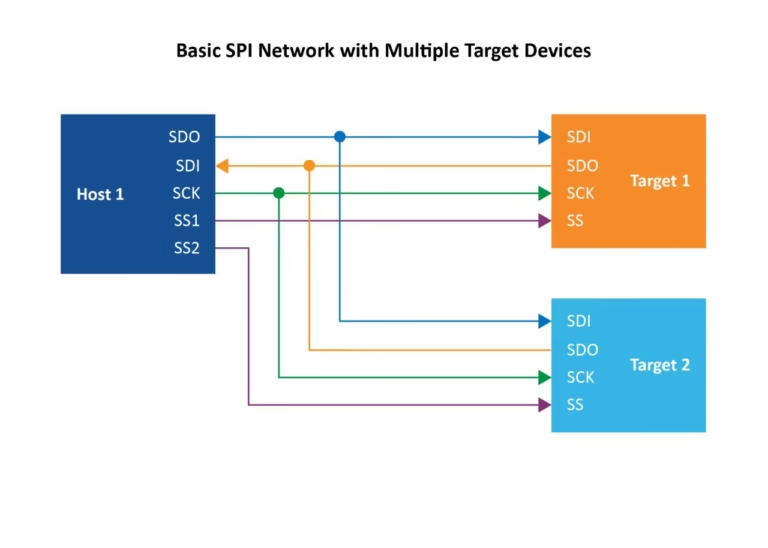
- Interface Incompatibility: You might find a standard screen with the perfect size and brightness, but it uses a MIPI DSI interface, and your chosen microcontroller only supports RGB or SPI. Now you are forced to add a bridge chip to your motherboard, increasing your Bill of Materials (BOM) cost and PCB complexity.
- Supply Chain Surprises (EOL): When you buy standard TFT Modules, you are at the mercy of the market. If the manufacturer decides that the specific 4.3-inch screen you rely on is no longer profitable because consumer tablet trends have moved on, you will receive a terrifying End-of-Life (EOL) notice. Suddenly, you have six months to redesign your entire product.
2. The Bespoke Tailoring: Custom TFT Modules
If standard displays are off-the-rack suits, custom TFT Modules are the bespoke Savile Row tailoring of the electronics world. You get exactly what you want, fitting your product’s mechanical and electrical constraints flawlessly—but you are going to pay for the privilege, both in time and money.
However, “custom” is not a binary switch. It is a spectrum. Let’s break down the layers of customization, from mild tweaks to total overhauls.
Level 1: Semi-Custom (The “Tailored Fit”)
This is where 80% of European and American industrial designers end up. You take a standard piece of LCD glass and modify the peripherals around it.
- Custom FPC (Flexible Printed Circuit): The standard FPC is too short to reach your motherboard, or the pinout is backwards. Paying a small NRE to redesign the FPC shape, length, and pin arrangement is highly common and incredibly cost-effective.
- Custom Backlight Unit (BLU): The standard screen is 300 nits (great for a dark room, useless outdoors). You can pay to have a custom LED string installed behind the glass to pump the brightness up to a sunlight-readable 1,000+ nits.
Level 2: Touch & Cover Glass Customization (The “Face Lift”)
The actual LCD remains standard, but the glass the user touches is entirely yours.
- Projected Capacitive (PCAP) Touch Tuning: If your product is a medical device where nurses wear thick latex gloves, or a marine chartplotter that gets splashed with saltwater, a standard touch panel will fail miserably. You need custom firmware tuning for the touch controller IC.
- Cover Glass (CG) Aesthetics: You want edge-to-edge glass, custom cutouts for a mechanical button, your company logo silk-screened under the glass, and an Anti-Glare (AG) or Anti-Fingerprint (AF) coating. This requires custom tooling for the glass cutting and printing processes.
Level 3: Full Custom LCD Glass (The “Unicorn”)
You want an LCD panel shaped like a triangle, or an ultra-wide 21:3 aspect ratio that doesn’t exist anywhere in the world.
- The Reality Check: To get a custom cut of actual TFT glass (the active matrix itself), you must negotiate directly with the massive multi-billion-dollar panel fabs. The NRE fees for this run into the hundreds of thousands of dollars, and the MOQ will be in the hundreds of thousands of units. Unless you are building the next flagship smartphone or supplying a global automotive fleet, Level 3 is generally out of reach.
3. The Money Talk: Unit Economics vs. NRE
The battle between custom and standard TFT Modules usually takes place in the CFO’s office. It boils down to a classic ROI (Return on Investment) calculation.
Let’s say you need a display with a very specific, slightly longer ribbon cable (FPC).
- Option A (Standard): You buy a standard display and design a tiny, secondary “adapter board” inside your product to connect the short FPC to your main board. This adapter board and the extra connectors cost you $1.50 per unit.
- Option B (Custom): You pay a $2,000 NRE fee to the display manufacturer to design and tool a custom, elongated FPC. The display itself remains the same price.
The Math:
If you are only building 500 units, Option A costs you $750 in extra parts. Option B costs you $2,000 in NRE. Go standard.
If you are building 10,000 units, Option A costs you $15,000 in extra parts and assembly time. Option B still only costs the one-time $2,000 NRE. Go custom.
Customization requires upfront cash, but at scale, it almost always reduces the per-unit BOM cost, eliminates points of failure (fewer connectors), and drastically simplifies your assembly line.
4. The Time Dimension: Timelines and Patience
In product development, time is often more expensive than components.
If you choose TFT LCD의 다양한 시야각 범위, 귀하의 타임라인은 다음과 같습니다:
- 샘플 주문: 3일 소요.
- 평가 및 프로토타입에 통합: 2주 소요.
- 대량 생산 주문: 4–6주 리드 타임.
If you choose 맞춤형 TFT 모듈, 이제 기계적 금형 제작 및 검증 단계에 진입합니다.
- 제조사와 요구사항 논의 및 CAD 도면 수령: 1-2주 소요.
- 도면 승인 및 금형 NRE 비용 지불: 1주 소요.
- 금형 제작 및 초도 프로토타입 생산: 3-5주 소요.
- 프로토타입 수령, 테스트 수행 및 필연적으로 결함 발견 (예: 백라이트 100%에서 터치 스크린 오작동 발생): 2주 소요.
- 수정된 프로토타입: 3주 소요.
- 최종 승인 및 대량 생산 리드 타임: 6-8주 소요.
맞춤형 선택 시 제품 개발 주기에 최소 2~3개월 이 추가됩니다. 마케팅 팀이 이미 투자자에게 오늘로부터 정확히 90일 후 출시를 약속한 경우, 선택은 이미 결정된 것입니다: 표준 모듈 구매.
5. 산업별 주요 고려사항
아직 결정하지 못하셨나요? 북미 및 유럽 시장의 특정 산업이 맞춤형과 표준형 논쟁을 어떻게 다루는지 살펴보겠습니다.
의료 기기 분야
- 결론: 세미-커스텀.
- 이유: 의료 기기는 극한의 수명(7~10년 제품 수명)을 요구하며, 엄격한 EN 60601 EMC 테스트를 통과해야 합니다. 의료 엔지니어는 일반적으로 고안정성의 표준 산업용 TFT 패널을 선택하지만, 맞춤형 PCAP 터치 패널과 커버 글라스를 선택합니다. 생리식염수 방울을 차단하고 이중 수술용 장갑을 통해 작동하도록 터치 스크린을 조정해야 합니다.
산업 및 야외 분야
- 결론: 헤비 커스텀.
- 이유: 표준 350-nit 디스플레이는 텍사스 유전이나 스페인 태양광 발전소의 정오에는 검은 사각형처럼 보일 것입니다. 이러한 적용 분야는 맞춤형 고휘도 백라이트, 시간이 지나도 디스플레이가 황변되지 않도록 하는 UV 차단 편광판, 광학 본딩 (반사 및 결방 방지를 위해 터치 글라스를 LCD에 직접 접착).
소비자 가전 및 IoT 분야
- 결론: 완전 맞춤화 (미적 요소가 최우선).
- 이유: 스마트 홈 시장에서는 디자인이 전부입니다. 스마트 온도 조절기를 제작하는 경우, 표준 직사각형 스크린으로는 부족합니다. 세련된 곡선 모서리, 실크 스크린 아이콘, 데드-프론팅(전원이 꺼졌을 때 스크린이 완전히 보이지 않고 검은색 플라스틱 케이스와 일체화됨)이 적용된 맞춤형 커버 글라스가 필요합니다.
6. 최종 결정 매트릭스
요약하면, 다음 엔지니어링 및 구매 협의 회의 시 이 체크리스트를 활용하십시오:
| 결정 요소 | 표준 TFT 모듈 선호 | 맞춤형 TFT 모듈 선호 |
| 연간 생산량 (EAU) | 낮음 (< 1,000개/년) | 중간에서 높음 (> 5,000개/년) |
| 출시 시기 | 3개월 이내 출시 | 6개월 이상 후 출시 |
| 기계적 설계 | 외관을 디스플레이에 맞춰 설계 가능 around 디스플레이 | 엄격하게 사전 설계된 외관에 맞춰야 함 |
| 작동 환경 | 실내, 상온, 깨끗한 손 | 야외, 극한 온도, 물, 장갑, 두꺼운 글라스 |
| 예산 제약 | NRE 금형 비용 예산 없음 | 장기적 BOM 비용 절감을 위한 NRE 자본 확보 가능 |
결론
맞춤형과 표준형 TFT 모듈 선택은 어느 기술이 “더 나은지”에 대한 질문이 아닙니다. 이는 위험 관리, 예산 배분 및 엔지니어링 철학에 대한 계산된 실행입니다.
제품-시장 적합성을 입증하려는 신생 스타트업이거나, 소량 생산의 고복잡성 기계를 제조하는 산업 제조업체라면, TFT LCD의 다양한 시야각 범위 이 수익 창출을 위한 가장 빠르고 안전한 경로입니다.
그러나 사용자 경험이 브랜드를 정의하는 제품, 극한 환경이 생존을 결정하는 제품, 또는 생산량이 BOM의 모든 비용을 최적화할 수 있는 제품을 제조하는 경우, 맞춤형 TFT 모듈 는 비용이 아닌 제품의 경쟁 우위에 대한 전략적 투자입니다.
자주 묻는 질문(FAQ)
Q: 맞춤형 TFT 모듈의 일반적인 NRE 비용은 얼마인가요?
A: 이는 맞춤화 수준에 크게 의존합니다.
- 맞춤형 FPC: ~$500 – $1,500.
- 맞춤형 백라이트: ~$1,000 – $3,000 (도광판 금형에 따라 가격이 달라짐).
- 맞춤형 커버 글래스 및 터치 패널: ~$1,500 – $5,000.
- 참고: NRE(비반복 비용)는 일반적으로 일회성 비용입니다. 금형이 제작되면 해당 설계는 귀사가 소유하게 됩니다.
Q: 디스플레이를 맞춤 제작하면 CE 또는 FCC 인증 획득이 더 어려워지나요?
A: 오히려 올바르게 진행할 경우 더 쉬워질 수 있습니다. 표준 디스플레이의 주요 문제점은 일반 FPC에서 발생하는 전자기 간섭(EMI)입니다. 맞춤형 FPC를 설계할 때는 특정 접지층, EMI 차폐 테이프 및 최적화된 배선 경로를 추가하여 유럽 CE 및 북미 FCC 방사 테스트를 한 번에 통과할 수 있도록 보장할 수 있습니다.
Q: “광학 접합”이 무엇이며, 맞춤형 공정인가요?
A: 광학 접합은 TFT LCD와 터치 글래스 사이에 광학 등급 수지(OCA 또는 OCR) 층을 주입하여 공기층을 제거하는 공정입니다. 네, 일반적으로 맞춤형 조립 공정으로 간주됩니다. 이는 야외 가시성과 물리적 내구성을 극적으로 향상시킵니다. 제품이 야외에서 사용될 경우 필수적으로 필요합니다.
Q: 표준 TFT LCD를 구매하되 인터페이스만 LVDS에서 HDMI로 변경할 수 있나요?
A: 원본 TFT 글래스 자체의 기본 인터페이스는 변경할 수 없습니다(이는 글래스에 장착된 드라이버 IC에 의해 결정됨). 그러나 제조사는 디스플레이의 기본 LVDS 또는 MIPI 신호를 HDMI로 변환하는 맞춤형 “브리지 보드”(모듈 후면에 부착되는 소형 PCB)를 설계하여 Raspberry Pi나 산업용 PC와 같은 시스템에서 플러그 앤 플레이로 사용할 수 있게 할 수 있습니다.
Q: 맞춤형 금형 비용을 지불하면 설계는 누가 소유하나요?
A: 귀사가 소유합니다. 신뢰할 수 있는 디스플레이 제조사는 비밀 유지 계약(NDA) 및 금형 계약을 체결하여 귀사를 위해 설계된 맞춤형 FPC, 백라이트 또는 터치 패널을 귀사의 경쟁사에 판매하지 않을 것을 명시합니다.