Facing a bottleneck in your Embedded Display Project?
Don’t let complex integration or supply chain issues slow your time-to-market. Book a free consultation with the RJY expert team for tailored design and manufacturing support.

Touch screens have transformed the way humans interact with digital devices, evolving from resistive panels in early ATMs to today’s highly responsive smartphones and industrial displays. At the forefront of this evolution is the PCAP touch screen (Projected Capacitive Touch).Unlike resistive touch screens that rely on physical pressure, PCAP technology uses electrical signals to detect touch through a conductive grid. This enables faster, more precise, and more durable interaction. Whether in consumer electronics, industrial control systems, medical devices, or retail kiosks, PCAP touch screens have become the standard for modern human-machine interaction (HMI).This article explores the fundamentals of PCAP technology, its benefits, industry applications, challenges, and how businesses can leverage it to create next-generation interactive solutions.
A PCAP touch screen is a display that detects touch input using projected capacitive sensing. The technology involves embedding a transparent grid of conductive material (commonly indium tin oxide, ITO) into the glass surface.
When a finger—or a conductive object such as a stylus—approaches the surface, it disturbs the electrostatic field, allowing the system to calculate the exact touch position. Unlike older technologies, PCAP can:
The working principle of PCAP touch screens can be broken down into several steps:
This process happens in milliseconds, providing users with a natural, intuitive, and responsive touch experience.
The popularity of PCAP touch screens is driven by their ability to outperform older technologies. Major benefits include:
| Feature | PCAP Touch Screen | Resistive Touch Screen |
|---|---|---|
| Touch Detection | Capacitive sensing | Pressure-based |
| Multi-Touch Support | Yes, up to 10+ points | No, single or dual touch only |
| Durability | Scratch-resistant, long lifespan | More prone to wear and tear |
| Clarity | High, >90% transparency | Lower, due to multiple layers |
| Input Method | Finger, conductive stylus, glove (special design) | Any object (finger, stylus, glove) |
| Cost | Higher initial investment | Lower upfront cost |
| User Experience | Fast, smooth, modern interface | Slower, less intuitive |
Clearly, PCAP touch screens offer superior performance for most modern applications, though resistive touch still has a niche where cost or ruggedness is the primary concern.
Smartphones and tablets are the most common examples of PCAP adoption. Their seamless, fluid interactions set the benchmark for all other devices.
Interactive kiosks, digital signage, and vending machines rely on PCAP technology for fast, intuitive customer engagement.
In factories and production environments, ruggedized PCAP screens offer operators reliable performance with glove touch functionality.
Hospitals and clinics deploy PCAP screens in diagnostic equipment and patient monitoring systems due to their high hygiene compatibility and resistance to frequent cleaning.
Infotainment systems and dashboard controls in modern vehicles increasingly rely on PCAP displays for their sleek designs and responsive gestures.
Modern ATMs and financial kiosks use PCAP screens to improve usability, reduce maintenance, and enhance durability compared to resistive technology.
Despite its many advantages, PCAP technology is not without limitations:
The future of PCAP touch screens is promising, with innovations making the technology more versatile:
When implementing PCAP technology in industrial or commercial products, selecting the right partner is crucial. An experienced solution provider offers:
Such partnerships ensure not only quality hardware but also system-level optimization for maximum performance.
From smartphones to industrial control systems, PCAP touch screens are redefining human-machine interaction. Their multi-touch capability, durability, precision, and sleek aesthetics make them the go-to technology for industries requiring intuitive, reliable, and future-ready interfaces.
As innovations such as flexible panels, haptics, and AI-driven recognition advance, PCAP will remain at the forefront of display technology. Businesses that adopt PCAP solutions now will be better positioned to deliver modern user experiences, reduce maintenance risks, and enhance competitiveness.
For enterprises seeking a reliable partner in PCAP touch screen solutions, the choice is clear: invest in a technology provider that combines customization, quality, and end-to-end support.
Share your display size, resolution, interface, brightness, touch requirement, controller board requirement, and application environment.
Continue reading related display technology guides and application references.
Explore product pages related to this article topic.
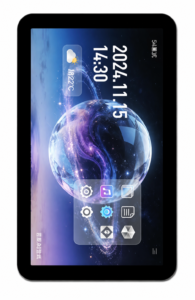
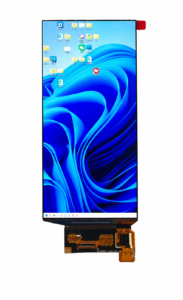
Talk to RJY’s engineering team for display matching, controller board review, and customization discussion.