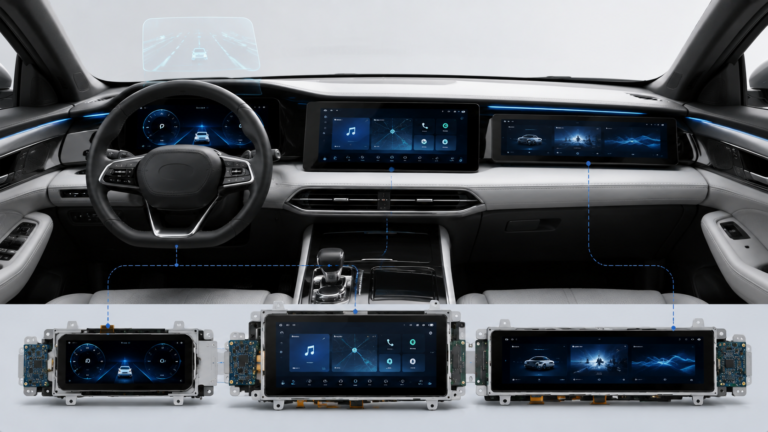
Facing a bottleneck in your Embedded Display Project?
Don’t let complex integration or supply chain issues slow your time-to-market. Book a free consultation with the RJY expert team for tailored design and manufacturing support.

In a world where displays dominate everything from smartphones and laptops to industrial equipment and automotive dashboards, it can be tempting to save money by choosing the cheapest option available. After all, an LCD is just a screen, right? Unfortunately, the truth is far more complex.While low-cost LCD displays may seem appealing upfront, they often come with hidden trade-offs that affect not only the user experience but also the long-term reliability, safety, and overall cost of ownership. This article explores why cheap LCDs can be a risky choice, what problems commonly arise, and why investing in quality displays pays off in the long run.
The LCD (Liquid Crystal Display) market spans a huge range of products—everything from budget consumer panels used in toy electronics to high-performance industrial-grade modules designed for mission-critical applications.
Cheap LCD displays typically come from low-tier manufacturers that cut corners in:
At first glance, these may look acceptable. But as we’ll explore, the consequences surface quickly once they are in use.
Cheap LCDs often suffer from low resolution, poor color accuracy, and uneven backlighting. For applications such as:
These performance issues directly impact usability and trust in the device.
High-quality LCDs are designed for tens of thousands of operating hours. In contrast, low-cost displays often fail prematurely due to:
This leads to screen flickering, dead pixels, or complete display failure within months.
A less-discussed risk of cheap LCDs is safety. Poor electrical insulation, untested driver boards, and low-quality connectors increase the chance of:
In mission-critical environments like aviation, automotive, or medical equipment, this is simply unacceptable.
High-grade LCDs use IPS (In-Plane Switching) or advanced technologies to deliver wide viewing angles and strong sunlight readability. Cheap LCDs, often based on outdated TN panels, provide narrow angles where the image washes out or inverts.
This may not matter for a toy gadget but becomes disastrous for:
Professional LCD suppliers provide datasheets, driver support, and integration guidance. With cheap alternatives, engineers are often left guessing—facing:
This leads to costly engineering delays and system redesigns.
While upfront costs may seem attractive, the total cost of ownership (TCO) of a cheap LCD is usually higher:
In contrast, investing in a reliable LCD ensures longer life cycles, stable supply chains, and reduced maintenance costs.
Certain industries cannot afford compromises:
In these cases, opting for the cheapest display can expose companies to regulatory non-compliance, safety recalls, and massive financial losses.
To avoid the pitfalls of cheap LCDs, engineers and buyers should evaluate displays based on:
Although the initial cost of investing in a high-end LCD module is higher, the long-term benefits far outweigh the savings made by opting for cheaper alternatives, and you can benefit from ongoing technical support from a reputable manufacturer, thereby reducing hidden costs:
In industries where downtime costs thousands of dollars per hour, this investment is not just about quality—it’s about business sustainability.
Buying a cheap LCD display may seem like a bargain, but the hidden costs and risks tell a different story. Poor performance, reduced reliability, safety hazards, and lack of support make these displays unsuitable for most serious applications.
Whether you’re an engineer, product designer, or business decision-maker, investing in a high-quality LCD ensures long-term reliability, customer satisfaction, and brand credibility.
Share your display size, resolution, interface, brightness, touch requirement, controller board requirement, and application environment.
Continue reading related display technology guides and application references.
Talk to RJY’s engineering team for display matching, controller board review, and customization discussion.