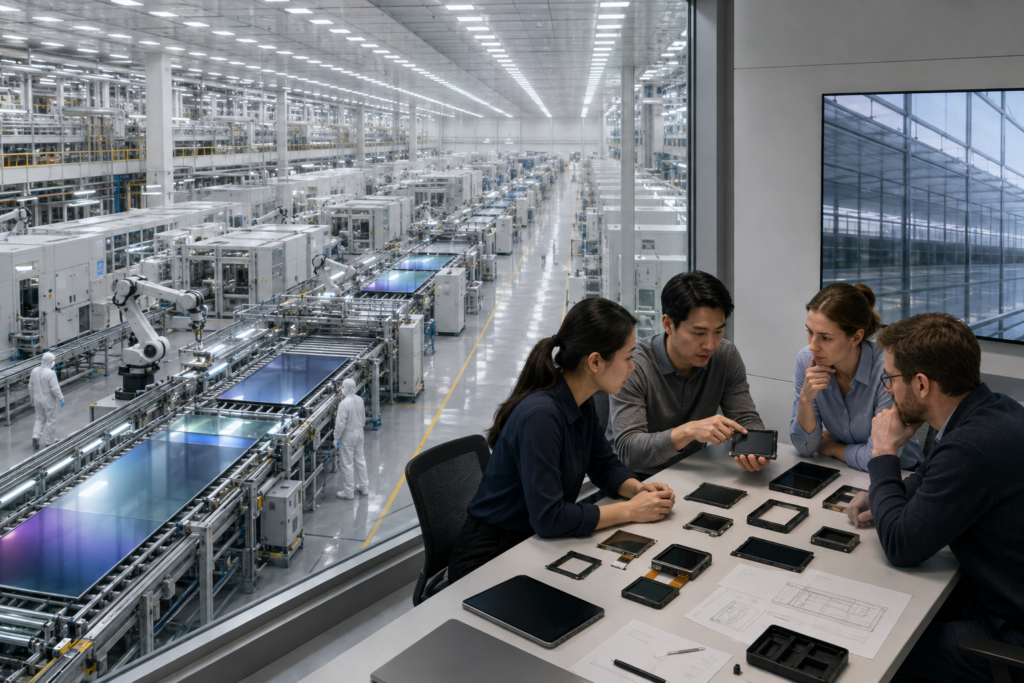
Die weltweit führenden Display-Hersteller verfügen über enorme Produktionskapazitäten, fortschrittliche Prozesstechnologien, umfangreiche Patentportfolios und Zugang zu großen Märkten der Unterhaltungselektronik. Für Fernseher, Smartphones, Laptops, Fahrzeuge und andere Produkte mit hohen Stückzahlen ist ihre Skalierung ein entscheidender Vorteil.
Doch dieser Vorteil macht einen erstklassigen Panelhersteller nicht automatisch zum besten Partner für jedes Displayprojekt.
Kleine und mittlere Unternehmen gehen oft mit einem anderen Anforderungsspektrum an den Markt. Sie benötigen möglicherweise Hunderte oder Tausende von Displays statt Millionen. Sie benötigen möglicherweise ein modifiziertes Abdeckglas, eine andere Hintergrundbeleuchtung, eine ungewöhnliche FPC-Richtung, Touch-Integration, eine Controller-Platine, Firmware-Anpassungen oder Unterstützung bei der Integration eines vorhandenen LCDs in ein neues Gehäuse.
Diese Anforderungen können für den Geräteentwickler wirtschaftlich bedeutsam sein, bleiben jedoch für das standardisierte Betriebsmodell eines großen Panelherstellers zu klein, zu fragmentiert oder zu engineering-intensiv.
Dies erzeugt ein Paradoxon im Zentrum der Display-Branche. Skalierung macht fortschrittliche Displays erschwinglich und breit verfügbar, aber die organisatorischen Systeme, die zur Erreichung dieser Skalierung erforderlich sind, können die Unterstützung von Differenzierung bei geringen Stückzahlen erschweren. Je effizienter ein Hersteller auf standardisierte Produktion optimiert ist, desto unattraktiver kann ein kleines, stark individualisiertes Projekt werden.
Dies bedeutet nicht, dass führende LCD-Marken technisch nicht in der Lage sind, kleinere Unternehmen zu unterstützen. Es bedeutet, dass ihre Fabriken, Vertriebsstrukturen, Entwicklungsprioritäten und Renditeanforderungen möglicherweise nicht mit der Wirtschaftlichkeit eines KMU-Projekts übereinstimmen. Das Verständnis dieser Unterscheidung hilft Start-ups, F&E-Teams und Geräteherstellern, den richtigen Typ von Display-Partner zu wählen.
Die wichtige Unterscheidung: Panelhersteller, Modullieferant und Lösungspartner
Der Begriff “LCD-Hersteller” wird im Markt lose verwendet, kann jedoch mehrere sehr unterschiedliche Rollen beschreiben.
Ein Panelhersteller betreibt die hochgradig kapitalintensiven Produktionsprozesse, die Display-Panels erzeugen. Seine Arbeit kann Dünnschichttransistor-Arrays, Farbfilter, Flüssigkristallzellen, OLED-Strukturen, Schneiden, Testen und andere Prozesse im industriellen Maßstab umfassen.
Ein Modullieferant arbeitet näher an der gebrauchsfertigen Display-Baugruppe. Je nach Umfang kann er ein Panel mit einer Treiberanordnung, Hintergrundbeleuchtung, Rahmen, FPC, Steckverbinder, Touchpanel, Abdeckglas oder anderen Integrationselementen kombinieren.
Ein Display-Lösungspartner arbeitet noch näher am Endprodukt des Kunden. Er kann dabei helfen zu bewerten, ob ein vorhandenes Modul in das Gehäuse passt, ob die Host-Schnittstelle geeignet ist, ob eine Controller-Platine erforderlich ist, wie Touch integriert werden sollte oder wie FPC und mechanische Struktur koordiniert werden sollten.
Ein Unternehmen kann über mehr als eine dieser Ebenen hinweg tätig sein. Mehrere große Display-Konzerne haben sich über die Panelproduktion hinaus erweitert und bewerben nun integrierte Systeme, vertikale Marktanwendungen und displayzentrierte Lösungen. AUO beispielsweise beschreibt eine Transformation vom Panel-Lieferanten hin zu einem displayzentrierten Lösungspartner, der Display, Mobilität und vertikale Lösungen umfasst.1
Dennoch kann der kommerzielle Weg, der einem globalen Automobilkunden oder einer großen Marke der Unterhaltungselektronik offensteht, sich stark von dem Weg unterscheiden, der einem Start-up bei seiner ersten Produktionscharge zur Verfügung steht.
Der Käufer sollte daher mehr fragen als: “Wer hat das Panel hergestellt?” Eine nützlichere Frage ist: “Wer übernimmt die Verantwortung dafür, dass dieses Panel in meinem Produkt funktioniert?”
Warum Skalierung in der Display-Branche so wirkungsvoll ist
Die moderne Display-Produktion belohnt Skalierung. Große Fabrikationsanlagen, spezialisierte Ausrüstung, Prozesskontrolle, Materialbeschaffung, Ausbeutemanagement und Forschungsprogramme erfordern erhebliche Investitionen. Hohe Produktionsvolumina ermöglichen es, diese Fixkosten auf mehr Panels zu verteilen.
Skalierung kann mehrere Vorteile bieten:
- Niedrigere Stückkosten für etablierte Produkte mit hohen Stückzahlen
- Reifere Prozesskontrolle und Fertigungsdaten
- Zugang zu fortschrittlichen Display-Technologien
- Große Forschungs- und Schutzrecht-Portfolios
- Kapazität zur Bedienung globaler Programme der Unterhaltungselektronik
- Starke Verhandlungsmacht innerhalb der vorgelagerten Lieferkette
Die Unternehmensgeschichte von BOE veranschaulicht die Größenordnung dieses Modells. Das Unternehmen beschreibt den Bau und die Massenproduktion mehrerer Hochgenerations-TFT-LCD-Produktionslinien und meldet bis 2025 mehr als 100.000 eigenständig eingereichte Patentanmeldungen.2
Die jüngste Strategie von LG Display betont ebenfalls eine OLED-zentrierte Unternehmensstruktur und einen größeren Anteil an Premiumprodukten. Laut der Ergebnisbekanntgabe des Unternehmens machten OLED-Produkte im zweiten Quartal 2025 56 % des Umsatzes aus.3
Dies sind rationale Strategien für Unternehmen, die große Kapitalinvestitionen verwalten. Eine Produktionslinie kann nicht so betrieben werden, als wäre jede Bestellung ein Laborexperiment. Materialien, Anlagenzeit, technische Ressourcen, Qualitätssysteme und Kundenprogramme müssen auf Chancen ausgerichtet werden, die eine angemessene Rendite erzielen können.
Aus der Perspektive des Großherstellers ist Standardisierung kein Mangel an Kundenorientierung. Sie ist einer der Mechanismen, die die Display-Branche wirtschaftlich möglich machen.
Das erste Paradoxon: KMU benötigen Differenzierung, aber Skalierung belohnt Standardisierung
Viele kleinere Gerätemarken können nicht über Fertigungsvolumen konkurrieren. Sie konkurrieren, indem sie engere Märkte bedienen, spezialisierte Probleme lösen, schnell handeln oder ein Produkterlebnis schaffen, das große Marken übersehen haben.
Das Display ist oft zentral für diese Differenzierung. Ein Smart-Home-Unternehmen benötigt möglicherweise ein rundes Frontpanel. Ein Entwickler von Laborgeräten benötigt möglicherweise einen kompakten Bildschirm, der in ein vorhandenes Instrument integriert ist. Ein Hersteller von Sicherheitsgeräten benötigt möglicherweise ein schmales Statusdisplay. Ein Hospitality-Start-up wünscht möglicherweise ein markantes Abdeckglas und eine individualisierte Schnittstelle.
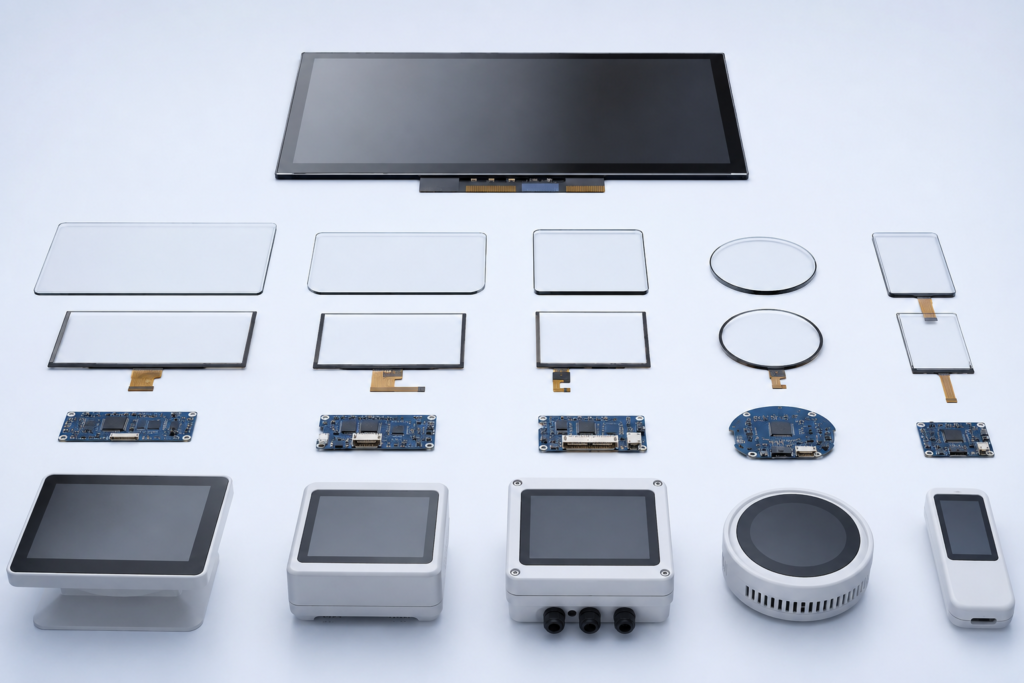
Für den KMU sind diese Details nicht rein kosmetischer Natur. Sie können darüber entscheiden, ob das Produkt in sein Gehäuse passt, seinen Wert kommuniziert oder sich ausreichend von konkurrierenden Geräten unterscheidet.
Für einen großflächigen Panel-Hersteller kann jedoch jede Abweichung Komplexität erzeugen:
- Eine separate technische Prüfung
- Neue Zeichnungen und Dokumentationen
- Zusätzliche Material- oder Komponentenqualifizierung
- Änderungen an Werkzeugen oder Produktionsprozessen
- Unterschiedliche Prüfanforderungen
- Getrennte Lagerhaltung und Bedarfsplanung
- Mehr Kommunikationsaufwand im Projektmanagement
Wenn die erwartete Bestellmenge gering ist, kann der Umsatz diese Komplexität nicht rechtfertigen. Der Hersteller bietet möglicherweise nur seinen bestehenden Standardkatalog an, verlangt eine hohe Mindestbestellmenge, leitet den Käufer an einen Distributor weiter oder lehnt das Projekt ab.
Das Ergebnis ist ein grundlegender Missstand: Das KMU benötigt Individualisierung, weil ihm Skaleneffekte fehlen, während der Großhersteller erst Skaleneffekte benötigt, bevor Individualisierung wirtschaftlich attraktiv wird.
Das zweite Paradoxon: KMU benötigen Flexibilität, bevor ihre Nachfrage planbar ist
Ein ausgereiftes globales Produktprogramm kann detaillierte Prognosen, genehmigte Spezifikationen, definierte Produktionsstandorte, validierte Firmware und einen mehrjährigen Einkaufsplan vorweisen. Ein neues KMU-Projekt beginnt oft mit Unsicherheit.
Der Entwickler entscheidet möglicherweise noch:
- Welche Displaygröße zum Industriedesign passt
- Ob das Produkt Touch benötigt
- Welcher Prozessor oder welches Betriebssystem verwendet werden soll
- Wie viel Helligkeit die Umgebung erfordert
- Ob die Schnittstelle MIPI, LVDS, eDP, RGB oder eine andere Option sein soll
- Wie Kunden auf den ersten Prototypen reagieren werden
- Wie hoch die Produktionsmenge im ersten Jahr sein wird
Genau dann hat technische Unterstützung den größten Wert. Genau dann sind Einkaufsprognosen am wenigsten zuverlässig.
Ein Großhersteller möchte möglicherweise zu Recht Prognosesicherheit, bevor er technische Ressourcen zuweist. Der KMU benötigt technische Ressourcen, um das Produkt zu entwickeln, das möglicherweise irgendwann eine zuverlässige Prognose erzeugt. Jede Partei wartet auf Nachweise, die die andere Partei noch nicht liefern kann.
Ein flexiblerer Modul- oder Lösungslieferant kann diese Lücke manchmal überbrücken, indem er von einer bestehenden Display-Plattform ausgeht, eine Musterkonfiguration aufbaut und die technische Unsicherheit eingrenzt, bevor Verpflichtungen für die Massenproduktion eingegangen werden.
Dies beseitigt nicht das kommerzielle Risiko. Es teilt das Risiko in kleinere und besser handhabbare Entscheidungen auf.
Das dritte Paradoxon: KMU wünschen niedrigere Mindestabnahmemengen, aber mehr technische Betreuung
Bestellmenge und technischer Arbeitsaufwand bewegen sich nicht immer in dieselbe Richtung.
Ein kleines Unternehmen bestellt möglicherweise nur 500 kundenspezifische Displays, benötigt jedoch mehrere Gespräche über Deckglas, FPC, Touch-Controller, Host-Prozessor, Hintergrundbeleuchtung, Firmware, Gehäuse und Musterverhalten. Ein Großkunde, der Hunderttausende Einheiten bestellt, hat möglicherweise größere Gesamtanforderungen, verfügt jedoch möglicherweise auch über eine eigene technische Organisation und etablierte Spezifikationen.
Aus Sicht des Lieferanten kann das kleinere Projekt mehr Kommunikation pro verkaufter Einheit erfordern.
Deshalb sollte eine niedrige Mindestbestellmenge nicht als einfacher Akt der Großzügigkeit verstanden werden. Es ist ein wirtschaftliches Modell, das Folgendes berücksichtigen muss:
- Technische Prüfzeit
- Einmalige Entwicklungsarbeit
- Mustererstellung
- Beschaffungsbeschränkungen für Komponenten
- Anforderungen an Werkzeuge oder Vorrichtungen
- Einrichtung der Produktionslinie
- Prüfung und Dokumentation
- Risiko, dass das Projekt nie in Serienproduktion geht
Ein ernsthafter KMU-Käufer sollte nicht erwarten, dass umfangreiche kundenspezifische Anpassungen wie ein Standardbauteil bepreist werden. Das eigentliche Ziel ist nicht “kundenspezifische Anpassung ohne Kosten”. Es ist eine Entwicklungsstruktur, in der die Kosten sichtbar, verhältnismäßig und mit der Gelegenheit vereinbar sind.
Die kundenspezifischen Projekte von RJY Display starten typischerweise mit einer Mindestbestellmenge von etwa 500 Einheiten, abhängig vom Modul, dem Anpassungsumfang, den Materialien und den Projektanforderungen. Dies ist keine universelle Verpflichtung für jede Konfiguration, veranschaulicht jedoch ein Geschäftsmodell, das zwischen einmaliger Hobby-Versorgung und Massenmarkt-Panel-Produktion positioniert ist.
Warum eine bekannte Panelmarke keine vollständige Produktlösung garantiert
KMU-Käufer gehen manchmal davon aus, dass der Bezug eines Panels von einer führenden Marke die meisten ihrer Display-Entwicklungsrisiken löst. Die Herkunft des Panels ist wichtig, beantwortet jedoch nicht jede Integrationsfrage.
Das Endprodukt kann dennoch Entscheidungen erfordern zu:
- Design und Leistung der Hintergrundbeleuchtung
- FPC-Layout und Steckverbinderposition
- Display-Timing und Initialisierung
- Auswahl des Touch-Panels
- Touch-Controller-Kommunikation
- Form und Bedruckung des Deckglases
- Optische und mechanische Montage
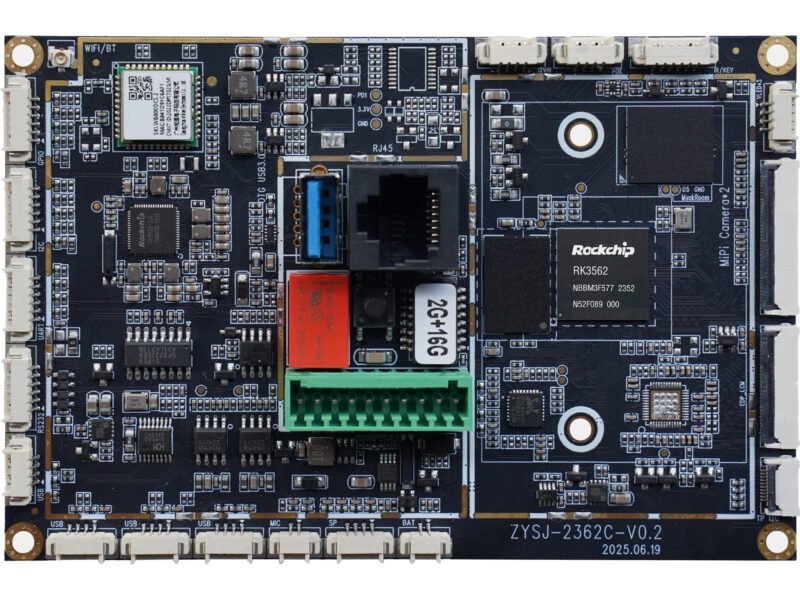
- Kompatibilität der Controller-Platine
- Firmware- oder Betriebssystemverhalten
- Gehäusetoleranzen und Montage
Ein Panel kann technisch exzellent sein und dennoch schwierig in einem bestimmten Produkt zu verwenden sein. Das Problem hat möglicherweise nichts mit der Panel-Qualität zu tun. Die Schnittstelle passt möglicherweise nicht zum Host, die FPC tritt möglicherweise in die falsche Richtung aus, der aktive Bereich passt möglicherweise nicht zum Gehäuse, oder die verfügbare Controller-Platine unterstützt möglicherweise nicht das erforderliche Timing.
Dies sind Probleme der Modul- und Systemintegration und nicht der Panel-Herstellung.
Dies erklärt, warum ein Lieferant mit geringerer globaler Markenbekanntheit manchmal einen größeren praktischen Nutzen für ein KMU-Projekt schaffen kann. Der kleinere Lieferant produziert nicht unbedingt ein fortschrittlicheres Panel. Er arbeitet möglicherweise einfach auf der Ebene, auf der die tatsächlichen Probleme des Kunden auftreten.
Individualisierung ist nicht eine einzige Sache
Käufer fragen häufig nach einem “kundenspezifischen LCD”, ohne zwischen mehreren sehr unterschiedlichen Ebenen der Individualisierung zu unterscheiden.
Ebene 1: Auswahl eines anderen Standardmoduls
Die Option mit dem geringsten Risiko kann darin bestehen, ein vorhandenes Modul zu identifizieren, dessen Größe, Auflösung, Schnittstelle, Helligkeit, Blickrichtung und Temperaturanforderungen bereits zum Produkt passen. Es ist keine physische Änderung erforderlich.
Ebene 2: Individualisierung von Komponenten rund um ein vorhandenes LCD
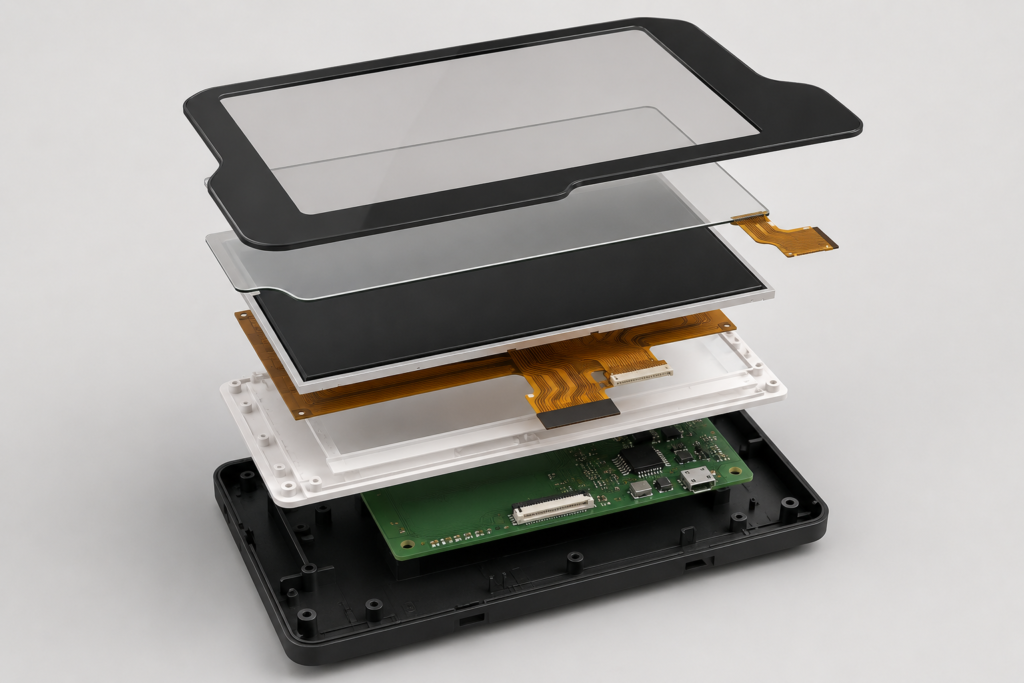
Das Kerndisplay bleibt unverändert, aber der Lieferant modifiziert die umgebende Baugruppe. Mögliche Elemente umfassen das Abdeckglas, das Touchpanel, die Hintergrundbeleuchtung, den FPC, die Steckerverbindungsanordnung, die Controller-Platine, die Firmware oder die zugehörige mechanische Struktur.
Dies ist für KMU-Projekte oft die praktischste Ebene, da sie eine sinnvolle Produktdifferenzierung ermöglicht, ohne einen vollständig neuen Display-Panel-Prozess zu erfordern.
Ebene 3: Modifikation der Modularchitektur
Umfangreichere Änderungen können mehrere Komponenten betreffen oder neue Werkzeuge und Validierungen erfordern. Die Machbarkeit hängt vom ausgewählten Panel, verfügbaren Materialien, Produktionsmenge, Zeitplan und technischem Risiko ab.
Ebene 4: Entwicklung eines vollständig neuen LCD-Panels
Eine neue aktive Fläche, Zellkonstruktion, Pixelstruktur, Treiberanordnung oder Panel-Geometrie ist ein grundlegend anderes Vorhaben. Es kann erhebliche nicht wiederkehrende Kosten, hohe Mengenerwartungen, lange Entwicklungsarbeiten und prozessspezifische Machbarkeitsbeschränkungen mit sich bringen.
Viele KMU benötigen tatsächlich keine Ebene 4. Sie benötigen Ebene 2, die klar dargestellt und kompetent umgesetzt wird.
Die Verwechslung dieser Ebenen führt zu einer schlechten Lieferantenauswahl. Ein Käufer kann eine praktische Lösung mit vorhandenem Modul ablehnen, weil sie nicht “vollständig kundenspezifisch” klingt, oder sich mit einem Projekt an eine Panel-Fabrik wenden, das besser durch Anpassung von Abdeckglas, Touch, Schnittstelle und Mechanik bedient würde.
Wo KMU üblicherweise Differenzierung benötigen
Für viele Geräteentwickler erfolgt die sichtbare Produktdifferenzierung oberhalb und rund um das LCD und nicht innerhalb der Flüssigkristallzelle.
Abdeckglas und Identität der Frontplatte
Abdeckglas kann die scheinbare Form der Schnittstelle, das Rahmen-Design, die Markenpräsentation, Öffnungspositionen und die Integration in das Gehäuse beeinflussen. Ein standardmäßiges rechteckiges LCD kann ein unverwechselbares Produkterscheinungsbild unterstützen, wenn die Frontplatte gut gestaltet ist.
Das genaue Glasmaterial, die Dicke, die Oberflächenbehandlung, die Härte, der Druck und die Verbindungsmethode müssen für das Projekt bestätigt werden. Diese Eigenschaften sollten niemals aus dem Begriff “kundenspezifisches Abdeckglas” abgeleitet werden.”
Touchscreen-Konfiguration
Touch kann physische Bedienelemente ersetzen und ermöglicht, dass eine Hardware-Plattform mehrere Schnittstellen unterstützt. Der Touch-Sensor, der Controller, das Abdeckglas, die Firmware, das Betriebssystem, die Erdung, das Gehäuse und die Einsatzumgebung beeinflussen jedoch das Endergebnis.
Touch-Individualisierung ist daher eine Systemintegrationsaufgabe und nicht einfach eine Option, die zu einer LCD-Teilenummer hinzugefügt wird.
Helligkeit und Hintergrundbeleuchtung
Ein Display, das in einer kontrollierten Innenumgebung verwendet wird, hat andere Sichtbarkeitsanforderungen als eines, das in der Nähe eines Fensters oder in beleuchteter Ausrüstung installiert ist. Eine Anpassung der Hintergrundbeleuchtung kann dazu beitragen, dass ein Modul besser zu seiner Umgebung passt, aber Helligkeit, Leistung, Wärme, optischer Aufbau und erwarteter Betrieb müssen gemeinsam geprüft werden.
FPC- und Schnittstellenkoordination
Die Position und Richtung eines flexiblen Kabels kann bestimmen, ob ein Display in ein kompaktes Gehäuse passt. Die Schnittstellenauswahl beeinflusst auch die Prozessorwahl, Anforderungen an die Controller-Platine, Signalintegrität, Firmware und Kabeldesign.
Controller-Platine und Firmware
Ein KMU kann ein ausgewähltes LCD haben, aber keinen direkten Weg, es von seinem bevorzugten Host aus anzusteuern. Ein Controller-Platinen-Projekt erfordert mehr als nur die Abstimmung der Steckertypen. Panel-Modell, Auflösung, Schnittstelle, Pin-Definition, Timing, Treiber-IC sofern verfügbar, Hintergrundbeleuchtung, Touch, Betriebssystem, Firmware und Umgebung müssen geprüft werden, bevor die Kompatibilität bestätigt wird.
Mechanische Koordination
Eine Display-Baugruppe interagiert mit dem Rahmen, Befestigungspunkten, der Dichtung, Kabeln, dem thermischen Design, Tasten, Lautsprechern, Sensoren und dem Produktgehäuse. Displaybezogene mechanische Koordination kann späte Störungen verhindern, sollte aber nicht mit unbegrenztem Industriedesign oder vollständigen Gerätefertigungsdienstleistungen verwechselt werden.
Warum große Hersteller nicht einfach eine Abteilung mit kleinem Team schaffen können
Es mag scheinen, dass ein globaler Hersteller das KMU-Problem lösen könnte, indem er ein kleines Vertriebs- und Ingenieurteam für Konten mit geringeren Volumina einsetzt. Einige große Unternehmen und ihre Vertriebsnetze bieten bereits Programme an, die breitere Kundengruppen bedienen. Die organisatorische Größe kann jedoch nicht leicht von der Fertigungsgröße getrennt werden.
Eine Abteilung für kleine Projekte wäre weiterhin abhängig von den folgenden Aspekten des größeren Unternehmens:
- Zugelassene Materialien und Lieferanten
- Produktionsplanungsregeln
- Qualitätsmanagementverfahren
- Systeme für technische Änderungen
- Rechtliche und kommerzielle Prüfung
- Kundenqualifizierungsprozesse
- Mindestanforderungen an die wirtschaftliche Rendite
Das Konto mag klein sein, aber die Organisation, die es bearbeitet, bleibt groß.
Große Hersteller stehen auch vor einem Opportunitätskostenproblem. Ein Ingenieur, der an einem kundenspezifischen Modul mit geringem Volumen arbeitet, arbeitet nicht an einer globalen Automobilplattform, einem OLED-Produkt der nächsten Generation oder einem strategischen Unterhaltungselektronikprogramm. Das kleinere Projekt muss intern um begrenzte technische Aufmerksamkeit konkurrieren.
Dies ist besonders relevant, da große Display-Unternehmen Premium-Technologien und die Transformation vertikaler Märkte betonen. LG Display hat öffentlich seine OLED-zentrierte Struktur hervorgehoben, während AUO Strategien wie “Go Premium” und “Go Vertical” beschrieben hat, die darauf abzielen, den Wert der Display-Technologie zu erhöhen und vertikale Anwendungen zu vertiefen.4
Diese Strategien zeigen, dass führende Unternehmen die Grenzen undifferenzierter Panel-Produktion erkennen. Sie bedeuten jedoch nicht, dass jedes kleine OEM-Unternehmen direkt auf eine kundenspezifische Lösung mit denselben kommerziellen Bedingungen zugreifen kann wie ein strategischer Großvolumenkunde.
Die Rolle von Distributoren – und ihre Grenzen
Distributoren machen die Produkte großer Hersteller einem breiteren Kundenkreis zugänglich. Sie können lokale Lagerbestände, kleinere Bestellmengen, kommerzielle Unterstützung, Logistik und Zugang zu mehreren Marken bereitstellen.
Für ein KMU, das ein Standarddisplay sucht, kann ein Distributor die richtige Wahl sein. Der Kunde kann verfügbare Module vergleichen, Muster kaufen und direkte Mindestmengen der Fabrik vermeiden.
Die Distribution wird weniger vollständig, wenn das Projekt Änderungen über das Katalogprodukt hinaus erfordert. Nicht jeder Distributor kann eine kundenspezifische Hintergrundbeleuchtung entwickeln, Touch und Abdeckglas koordinieren, einen FPC modifizieren, Firmware anpassen oder die Verantwortung für eine Display-Controller-Kombination übernehmen.
Der Unterschied liegt nicht zwischen “guter Fabrik” und “schlechtem Distributor”. Er liegt zwischen transaktionaler Verfügbarkeit und technischer Verantwortlichkeit.
Ein nützlicher Lieferantenauswahlprozess fragt:
- Kann der Lieferant nur das Standardteil verkaufen?
- Kann er genaue Panel-Dokumentationen beschaffen?
- Kann er erklären, was modifiziert werden kann und was nicht?
- Kann es die Anforderungen an Touch, Controller, Firmware und Mechanik koordinieren?
- Wer ist für die technische Prüfung verantwortlich, wenn das Gesamtsystem nicht funktioniert?
Ein Distributor kann Teil der Lieferkette bleiben, während ein spezialisierter Lösungspartner die Integration übernimmt. Die geeignete Struktur hängt vom Projekt ab.
Die mittlere Ebene: Warum spezialisierte Display-Lieferanten existieren
Die Kluft zwischen der Großserienproduktion von Panels und der Entwicklung kleiner Geräte schafft einen Markt für spezialisierte Display-Anbieter.
Diese Anbieter versuchen in der Regel nicht, den Kapitalumfang oder die fortgeschrittene Prozessentwicklung eines großen Panel-Herstellers zu reproduzieren. Ihr Wert ergibt sich aus der Kombination bestehender Display-Technologie mit einem flexibleren kommerziellen und technischen Geschäftsmodell.
Ein spezialisierter Anbieter kann auf folgende Weise Mehrwert schaffen:
- Durch die Suche über bestehende Module hinweg nach einer möglichst passenden Lösung
- Durch die Unterstützung der Evaluierung in der Musterphase
- Durch die Bündelung der Nachfrage nach Panels und Komponenten
- Durch die Individualisierung ausgewählter Teile der Modulmontage
- Durch die Koordinierung externer Ressourcen für Touch, Cover-Glas oder Platinen
- Durch die Kommunikation mit dem Entwicklungsteam eines kleineren Kunden
- Durch die Steuerung des Übergangs vom Prototyp zur Serienproduktion
Diese Rolle wird manchmal fälschlich als bloßer Weiterverkauf verstanden. Ein Anbieter, der lediglich Teilenummern weiterleitet, erfüllt tatsächlich nur eine begrenzte kommerzielle Funktion. Ein leistungsfähiger Modul- oder Lösungsanbieter übernimmt technische Auswahl, Integrationskoordination, Risikoklärung und Projektmanagement rund um das Kerndisplay.

Der Wert dieser mittleren Ebene steigt, je spezialisierter das Produkt des Kunden wird und je begrenzter dessen interne Display-Kompetenz ist.
Individualisierung auf Basis vorhandener Module: Eine praktische KMU-Strategie
Für viele KMU besteht die stärkste Produktentwicklungsstrategie nicht darin, ein neues Panel zu entwickeln. Sie besteht darin, mit einem geeigneten bestehenden Modul zu beginnen und die Investitionen auf die Elemente zu konzentrieren, die Kunden sehen, nutzen oder von denen sie abhängig sind.
Dieser Ansatz bietet mehrere Vorteile.
Er reduziert die technische Unsicherheit.
Eine bestehende Panel-Plattform verfügt bereits über eine definierte aktive Fläche, Auflösung, Schnittstelle, Treiberarchitektur und physische Abmessungen. Das Projekt startet mit mehr bekannten Informationen als eine vollständig neue Display-Entwicklung.
Er hält die Differenzierung fokussiert.
Das Unternehmen kann in Cover-Glas, Touch-Verhalten, Schnittstellendesign, Gehäuse, Firmware, Anwendungssoftware und das gesamte Produkterlebnis investieren, anstatt den Großteil des Budgets für die Nachbildung von Display-Technologie auszugeben.
Er macht die Bemusterung realistischer.
Ein Prototyp auf Basis des vorgesehenen Moduls liefert bessere Nachweise hinsichtlich mechanischer Passung, Lesbarkeit, Schnittstellenleistung und Benutzererfahrung als ein generischer Entwicklungsbildschirm, der später ersetzt werden müsste.
Er schafft einen klareren Weg zur Produktion.
Das Projekt erfordert weiterhin Validierung und Lieferplanung, aber zwischen Prototyp- und Produktionsphase müssen weniger grundlegende Elemente geändert werden.
Er kann die Entwicklungskosten besser steuerbar machen.
Der Kunde kann Standardkomponentenkosten von nicht wiederkehrenden Individualisierungsarbeiten trennen. Dies garantiert keine niedrigen Gesamtkosten, macht aber die Kostenquellen leichter verständlich und steuerbar.
Es gibt Grenzen. Das verfügbare Modul entspricht möglicherweise nicht jeder gewünschten Abmessung, Auflösung, Schnittstelle oder optischen Anforderung. Der Käufer muss bereit sein, das Industriedesign anzupassen, wenn die Kosten einer perfekten Display-Geometrie den dadurch geschaffenen Wert übersteigen.
Standardisierung und Differenzierung sind keine Gegensätze
KMU befürchten manchmal, dass die Verwendung eines bestehenden Display-Moduls ihr Produkt generisch wirken lässt. Dies setzt voraus, dass die Produktidentität in erster Linie aus der verborgenen Herkunft des LCD-Panels stammt.
In der Praxis interagieren Kunden mit einem Gesamtsystem. Sie sehen:
- Die Form und Oberfläche der Frontblende
- Das Verhältnis des Bildschirms zum Gehäuse
- Die grafische Benutzeroberfläche
- Die Reaktionsfähigkeit der Touch-Funktion
- Die Qualität von Animationen und Übergängen
- Die Montage- und mechanischen Details
- Die durch die Software ermöglichten Funktionen
- Die Konsistenz des gesamten Produkterlebnisses
Zwei Produkte können verwandte Display-Technologie verwenden und sich dennoch völlig unterschiedlich anfühlen.
Dies deutet auf ein effizienteres Innovationsmodell hin: Standardisieren Sie die Komponentenebenen, die der Kunde nicht unterscheiden muss, und differenzieren Sie die Ebenen, die Nutzung, Integration und Markenidentität beeinflussen.
Ein intelligentes Bedienfeld benötigt möglicherweise keine einzigartige Flüssigkristallzelle. Es benötigt möglicherweise ein geformtes Cover-Glas, eine reaktionsschnelle Touch-Oberfläche, ein sorgfältig proportionertes Gehäuse und eine Software, die für seinen spezifischen Arbeitsablauf entwickelt wurde.
Das ist kein Kompromiss bei der Innovation. Es ist die Zuweisung begrenzter Entwicklungsressourcen auf die Teile des Produkts, die den größten Wert schaffen.
Wann ein KMU direkt einen großen Panelhersteller kontaktieren sollte
Ein spezialisierter Anbieter ist nicht immer die richtige Antwort. Eine direkte Zusammenarbeit mit einem großen Panel-Hersteller kann geeignet sein, wenn das Projekt Merkmale wie folgende aufweist:
- Sehr hohe und glaubwürdige Jahresnachfrage
- Ein mehrjähriger Plattformplan
- Anforderungen im Zusammenhang mit fortschrittlicher Panel-Technologie
- Starke interne Display-Engineering-Ressourcen
- Eine klare Spezifikation, die voraussichtlich unverändert bleibt
- Kommerzielle Kapazität zur Unterstützung von Werkzeug- und Entwicklungskosten
- Qualifizierungsprozesse, die für ein strategisches Programm geeignet sind
Ein großes Programm im Bereich Unterhaltungselektronik, Fahrzeuge, Notebooks oder Fernseher kann direkt von der Größe, Prozesstiefe, Technologie-Roadmap und langfristigen Kapazitätsplanung eines führenden Panel-Unternehmens profitieren.
Ein KMU kann ebenfalls strategisch wichtig werden, wenn seine Anwendung Zugang zu einem neuen Markt oder einer Technologie bietet, die der Hersteller entwickeln möchte. Allein die Unternehmensgröße bestimmt nicht, ob eine direkte Zusammenarbeit möglich ist.
Der Schlüssel liegt in der Übereinstimmung. Wenn die Gelegenheit zur Technologie-Roadmap, den Umsatzerwartungen und den Ressourcenprioritäten des Herstellers passt, kann auch ein kleineres Unternehmen ein wertvoller Partner werden.
Wann ein spezialisierter Modul- oder Lösungslieferant besser geeignet ist
Ein spezialisierter Lieferant ist in der Regel dann relevanter, wenn das Projekt Folgendes benötigt:
- Auswahl aus bestehenden kompakten TFT-LCD-Modulen
- Moderates Produktionsvolumen
- Technische Kommunikation in der Musterphase
- Kundenspezifisches Coverglas oder Touchscreen-Integration
- Anpassung von Hintergrundbeleuchtung, FPC oder Schnittstelle
- Eine Controller-Platine, die auf das ausgewählte Panel abgestimmt ist
- Firmware-Koordination
- Displaybezogene mechanische Unterstützung
- Ein praktikabler Übergang vom Prototyp zur Serienproduktion
Der Kunde sollte den Lieferanten dennoch sorgfältig bewerten. Flexibilität ohne technische Disziplin kann zu inkonsistenter Dokumentation, unklarer Verantwortlichkeit oder schlecht kontrollierten Änderungen führen.
Ein glaubwürdiger Lieferant sollte seine Grenzen klar benennen. Er sollte Standardprodukte von kundenspezifischen Arbeiten unterscheiden, angeben, wann eine Schlussfolgerung das tatsächliche Panel-Datenblatt erfordert, keine universelle Controller-Platinen-Kompatibilität behaupten und klären, ob die Entwicklung auf einem bestehenden Modul basiert.
Ein Lieferant, der bereit ist zu sagen “dies muss verifiziert werden”, kann nützlicher sein als einer, der verspricht, dass jede Anfrage einfach sei.
Wie KMU einen Lieferanten bewerten sollten Kundenspezifischen Displays Lieferant
1. Fragen Sie, wo die Individualisierung stattfindet
Schlägt der Lieferant ein neues Panel, ein modifiziertes Modul oder eine Individualisierung rund um ein bestehendes Display vor? Die Antwort bestimmt Kosten, Risiko, Mindestbestellmenge und Entwicklungszeit.
2. Fragen Sie, welche Informationen benötigt werden, bevor die Machbarkeit bestätigt werden kann
Eine seriöse technische Prüfung sollte Zielgröße, Auflösung, Schnittstelle, Helligkeit, Touch, Umgebung, Gehäusebeschränkungen, Mustermenge und erwarteten Produktionsbedarf anfordern.
Für Controller-Platinen-Arbeiten sind auch Panelmodell, Datenblatt, Pin-Definition, Hintergrundbeleuchtung, Touch-Schnittstelle, Firmware, Betriebssystem und Eingangsanforderungen wichtig.
3. Trennen Sie verifizierte Fakten von Vorschlägen
Ein vorgeschlagener Helligkeitszielwert ist kein verifiziertes Ergebnis. Ein geplanter Controller-Pfad ist keine bestätigte Kompatibilität. Ein konzeptionelles Gehäuse ist keine produktionsreife Struktur. Der Lieferant sollte jede Phase korrekt kennzeichnen.
4. Prüfen Sie das Änderungsmanagement
Fragen Sie, wie Zeichnungen, Muster, Firmware-Versionen, freigegebene Materialien und Konfigurationsänderungen dokumentiert werden. Auch kleinere Projekte benötigen eine stabile Referenz, wenn sie in die Serienproduktion übergehen.
5. Bewerten Sie die Kommunikationsqualität
Schnelle Antworten sind nützlich, aber technische Klarheit ist wichtiger. Achten Sie auf Antworten, die Empfehlungen mit Display, Host, Gehäuse, Umgebung und Menge verbinden.
6. Vergleichen Sie die Gesamtprojektkosten
Der Stückpreis sollte zusammen mit Werkzeugkosten, Engineering-Gebühren, Musterrevisionen, Controller-Platinen, Kabeln, Softwarearbeiten, Installationsrisiko und möglichem Redesign betrachtet werden.
7. Testen Sie die tatsächliche Konfiguration
Genehmigen Sie die Produktion nicht ausschließlich auf Basis eines ähnlichen Moduls oder eines generischen Demonstrationsboards. Bewerten Sie das vorgesehene LCD, Touch, Coverglas, Controller, Firmware, Gehäuse und die Einsatzumgebung gemeinsam.
Was die Kluft zwischen Großherstellern und KMU für den Display-Markt bedeutet
Der Markt teilt sich nicht klar in “fortschrittliche Großhersteller” und “flexible kleine Lieferanten”. Stattdessen bewegen sich Unternehmen auf überlappende Ebenen zu.
Große Display-Gruppen expandieren in Premiumprodukte, integrierte Systeme, Mobilität, Einzelhandel und andere vertikale Lösungen. AUO Display Plus hat beispielsweise integrierte Einzelhandels-Displaylösungen gefördert, nicht nur einzelne Panels.5
Gleichzeitig bieten spezialisierte Modullieferanten Controller-Platinen, Touch-Baugruppen, Firmware-Koordination und mechanische Unterstützung an. Distributoren erweitern ihr Angebot um Designleistungen, während Gerätehersteller intern mehr Display-Kompetenz aufbauen.
Dies erzeugt Wettbewerb um die Eigentümerschaft der Integration. Der erfolgreiche Lieferant muss nicht das Unternehmen mit der größten Fabrik oder dem breitesten Katalog sein. Es kann das Unternehmen sein, das die Distanz zwischen einer Display-Spezifikation und einem funktionierenden Produkt verringern kann.
Für KMU ist dies positiv. Mehrere Lieferketten-Ebenen versuchen, Anwendungsprobleme zu lösen. Es macht die Lieferantenbewertung jedoch auch schwieriger, da das Wort “Lösung” alles von einem Standardmodul-Kit bis zu einer tief koordinierten Hardware-Plattform beschreiben kann.
Käufer müssen den tatsächlichen Umfang hinter der Marketing-Sprache prüfen.
Die strategische Chance für KMU
Der Größennachteil eines KMU kann zu einem Innovationsvorteil werden, wenn das Unternehmen seine Produktentwicklung intelligent organisiert.
Ein kleineres Team kann oft:
- Eine unterversorgte Gerätekategorie ansprechen
- Entscheidungen mit weniger Organisationsebenen treffen
- Eine spezialisierte Benutzeroberfläche schnell testen
- Ein bestehendes Modul kreativ anpassen
- Produktionsvolumen bedienen, die für eine globale Plattform zu klein sind
- Eng mit frühen Kunden zusammenarbeiten
- Sein Produkt ändern, bevor größere Kapitalbeträge gebunden werden
Das Ziel sollte nicht sein, das Einkaufsmodell eines multinationalen Unterhaltungselektronik-Unternehmens nachzuahmen. Es sollte darin bestehen, eine Lieferkette aufzubauen, die der Größe des KMU angemessen ist.
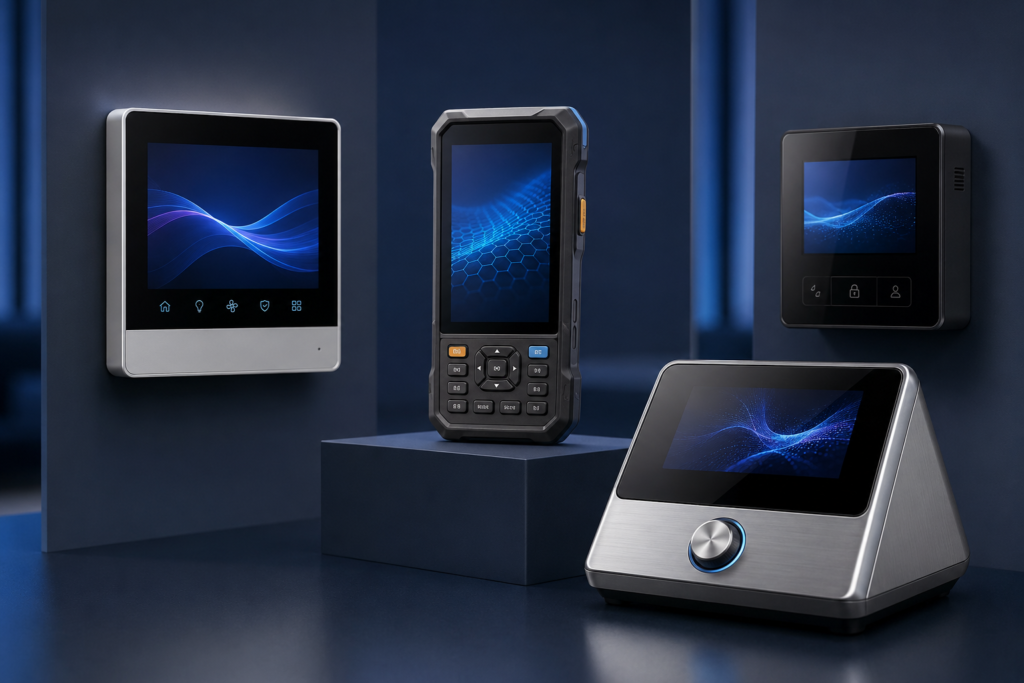
Dies kann ein Standardpanel eines führenden Herstellers, ein über einen anderen Lieferanten zusammengesetztes Modul, eine kundenspezifische Touch- und Abdeckscheibenlösung, eine projektspezifische Controller-Platine sowie ein vom Gerätehersteller entwickeltes Gehäuse umfassen.
Diese geschichtete Struktur ist nicht grundsätzlich ineffizient. Sie wird effizient, wenn Verantwortlichkeiten, Spezifikationen und Validierungspunkte klar definiert sind.
Wie RJY Display seine Rolle positioniert
RJY Display versucht nicht, die technologische Größenordnung der weltweit führenden Panelhersteller zu ersetzen. Die Rolle liegt näher an der technischen und Modulintegrationsebene, die von F&E-Teams, Start-ups und Geräteherstellern benötigt wird.
RJY unterstützt TFT-LCD-Produkte, Controller-Platinen und Individualisierungen, die hauptsächlich auf bestehenden Display-Modulen basieren. Abhängig vom ausgewählten Modul und Projektumfang kann die Unterstützung Folgendes umfassen:
- Auswahl des Display-Moduls
- Individualisierung der Abdeckscheibe
- Touchscreen-Konfiguration
- Anforderungen an Helligkeit und Hintergrundbeleuchtung
- FPC- und Schnittstellenanpassung
- Prüfung der Controller-Platine
- Firmware-Koordination
- Displaybezogene Gehäuse- und Mechanikkoordination
Dieser Umfang ist nicht als Fähigkeit zu verstehen, jede neue LCD-Größe von Grund auf zu entwickeln. Der praktische Ausgangspunkt ist in der Regel ein bestehendes Modul, dessen optische, elektrische und mechanische Kerneigenschaften den Produktanforderungen hinreichend nahekommen.
Individualisierungsprojekte beginnen in der Regel bei einer Mindestbestellmenge von etwa 500 Einheiten, abhängig vom Display, den Komponenten, dem technischen Aufwand und den Projektbedingungen. Standardmodule und Anforderungen in der Musterphase sollten separat besprochen werden.
Bei Controller-Platinen-Projekten wird die Kompatibilität erst nach Prüfung des tatsächlichen Panelmodells, der Auflösung, der Schnittstelle, der Pin-Definition, der Treiberinformationen (sofern verfügbar), der Hintergrundbeleuchtung, der Touch-Anforderungen, des Host-Eingangs, der Firmware bzw. des Betriebssystems sowie der Betriebsumgebung bestätigt.
Ein besserer Weg zur Vorbereitung eines KMU-Displayprojekts
Vor der Kontaktaufnahme mit einem Display-Lieferanten sollte ein Pflichtenheft erstellt werden, das wesentliche Anforderungen von Präferenzen unterscheidet.
Wesentliche Anforderungen
- Zielprodukt und Anwendung
- Verfügbarer Bauraum für das Display
- Erforderliche aktive Fläche oder minimale ablesbare Fläche
- Inhalt und Ausrichtung der Benutzeroberfläche
- Host-Prozessor und Betriebssystem
- Erforderliche Display- und Touch-Schnittstellen
- Installations- und Betriebsumgebung
- Erwartete Muster- und Produktionsmengen
Bevorzugte Anforderungen
- Exakte Diagonalgröße
- Bevorzugte Auflösung
- Form und Erscheinungsbild der Abdeckscheibe
- Steckverbinderposition
- Zielhelligkeit
- Gehäusekonzept
- Optionale Funktionen der Controller-Platine
Diese Trennung gibt dem Lieferanten Spielraum, ein bestehendes Modul zu identifizieren, das die Anwendung möglicherweise wirtschaftlicher löst. Wenn jede Abmessung vor der Modulauswahl als fest definiert behandelt wird, kann das Projekt unbeabsichtigt eine teure Neuentwicklung erfordern.
Fügen Sie, sofern verfügbar, eine Gehäusezeichnung, ein Konzeptbild, ein Referenzprodukt, ein Panel-Datenblatt oder ein Blockschaltbild bei. Visueller und technischer Kontext kann Missverständnisse beseitigen, die über eine kurze Spezifikationsliste nur schwer zu klären sind.
Fazit: Der beste Display-Partner ist derjenige, dessen Wirtschaftlichkeit zu Ihrem Projekt passt
Führende LCD-Marken scheitern bei KMU nicht wegen mangelnder Technologie, Fertigungsqualität oder Geschäftskompetenz. Die Diskrepanz entsteht, weil ihre größten Stärken – Skaleneffekte, Standardisierung, Prozesseffizienz und strategische Ressourcenallokation – nicht immer die Stärken sind, die ein kleineres Geräteprojekt am meisten benötigt.
Ein KMU benötigt möglicherweise einen Lieferanten, der bereit ist, eine Gelegenheit mit 500 Einheiten zu prüfen, mehrere bestehende Module zu vergleichen, eine Abdeckscheibe zu modifizieren, ein FPC anzupassen, einen Touch-Controller zu koordinieren, eine Host-Schnittstelle zu prüfen und das Gehäuse mit einem kleinen Entwicklungsteam zu besprechen.
Diese Aufgaben mögen im Vergleich zur Entwicklung einer nächsten Generation von OLED-Plattformen geringfügig erscheinen, doch sie können darüber entscheiden, ob das Produkt des KMU den Markt erreicht.
Die richtige Beschaffungsstrategie kombiniert daher die Stärken verschiedener Lieferkettenebenen. Große Panelhersteller bieten industriellen Maßstab und Kerntechnologie. Distributoren bieten Zugang und Logistik. Spezialisierte Display-Lieferanten helfen, bestehende Display-Technologie in projektspezifische Baugruppen zu übersetzen. Geräteentwickler tragen Anwendungswissen und das finale Produktdesign bei.
Differenzierung und Skaleneffekte schließen sich nicht gegenseitig aus, wenn sie auf unterschiedlichen Ebenen stattfinden. Das Panel kann standardisiert sein, während Touch, Abdeckscheibe, Schnittstelle, Controller, Firmware, Gehäuse und Benutzererfahrung darum herum angepasst werden.
Wenn Ihr Unternehmen ein eingebettetes Display-Produkt entwickelt und Unterstützung über den reinen Standardpanel-Kauf hinaus benötigt, prüfen Sie RJY kundenspezifische Display-Lösungen oder kontaktieren Sie RJY Display mit Ihren Anforderungen an Modul, Touch, Controller-Platine, Firmware und Mechanik.
Häufig gestellte Fragen
Warum verlangen große LCD-Hersteller oft hohe Bestellmengen?
Große Display-Hersteller betreiben kapitalintensive Produktionssysteme, die auf Skaleneffekte, Prozessstabilität und Großkundenprogramme optimiert sind. Kleine kundenspezifische Bestellungen können technischen, materiellen, produktionsplanerischen und administrativen Aufwand erfordern, der in keinem Verhältnis zu ihrem kommerziellen Wert steht. Die Anforderungen variieren je nach Hersteller und Produkt.
Bedeutet der Kauf bei einem kleineren Display-Lieferanten die Verwendung eines Panels geringerer Qualität?
Nein. Ein spezialisierter Lieferant kann Panels verwenden, die von etablierten Panelherstellern stammen, und zusätzlich Modulauswahl, Touch, Abdeckscheibe, Hintergrundbeleuchtung, FPC, Controller-Platine, Firmware oder mechanische Unterstützung hinzufügen. Panelherkunft und Integrationsfähigkeit sollten getrennt bewertet werden.
Kann ein KMU ein vollständig kundenspezifisches kundenspezifische TFT-LCD?
Das hängt davon ab, was “vollständig kundenspezifisch” bedeutet. Die Individualisierung von Abdeckscheibe, Touch, Hintergrundbeleuchtung, FPC, Schnittstelle, Controller-Platine, Firmware oder mechanischer Integration um ein bestehendes Modul ist oft praktikabel. Die Entwicklung einer vollständig neuen LCD-Panelgröße erfordert eine separate Machbarkeits-, Kosten-, Mengen- und Zeitplanbewertung.
Was ist die wirtschaftlichste Individualisierungsstrategie für ein KMU?
Für viele Projekte ist die wirtschaftlichste Strategie, ein bestehendes LCD-Modul auszuwählen, das die optischen und elektrischen Kernanforderungen erfüllt, und anschließend die benutzerorientierten und Integrationsschichten zu individualisieren. Dies reduziert die grundlegende Entwicklung und bewahrt gleichzeitig eine sinnvolle Produktdifferenzierung.
Wann sollte ein KMU direkt mit einem großen Panelhersteller zusammenarbeiten?
Eine direkte Zusammenarbeit kann angemessen sein, wenn das Projekt über ein substanzielles und glaubwürdiges Volumen, eine klare mehrjährige Roadmap, fortgeschrittene Anforderungen an die Panel-Technologie, starke interne technische Ressourcen sowie die kommerzielle Kapazität zur Unterstützung von Entwicklung und Qualifizierung verfügt.
Welche Informationen benötigt RJY zur Prüfung eines kundenspezifische Display- Projekts?
RJY benötigt in der Regel die Zielanwendung, Displaygröße, Auflösung, Schnittstelle, Helligkeit, Touch-Funktion, Abdeckglas, FPC, Hintergrundbeleuchtung, Host-Plattform, Anforderungen an Controller-Board oder Firmware, Betriebsumgebung, Gehäusebeschränkungen, Mustermenge, Jahresbedarf sowie den Projektzeitplan.
Referenzen
- AUO Corporation, Aktionärsbrief 2026: displayzentrierte Transformation und operative Säulen
- BOE Technology Group, Unternehmensgeschichte und Überblick
- LG Display, Ergebnisse des zweiten Quartals 2025
- AUO Corporation, Transformationsstrategie „Go Premium und Go Vertical“
- AUO Display Plus, Integrierte Smart-Retail-Display-Lösungen auf der ISE 2026