








1. The Reality of the TFT LCD Supply Chain
Before you send out a single Request for Quotation (RFQ), it is vital to understand the structure of the modern display industry. Not every company that calls itself a “TFT LCD display manufacturer” actually manufactures the core glass.
The Glass Makers vs. The Module Assemblers
The TFT LCD supply chain is heavily tiered:
- The Fab (Panel Makers): These are the multi-billion-dollar conglomerates operating massive cleanrooms (Gen 6, Gen 8, Gen 10 fabs). They produce the raw “motherglass” and the TFT backplane. They deal in millions of units and rarely entertain custom projects for mid-volume buyers.
- The LCD Module (LCM) Manufacturers: This is who you are likely looking for. A premium TFT LCD display manufacturer buys the “open cell” (the glass) from the fabs, and then engineers and manufactures the backlight unit (BLU), the driver circuitry (FPC/PCBA), the structural bezel, and integrates the touch panel.
Your goal is to find an LCM manufacturer that possesses flawless engineering capabilities, deep relationships with the glass fabs (to ensure supply stability), and the agility to customize the module to your precise specifications.
2. Quality Assurance: Beyond the ISO Certificate
In the Japanese and South Korean markets, “quality” is not a buzzword; it is a baseline expectation. A defect rate of 1% might be acceptable in cheap consumer toys, but in industrial automation, medical devices, or automotive applications, ppm (parts per million) failure rates must approach zero.
When auditing a potential TFT LCD display manufacturer, do not just look at the ISO 9001 certificate hanging in their lobby. You must dive into their Quality Management System (QMS).
A. The 8D Reporting Standard
Ask the manufacturer how they handle a field failure. A mature manufacturer will immediately provide an 8D (Eight Disciplines) Problem Solving report. This demonstrates that they don’t just replace a broken screen—they quarantine the batch, perform a root-cause analysis (e.g., finding out that a specific ACF bonding temperature was off by 2 degrees), and implement a permanent corrective action.
B. Reliability Testing Laboratories
A top-tier manufacturer does not guess how long their screens will last; they try to destroy them in controlled environments to find out. Your audit checklist should verify they have in-house equipment for:
- High Temperature & High Humidity Storage (HTHH): E.g., 85°C at 85% RH for 500 hours.
- Thermal Shock Testing: Rapid cycling between -30°C and +80°C to check for micro-cracks in the glass or delamination of the polarizers.
- ESD (Electrostatic Discharge) Testing: Ensuring the display’s driver IC won’t fry when a user touches the screen in a dry winter environment.
- Vibration and Drop Testing: Crucial for handheld terminals and automotive displays.
3. Engineering and Customization Capabilities (NRE)
Very rarely does an “off-the-shelf” display perfectly fit a complex industrial or consumer product. The true value of an excellent TFT LCD display manufacturer lies in their Non-Recurring Engineering (NRE) capabilities.
Mastering the Backlight Unit (BLU)
The backlight is the engine of the TFT LCD. If your product is an outdoor kiosk, an indoor 250-nit backlight is useless. You need a manufacturer capable of engineering a custom LED string that delivers 1,000+ nits of brightness while managing the thermal dissipation so the display doesn’t melt in direct sunlight.
Flexible Printed Circuit (FPC) Customization
The FPC is the umbilical cord connecting the display to your motherboard. A rigid, inflexible manufacturer will force your engineering team to redesign your entire PCB to match their display. A flexible, partner-oriented manufacturer will happily redesign the shape, length, and pinout of the FPC to match il tuo existing board layout.
Optical Bonding and Touch Integration
Adding a touch screen isn’t just about slapping a piece of glass on top of the LCD. If there is an air gap between the touch sensor and the TFT LCD, you will get internal reflections that wash out the screen in bright environments.
Look for a manufacturer that offers in-house l'Optical Bonding (OCA/OCR). This process fills the air gap with a specialized liquid resin or dry adhesive, dramatically improving contrast, ruggedness, and moisture resistance.
4. Supply Chain Longevity and EOL Management
If there is one thing that gives procurement managers nightmares, it is the dreaded EOL (End of Life) Notice.
Imagine this: You have spent 18 months designing a medical ventilator around a specific 7.0-inch TFT LCD. You finally pass all medical regulatory certifications (which cost hundreds of thousands of dollars). Six months into mass production, your display supplier casually emails you to say they are discontinuing that panel next month.
In the medical, industrial, and automotive sectors, product lifecycles are 5, 7, or even 10+ years. Therefore, evaluating a TFT LCD display manufacturer requires evaluating their supply chain resilience.
How to Ensure Longevity:
- Ask for Longevity Guarantees: Reputable manufacturers focusing on the industrial sector will offer a 3-to-5-year longevity guarantee on specific modules.
- Understand Their Sourcing: Does the LCM manufacturer single-source their glass from one fab? If that fab stops making that size, you are in trouble. The best manufacturers design their modules to be compatible with glass from at least two different panel makers (e.g., BOE and Innolux) to mitigate risk.
- PCN (Product Change Notification) Policies: Insist on a strict PCN agreement. If the manufacturer changes anything—even a single resistor on the FPC or the supplier of the LED backlight—they must notify you 3 to 6 months in advance so your engineering team can re-validate the display.
5. The “Soft Skills”: Communication and Cultural Alignment
In cross-border procurement, especially when sourcing from China or Taiwan for the Japanese or Korean markets, technical specs are only half the battle. The other half is communication.
A common pitfall is the “Yes Culture.” You ask a supplier, “Can you achieve a 50,000-hour MTBF on the backlight?” The eager sales rep says, “Yes, no problem!” without consulting their engineering team, only to fail dramatically during the prototype phase.
A high-quality TFT LCD display manufacturer operates with transparency and engineering honesty.
- Direct Engineer-to-Engineer (E2E) Communication: You do not want your technical requirements playing a game of “telephone” through a salesperson who doesn’t understand the difference between an RGB and an LVDS interface. Look for a manufacturer that assigns dedicated Field Application Engineers (FAEs) to your account.
- Documentation Standards: Are their datasheets complete, accurate, and written in clear technical English (or localized for Japan/Korea)? A sloppy datasheet with missing initialization codes or incorrect mechanical tolerances is a massive red flag for how they manage their production lines.
6. The Procurement Evaluation Matrix
Per oggettivare la vostra decisione, utilizzate questa matrice di valutazione quando esaminate un nuovo produttore di display TFT LCD:
| Criteri di Valutazione | Segnali di Allarme (Da Evitare) | Segnali Positivi (Da Inserire in Shortlist) |
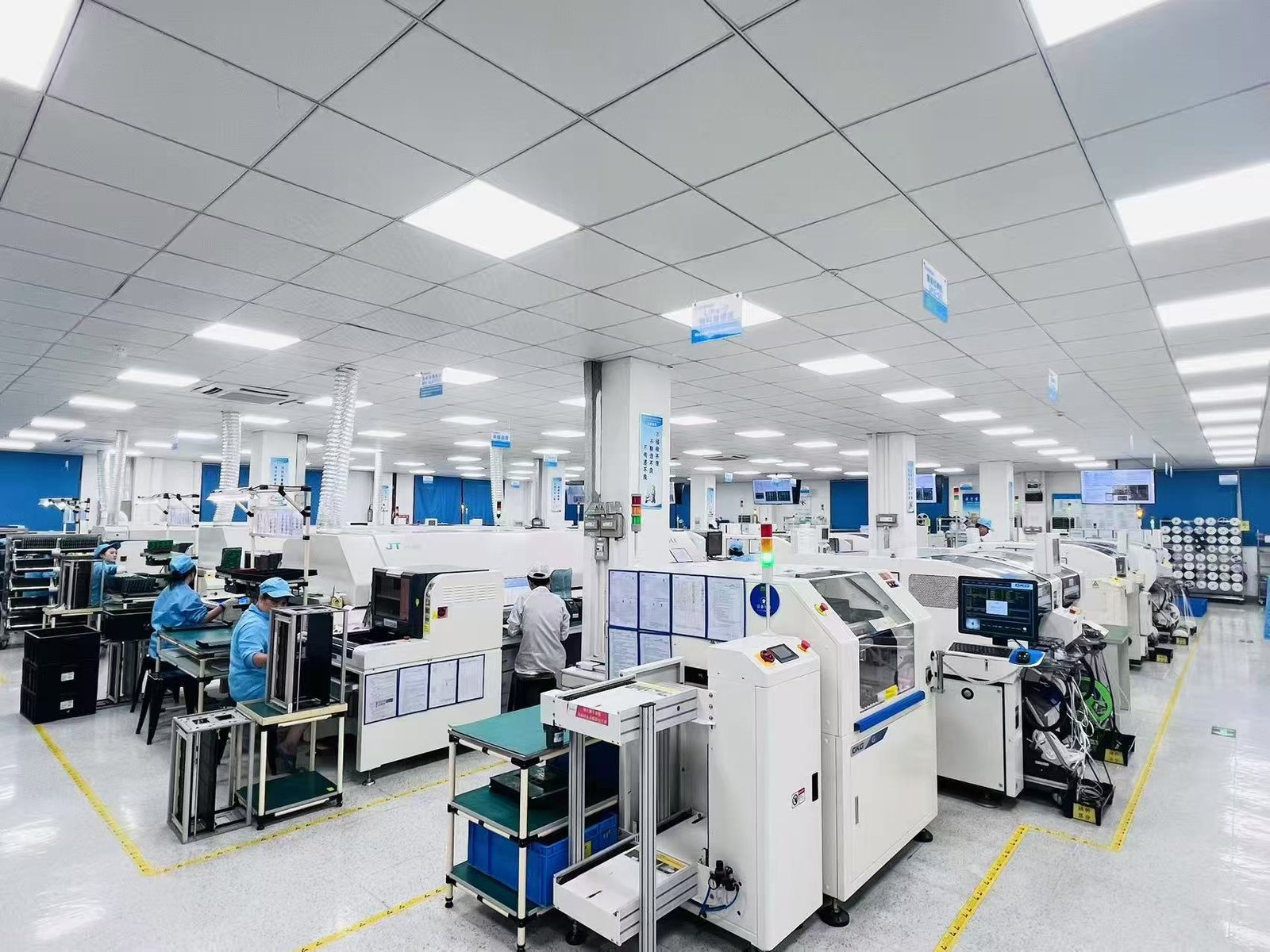
| Audit dello Stabilimento | Pavimenti polverosi, saldatura manuale, inventario disordinato, assenza di protocolli ESD. | Camere bianche classe ISO, macchine automatizzate per il bonding COG/FOG, rigorosa attrezzatura ESD. |
| Controllo Qualità | Controlla solo i prodotti in uscita (OQC). Forte dipendenza dall'ispezione manuale. | Rigido Controllo Qualità in Ingresso (IQC) per le materie prime. Macchine per l'Ispezione Ottica Automatizzata (AOI). |
| Personalizzazione | Rifiuta di modificare l'FPC; offre solo componenti standard pronti all'uso. | Team di progettazione interno per FPC, retroilluminazione e vetri di copertura personalizzati. |
| Focus Aziendale | Il 95% del loro business è costituito da tablet e giocattoli economici per consumatori. | Portafoglio solido in applicazioni medicali, automotive o industriali robuste. |
| Politica di Fine Vita (EOL) | “Cercheremo di informarvi.” | Avviso contrattuale di 6 mesi per PCN/EOL con opzioni di Acquisto Finale (LTB). |
Conclusione: Una Partnership per il Futuro
Scegliere il giusto produttore di display TFT LCD è una grande responsabilità. Richiede un bilanciamento tra l'economicità unitaria e gli standard di qualità senza compromessi dei mercati giapponese e sudcoreano.
Andando oltre il prezzo iniziale e analizzando approfonditamente le loro capacità ingegneristiche, i sistemi di gestione della qualità e le politiche EOL, si passa dal semplice “acquistare schermi” alla costruzione di una catena di fornitura resiliente e a lungo termine. Ricordate: un grande produttore di display fa apparire brillante il vostro prodotto; uno scadente fa apparire terribile il vostro team acquisti. Scegliete con saggezza.
Domande frequenti (FAQ)
D1: Qual è la tipica Quantità Minima d'Ordine (MOQ) per un TFT LCD personalizzato?
A: Questo varia notevolmente in base al produttore. Per le fabbriche standard di fascia consumer, le MOQ personalizzate possono arrivare fino a 10.000-50.000 unità. Tuttavia, i produttori specializzati nei settori industriale e medicale spesso offrono MOQ molto più basse per moduli personalizzati, a volte comprese tra 500 e 1.000 unità, riconoscendo i volumi inferiori ma il valore più alto di questi mercati.
D2: Quanto dura solitamente il processo di personalizzazione (NRE)?
A: Se state modificando un modulo esistente (ad esempio, riprogettando l'FPC o aggiornando la retroilluminazione), prevedete un lead time di 3-5 settimane per ricevere i primi prototipi. Se state sviluppando un modulo completamente personalizzato con pannello touch capacitivo su misura e incollaggio ottico, la tempistica si estende a circa 6-8 settimane.
D3: Qual è la differenza tra TN, VA e IPS nei TFT LCD?
A: Questi termini rappresentano il modo in cui i cristalli liquidi sono allineati.
- TN (Twisted Nematic): La tecnologia più vecchia ed economica. Tempi di risposta rapidi ma angoli di visualizzazione pessimi (i colori si invertono se si guarda di lato).
- VA (Vertical Alignment): Offre eccellenti rapporti di contrasto (neri profondi) ma angoli di visualizzazione solo moderati.
- IPS (In-Plane Switching): IPS (In-Plane Switching):.
Lo standard premium. Offre angoli di visualizzazione ultra-ampî di 178 gradi e una riproduzione cromatica precisa. Essenziale per dispositivi medicali, automotive e industriali di alta gamma.
A: D4: Abbiamo bisogno di un display che funzioni all'aperto nell'estate di Tokyo e nell'inverno dell'Hokkaido. Quali specifiche dovremmo indicare?
- Dovete specificare al vostro produttore di display TFT LCD tre aspetti critici: Fluido a Larga Temperatura:.
- I cristalli liquidi standard si congelano o diventano neri a temperature estreme. Specificate un intervallo di temperatura operativa di almeno -30°C a +80°C. Leggibilità alla Luce Solare:.
- La retroilluminazione deve essere di almeno 800-1.000 nits. Protezione UV e Incollaggio Ottico:.
Il vetro di copertura deve avere un rivestimento Anti-UV e Anti-Riflesso (AG) e deve essere otticamente incollato per prevenire la formazione di condensa all'interno dello schermo durante rapidi sbalzi di temperatura.
A: D5: Come possiamo proteggerci dalla carenza improvvisa di chip che influisce sul driver IC del display?.