2026年10月21日時点の市場分析。.
2026年の selected announcements は、電子ペーパー小売ディスプレイ市場における2つの方向性を示している。コネクテッド棚ラベルの展開と、サイネージ・ポスター向けディスプレイの選択肢拡大である。Vusionの業績は、ハードウェアに加えて継続的サービスが成長していることも示している。これらの事例を総合すると、モジュールサプライヤーは画面自体だけでなく、画面を取り巻く運用サービスも評価すべきであることが示唆される。ただし、これらはすべてのサプライヤーに当てはまるトレンドを確立するものではない。.
現在の発表はこの方向性を支持しているが、世界的な市場規模を確立したり、電子ペーパーがあらゆる小売画面を置き換えることを証明したりするものではない。店舗数は展開の到達範囲を測る指標である。サプライヤーの売上高はその企業自身の事業を測る指標である。製品発表は入手可能性を示すものである。これらの指標を分けておくことで、単一の成長主張にまとめるよりも有用な市場観が得られる。.
2026年の3つのシグナルが、より広範な小売ディスプレイ事業を示唆
大規模展開は、棚ラベルが店舗運営の一部であることを示す
Walmartは3月2日、米国約2,300店舗でデジタル棚ラベルを使用していると報告した。その記事では、従業員の業務の変化と、計画されている更なる展開について述べられていた。.[1] 報告された店舗数は、大規模展開の証拠である。それはラベルの数でも、世界市場シェアでも、すべての設置が同じパネル技術を使用していることの証明でもない。「デジタル棚ラベル」は電子ペーパーよりも広いカテゴリーである。.
市場への示唆は、棚ディスプレイが店舗の運営プロセスの一部になり得るということである。その場合、ディスプレイの価値は、価格情報と製品情報が信頼性の高いプロセスを通じて正しい棚に届くかどうかに依存する。パネルは依然として必要だが、顧客が購入するのは機能する情報サービスである。.
継続的サービスはサプライヤー業績に表れている
Vusionの10月20日の未監査リリースによると、第3四半期のIFRS売上高は4億3,260万ユーロで、前年同期比24.4%増であった。9ヶ月間の継続的付加価値サービス(VAS)売上高は1億ユーロに達し、77%増となった。継続的VASにはサブスクリプションと継続的サービス契約が含まれる。同社のより広範なVAS定義は、ソフトウェア、サービス、非ESLソリューションを対象としている。.[2] これらは企業業績であり、電子ペーパーパネル販売の推計ではない。同社の活動はディスプレイハードウェアにとどまらない。.
これらの数値は、継続的サービスが展開と並行して成長事業を形成し得る証拠を提供している。しかし、パネル、デバイス、ソフトウェア、統合作業のうち、どの部分にどれだけの利益が帰属するかは示していない。WalmartとVusionは商業関係にあるため、両社の発表は市場需要の独立した加算的指標として扱うべきではない。.
ポスターフォーマット製品は購買決定の範囲を拡大する
Samsung Electronics Americaは3月26日、ローカルおよびリモートのコンテンツ管理オプションを備えた13インチカラー電子ペーパーサイネージ製品を発表した。.[3] これは小型棚ラベルを超えた製品の多様化の証拠である。発表だけでは、設置台数、小売業者の受け入れ、実測された運用コスト削減を示すものではない。.
戦略的な問いは、より大型の電子ペーパーサイネージが未充足のコンテンツ役割を果たすかどうかである。たとえ両方が電子ペーパーを使用していても、棚ラベル展開とは異なる評価が必要である。.
棚ラベル、ポスター、インタラクティブスクリーンを分けて考える
小売ディスプレイ需要は単一のカテゴリーではない。棚ラベルは情報を特定の製品位置に結びつける。ポスターはより遠くから買い物客に訴える。インタラクティブスクリーンは人に応答したり、動くコンテンツを表示したりする。各役割は、展開、保守、コンテンツ管理に異なる要件を生む。.

E Inkは電子棚ラベルを、棚コンテンツのワイヤレス更新をサポートするデバイスと説明している。.[4] その機能は画面をより大きなシステムに接続する。製品データ、通信、デバイス識別、店舗手順である。したがって市場機会は、表示面だけではなく、更新プロセス全体に依存する。.
| 小売上の役割 | 購入者が達成する必要があること | 追加価値が存在し得る領域 | 2026年の証拠が未解決のままにしていること |
|---|---|---|---|
| 棚ラベル | 製品情報を正しい棚位置に関連付け続ける。. | データ統合、デバイスマッピング、更新検証、保守。. | 店舗フォーマットと展開条件をまたぐ比較可能な経済性。. |
| デジタルポスター | 閲覧場所に適したコンテンツでサイネージを置き換えまたは更新する。. | コンテンツ承認、スケジューリング、設置、リモート管理。. | 新しく導入されたフォーマットの採用量とリピート注文。. |
| インタラクティブまたはモーションスクリーン | 応答性の高いインタラクションや変化するビジュアルコンテンツをサポートする。. | アプリケーションソフトウェア、タッチ動作、メディア配信、サポート。. | インタラクションやモーションが不可欠な場合に、電子ペーパーがどの程度の需要に対応できるか。. |
このセグメンテーションは共存を示唆している。小売業者は電子ペーパーの棚ラベルとポスターを使用しながら、他のタスクにはLCDを保持できる。商業的判断はコンテンツ役割と運用モデルに関するものである。あるディスプレイ技術が店舗全体を支配するという主張を必要としない。基礎となる工学的比較については、RJYの 電子ペーパー対LCDディスプレイガイド.
ディスプレイフリートの管理がサービス機会を生む
以下は展開とサービスの証拠からの推論である。小売業者がより多くのデバイスを接続するにつれて、困難な作業は個々の画面の変更から、多数の画面を一貫して制御することへと移行する。成功的な更新は、意図したデバイスに到達し、承認されたコンテンツを使用し、店舗チームが解釈できる記録を残さなければならない。.

これにより、デバイス登録、コンテンツ配信、例外処理、サービスに価値が生まれる。例えば、少数のラベルで価格更新が失敗した場合、明確な対応が必要である。影響を受けた場所を特定し、通信障害とデータエラーを区別し、正しい情報を復元する必要がある。新しいパネル仕様だけでは、その運用上の問題を解決できない。.
ベンダーにとって、継続契約は初期ハードウェア販売後の継続サービスを支えることができる。小売業者にとって、それらは提供されるサービスとともに評価すべき継続的コストと依存関係を生む。システムがより多くの手作業を生み出したり、店舗データへのアクセスを制限したりする場合、より低いデバイス購入価格は魅力が低くなる可能性がある。逆に、サービスサブスクリプションは、展開が大規模であるというだけでは正当化されない。.
これらの観察は、どのプラットフォームが勝つかを予測するものではない。競争がディスプレイ特性だけでなく、統合、サポート、運用パフォーマンスを含み得る理由を説明するものである。購入者は、各責任を誰が負うのか、デバイス、接続、データフィードが失敗したときに何が起こるのかを知る必要がある。.
設置ベースは新規ハードウェア需要とは異なる
小売業者は、新店舗、既存店舗内でのカバレッジ拡大、または追加のディスプレイ役割を通じて、コネクテッド設置ベースを拡大できる。サプライヤーはまた、以前の期間に設置されたデバイスから継続的収益を得ることもできる。これらの活動はともに成長し得るが、事業の異なる部分を測るものである。.
これはモジュール計画担当者にとって重要である。より大きなコネクテッドフリートは、今四半期に発注されたパネル数量を直接明らかにするものではない。ハードウェア需要は、展開タイミング、在庫、交換需要、デバイス設計、システム背後にある供給取り決めに依存する。サービス収益は、同等の新規ディスプレイ出荷量がなくても継続し得る。.
Similarly, a poster product announcement establishes that a vendor has entered or expanded a format. It does not establish that retailers have approved the product for chainwide use. The stronger evidence would include repeat deployments, a defined operating role, and sustained orders. Public announcements may not disclose those details.
Module suppliers should therefore distinguish three questions when assessing an opportunity: Is the device commercially available? Has the customer validated its use? Is there a documented production requirement? Treating a launch as the answer to all three can distort capacity planning and sales expectations.
Integration choices shape competition and customer dependence
A connected display system can simplify store work by combining hardware, communications, and management tools. That convenience can also make it harder to change one component. A retailer may need to consider access to device records, content formats, integration documentation, and support arrangements when it evaluates future flexibility.
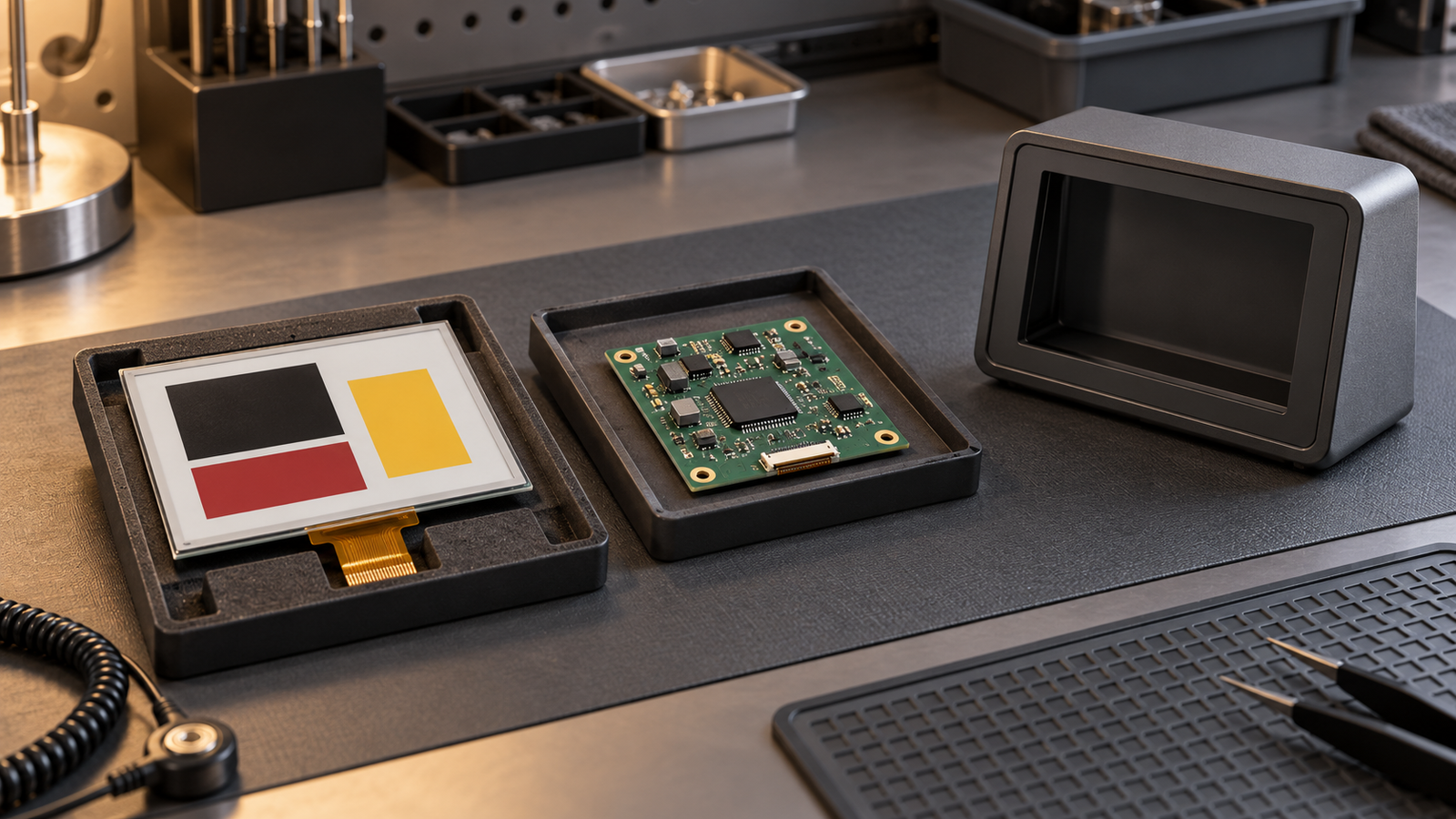
The same issue appears at the module level. A technically suitable display may still require changes to the host, enclosure, control software, or update behavior. An alternate panel is not an approved substitute until the device maker verifies the complete design. Neither an open purchasing channel nor a similar screen size establishes interchangeability.
This creates several possible routes for module suppliers. One is to supply a defined display within a device maker’s established architecture. Another is to help an OEM adapt an existing module to a documented application. A third is to support a new sign format where content and installation needs are clear. Each route has a different technical boundary.
The opportunity does not automatically extend to operating an ESL platform. Radio infrastructure, store software, device security, fleet management, and retailer integration require their own capabilities. A credible module proposal should state its scope and identify which system functions belong to the OEM or another partner.
Pilots should test the operating model
A retail pilot can establish whether the proposed display performs its intended job under the customer’s conditions. It should test more than whether an image appears correctly. For connected shelf labels, useful observations include update completion, exception recovery, and the work required to associate a device with a location. For posters, content preparation and approval may be equally important.
Measure these outcomes against the process the retailer already uses. A pilot should record both routine work and failures; otherwise, a smooth demonstration may conceal the labor needed to run the system. The appropriate measures depend on the use case, so they should be agreed before deployment.
Power evaluation also needs a complete system boundary. Image retention does not account for every part of an operating device. Communication, updates, control electronics, and any other active functions affect the result. An energy claim about a display characteristic should not become a claim of zero power for the full installation.
These tests can support an investment decision. They cannot guarantee a return across stores with different layouts, content schedules, or support practices.
What this means for display OEMs and module buyers
The selected 2026 examples support a market view centered on connected operations and broader display formats. It does not support a precise global growth rate or a universal replacement story. For OEMs, the practical task is to identify a specific retail role, define the system responsibilities, and verify the module within that design.
レビュー RJY’s EPD display category as a starting point for a defined display requirement. For a project discussion, share the intended content, update cycle, installation environment, power arrangement, and host requirements. Available module options and any customization of an existing module require project-specific verification. Those details help establish a useful display proposal without confusing component supply with a complete connected-store service.
参考文献
- Walmart, “How the Shelf Got Smarter and Our Jobs Got Easier”, March 2, 2026.
- Vusion, Q3 2026 sales release, October 20, 2026. Unaudited company figures.
- Samsung Electronics America, 13-inch color e-paper announcement, March 26, 2026.
- E Ink, electronic shelf label application, accessed October 21, 2026.