






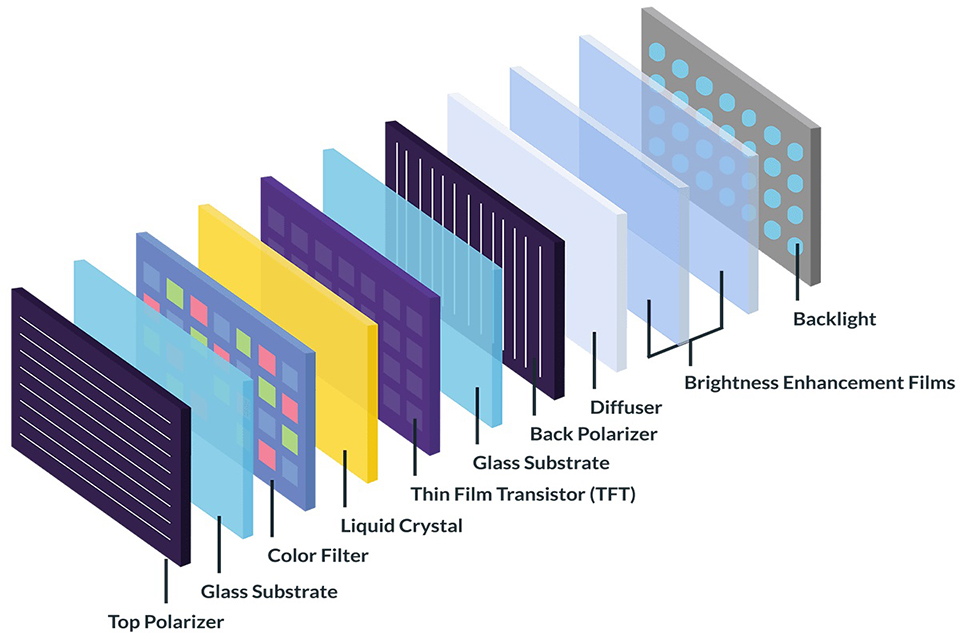
1. TFT와 LCD: 어떤 관계인가?
TLCD(액정 디스플레이) LCD(액정 디스플레이)는 액정과 백라이트를 사용하여 이미지를 생성하는 광범위한 화면 기술 범주입니다. 이 디스플레이는 전기 신호를 가해 액정 분자의 배열을 변경하고, 이를 통해 통과하는 빛을 변조하는 방식으로 작동합니다.
TFT 는 TFT(박막 트랜지스터)는 능동 매트릭스 LCD의 구체적인 유형입니다.. 각 픽셀마다 박막 트랜지스터를 사용하여 화질과 응답 시간을 정밀하게 제어합니다. 간단히 말해:
- 모든 TFT는 LCD입니다.
- 모든 LCD가 TFT는 아닙니다.
TFT는 픽셀이 제어되는 방식을 설명하는 용어입니다(화면이 LCD 기술을 사용하는지 여부를 말하는 것이 아닙니다. 이미 LCD 기술을 사용하기 때문입니다).
즉, TFT는 LCD의 한 유형이며, 모든 TFT 디스플레이는 LCD이지만 모든 LCD가 TFT는 아닙니다. “TFT”라는 용어는 LCD 화면 내에서 픽셀을 제어하는 데 사용되는 특정 기술을 가리킵니다.
2. “TFT vs. LCD”가 오해의 소지가 있는 질문인 이유
“TFT vs LCD”라는 용어는 이 둘이 별개의 기술인 것처럼 보이게 하지만, 실제로는 TFT가 LCD의 하위 집합. 입니다. 더 정확한 비교는 TFT 대 다른 유형의 LCD 기술, 예를 들어 패시브 매트릭스나 IPS와 같은 것일 것입니다.
이러한 혼란은 종종 디스플레이가 마케팅되는 방식에서 비롯됩니다. 일부 브랜드는 기본 LCD를 “LCD”로, 고급 버전을 “TFT”로 표시하지만, 둘 다 액정 기술을 사용합니다.
3. LCD 기술의 유형
LCD 패널은 다양한 제어 방식을 사용하여 제작됩니다. 주요 유형은 다음과 같습니다:
패시브 매트릭스 LCD (PM-LCD)
이 초기 LCD 유형은 수평 및 수직 라인의 격자를 사용하여 픽셀을 제어합니다. 응답 시간이 느리고, 색상 표현력이 낮으며, 명암비가 떨어집니다. 현대 응용 분야에서는 대부분 사용되지 않습니다.
능동 매트릭스 LCD (AM-LCD)
AM-LCD의 각 픽셀에는 자체 트랜지스터가 있습니다. 이를 통해 빠른 새로 고침 속도와 더 나은 색상 제어가 가능합니다. TFT TFT는 가장 널리 사용되는 능동 매트릭스 유형입니다.
인플레인 스위칭 (IPS) LCD
IPS는 액정의 움직임 방식을 변경하여 색상 일관성과 시야각을 개선한 능동 매트릭스 LCD의 한 유형입니다. IPS 디스플레이는 여전히 TFT 기술을 사용합니다., 하지만 패널 내부의 배열 방식이 다릅니다.
슈퍼 트위스트 네마틱 (STN) LCD
STN 디스플레이는 개선된 패시브 매트릭스 화면으로, 초기 PM-LCD보다 더 나은 명암비와 색상을 제공합니다. 그러나 TFT보다 속도가 느려 빠른 동작 콘텐츠에는 적합하지 않습니다.
4. TFT LCD 기술의 장점
TFT는 소비자 가전, 의료 기기, 산업 시스템 등에서 지배적인 LCD 디스플레이 유형 이 되었습니다. 그 이유는 다음과 같습니다:
✅ 빠른 응답 시간
빠른 응답 시간.
✅ TFT는 각 픽셀을 개별적으로 제어하여 빠른 이미지 전환을 가능하게 합니다. 이로 인해 비디오와 게임에서 모션 블러가 감소합니다.
생생한 색상 재현.
✅ TFT 디스플레이는 패시브 매트릭스 대안보다 더 넓은 색상 범위와 높은 정확도로 색상을 표시합니다.
높은 해상도와 선명도.
✅ 정밀한 픽셀 제어로 인해 특히 작은 화면에서 선명한 이미지와 텍스트를 구현할 수 있습니다.
더 나은 명암비.
✅ 넓은 시야각
TFT 기술은 더 깊은 검정색과 더 밝은 흰색을 제공하여 이미지의 깊이와 가독성을 향상시킵니다.
5. 개선된 시야각
IPS가 최고의 시야각을 제공하지만, 표준 TFT 디스플레이도 이전 LCD 유형보다 이 점에서 뛰어납니다.
TFT LCD 선택 시 고려 사항강점에도 불구하고, TFT 디스플레이는 모든 상황에 이상적이지 않습니다. 다음 요소들을 염두에 두세요:, 색상 정확도가 중요한 응용 분야 : 완벽한 색상 정확도가 필수적이라면,.
비용IPS(TFT의 변형).
전력 사용량가 개선된 시야각과 안정적인 색상 출력으로 인해 더 나은 선택일 수 있습니다.
FAQ - 자주 묻는 질문
비용
A: : TFT는 패시브 매트릭스 디스플레이보다 제조 비용이 더 높습니다. 예산이 제한된 장치를 설계 중이라면 PM-LCD나 STN이 더 적합할 수 있습니다. 전력 소비: TFT 패널은 일반적으로 더 많은 전력을 사용합니다. 배터리 민감도가 높은 응용 분야에서는 저전력 TFT 변형을 선택하거나 디스플레이 사용을 최적화하세요.
Q1: TFT와 LCD의 차이점은 무엇인가요?
A: TFT는 LCD의 한 유형. 입니다. 구체적으로는 능동 매트릭스 LCD입니다. TFT는 각 픽셀에 전용 트랜지스터를 부여하여 응답 속도를 높이고 색상 제어를 개선합니다.
Q2: IPS가 TFT보다 더 좋나요?
A: TFT 디스플레이는 박막 트랜지스터로 인해 더 복잡한 제조 공정이 필요합니다. 이들은 우수한 성능을 제공하며, 이는 많은 사용 사례에서 높은 비용을 정당화합니다.
Q4: TFT 스크린은 야외 사용에 적합한가요?
A: 특히 높은 밝기와 안티글레어 코팅이 적용된 경우에는 가능합니다. 그러나 투반사형 또는 반사형 LCD(주로 패시브 매트릭스 방식)가 직사광선 아래에서 가독성이 더 높을 수 있습니다.
Q5: 저전력 장치에 TFT LCD를 사용할 수 있나요?
A: 네, 하지만 최적화가 필요할 수 있습니다. 저전력 TFT 모듈을 사용할 수 있으며, 백라이트 밝기 조절이나 주사율 감소와 같은 기법이 도움이 될 수 있습니다.