중국 공급업체와 함께 맞춤형 디스플레이를 선택하는 것이 좋은 선택인 이유

사랑을 나누세요

Choosing a custom display supplier in China can be a practical decision for many OEMs, hardware teams, startups, and equipment manufacturers. China has a mature electronics manufacturing ecosystem, a broad display component supply chain, experienced module assembly resources, and strong engineering support capabilities for TFT LCD, touch panel, cover glass, backlight, FPC, controller board, and firmware-related projects.

However, choosing a Chinese display supplier should not be based only on low cost or broad claims about manufacturing scale. A good sourcing decision depends on project fit: display size, resolution, interface, brightness, touch requirement, mechanical structure, controller board compatibility, customization scope, MOQ, lead time, quality expectations, and communication quality.

This guide explains why working with a custom display supplier in China can be a good choice, what advantages buyers can realistically expect, what risks should be managed, and how to evaluate the right supplier for a B2B display project.

Why Custom Display Sourcing Matters

A display is not just a screen. In many embedded products, it is the main interface between the user and the device. It affects usability, product appearance, power design, mechanical structure, software layout, touch experience, and long-term maintenance.

For standard products, an off-the-shelf display module may be enough. But many B2B projects need adjustments around the display module. These adjustments may include cover glass, touch panel, backlight, FPC, interface, controller board, firmware, or mechanical structure coordination.

Custom display sourcing matters because the display must fit the final product, not only the datasheet. A display that looks acceptable during early testing can still create problems if the FPC direction is wrong, the interface does not match the host board, the brightness is unsuitable, the cover glass does not fit the enclosure, or the controller board needs firmware adaptation.

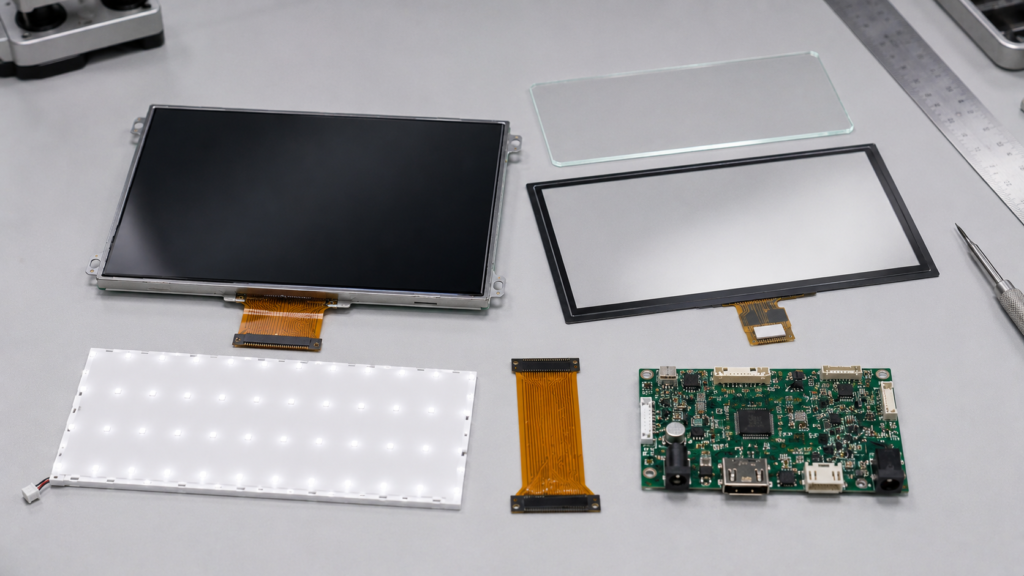
Custom TFT LCD display module components including cover glass touch panel FPC controller board and backlight

What Does “Custom Display” Usually Mean?

Custom display does not always mean developing a completely new LCD panel from scratch. In many real projects, the most practical path is to start from an existing TFT LCD module and customize related parts around it.

Common custom display requirements include:

  • Display size selection based on an existing module platform
  • Brightness adjustment or backlight customization
  • Touch panel integration
  • Cover glass design
  • FPC direction, length, or connector discussion
  • Interface review or interface adaptation
  • 컨트롤러 보드 매칭
  • Firmware support for display behavior or system requirements
  • Mechanical structure coordination around the display module

This is an important distinction. Developing a completely new screen size is far more complex than customizing cover glass, backlight, touch panel, FPC, or controller board around an existing module. For most OEM projects, module-based customization is the more practical and cost-controlled route.

Why China Is Strong in Custom Display Supply

China has a strong display and electronics supply chain because many required resources are close to each other: LCD modules, touch panels, cover glass, FPC, PCBs, controller boards, connectors, mechanical parts, tooling suppliers, assembly factories, logistics providers, and engineering teams.

This ecosystem is especially useful for custom display projects. Custom work usually requires several parts to be reviewed together. For example, a touch display project may involve the LCD module, touch sensor, cover glass, FPC, controller board, firmware, enclosure opening, and cable routing. A supplier with access to nearby component and engineering resources can often move faster during sample development and issue resolution.

The main advantage is not simply “China is cheaper.” The stronger advantage is that many display-related processes can be coordinated within a mature manufacturing environment.

Customization Flexibility for OEM Projects

One reason buyers choose Chinese custom display suppliers is flexibility. OEM projects often need a display that fits a specific product structure, user interface, or operating environment.

Useful customization areas may include:

맞춤화 영역중요성Typical Project Relevance
밝기Affects readability, power use, and heatIndustrial panels, semi-outdoor devices, vehicle-related displays
터치 패널Affects user interaction and control accuracyHMI, smart home panels, handheld devices, equipment controls
커버 글라스Affects appearance, protection, and front-panel fitConsumer electronics, control panels, industrial interfaces
FPCAffects internal routing and assembly feasibilityCompact devices, custom enclosures, embedded products
인터페이스Affects compatibility with the host systemRGB, LVDS, MIPI, SPI, MCU, HDMI, eDP projects
컨트롤러 보드Connects LCD modules to real system inputsAndroid panels, HDMI displays, industrial display integration
펌웨어Supports project-specific display or controller behaviorController-board-based and embedded system projects

For buyers, this flexibility can reduce mechanical redesign, simplify system integration, and help the display match the final product more closely.

ChatGPT Image 2026年6月30日 14 04 32 1 - RJY Display
Custom display supply chain components including TFT LCD modules touch panels FPC cables PCBs and connectors

Engineering Support Can Be More Important Than Unit Price

For custom display projects, a low unit price is not enough. Buyers also need engineering support. A display module must match the electrical, mechanical, optical, and software requirements of the product.

Engineering support may include reviewing the LCD datasheet, checking interface compatibility, discussing backlight requirements, confirming FPC direction, matching a controller board, reviewing touch interface needs, supporting firmware discussion, and checking whether the display can fit the target enclosure.

This is especially important for R&D teams and equipment manufacturers. A small mismatch in pin definition, timing, backlight current, touch interface, or FPC position can delay development. A supplier that can identify these issues early is often more valuable than a supplier that only quotes a low price.

Engineering review setup for custom TFT LCD display project with module controller board FPC and drawing

Cost Advantage: Real, but Not Automatic

China can offer strong cost advantages in many display projects because of supplier density, component access, manufacturing scale, and production experience. However, buyers should treat cost as a full project calculation, not only a unit-price comparison.

The real cost of a custom display includes:

  • LCD module cost
  • Touch panel and cover glass cost
  • Backlight or FPC customization cost
  • Controller board cost, if required
  • Firmware or software adaptation cost, if required
  • Tooling or development cost, if applicable
  • Sample and testing cost
  • Freight, customs, duties, and taxes
  • Communication and project management time
  • Risk cost from design changes or compatibility problems

A Chinese supplier may still be cost-effective after these factors are included, but serious buyers should compare the full landed and development cost rather than focusing only on the first quotation.

Speed and Sampling: Useful When Requirements Are Clear

Chinese display suppliers are often attractive for fast sampling and flexible engineering response. This is especially true when the project can use an existing LCD module platform and only needs module-level customization, such as cover glass, touch panel, backlight, FPC, or controller board matching.

Speed depends heavily on requirement clarity. A project with a complete display size, resolution, interface, brightness target, touch requirement, enclosure drawing, and expected demand can usually be evaluated more efficiently than a project described only as “we need a custom screen.”

Buyers should prepare technical requirements before asking for samples. This reduces back-and-forth communication and helps the supplier confirm feasibility faster.

Wide Component Access for Display Integration

Custom display projects often require more than the LCD panel. They may need touch sensors, cover glass, FPC, LED backlight, PCBs, controller boards, connectors, adhesives, frames, cables, and mechanical parts.

China’s electronics supply chain can be useful because many of these components are available through established supplier networks. This can make it easier to coordinate complete display modules or display-plus-controller solutions.

For example, a buyer may start with a TFT LCD module but later need:

  • A capacitive touch panel
  • Custom cover glass
  • Different FPC routing
  • A brighter backlight
  • An HDMI or Android controller board
  • Firmware adaptation
  • A mechanical structure review

A supplier that can coordinate these related parts can reduce the number of separate vendors the buyer must manage.

Why China Can Be Suitable for Startups and R&D Teams

Hardware startups and R&D teams often need practical engineering support before they are ready for mass production. They may need samples, design review, interface advice, display alternatives, and feasibility feedback.

A custom display supplier in China can be a good fit when the project has a real product plan and needs a balance of cost control, technical response, and production scalability.

However, buyers should be realistic. Very small one-off projects, unclear concepts, or requests for completely new display sizes from scratch may not be suitable for many B2B display suppliers. Custom display development works best when the buyer can provide clear requirements and expected production demand.

ChatGPT Image 2026年6月30日 14 15 56 - RJY Display
Custom display inquiry preparation scene with TFT LCD module controller board cover glass and requirements form

Why China Can Be Suitable for Equipment Manufacturers

Equipment manufacturers often care about specification matching, repeat supply, quality stability, customization feasibility, and long-term integration support. For these buyers, China’s custom display supply chain can be valuable when the supplier can support both sample development and repeat production.

Common equipment manufacturer needs include:

  • Replacing an existing display module
  • Matching a display to a new enclosure
  • Adding touch or cover glass
  • Improving display brightness
  • Adapting a controller board
  • Supporting a new product version
  • Reducing development cost while maintaining stable specifications

The buyer should confirm whether the supplier can support the required product lifecycle, documentation, sample approval process, and change management expectations.

Quality and Compliance: Verify, Do Not Assume

Some Chinese display suppliers can support international quality and compliance requirements, but buyers should not assume that every supplier or every product automatically meets the same standards.

Instead of relying on general claims, buyers should ask for relevant documents based on the target market and product category. These may include material declarations, RoHS-related documents, product test reports, factory quality system information, or other project-specific files when applicable.

Do not treat certification logos as a substitute for technical review. The display module still needs to match the project’s electrical, optical, mechanical, environmental, and software requirements.

Logistics, Tariffs, and Landed Cost

International sourcing requires logistics planning. Freight cost, customs clearance, duties, taxes, trade terms, delivery method, and documentation can affect the final landed cost and project timeline.

For samples, air express is often practical. For mass production, air freight, sea freight, or other logistics arrangements may be considered depending on urgency, volume, and destination.

Tariffs and import duties vary by country, product classification, and trade policy. Buyers should confirm the HS code, trade terms, customs documentation, and landed cost before placing volume orders. A responsible supplier can help prepare export documents, but the buyer or importer should still verify local import requirements.

Communication and Time Zone Management

Communication is one of the most important factors in custom display sourcing. A technically capable supplier is only useful if the buyer can communicate requirements clearly and receive accurate feedback.

Time zone differences can be managed if both sides use structured communication. Good practice includes written specifications, drawings, datasheets, meeting notes, sample approval records, and version control.

Buyers should avoid relying only on casual chat messages for technical decisions. For display projects, details such as resolution, interface, pin definition, backlight voltage, touch interface, and mechanical dimensions must be documented clearly.

Risks When Choosing a Custom Display Supplier in China

Working with a Chinese supplier can be effective, but there are real risks if the supplier is not properly evaluated or if requirements are unclear.

Common risks include:

  • Unclear customization scope
  • Wrong display interface or pin definition
  • Controller board incompatibility
  • Touch panel or firmware issues
  • Unexpected tooling or development cost
  • MOQ mismatch
  • Lead time misunderstanding
  • Insufficient documentation
  • Unverified quality or compliance claims
  • Communication gaps during sample changes

Most of these risks can be reduced by preparing complete requirements, testing samples properly, confirming documents, and choosing a supplier with real engineering communication capability.

중국에서 맞춤형 디스플레이 공급업체를 선택하는 방법

The right supplier is not simply the one with the lowest price. Buyers should evaluate whether the supplier can support the technical and commercial requirements of the project.

Useful evaluation questions include:

  • Does the supplier understand TFT LCD 모듈 선정?
  • Can the supplier support customization based on existing modules?
  • Can they review interface, FPC, backlight, touch, and controller board requirements?
  • Can they provide clear drawings, datasheets, or technical confirmation?
  • Can they explain MOQ, sample timing, and development cost clearly?
  • Can they support repeat production after sample approval?
  • Do they avoid exaggerated claims such as universal compatibility?
  • Can they communicate technical changes in writing?
  • Do they understand the target application environment?
  • Can they support the buyer’s expected production volume?

A good supplier should help reduce technical uncertainty, not increase it.

What Project Information Should Buyers Prepare?

Before contacting a custom display supplier, buyers should prepare a basic RFQ package. This helps the supplier evaluate feasibility and avoids unnecessary communication delays.

Recommended information includes:

  • Target application
  • 디스플레이 크기
  • 해상도
  • Interface requirement
  • 밝기 요구 사항
  • 터치 요구사항
  • 커버 유리 요구사항
  • FPC direction or connector requirement
  • 백라이트 요구 사항
  • 컨트롤러 보드 요구사항
  • 펌웨어 또는 소프트웨어 요구사항
  • 작동 환경
  • Mechanical drawing or enclosure information
  • 샘플 수량
  • Estimated annual demand
  • 목표 개발 일정
  • Reference display model or datasheet, if available

Clear requirements make it easier for the supplier to recommend a practical display path, whether that means a standard module, a customized module, or a display-plus-controller solution.

When Is a China Custom Display Supplier a Good Choice?

A custom display supplier in China can be a good choice when the project needs engineering flexibility, cost control, access to display-related components, and support for sample-to-production development.

It is especially suitable for projects such as:

  • Industrial HMI displays
  • Smart home control panels
  • Medical-related device interfaces
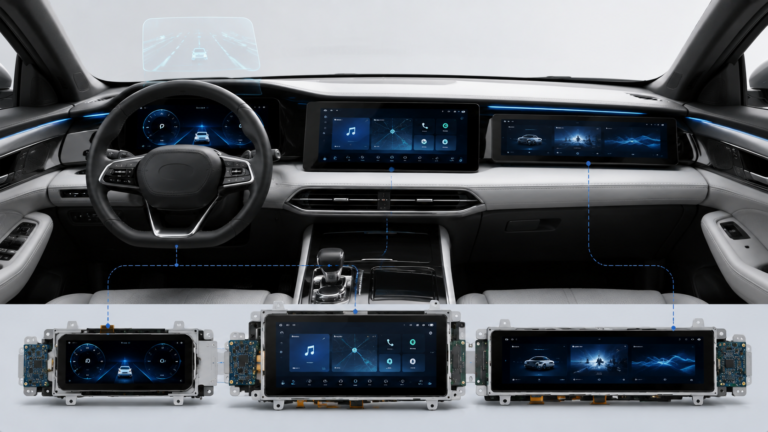
  • Vehicle-related equipment displays
  • Security equipment displays
  • Consumer electronics interfaces
  • Custom touch displays
  • High-brightness TFT LCD modules
  • LCD modules with controller boards
  • Products requiring cover glass, FPC, backlight, or firmware discussion

It may be less suitable when the buyer needs only a one-off display, has no clear requirements, cannot meet MOQ expectations, or expects a completely new panel size without sufficient budget and volume.

RJY Display Support for Custom Display Projects

RJY Display supports TFT LCD modules, controller boards, and custom display solution discussions for engineering-driven B2B projects. Customization can be reviewed around existing display modules, including brightness, touch panel, cover glass, backlight, FPC, interface, controller board, firmware, and mechanical structure coordination.

For buyers evaluating a custom display supplier in China, the practical first step is to share complete project requirements. RJY Display can review display size, resolution, interface, brightness, touch, cover glass, controller board, firmware, operating environment, sample needs, and expected demand to identify a feasible path.

If your project needs a custom TFT LCD module, touch display, high-brightness display, controller board, or display integration support, prepare your requirements before inquiry.

Send Your Custom Display Requirements

결론

Choosing a custom display supplier in China can be a good decision when the buyer needs practical customization, engineering support, component access, cost control, and a supply chain capable of supporting both samples and production.

The strongest advantage is not only price. It is the ability to coordinate LCD modules, touch panels, cover glass, FPC, backlight, controller boards, firmware, and mechanical requirements within a mature electronics manufacturing ecosystem.

At the same time, buyers should avoid treating China sourcing as an automatic solution. Supplier selection still requires technical review, clear documentation, sample testing, compliance verification, logistics planning, and realistic expectations about MOQ, lead time, and customization scope.

The right China custom display supplier can help turn a display requirement into a practical product-ready module. The wrong supplier can create compatibility problems, delays, and hidden costs. The difference depends on engineering communication, requirement clarity, and supplier capability.

자주 묻는 질문

Why choose a custom display supplier in China?

A custom display supplier in China can provide access to a mature electronics supply chain, practical module-level customization, engineering support, component sourcing, sample development, and cost-effective production options for B2B display projects.

What can be customized in a TFT LCD display project?

Common customization areas include brightness, touch panel, cover glass, FPC, interface, backlight, controller board, firmware, and mechanical structure coordination. In many projects, customization is most practical when based on an existing display module.

Is a China display supplier always cheaper?

Not always. China can offer cost advantages, but buyers should compare full project cost, including tooling, customization, samples, testing, freight, duties, taxes, communication, and possible design changes.

Can Chinese suppliers support custom LCD development?

Many Chinese display suppliers can support custom LCD module projects, especially module-level customization around existing display platforms. Completely new panel-size development is more complex and usually requires deeper feasibility review, higher cost, and sufficient production volume.

How do I evaluate a custom display supplier in China?

Evaluate technical capability, experience with TFT LCD modules, customization support, communication quality, documentation, sample process, MOQ, lead time, controller board support, and whether the supplier can review your project requirements clearly.

What information should I send for a custom display inquiry?

Send display size, resolution, interface, brightness, touch requirement, cover glass requirement, FPC requirement, controller board requirement, firmware requirement, operating environment, mechanical drawing, sample quantity, annual demand, and target timeline.

What are the risks of sourcing custom displays from China?

Common risks include unclear specifications, interface mismatch, controller board incompatibility, hidden development cost, MOQ mismatch, communication gaps, logistics issues, and unverified quality or compliance claims. These risks can be reduced through clear documentation and sample testing.

Is a China supplier suitable for small prototype projects?

It depends on the supplier and project. China suppliers can often support samples for serious product development, but very small one-off projects or unclear concepts may not be a good fit for B2B custom display manufacturing.

참고문헌

  1. Omdia: Large-area LCD panel shipment outlook
  2. Reuters: LG Display sale of China LCD plant to TCL CSOT
  3. Rhodium Group: China and the Future of Global Supply Chains
  4. RJY Display: Custom TFT LCD Displays Guide
  5. RJY Display: Contact and Project Inquiry