








1. The Reality of the TFT LCD Supply Chain
Before you send out a single Request for Quotation (RFQ), it is vital to understand the structure of the modern display industry. Not every company that calls itself a “TFT LCD display manufacturer” actually manufactures the core glass.
The Glass Makers vs. The Module Assemblers
The TFT LCD supply chain is heavily tiered:
- The Fab (Panel Makers): These are the multi-billion-dollar conglomerates operating massive cleanrooms (Gen 6, Gen 8, Gen 10 fabs). They produce the raw “motherglass” and the TFT backplane. They deal in millions of units and rarely entertain custom projects for mid-volume buyers.
- The LCD Module (LCM) Manufacturers: This is who you are likely looking for. A premium TFT LCD display manufacturer buys the “open cell” (the glass) from the fabs, and then engineers and manufactures the backlight unit (BLU), the driver circuitry (FPC/PCBA), the structural bezel, and integrates the touch panel.
Your goal is to find an LCM manufacturer that possesses flawless engineering capabilities, deep relationships with the glass fabs (to ensure supply stability), and the agility to customize the module to your precise specifications.
2. Quality Assurance: Beyond the ISO Certificate
In the Japanese and South Korean markets, “quality” is not a buzzword; it is a baseline expectation. A defect rate of 1% might be acceptable in cheap consumer toys, but in industrial automation, medical devices, or automotive applications, ppm (parts per million) failure rates must approach zero.
When auditing a potential TFT LCD display manufacturer, do not just look at the ISO 9001 certificate hanging in their lobby. You must dive into their Quality Management System (QMS).
A. The 8D Reporting Standard
Ask the manufacturer how they handle a field failure. A mature manufacturer will immediately provide an 8D (Eight Disciplines) Problem Solving report. This demonstrates that they don’t just replace a broken screen—they quarantine the batch, perform a root-cause analysis (e.g., finding out that a specific ACF bonding temperature was off by 2 degrees), and implement a permanent corrective action.
B. Reliability Testing Laboratories
A top-tier manufacturer does not guess how long their screens will last; they try to destroy them in controlled environments to find out. Your audit checklist should verify they have in-house equipment for:
- High Temperature & High Humidity Storage (HTHH): E.g., 85°C at 85% RH for 500 hours.
- Thermal Shock Testing: Rapid cycling between -30°C and +80°C to check for micro-cracks in the glass or delamination of the polarizers.
- ESD (Electrostatic Discharge) Testing: Ensuring the display’s driver IC won’t fry when a user touches the screen in a dry winter environment.
- Vibration and Drop Testing: Crucial for handheld terminals and automotive displays.
3. Engineering and Customization Capabilities (NRE)
Very rarely does an “off-the-shelf” display perfectly fit a complex industrial or consumer product. The true value of an excellent TFT LCD display manufacturer lies in their Non-Recurring Engineering (NRE) capabilities.
Mastering the Backlight Unit (BLU)
The backlight is the engine of the TFT LCD. If your product is an outdoor kiosk, an indoor 250-nit backlight is useless. You need a manufacturer capable of engineering a custom LED string that delivers 1,000+ nits of brightness while managing the thermal dissipation so the display doesn’t melt in direct sunlight.
Flexible Printed Circuit (FPC) Customization
The FPC is the umbilical cord connecting the display to your motherboard. A rigid, inflexible manufacturer will force your engineering team to redesign your entire PCB to match their display. A flexible, partner-oriented manufacturer will happily redesign the shape, length, and pinout of the FPC to match seu existing board layout.
Optical Bonding and Touch Integration
Adding a touch screen isn’t just about slapping a piece of glass on top of the LCD. If there is an air gap between the touch sensor and the TFT LCD, you will get internal reflections that wash out the screen in bright environments.
Look for a manufacturer that offers in-house Optical Bonding (OCA/OCR). This process fills the air gap with a specialized liquid resin or dry adhesive, dramatically improving contrast, ruggedness, and moisture resistance.
4. Supply Chain Longevity and EOL Management
If there is one thing that gives procurement managers nightmares, it is the dreaded EOL (End of Life) Notice.
Imagine this: You have spent 18 months designing a medical ventilator around a specific 7.0-inch TFT LCD. You finally pass all medical regulatory certifications (which cost hundreds of thousands of dollars). Six months into mass production, your display supplier casually emails you to say they are discontinuing that panel next month.
In the medical, industrial, and automotive sectors, product lifecycles are 5, 7, or even 10+ years. Therefore, evaluating a TFT LCD display manufacturer requires evaluating their supply chain resilience.
How to Ensure Longevity:
- Ask for Longevity Guarantees: Reputable manufacturers focusing on the industrial sector will offer a 3-to-5-year longevity guarantee on specific modules.
- Understand Their Sourcing: Does the LCM manufacturer single-source their glass from one fab? If that fab stops making that size, you are in trouble. The best manufacturers design their modules to be compatible with glass from at least two different panel makers (e.g., BOE and Innolux) to mitigate risk.
- PCN (Product Change Notification) Policies: Insist on a strict PCN agreement. If the manufacturer changes anything—even a single resistor on the FPC or the supplier of the LED backlight—they must notify you 3 to 6 months in advance so your engineering team can re-validate the display.
5. The “Soft Skills”: Communication and Cultural Alignment
In cross-border procurement, especially when sourcing from China or Taiwan for the Japanese or Korean markets, technical specs are only half the battle. The other half is communication.
A common pitfall is the “Yes Culture.” You ask a supplier, “Can you achieve a 50,000-hour MTBF on the backlight?” The eager sales rep says, “Yes, no problem!” without consulting their engineering team, only to fail dramatically during the prototype phase.
A high-quality TFT LCD display manufacturer operates with transparency and engineering honesty.
- Direct Engineer-to-Engineer (E2E) Communication: You do not want your technical requirements playing a game of “telephone” through a salesperson who doesn’t understand the difference between an RGB and an LVDS interface. Look for a manufacturer that assigns dedicated Field Application Engineers (FAEs) to your account.
- Documentation Standards: Are their datasheets complete, accurate, and written in clear technical English (or localized for Japan/Korea)? A sloppy datasheet with missing initialization codes or incorrect mechanical tolerances is a massive red flag for how they manage their production lines.
6. The Procurement Evaluation Matrix
To objectify your decision, use this scoring matrix when evaluating a new TFT LCD display manufacturer:
| Evaluation Criteria | Red Flags (Avoid) | Green Flags (Shortlist) |
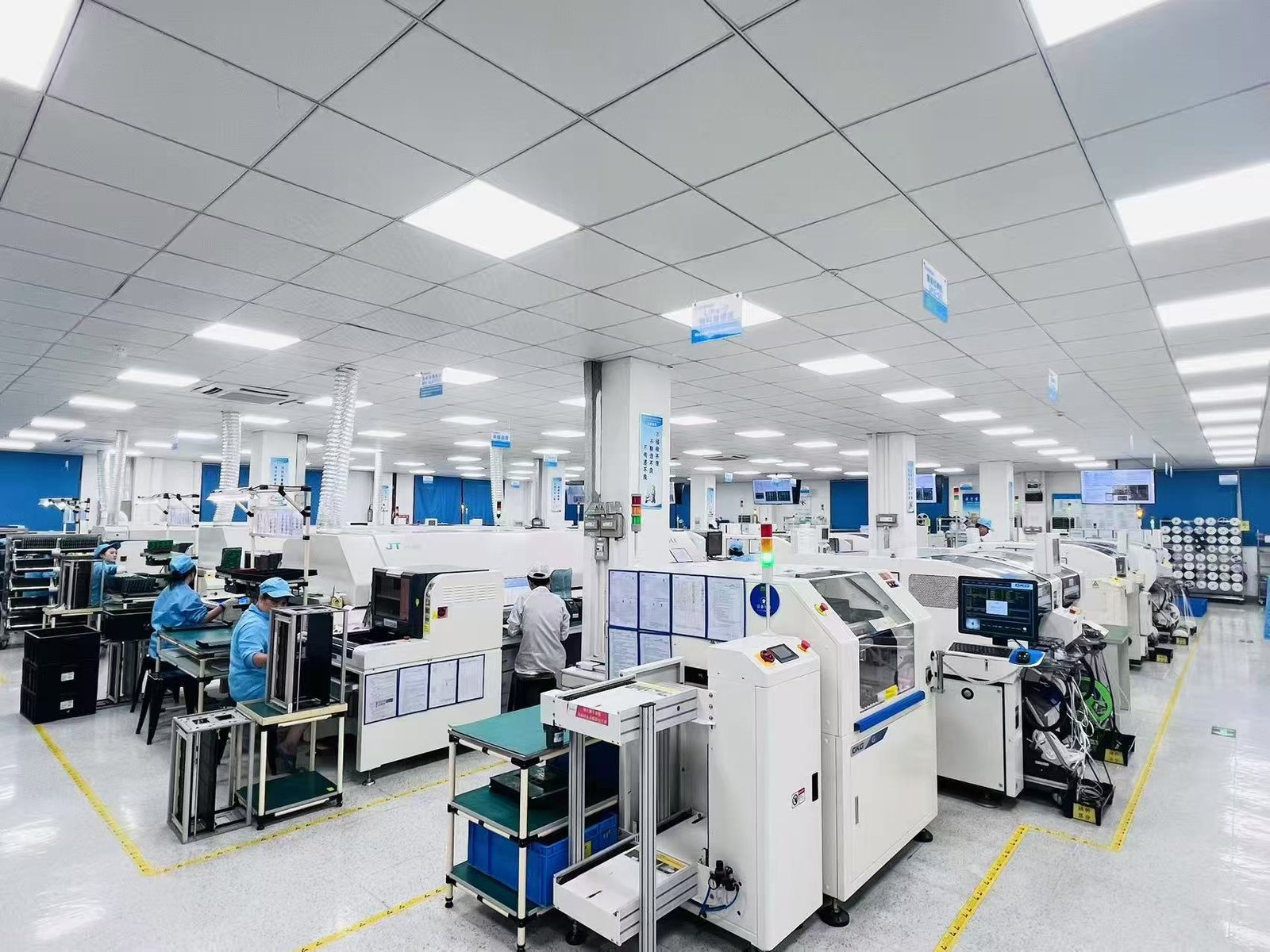
| Facility Audit | Dusty floors, manual soldering, messy inventory, no ESD protocol. | ISO Class cleanrooms, automated COG/FOG bonding machines, strict ESD gear. |
| Quality Control | Only checks outgoing products (OQC). High reliance on manual inspection. | Strict Incoming QC (IQC) for raw materials. Automated Optical Inspection (AOI) machines. |
| Personalização | Refuses to modify FPC; only offers standard off-the-shelf parts. | In-house design team for FPC, backlight, and custom cover glass. |
| Business Focus | 95% of their business is cheap consumer tablets and toys. | Strong portfolio in medical, automotive, or rugged industrial applications. |
| EOL Policy | “We will try to let you know.” | Contractual 6-month PCN/EOL notice with Last-Time-Buy (LTB) options. |
Conclusion: Partnering for the Future
Choosing the right TFT LCD display manufacturer is a heavy responsibility. It requires balancing unit economics with the uncompromising quality standards of the Japanese and South Korean markets.
By looking past the initial price tag and deeply auditing their engineering capabilities, quality management systems, and EOL policies, you transition from simply “buying screens” to building a resilient, long-term supply chain. Remember: a great display manufacturer makes your product look brilliant; a bad one makes your procurement team look terrible. Choose wisely.
Perguntas frequentes (FAQ)
Q1: What is the typical Minimum Order Quantity (MOQ) for a custom TFT LCD?
R: This varies wildly by manufacturer. For standard consumer-grade factories, custom MOQs can be as high as 10K-50K units. However, manufacturers that specialize in the industrial and medical sectors often offer much lower MOQs for custom modules, sometimes ranging from 500 to 1,000 units, acknowledging the lower volume but higher value of these markets.
Q2: How long does the customization process (NRE) usually take?
R: If you are modifying an existing module (e.g., redesigning the FPC or upgrading the backlight), expect a lead time of 3 to 5 weeks to receive the first prototypes. If you are developing a completely custom module with a custom capacitive touch panel and optical bonding, the timeline extends to roughly 6 to 8 weeks.
Q3: What is the difference between TN, VA, and IPS in TFT LCDs?
R: These represent how the liquid crystals are aligned.
- TN (Twisted Nematic): The oldest, cheapest technology. Fast response times but terrible viewing angles (colors invert if you look from the side).
- VA (Vertical Alignment): Offers excellent contrast ratios (deep blacks) but viewing angles are only moderate.
- IPS (In-Plane Switching): The premium standard. Offers ultra-wide 178-degree viewing angles and precise color reproduction. Essential for medical, automotive, and high-end industrial devices.
Q4: We need a display that works outdoors in the Tokyo summer and Hokkaido winter. What specs should we specify?
R: You need to specify three critical things to your TFT LCD display manufacturer:
- Wide Temperature Fluid: Standard liquid crystals freeze or turn black in extreme temperatures. Specify an operating temperature range of at least -30°C to +80°C.
- Sunlight Readability: The backlight must be at least 800 to 1,000 nits.
- UV Protection and Optical Bonding: The cover glass must have an Anti-UV and Anti-Glare (AG) coating, and it must be optically bonded to prevent condensation from forming inside the screen during rapid temperature shifts.
Q5: How can we protect ourselves from sudden chip shortages affecting the display’s driver IC?
R: This is a critical supply chain risk. Ensure your manufacturer uses driver ICs from major, stable foundries (like Ilitek, FocalTech, or Novatek). Secondly, during the engineering phase, ask the manufacturer to design the FPC to be “pin-to-pin compatible” with an alternative fallback IC. If the primary IC goes out of stock, they can swap to the backup IC without requiring you to redesign your motherboard.