Столкнулись с трудностями в проекте встраиваемого дисплея?
Не позволяйте сложной интеграции или проблемам цепочки поставок замедлить ваш выход на рынок. Забронируйте бесплатную консультацию с экспертной командой RJY для получения индивидуальной поддержки в проектировании и производстве.
Разница между IPS и TFT LCD часто понимается неправильно. Многие покупатели ищут “IPS против TFT”, как будто IPS и TFT — это две отдельные технологии отображения. Технически такое сравнение неточно.
TFT LCD означает жидкокристаллический дисплей на тонкопленочных транзисторах. Он описывает активную матричную структуру LCD, в которой пиксели управляются тонкопленочными транзисторами. IPS (In-Plane Switching) — это конкретная технология LCD-панелей, используемая для улучшения углов обзора и стабильности цветопередачи. В большинстве современных обсуждений продуктов IPS-дисплей обычно представляет собой IPS TFT LCD.
Простыми словами: IPS не является противоположностью TFT. IPS — это тип технологии TFT LCD-панелей.
Это различие важно для инженеров, отделов закупок и разработчиков продуктов, выбирающих дисплеи для промышленных HMI, панелей умного дома, устройств, связанных с транспортными средствами, медицинских интерфейсов, охранного оборудования и встраиваемых систем. Выбор правильного дисплея требует большего, чем просто чтения этикетки. Покупателям необходимо оценивать тип панели, угол обзора, яркость, разрешение, интерфейс, требования к сенсорному управлению, совместимость с контроллерной платой, механическую подгонку и рабочую среду.
IPS и TFT LCD: Какова взаимосвязь?
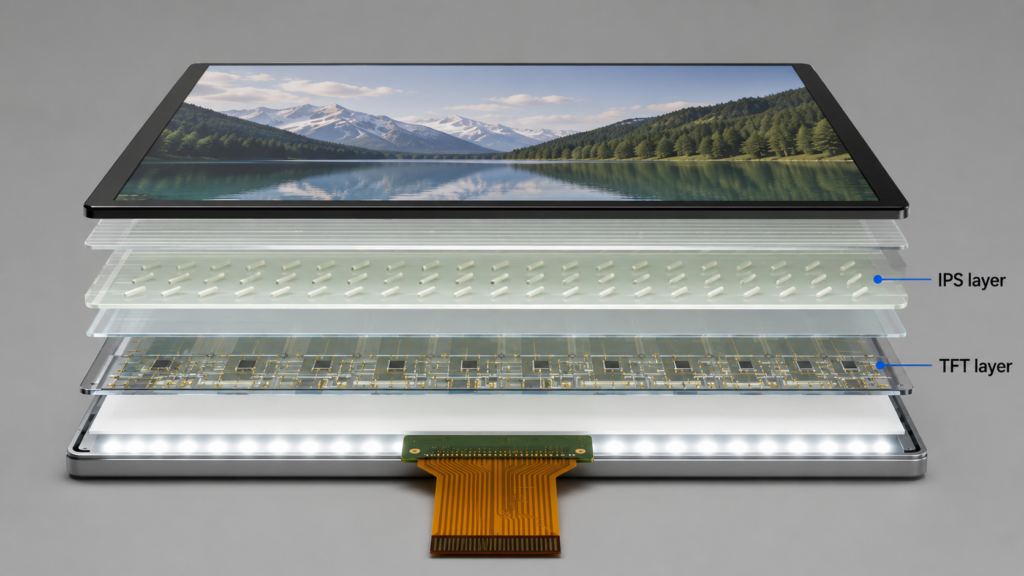
TFT LCD — это широкая категория дисплеев. Она относится к LCD-панели, использующей активную матрицу на тонкопленочных транзисторах для управления пикселями. Слой TFT помогает дисплею адресовать пиксели более точно, чем более старые пассивные матричные LCD-конструкции.
IPS — это одна из технологий панелей в семействе LCD. Она описывает, как движутся молекулы жидких кристаллов внутри панели. В IPS-панели жидкие кристаллы вращаются в плоскости, что помогает поддерживать более стабильные цвет и контрастность при просмотре экрана под разными углами.
Поперечное сечение IPS TFT LCD, показывающее слой жидких кристаллов IPS и слой активной матрицы TFT.
Взаимосвязь можно четко резюмировать:
TFT описывает структуру управления пикселями.
IPS описывает метод выравнивания жидких кристаллов.
IPS-дисплей, используемый в современных LCD-модулях, обычно является IPS TFT LCD.
IPS и TFT не являются конкурирующими технологиями одного уровня.
Более точным сравнением является IPS TFT LCD против TN TFT LCD или VA TFT LCD.
Почему “IPS против TFT” — вводящий в заблуждение вопрос.
Фраза “IPS против TFT” вводит в заблуждение, поскольку сравнивает два термина из разных технических уровней. TFT — это технология активной матричной подложки. IPS — это режим жидкокристаллической панели.
Дисплей может быть одновременно и TFT, и IPS. В описаниях продуктов часто используются такие термины, как “IPS TFT LCD”, “TFT IPS дисплей” или “IPS LCD модуль”, чтобы показать, что панель сочетает активное матричное управление TFT с характеристиками углов обзора IPS.
Когда покупатель спрашивает, лучше ли IPS, чем TFT, реальный вопрос обычно заключается в одном из следующих:
Лучше ли IPS TFT LCD, чем TN TFT LCD, для данного применения?
Нужны ли мне более широкие углы обзора?
Будут ли пользователи смотреть на дисплей сбоку?
Важна ли стабильность цветопередачи?
Использует ли продукт сенсорную панель?
Используется ли дисплей в фиксированном положении с одним углом обзора или в многопользовательской среде?
Требует ли проект контроля затрат больше, чем широких углов обзора?
Эти вопросы более полезны, чем простое сравнение “IPS против TFT”.
Что такое TFT LCD?
TFT LCD расшифровывается как жидкокристаллический дисплей на тонкопленочных транзисторах. Это тип активной матрицы LCD. В TFT LCD тонкопленочные транзисторы помогают управлять отдельными пикселями или субпикселями, позволяя дисплею отображать изображения с лучшей стабильностью, детализацией и временем отклика, чем многие более старые пассивные матричные LCD.
TFT LCD по-прежнему требует подсветки, поскольку жидкокристаллический материал сам по себе не излучает свет. Подсветка пропускает свет через структуру LCD, в то время как слой жидких кристаллов и цветовые фильтры управляют формированием изображения.
Технология TFT LCD широко используется во встраиваемых продуктах, поскольку она предлагает практичный баланс качества отображения, стоимости, доступных размеров, вариантов интерфейсов и гибкости настройки.
Общие сильные стороны TFT LCD:
Подходит для цветных графических пользовательских интерфейсов.
Доступен во многих размерах и разрешениях.
Поддерживает распространенные интерфейсы дисплеев в зависимости от модуля и контроллерной платы.
Может быть интегрирован с сенсорными панелями и защитным стеклом.
Хорошо работает для многих встраиваемых и промышленных дисплейных приложений.
Может быть выбран с различными типами панелей, включая TN, IPS и VA.
Что такое IPS LCD?
IPS расшифровывается как In-Plane Switching (переключение в плоскости). Это технология панелей, используемая в LCD-дисплеях. IPS была разработана для устранения некоторых ограничений более ранних структур LCD-панелей, особенно углов обзора и цветового сдвига.
В IPS-панели молекулы жидких кристаллов движутся более параллельно поверхности дисплея. Эта структура помогает экрану поддерживать более стабильные цвет и контрастность при просмотре с разных направлений.
Для встраиваемых продуктов и промышленных интерфейсов IPS часто выбирается, когда пользователям необходимо читать экран с боковых углов, когда несколько операторов могут просматривать один и тот же дисплей или когда интерфейс использует цвета, которые должны оставаться различимыми с разных позиций.
Общие сильные стороны IPS TFT LCD:
Более широкий угол обзора по сравнению со многими TN TFT LCD-панелями.
Более стабильное цветовоспроизведение при просмотре сбоку.
Лучшая пригодность для многопользовательских сред просмотра.
Полезен для сенсорных дисплеев, умных панелей, HMI и интерфейсов оборудования.
Хорошо подходит, когда читаемость пользовательского интерфейса важна с разных позиций оператора.
IPS TFT LCD против TN TFT LCD.
Наиболее полезным сравнением является не IPS против TFT. Обычно это IPS TFT LCD против TN TFT LCD.
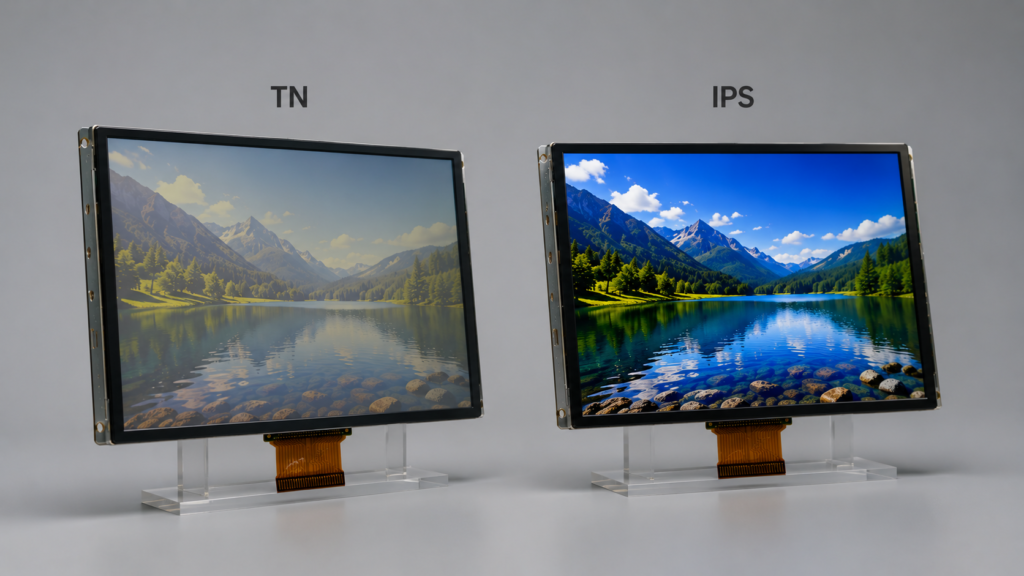
TN расшифровывается как Twisted Nematic (твист-нематик). TN — это еще один режим LCD-панели. TN TFT LCD-панели могут быть экономически эффективными и могут поддерживать быстрое время отклика в некоторых приложениях, но они обычно имеют более узкие углы обзора и более заметный цветовой сдвиг, чем IPS-панели.
Сравнение углов обзора TN и IPS TFT LCD с разницей в стабильности цветопередачи при боковом просмотре.
IPS TFT LCD-панели обычно предпочтительнее, когда дисплей должен оставаться читаемым под несколькими углами, когда важна стабильность цветопередачи или когда продукт будет использоваться в качестве сенсорного интерфейса в реальной рабочей среде.
Характеристика
TN TFT LCD
IPS TFT LCD
Технический уровень:
TFT LCD с TN-режимом жидких кристаллов.
TFT LCD с IPS-режимом жидких кристаллов.
视角
Более ограниченный, особенно с определенных направлений.
Более широкий и стабильный при типичном использовании.
слабоосвещенных средах
Более вероятен при боковых углах обзора.
Обычно менее заметен.
Стоимость
Часто более экономически эффективен.
Часто выше, чем у базовых TN-вариантов.
Пригодность для сенсорных дисплеев:
Применимо, но угол обзора следует проверить.
Часто предпочтительнее для сенсорных панелей и многоуглового просмотра.
Наилучшее соответствие.
Простые интерфейсы, одновидовые продукты, приложения с ограниченным бюджетом
VA означает вертикальное выравнивание. VA — это ещё один режим ЖК-панели, используемый в некоторых продуктах TFT LCD. Панели VA часто рассматриваются, когда важен контраст, но их углы обзора и характеристики отклика зависят от конкретной конструкции панели.
Для многих B2B-проектов с дисплеями практическое сравнение проводится между TN, IPS и VA TFT LCD панелями. Каждый тип панели имеет свои компромиссы. IPS не всегда является единственно правильным ответом, но часто оказывается сильным выбором, когда важны угол обзора и стабильность цветопередачи.
Тип панели
Основное преимущество
Основное ограничение
Типичное применение
TN TFT LCD
Экономичность и простота
Более узкий угол обзора и больший цветовой сдвиг
Базовые элементы управления, одновидовые устройства, продукты с ограниченным бюджетом
IPS TFT LCD
Широкий угол обзора и стабильная цветопередача
Может стоить дороже базовых вариантов TN
Сенсорные панели, ЧМИ, интеллектуальные устройства, дисплеи оборудования
VA TFT LCD
Хороший потенциал контрастности
Производительность сильно зависит от конструкции панели
Приложения, где контраст является приоритетом
Всегда ли IPS лучше TFT?
Нет. Этот вопрос технически некорректен, поскольку IPS обычно является разновидностью TFT LCD. Лучший вопрос — будет ли IPS TFT LCD лучше, чем TN TFT LCD или VA TFT LCD, для целевого применения.
IPS часто лучше, когда дисплей просматривается под разными углами, когда продукт имеет графический интерфейс, когда несколько пользователей могут смотреть на экран или когда важна цветовая согласованность. Однако TN TFT LCD может оставаться практичным для простых интерфейсов, одновидовых приложений и проектов со строгими бюджетными ограничениями.
Правильный выбор зависит от применения, а не от одного ярлыка дисплея.
Когда следует выбирать IPS TFT LCD?
IPS TFT LCD обычно является хорошим направлением, когда важны читаемость дисплея и угол обзора. Это особенно полезно, когда пользователи не всегда стоят прямо перед дисплеем.
Рассмотрите IPS TFT LCD для:
Промышленных панелей ЧМИ, просматриваемых с разных рабочих позиций оператора
Панелей управления умного дома с сенсорным взаимодействием
Интерфейсов медицинского оборудования, где важна стабильная видимость
Охранного оборудования с графическими интерфейсами дисплея
Дисплеев транспортного оборудования, просматриваемых под углом
Потребительской электроники, где визуальное оформление влияет на пользовательский опыт
Встраиваемых продуктов с иконками, диаграммами, меню или элементами интерфейса на основе изображений
IPS также может быть полезен, когда дисплей установлен в вертикальной панели, настенном устройстве, приборной панели или в среде совместного управления, где угол обзора не фиксирован.
Когда может быть достаточно не-IPS TFT LCD?
IPS не требуется для каждого проекта. TN или другой не-IPS TFT LCD может быть достаточным, когда пользователь смотрит на дисплей прямо спереди, интерфейс прост, продукт чувствителен к стоимости, а стабильность цветопередачи не является основным требованием.
Варианты не-IPS TFT LCD могут рассматриваться для:
Простых индикаторов состояния
Базовых показаний оборудования
Однопользовательских устройств с фиксированным положением просмотра
Чувствительных к стоимости встраиваемых продуктов
Интерфейсов с ограниченным содержанием, критичным к цвету
Приложений, где угол обзора контролируется конструкцией корпуса
Ключевой момент — протестировать дисплей в реальных условиях просмотра. Панель, которая выглядит приемлемо на столе, может вести себя иначе после установки в корпус или шкаф оборудования.
Влияет ли IPS на производительность сенсорного экрана?
IPS сам по себе не определяет технологию сенсорного ввода. Производительность сенсора зависит от сенсорной панели, контроллера сенсора, покровного стекла, структуры склейки, прошивки, заземления и рабочей среды.
Однако IPS TFT LCD часто хорошо подходит для продуктов с сенсорными экранами, поскольку сенсорные экраны обычно просматриваются и используются под разными углами. Пользователь может стоять сбоку, тянуться через панель или смотреть на дисплей во время взаимодействия с оборудованием. В таких ситуациях более широкий угол обзора может улучшить удобство использования.
Для проектов с сенсорным вводом покупателям следует оценивать производительность IPS-панели вместе с покровным стеклом, ёмкостным или резистивным типом сенсора, платой контроллера, сенсорным интерфейсом, использованием перчаток, воздействием влаги и механической конструкцией.
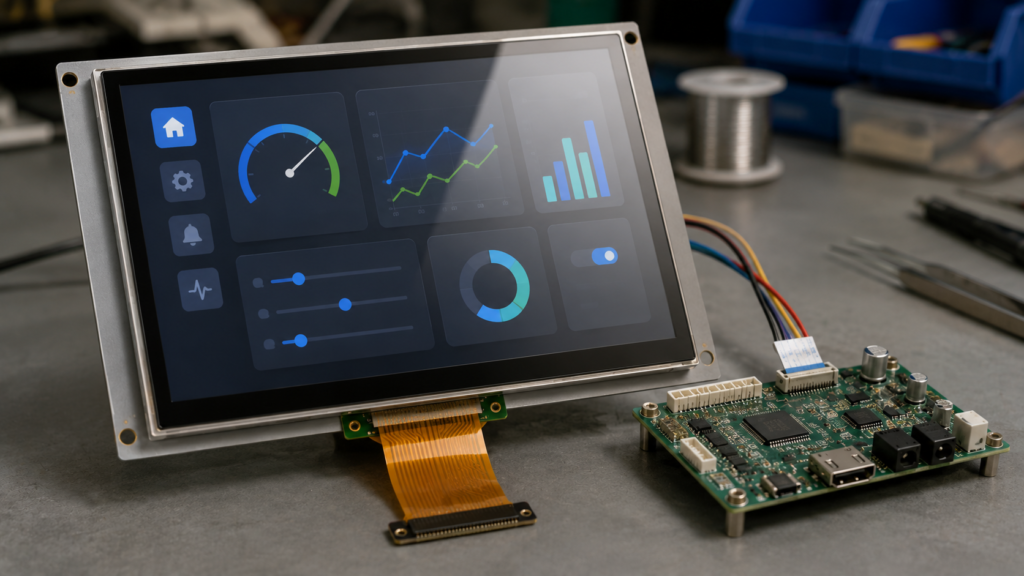
Набор для оценки модуля IPS TFT LCD с платой контроллера, кабелем FPC и спецификацией
Влияет ли IPS на яркость и энергопотребление?
Яркость и энергопотребление не определяются только IPS. Они зависят от ЖК-панели, конструкции подсветки, оптических плёнок, размера дисплея, целевой яркости, условий управления и конфигурации платы контроллера.
Поскольку ЖК-дисплеи требуют подсветки, подсветка часто составляет значительную часть энергопотребления. IPS TFT LCD с высокой яркостью может потребовать тщательного проектирования подсветки и теплоотвода, особенно в компактных корпусах или оборудовании с батарейным питанием.
Для наружного или полунаружного использования не выбирайте IPS только из-за угла обзора. Также проверьте яркость, отражение покровного стекла, антибликовую обработку, рабочую температуру, ток подсветки, нагрев корпуса и конструкцию источника питания.
Как читать “TFT IPS” в техническом описании
В некоторых технических описаниях или списках продуктов используются такие термины, как “TFT IPS”, “IPS TFT” или “IPS LCD”. Эти термины обычно означают, что дисплей представляет собой модуль TFT LCD, использующий технологию IPS-панели.
Для закупок и технического анализа ярлык является лишь отправной точкой. Покупатели всё равно должны подтвердить:
Размер дисплея
Разрешение
Тип панели
Направление обзора или информацию об угле обзора
Яркость
Тип интерфейса
Детали FPC и разъёма
Напряжение и ток подсветки
Требования к сенсорной панели
Совместимость с платой контроллера
Рабочая среда
Механические размеры
Краткая маркировка продукта не может заменить полный анализ спецификации.
Руководство по выбору: IPS TFT LCD или стандартный TFT LCD?
Требования проекта
Рекомендуемое направление
Причина
Требуется широкий боковой обзор
IPS TFT LCD
Лучшая стабильность просмотра под разными углами
Простой статусный дисплей с фронтальным расположением
TN или стандартный TFT ЖК-дисплей может быть достаточным
Стоимость и простота могут быть важнее широких углов обзора
Сенсорная панель управления
IPS TFT ЖК-дисплей часто является предпочтительным
Пользователи могут взаимодействовать с разных позиций
Чувствительный к цвету пользовательский интерфейс
IPS TFT LCD
Более стабильное цветопередача по сравнению со многими TN-вариантами
Строгий целевой показатель стоимости
Сравните варианты TN, IPS и VA
IPS может не потребоваться, если угол обзора контролируется
Использование на открытом воздухе или при высокой яркости
Проверьте подсветку и оптическую структуру
Тип панели сам по себе не определяет читаемость при солнечном свете
Продукт на базе контроллерной платы
Подтвердите совместимость ЖК-дисплея и контроллера
Интерфейс, синхронизация, прошивка и подсветка должны соответствовать друг другу
Распространенные ошибки при сравнении IPS и TFT ЖК-дисплеев
Одна из распространенных ошибок — предполагать, что IPS и TFT являются противоположными технологиями. Это не так. IPS может быть частью TFT ЖК-модуля.
Другая ошибка — предполагать, что все TFT ЖК-дисплеи имеют плохие углы обзора. Это неверно. TFT ЖК-дисплей — это широкая категория. IPS TFT ЖК-панели специально используются для улучшения углов обзора по сравнению со многими TN-панелями.
Третья ошибка — предполагать, что IPS автоматически решает все проблемы с дисплеем. IPS улучшает угол обзора и стабильность цвета, но не гарантирует автоматически читаемость на улице, низкое энергопотребление, надежность сенсора, работу в широком диапазоне температур или совместимость с контроллерной платой.
Четвертая ошибка — выбирать панель только по углу обзора. Выбор дисплея также должен включать размер, разрешение, яркость, интерфейс, подсветку, сенсор, механическую совместимость, прошивку, рабочую среду и вопросы поставки.
Поддержка RJY Display для проектов IPS TFT ЖК-дисплеев
RJY Display поддерживает TFT LCD модули, платы контроллеров и 定制显示器 Обсуждение решений для инженерно-ориентированных проектов. IPS TFT ЖК-дисплей может быть рассмотрен, когда проект требует более широких углов обзора, сенсорного взаимодействия, графического пользовательского интерфейса или установки дисплея в среде с многоугловым обзором.
Для индивидуальных проектов практический путь обычно заключается в том, чтобы начать с существующего дисплейного модуля и настроить связанные с ним компоненты, такие как защитное стекло, подсветка, сенсорный экран, FPC, интерфейс, контроллерная плата, прошивка или координация механической структуры.
Если ваш проект требует IPS TFT ЖК-дисплей, TN TFT ЖК-дисплей, сенсорный дисплей, дисплей с высокой яркостью, совместимость с контроллерной платой или 定制显示器 поддержку, подготовьте размер дисплея, разрешение, интерфейс, требования к яркости, требования к сенсору, рабочую среду и ожидаемый спрос перед запросом.
Разница между IPS и TFT ЖК-дисплеем — это не разница между двумя конкурирующими технологиями дисплеев. TFT описывает структуру активных матричных транзисторов, используемую для управления пикселями. IPS описывает режим жидкокристаллической панели, который улучшает угол обзора и стабильность цвета.
IPS-дисплей, используемый в современных ЖК-модулях, обычно является IPS TFT ЖК-дисплеем. Реальное сравнение обычно проводится между IPS TFT ЖК-дисплеем и TN TFT ЖК-дисплеем или VA TFT ЖК-дисплеем.
IPS TFT ЖК-дисплей часто является хорошим выбором для промышленных HMI, панелей умного дома, сенсорных дисплеев, интерфейсов оборудования и продуктов, просматриваемых под разными углами. TN или другие TFT ЖК-варианты могут по-прежнему подходить для простых, однопозиционных или чувствительных к стоимости приложений.
Правильное решение по дисплею должно основываться на полных требованиях к продукту: размер дисплея, разрешение, угол обзора, яркость, интерфейс, сенсор, защитное стекло, контроллерная плата, прошивка, механическая совместимость, рабочая среда и план производства.
Часто задаваемые вопросы
В чем разница между IPS и TFT ЖК-дисплеем?
TFT ЖК-дисплей — это технология активной матрицы, использующая тонкопленочные транзисторы для управления пикселями. IPS — это тип технологии ЖК-панели, используемый для улучшения угла обзора и стабильности цвета. Большинство IPS ЖК-модулей также являются TFT ЖК-дисплеями.
Является ли IPS лучше, чем TFT?
Этот вопрос технически неточен, поскольку IPS обычно является типом TFT ЖК-дисплея. IPS TFT ЖК-дисплей часто лучше, чем TN TFT ЖК-дисплей, по углу обзора и стабильности цвета, но правильный выбор зависит от применения.
IPS — это то же самое, что TFT?
Нет. TFT описывает структуру управления пикселями. IPS описывает метод выравнивания жидких кристаллов. Дисплей может быть одновременно IPS и TFT.
Что означает IPS TFT?
IPS TFT обычно означает TFT ЖК-модуль, использующий технологию IPS-панели. Он сочетает управление пикселями на активной матрице TFT с характеристиками угла обзора IPS.
Подходит ли IPS TFT ЖК-дисплей для промышленного HMI?
IPS TFT ЖК-дисплей часто подходит для промышленных HMI-приложений, где пользователи могут просматривать экран под разными углами или взаимодействовать с сенсорным интерфейсом. Окончательный выбор также должен учитывать яркость, тип сенсора, интерфейс, контроллерную плату и рабочую среду.
Нужна ли IPS ЖК-дисплею подсветка?
Да. IPS ЖК-дисплей по-прежнему является ЖК-технологией, поэтому для видимости изображения обычно требуется подсветка.
Когда следует выбирать TN TFT ЖК-дисплей вместо IPS?
TN TFT ЖК-дисплей может рассматриваться, когда дисплей просматривается в основном спереди, пользовательский интерфейс прост, а контроль стоимости важнее широкого угла обзора или стабильности цвета.
Как выбрать между IPS, TN и VA TFT ЖК-дисплеем?
Выбирайте на основе угла обзора, контрастности, требований к цвету, целевой стоимости, требований к сенсору, яркости, интерфейса, совместимости с контроллерной платой, рабочей среды и механической конструкции.