Столкнулись с трудностями в проекте встраиваемого дисплея?
Не позволяйте сложной интеграции или проблемам цепочки поставок замедлить ваш выход на рынок. Забронируйте бесплатную консультацию с экспертной командой RJY для получения индивидуальной поддержки в проектировании и производстве.
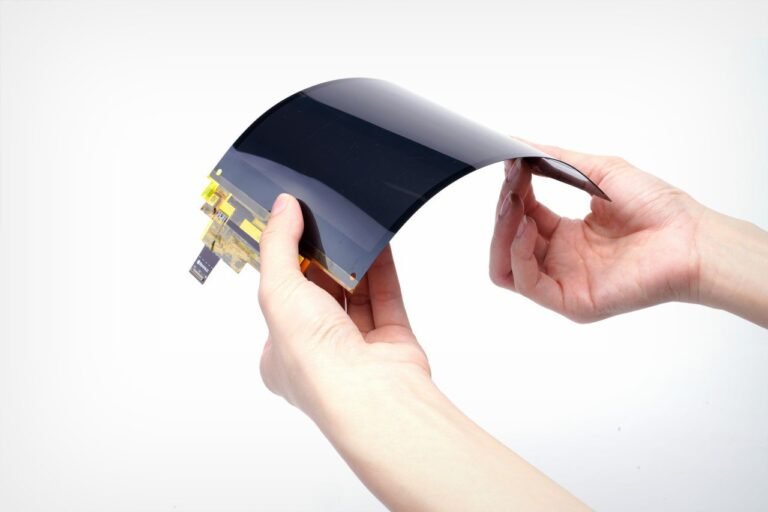
Unlike conventional TFT LCDs or OLEDs that require continuous electrical input to maintain an image, bistable displays leverage unique electro-optical mechanisms that allow them to retain a visual state without persistent power. This is achieved through material memory effects, typically in electrophoretic, cholesteric, or nematic-based systems.
Let’s break this down into three mainstream bistable technologies, each with different physics, and explore how they work from the inside out.
1. Electrophoretic Displays (E-Paper / E Ink)
Mechanism: These displays consist of millions of microcapsules, each filled with a clear fluid containing positively charged white particles и negatively charged black particles. When voltage is applied:
A positive charge attracts the black particles to the top of the capsule, making that pixel appear black.
A negative charge brings white particles to the surface, making it white.
Once the desired image is written, the microcapsules remain in place due to electrostatic stability—no refreshing or holding voltage is required to retain the image.
E-paper display in E-book
Key Characteristics:
Image remains visible even after power is cut.
Very low energy consumption (only when switching).
Excellent readability under natural light.
Engineering note: Voltage pulses typically range from ±15V to ±30V, and pulse duration can affect both update speed and ghosting performance. A full-screen refresh is often necessary to reset residual charges.
2. Cholesteric Liquid Crystal Displays (ChLCD)
Mechanism: ChLCDs rely on the helical structure of cholesteric liquid crystals, which can adopt two stable optical states—a reflective planar state and a scattering focal conic state.
Международный форум по аккредитации (IAF) planar state reflects ambient light selectively based on the helix pitch—this forms the visible image.
Международный форум по аккредитации (IAF) focal conic state scatters light and appears dark or opaque.
By applying specific voltage waveforms, the molecules transition between these two states and stay there until further voltage is applied.
ChLCD Display Screen
Advantages:
Fully reflective, ideal for outdoor displays.
Требуют no backlight.
Retains image for days or weeks without power.
Challenges: Longer response time (can be 1–2 seconds), temperature sensitivity, and limited grayscale make them more suitable for signage or low-frequency updates.
3. Bistable Nematic LCDs
Mechanism: A variation of traditional TN (twisted nematic) LCDs, these displays utilize surface anchoring and alignment layers that allow the liquid crystals to “latch” into one of two molecular alignments without an electric field.
Through careful control of boundary conditions and voltage-induced transitions, these displays can achieve bistability:
State A: liquid crystals are twisted, passing light through a polarizer—bright.
State B: crystals align uniformly, blocking light—dark.
Where It’s Used: Simple devices like e-labels, thermostats, industrial meters where cost and simplicity are prioritized over image richness.
Core Benefits of Bistable Displays in Engineering Applications
Let’s consider the advantages from a system design perspective:
Power conservation: No need for constant refresh means less strain on batteries—critical for remote IoT devices.
Readability: Many bistable screens are reflective, providing excellent visibility in daylight without the need for backlighting.
Longevity: With no organic emitters (unlike OLED), bistable displays often have longer operational life cycles.
Simplicity in design: With less thermal output and simpler driver requirements, they can simplify hardware architecture.
These traits make bistable displays a smart choice for systems where power budget, passive readability, and durability matter more than speed or rich color reproduction.
Use Cases Where Bistable Displays Make Sense
You’ll often find bistable displays used in:
E-readers like the Kindle or Kobo (where page content remains static for long periods)
Electronic shelf labels (ESLs) in supermarkets
Smart cards и wearable ID badges
Battery-powered IoT nodes, meters, and signage
Medical tracking tags, patient wristbands, or disposable test equipment
In each of these, the display typically shows static or rarely changing content, which plays directly to bistable’s strengths.
Bistable vs. Traditional TFT LCD: Key Differences
Характеристика
Bistable Display
TFT LCD Display
Power Consumption
Only when updating image
Constant power for backlight
Image Retention
Infinite (no power needed)
Image disappears without power
Speed
Slow refresh (~1s)
Fast (~60Hz or higher)
Readability in Sunlight
Excellent (reflective)
Poor without high brightness
Full Color Capability
Limited
Full RGB
Best Used For
Static data, low-power UIs
Video, dynamic interfaces
The Role of Bistable Displays in Future Product Design
As sustainability, portability, and autonomy become key design pillars, bistable displays are being adopted in more sectors. Their non-volatile visual memory opens doors for low-maintenance public displays, secure smart cards, и wearable tech with ultra-long standby times.
At RJY Display, we support projects requiring:
Custom-sized e-paper modules
SPI/I²C/MIPI integration
Optical bonding, anti-glare coating
Optional capacitive touch overlays
Display + driver + PCB co-design
Our team is here to help integrate bistable displays into long-life, low-power systems with confidence.
Q1: What makes a display ‘bistable’? A bistable display can hold its image state indefinitely without power. Only when the content is changed does it consume energy.
Q2: Are bistable displays suitable for video? No. The refresh rate is too slow. They are best for static or semi-static information.
Q3: Can bistable displays show color? Yes, but the range and saturation are limited compared to full-color TFT or OLED screens.
Q4: What interface types are supported? Common options include SPI, I²C, or MIPI for compact, low-power embedded systems.
Q5: How long does a bistable screen last? Many e-paper modules can last millions of update cycles, with image retention lasting months without power.