Столкнулись с трудностями в проекте встраиваемого дисплея?
Не позволяйте сложной интеграции или проблемам цепочки поставок замедлить ваш выход на рынок. Забронируйте бесплатную консультацию с экспертной командой RJY для получения индивидуальной поддержки в проектировании и производстве.
Как выбрать TFT ЖК-дисплей для HMI системы сортировки на складе
Published:
6 минут чтения
Updated:
Складское сортировочное оборудование может объединять конвейеры, механизмы отклонения, датчики, приводы, сканеры, локальные контроллеры, складское программное обеспечение и рабочие станции операторов. Дисплей важен для взаимодействия с оператором, но TFT ЖК-дисплей не является контроллером сортировки, системой управления складом, сканером или подтверждением того, что посылка была направлена правильно.
Для OEM-производителя оборудования или системного интегратора выбор дисплея должен начинаться с задачи локального оператора. HMI должен предоставлять полезную информацию для запуска, нормальной работы, обработки исключений, технического обслуживания и определенных процедур восстановления, соответствуя выбранному хосту, корпусу и электрической архитектуре.
Отделить локальный HMI от складских систем и систем управления оборудованием
Сортировочная установка может включать программное обеспечение управления складом или исполнения складских операций, системы управления верхнего уровня, ПЛК или встроенные контроллеры, приводные системы, датчики, сканеры и локальный интерфейс оператора. Эти уровни могут обмениваться информацией, но имеют разные обязанности.
Локальный HMI отображает информацию и принимает разрешенные запросы оператора. Хост отображает графику и управляет программным обеспечением дисплея и сенсорного ввода. Система управления оборудованием координирует заданную последовательность работы. Удаленная панель мониторинга или инженерный монитор могут предоставлять более широкий обзор объекта, но они не являются автоматической заменой встроенного станционного HMI.
Сортировочные системы используются для множества рабочих процессов с посылками, контейнерами и грузами в сферах комплектации и производства.1 Именно этот диапазон рабочих процессов является причиной того, что требования к дисплею должны следовать точной роли локальной станции, а не общему предпочтению по размеру экрана.
Определить, что оператор должен решать на станции
Локальный HMI сортировки может потребоваться для отображения доступности оборудования, состояния определенной зоны, рабочего процесса при исключениях, информации о контролируемом перезапуске, статусе обслуживания или следующего разрешенного действия оператора. Он не должен требовать от оператора интерпретации каждого низкоуровневого значения контроллера или события складского программного обеспечения во время нормальной работы.
Сопоставьте репрезентативные экраны с реальными задачами: запуск, нормальная работа, обработка исключений, устранение заторов, контролируемая остановка, техническое обслуживание и сервисный доступ. Отделите элементы управления оператора от защищенных функций конфигурации и проектирования. Это сохраняет видимый интерфейс согласованным с людьми, которые будут его использовать.
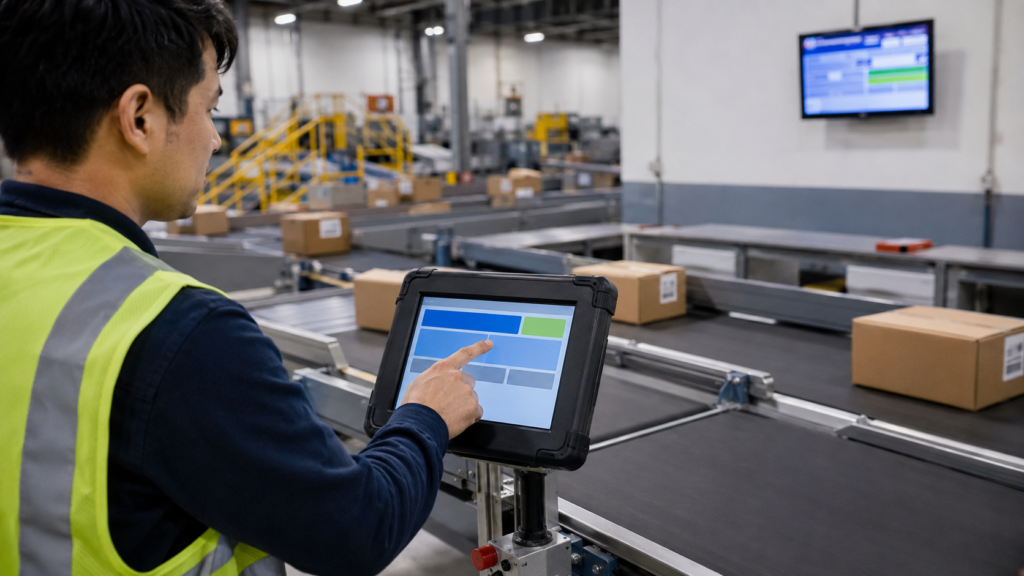
Оператор, использующий локальный TFT HMI рядом со складским сортировочным конвейером
Дисплей должен отображать текущую информацию о системе из подтвержденной архитектуры хоста. Он не должен рассматриваться как источник логики маршрутизации, идентификации продукта, функций безопасности или точности инвентаризации.
Сопоставьте интерфейс TFT с фактическим хостом HMI.
Необработанные TFT ЖК-модули обычно используют нативные интерфейсы, такие как RGB, LVDS, MIPI DSI или eDP. Выбранный хост должен поддерживать точный интерфейс панели, синхронизацию, формат пикселей, последовательность питания, расположение разъемов, управление подсветкой и программную конфигурацию.
Конфигурация интерфейса дисплея включает такие параметры, как размеры панели, синхронизация, полярность и выходной формат.2 Механически похожий разъем не является доказательством того, что панель будет правильно работать с конкретным хостом.
Если источник предоставляет HDMI, а необработанная панель требует MIPI DSI, RGB, LVDS или eDP, пассивный кабель не может выполнить преобразование. Для проекта требуется совместимый активный контроллер или мост. Этот компонент становится частью проверки электрической части, прошивки, запуска, тепловых характеристик и жизненного цикла.
Шкаф управления складской сортировкой с отдельными подключениями дисплея и сенсорного ввода
Обеспечьте разделение ввода с сенсорного экрана и видеотракта.
Сенсорный датчик имеет свой собственный контроллер, подключение, прошивку, требования к заземлению и программный путь. TFT видеотракт управляет пикселями; сенсорная система сообщает о вводе пользователя хосту. Одно не следует предполагать из другого.
Оценивайте сенсорное управление в соответствии с реальным рабочим процессом на станции. Учитывайте перчатки, размер цели, угол установки, защитное стекло, требования к очистке, положение оператора, электрические помехи и то, выигрывают ли определенные частые действия от выделенных физических элементов управления. Сенсорное управление может подходить для гибкой навигации и контролируемой конфигурации, в то время как другие элементы управления могут оставаться отдельными в соответствии с завершенной конструкцией оборудования.
Проектировать с учетом расстояния обзора, освещения и доступа для обслуживания
Сортировочная станция может располагаться рядом с движущимся оборудованием, под высоким освещением или в зоне, где оператор должен распределять внимание между HMI и окружающим процессом. Проверьте предполагаемую высоту установки, ориентацию, расстояние обзора, отражения, размер шрифта, требования к видимой области и яркости экрана в фактическом корпусе.
Конечная сборка имеет такое же значение, как и голая панель. Проверьте защитное стекло, выравнивание активной области, отверстие передней панели, монтажные кронштейны, доступ к разъемам, радиус изгиба кабеля, разгрузку натяжения, процедуру обслуживания и взаимосвязь между HMI и шкафом управления.
Один только модуль дисплея не определяет экологическую пригодность конечной системы, ЭМС-характеристики, доступ для обслуживания или соответствие требованиям на уровне оборудования. Эти результаты зависят от завершенного проекта и плана валидации.
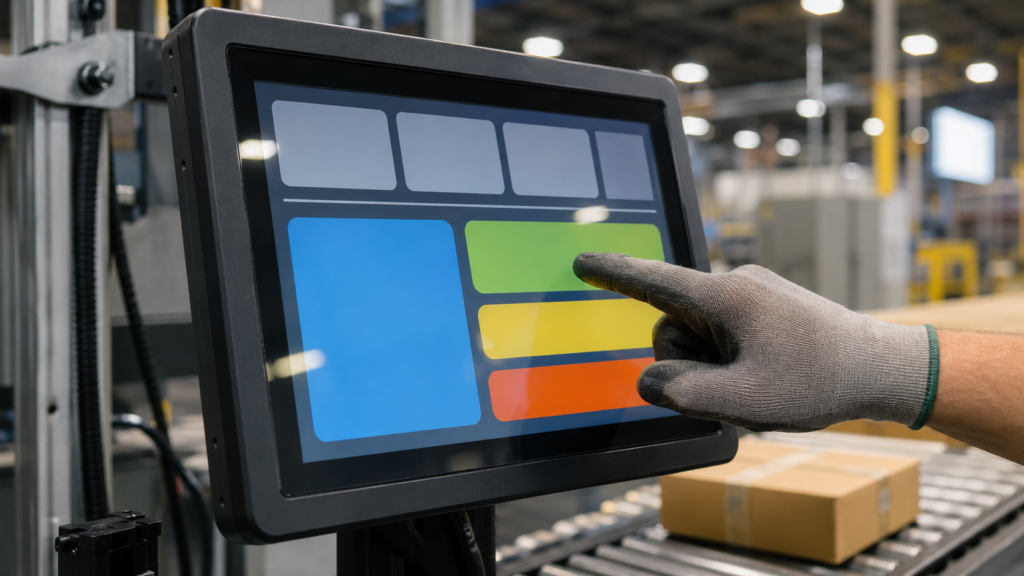
Оператор в перчатках, использующий TFT HMI на складской сортировочной станции
Спланировать поведение при восстановлении до заморозки проекта
Операторам необходимо отличать текущее состояние машины от недоступного, устаревшего или неполного состояния дисплея. Определите ожидаемое поведение во время запуска контроллера, потери связи, инициализации дисплея, неисправностей сенсорного контроллера, контролируемой остановки, восстановления после прерывания питания и перезапуска обслуживания.
Четкий HMI не заменяет проектирование безопасности машины. Аварийные функции, ограждения, блокировки и функции управления, связанные с безопасностью, должны быть реализованы в полной архитектуре оборудования и соответствующих требованиях. Дисплей может передавать информацию об определенном состоянии, но он не должен представляться как сама функция безопасности.
Проведите валидацию HMI, предназначенного для производства.
Валидация должна переходить от стендового запуска к фактическому хосту, кабелям, корпусу, сенсорному стеку, передней панели, программному обеспечению и рабочей среде склада. Цель состоит в том, чтобы проверить уровень дисплея в контексте, а не делать выводы о пропускной способности, производительности маршрутизации или соответствии системы на основе TFT-модуля.
Практический план может включать репрезентативное содержание GUI, положения обзора оператора, условия освещения, предполагаемое использование сенсорного ввода, поведение при включении, доступность дисплея, фиксацию кабеля, доступ к панели, контролируемую потерю связи и восстановление после ожидаемых неисправностей.
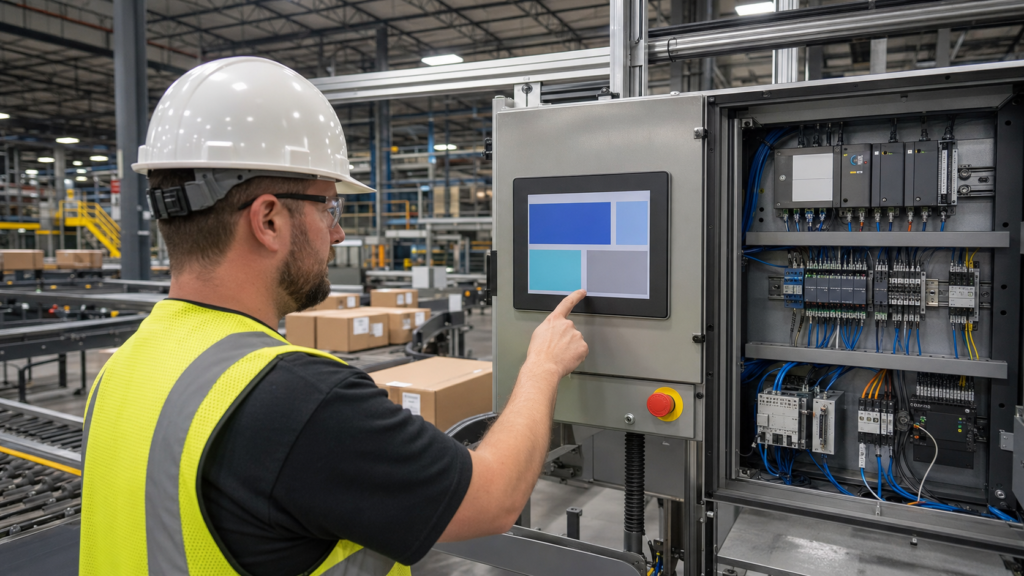
Инженер, проверяющий HMI складской сортировки рядом с открытым шкафом управления
Подготовить полезный запрос на проверку дисплея
Для проверки дисплея HMI складской сортировки предоставьте функцию станции, чертеж корпуса, целевую активную область, ориентацию, репрезентативный GUI, расстояние обзора, процессор или плату хоста, нативные интерфейсы дисплея, требования к сенсорному вводу и защитному стеклу, ограничения по кабелям, последовательность питания, потребности в сервисном доступе, стадию проекта и ожидаемый диапазон спроса.
Компания RJY Display может оценить применимые дисплейные модули и кастомизацию на основе существующих платформ модулей, включая сенсорный ввод, защитное стекло, подсветку, интерфейс, FPC, плату контроллера, прошивку и механическую координацию. Возможность зависит от подтвержденного модуля и требований проекта; это не должно интерпретироваться как обещание разработать произвольный размер ЖК-ячейки с нуля или квалифицировать полную сортировочную систему.
Является ли локальный HMI складской сортировки тем же самым, что и WMS или WES?
Нет. Локальный HMI — это интерфейс, обращенный к оператору на станции или машине. WMS или WES имеют более широкие обязанности по управлению складом или исполнению операций. Их данные могут быть связаны, но они не являются одной и той же границей поставки.
Может ли HDMI напрямую управлять «сырой» MIPI, RGB, LVDS или eDP TFT-панелью?
Нет. Пассивный кабель не может преобразовать HDMI в необработанный интерфейс панели MIPI, RGB, LVDS или eDP. Требуется совместимый активный контроллер или мост, который должен поддерживать источник и точные требования панели.
Является ли сенсорный ввод частью видеоинтерфейса TFT?
Нет. Сенсорный ввод обычно использует отдельный датчик, контроллер, соединение, прошивку и программный путь. Видеоинтерфейс управляет пикселями ЖК-дисплея, в то время как сенсорная система передает пользовательский ввод на хост.
Может ли TFT ЖК-дисплей определять маршрутизацию посылок или безопасность конвейера?
Нет. ЖК-дисплей отображает информацию. Решения по маршрутизации, управление оборудованием, функции безопасности и поведение оборудования относятся к завершенной архитектуре управления и безопасности.
Что должен предоставить OEM-производитель для проверки дисплея HMI складской сортировки?
Предоставьте функцию станции, чертеж корпуса, целевую активную область, репрезентативный GUI, платформу хоста, доступный интерфейс дисплея, требования к сенсорному вводу и защитному стеклу, условия обзора, ограничения по кабелям, последовательность питания, потребности в сервисном доступе, стадию проекта и ожидаемый диапазон спроса.