Our market reading: repair and refurbishment demand can cushion smartphone panel shipments when new-phone demand weakens, but it cannot be read as unlimited end demand. The commercial question is whether panels entering those channels convert into paid repairs, refurbished-device sales, and repeat orders. Shipments into distribution show activity; they do not establish that the final customer has bought a working phone.
For display businesses assessing the 2026 smartphone display panel market, this distinction changes the opportunity. New-phone production is only one destination for panels. The installed base creates another set of needs, with different model coverage, technology choices, inventory risks, and service costs. Our analytical judgment is that channel segmentation matters more than a single headline about total panel growth or decline.
This analysis uses four original public releases reviewed through October 21, 2026. It does not use a paid tracker or provide a complete market census.
The evidence shows different periods and destinations
The two TrendForce releases are forecast vintages from the same research firm. The Omdia release describes a quarterly channel flow. The European Commission announcement provides policy context. Their figures and statements have distinct uses; combining them into one demand total would obscure those uses. The commercial reasoning below is our analysis, not a measurement of channel inventory, margins, or returns.
| Source date | Period and scope | Evidence | Status and limit |
|---|---|---|---|
| TrendForce, March 5, 2026[1] | Full-year 2026 smartphone panel shipments | 2.14 billion panels; down 7.3% year over year | Earlier forecast, not realized shipments or a handset count |
| TrendForce, August 31, 2026[2] | Full-year 2026 global smartphone panel shipments and technology unit mix | About 2.25 billion, down 2.5%; LCD about 1.33 billion or 59%; AMOLED about 920 million or 41% | Later forecast; total-market panel units, not new-phone-only share, revenue, or actual full-year results |
| Omdia, August 5, 2026[3] | First-quarter 2026 panels entering the broad refurbished-phone ecosystem | 298 million, up 20% year over year, versus 289 million supplied to smartphone manufacturers | Reported channel shipments; includes repairs, professional refurbishment, and aftermarket parts; not completed repairs, devices sold, or retail sell-through |
| European Commission, June 20, 2025[4] | EU rules for covered mobile devices from that date | Repairability information, parts availability, and repair access form part of the announced framework | Policy context; no measured panel-demand increase or approval of third-party components |
The later TrendForce outlook recognizes secondary and repair demand. Its aggregate LCD category includes a-Si and LTPS LCD. These categories require separate commercial analysis. Omdia also notes the difficulty of measuring final demand in the aftermarket.
A forecast revision is not measured growth
Treat August as the later outlook and March as history. Their difference measures a forecast revision, not realized market growth. Keep dates with the figures and do not average successive vintages as independent evidence.
The installed base creates demand outside new-phone production
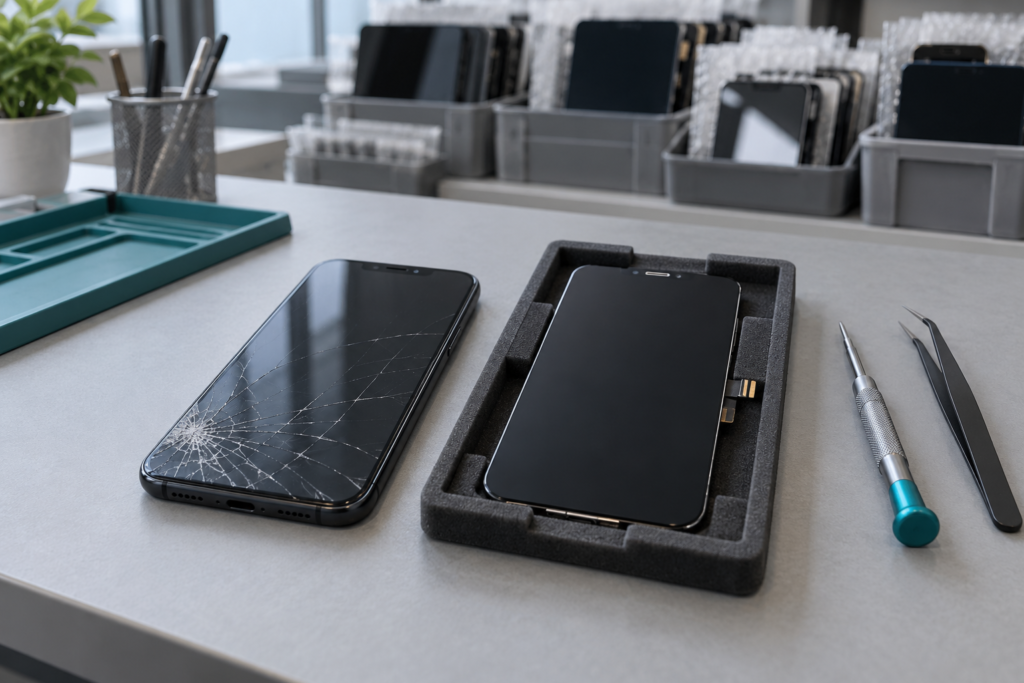
A panel used to repair an existing phone responds to a different purchase decision from a panel installed in a newly manufactured phone. The repair customer weighs the cost and usefulness of keeping that device. A refurbisher weighs the expected value of a restored device against acquisition, restoration, and selling costs.
This means that a weak launch cycle does not automatically remove the need for screens compatible with phones already in use. Equally, a large installed base is not a count of future repair orders. Devices must need repair, owners must choose repair, and the work must make economic sense. The reviewed releases do not quantify those conversion steps.
Professional refurbishment adds another distinction. A restorer may hold devices and parts before a finished product finds a buyer. Panel demand at that stage can precede final sales. The interval matters because a business can show strong inbound component activity while cash remains tied up in unfinished work or unsold devices.
The broad aftermarket therefore deserves its own commercial view. Treating it simply as overflow from new-phone manufacturing misses the different customers and decision rules. Treating it as guaranteed replacement demand misses the conditions required to turn an available part into revenue.
Panel shipments are the start of the inventory question
A channel shipment records a transfer at a particular point in the supply chain. The final outcome may occur later and elsewhere. A distributor can buy ahead of expected repairs; a service business can stock parts for model coverage; a refurbisher can build a work queue. None of those actions alone demonstrates final sell-through.
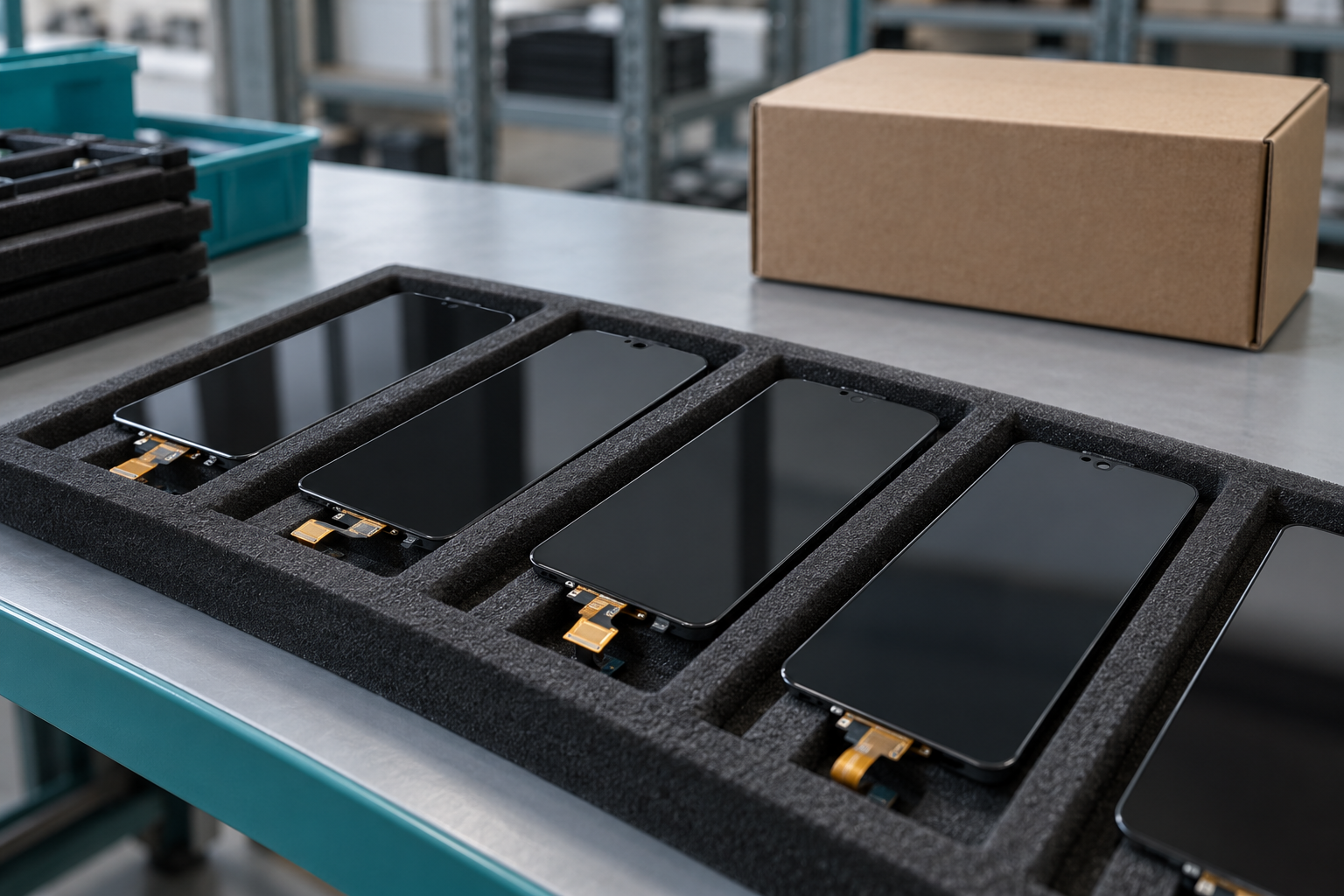
For a supplier considering diversification, the key issue is how inventory converts. Repeat orders supported by documented use offer a different signal from a one-time stock build. Rising shipments accompanied by slow inventory movement can create exposure even when the long-term repair need is real.
Model matching makes that exposure specific. Stock for one device configuration does not necessarily answer demand for another. Broad technology labels cannot resolve differences in fit or function. A large inventory can therefore coexist with gaps in the parts customers actually need.
Returns and unusable matches also matter to the commercial result. Revenue from a shipment should not be confused with contribution after handling, replacement, and service costs. These are proposed analytical tests for a business case, not measured aftermarket margins or return rates from the cited sources.
Technology mix depends on the channel and device population
TrendForce places a-Si LCD in entry-level, secondary, and repair demand, while reporting declining smartphone use of LTPS LCD.[2] Omdia reports OLED at 7% of the broad refurbished ecosystem’s panel shipments in first-quarter 2026, versus 2% a year earlier.[3] That channel share has a different denominator from the total-market AMOLED forecast.
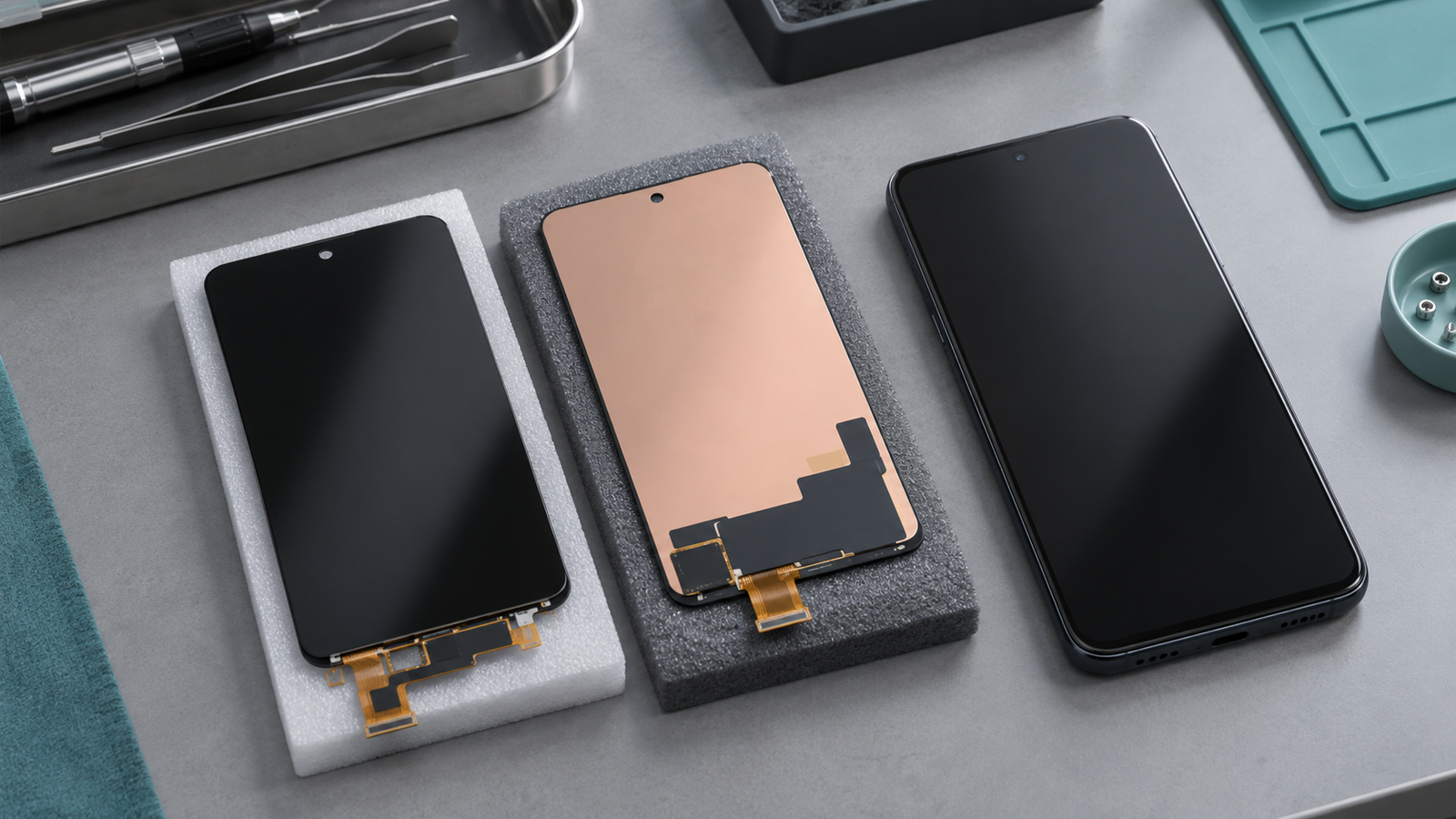
Our interpretation is that LCD retains specific commercial roles while OLED gains a place in the aftermarket. Neither supports a universal technology replacement story. A supplier’s opportunity depends on the models and channel it can serve, rather than a flagship technology trend alone.
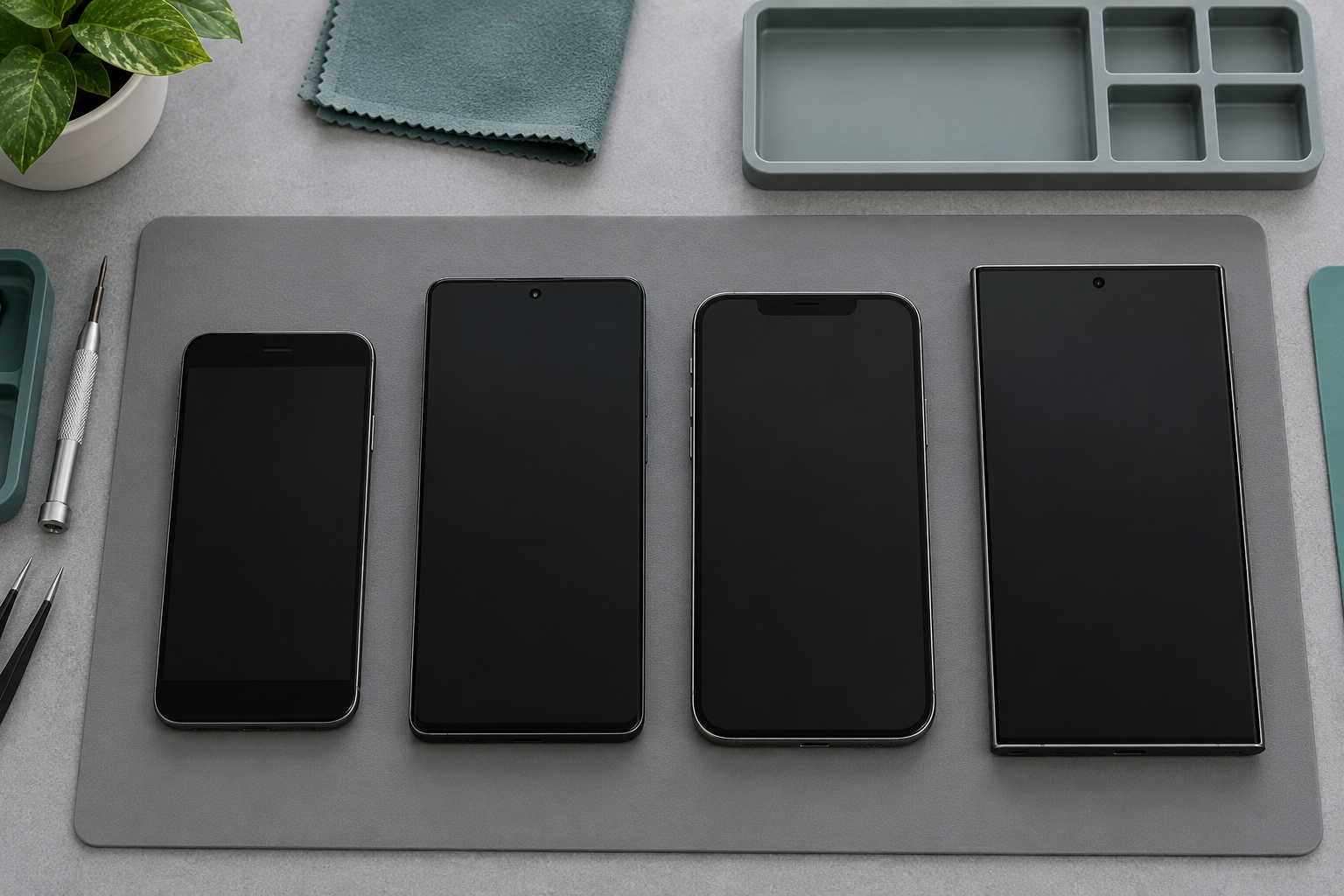
Flagship-phone adoption does not describe every screen needed by a repair network. New-phone production reflects current designs; aftermarket demand reflects the mix of models still worth servicing. Those populations can differ in age, specification, and customer price tolerance.
A total-market technology share can therefore remain commercially meaningful without predicting the mix at a particular repair business. The right denominator depends on the question. A producer planning broad panel output needs one view; a refurbisher serving a defined model range needs another. Neither can safely substitute the other’s percentage.
This also prevents a simplistic conclusion that all LCD demand behaves alike. An aggregate category can contain different product positions and end uses. Technology alone does not establish whether a specific part has an attractive customer base, an acceptable return profile, or a sustainable service proposition.
RJY’s TFT, OLED, and LCD comparison provides terminology background. The market decision here concerns channels and device populations rather than a universal ranking of display technologies.
Repair policy is context, not a sales forecast
A policy framework that addresses repairability can make device support more relevant to product planning. It does not specify how many owners will repair a phone, which repair route they will choose, or how much independent aftermarket inventory will sell.
The policy evidence also has a defined geographic and product scope. It should not be extended to all devices worldwide or treated as a requirement for unrelated industrial TFT modules. Converting policy direction into a sales estimate would require evidence about customer behavior and the covered device population.
What would make aftermarket expansion more convincing?
A stronger opportunity case would connect component orders to downstream use. Evidence of repeat demand, inventory movement, and completed sales would help distinguish durable channel growth from stock accumulation. Model-level coverage and return behavior would help explain whether that demand is commercially usable.
Our conclusion is conditional: channel diversification can widen the addressable customer base, but durable commercial value requires stock to convert into use and repeat demand. Rising inbound shipments without downstream evidence leave inventory-conversion risk unresolved. This is a testable business thesis, not a reported result for aftermarket profitability.
For embedded-display teams, the broader lesson concerns lifecycle support: a product’s service life can create needs beyond its initial production run. That does not establish compatibility between phone parts and industrial modules. RJY’s discontinued TFT LCD module guide addresses the separate problem of reviewing an embedded replacement.
For a documented embedded TFT project, contact RJY Display with module and host data, application constraints, expected demand, and lifecycle needs. Review would concern existing TFT module and controller-board options within that scope.
References
- TrendForce, March smartphone panel outlook, March 5, 2026. Earlier full-year forecast.
- TrendForce, August smartphone panel outlook, August 31, 2026. Later forecast and technology unit mix.
- Omdia, display shipments into the refurbished-phone ecosystem, August 5, 2026. First-quarter panel channel flows.
- European Commission, rules for durable and repairable smartphones and tablets, June 20, 2025. Covered-device policy context.