The automotive display market in 2026 is easier to misread when every headline becomes a single growth story. Panel revenue, OLED panel shipments, supplier-region shares, and orders for integrated display units measure different parts of the business. They cannot establish the same conclusion about demand, pricing, or an OEM’s available supply.
The public evidence reviewed through October 21, 2026 supports a more segmented analysis: technology value mix, cost discipline, supplier geography, and differentiated integration deserve separate treatment. This article uses five public releases. It does not provide a complete market census or a new estimate of full-year 2026 market value.
Read the evidence by date, period, and metric
Publication date tells readers when a claim became public. The reference period tells them what that claim describes. A forecast for a completed year does not become an actual result simply because the calendar has moved on. The table preserves these distinctions before drawing commercial implications. The sections that follow present our analysis of these public signals, rather than additional findings reported by the sources.
| Source and publication date | Reference period and metric | Reported evidence and status | Limit |
|---|---|---|---|
| Omdia, July 31, 2025[1] | 2025 automotive display panel revenue and technology revenue mix | Forecast: $13.6 billion, up 8% year over year; LTPS TFT LCD 45%, OLED 9% of panel shipment revenue | Historical forecast, not a 2026 valuation or final 2025 result; revenue shares are not unit penetration |
| Omdia, December 16, 2025[2] | 2025 automotive OLED panel shipments | Estimate: approximately 3.05 million panels, up 11.8%; discussion of cost sensitivity and some program shifts toward FALD or mature LCD | Panels, not vehicles or cockpit systems; estimate, not final actual; no current module price quote |
| Omdia, September 3, 2026[3] | Global automotive display unit shipments by maker base | Forecast: China-based makers 65.2% in second-half 2026; comparison with 59.0% in first-half 2026 and reported 56.6% in 2025 | Maker-based unit share; not revenue share, factory location, module origin, or full-year 2026 actual |
| AUMOVIO, April 7, 2026[4] | Order for a camera-under-OLED display unit | Company announcement: order intended for a volume model from a European premium manufacturer | Order signal, not realized shipments or market share; no volume or production date established here |
The four quantitative releases used here, including the small-display forecast below, come from Omdia. They offer different views of the market, but they do not provide independent confirmation from several research firms. The AUMOVIO release adds a company-reported application signal with a different evidentiary role.
Value mix does not tell the same story as panel volume
A market can change its technology revenue mix without changing its technology unit mix by the same amount. Revenue reflects both units and the average revenue per panel within each category. Changes in screen size, specification, or product mix can affect that average. The public figures above do not isolate those effects.
LTPS TFT LCD and OLED also need separate labels. LTPS describes the LCD technology category in the cited revenue split; adding it to OLED does not measure OLED penetration. A combined headline may be useful for describing a grouping chosen by the analyst, but it obscures the distinction an OEM needs for its own product strategy.
For a business case, the useful question is which denominator matches the decision. A panel supplier assessing revenue opportunity may care about panel shipment revenue. A vehicle program assessing screens per platform needs vehicle and display counts with a consistent scope. A display-unit integrator needs the value of the complete deliverable. Moving between these measures requires additional data.
This limits what can be said about the latest market size. The historical revenue forecast provides context, not a current 2026 valuation. Applying a growth rate from a different technology or period would create a number the reviewed evidence does not support.
One narrower 2026 signal concerns small displays. On May 21, 2026, Omdia forecast shipments of automotive AMOLED panels smaller than 5 inches at 1.5 million in 2030.[5] This is a segment forecast for 2030, not a 2026 result. It cannot be added to the 2025 OLED estimate. Our interpretation is that portfolio analysis should distinguish small interaction displays from larger cockpit screens rather than assume one adoption path for both.
Cost discipline and premium integration can coexist
A display technology does not have one commercial proposition across every vehicle program. In a program with a strict cost envelope, the buyer may prioritize an established architecture and its total integration burden. In another program, a distinctive cockpit design may justify evaluating a more integrated display unit. Neither decision establishes a universal direction for the whole market.
FALD, or full-array local dimming, belongs to the LCD option set discussed in the cost source. A technology substitution should therefore be analyzed at the program level rather than treated as evidence that all premium display demand has disappeared. Conversely, an advanced order does not show that cost constraints have become irrelevant.
The economic comparison also extends beyond the panel’s price. A complete program may assign costs to development, mechanical integration, software work, validation, and support. This is a business-analysis framework, not a measured cost breakdown from the releases. A claim that one option is cheaper in total needs a defined system boundary and comparable quotations.
That distinction matters when interpreting public price commentary. A reported industry price movement cannot serve as a quotation for a particular module, display unit, qualification scope, or delivery schedule. The commercial terms of a specific program remain a separate evidence requirement.
Maker-region share describes competition, not project availability
A change in maker-based shipment share can alter the competitive context for display sourcing. It can justify closer attention to the companies included in that category. It does not prove that any individual panel meets a program’s qualification requirements, has open capacity, or is available through a particular module supplier.
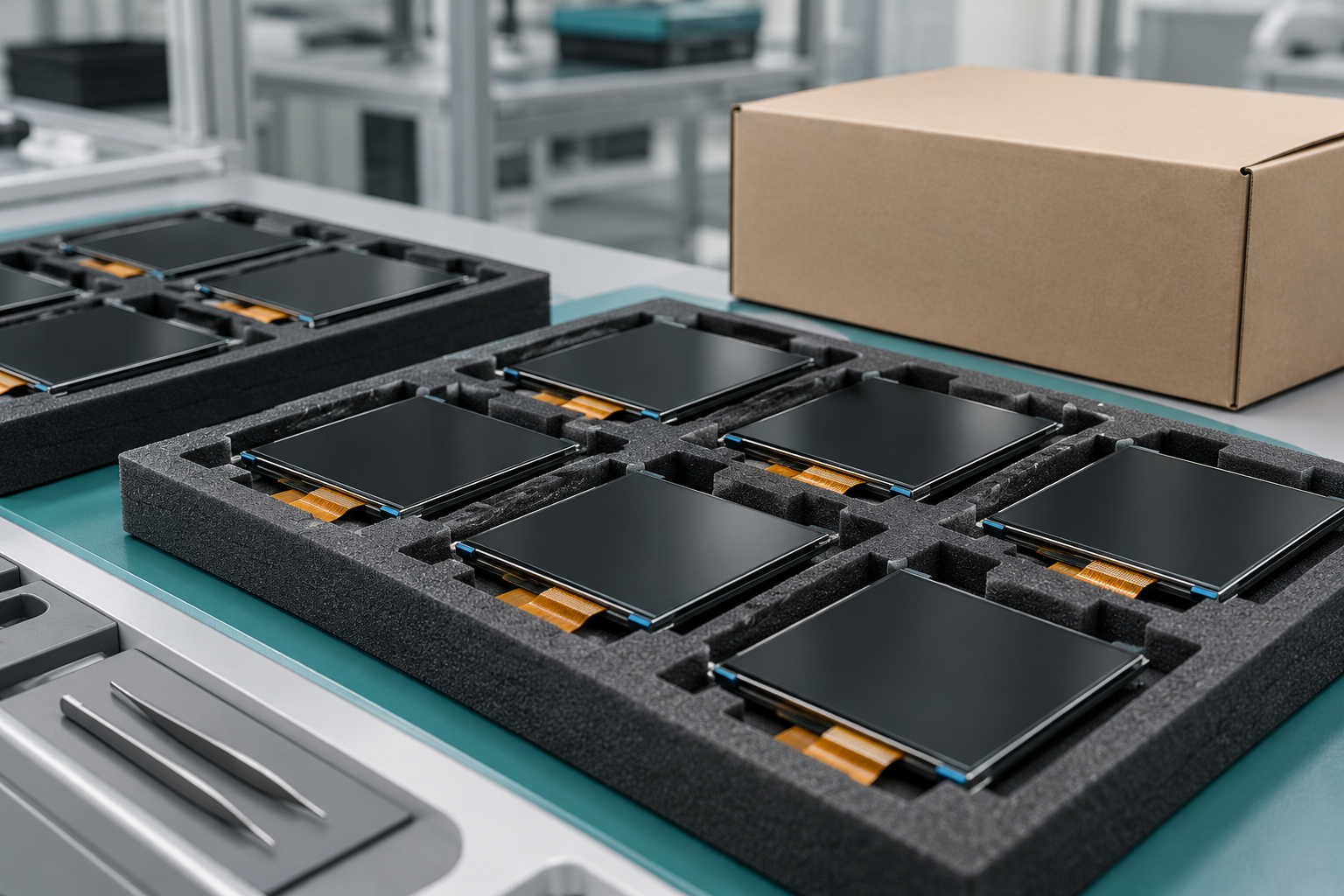
Separate the maker’s base, the factory location, and the delivered item’s origin. The cited classification describes the first. Establish the other two for the exact product.
Unit share alone cannot establish bargaining power or a usable second source. Both depend on the exact deliverable and the feasibility of switching.
See RJY’s LCD capacity consolidation analysis for the separate manufacturing context.
An integrated display order signals a different scope of value
A camera-under-display unit changes the proposition being evaluated. Design, sensing, optical behavior, and system integration may need to be considered together. Compare the complete deliverable rather than treat its price as a panel price.
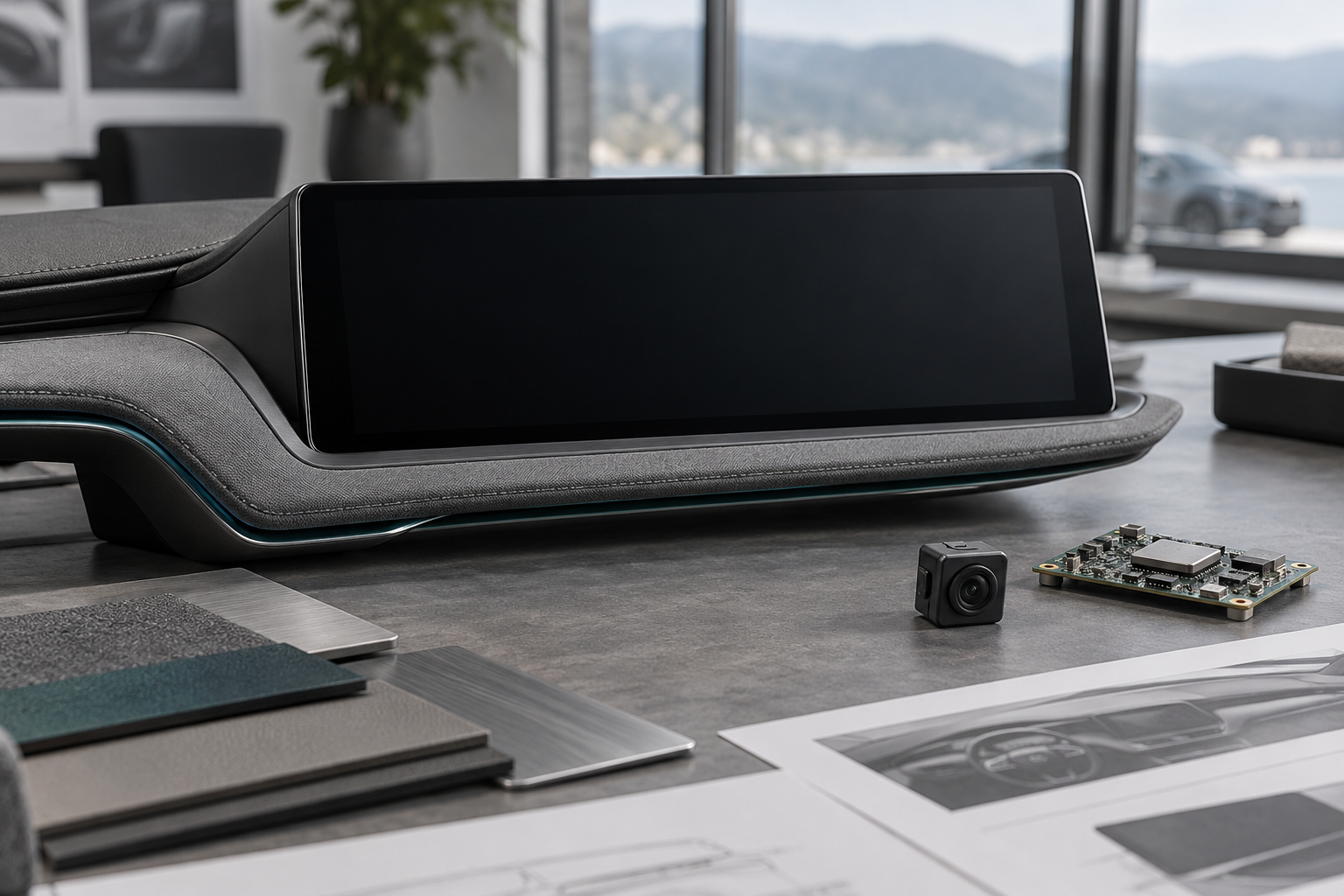
The company-reported order identifies an application direction, but it cannot quantify adoption. Without disclosed volume, realized deliveries, and a market denominator, it establishes neither penetration nor market share. It does not prove other products’ performance.
Track whether comparable announcements lead to documented production and deliveries. Until then, differentiation remains a commercial possibility illustrated by an order.
What would strengthen the market outlook?
The next useful evidence would close specific gaps rather than add more broad growth language. Final results for prior periods would clarify whether forecasts held. Comparable panel unit and revenue data would help separate volume from mix. Realized deliveries of integrated units would strengthen the link between announced orders and market adoption.
A company planning its display portfolio can keep these questions in separate scenarios. One scenario can test cost-sensitive demand for established architectures. Another can test the commercial value of differentiated integration. Both should state their assumptions and define the evidence that would change them. The reviewed sources do not supply probabilities for either scenario.
The commercial reading is that LCD value upgrades and differentiated OLED integration can be evaluated in parallel. Cost-sensitive programs compare total system cost, while integrated units compete on a broader deliverable than the panel. Supplier share informs competitive analysis; it does not determine which program can switch. The following opportunities are hypotheses to test, not forecasts assigned a probability here.
| Opportunity | Commercial constraint | Evidence that would strengthen the case |
|---|---|---|
| LCD value upgrades alongside OLED differentiation | Revenue mix alone cannot establish unit adoption | Comparable technology revenue and unit results |
| Cost-sensitive programs using established architectures | Panel price alone omits integration and validation costs | Comparable total-system quotations and program decisions |
| Broader supplier competition | Maker share does not establish a usable alternative | Program-specific approvals and viable switching paths |
| Integrated display units with distinct functions | An order does not quantify realized adoption | Documented production and deliveries from comparable programs |
Keep market opportunity separate from qualification
Commercial interest is a reason to investigate an application, not proof of technical approval. A growing category does not qualify a specific panel, module, controller board, or assembly for a vehicle program. The same boundary applies to supplier claims: a market article cannot establish automotive certification, production approval, or camera-under-display capability.
For background on application considerations, see RJY’s automotive TFT LCD display guide. For a defined TFT LCD or controller integration project, contact RJY Display with the application boundary, qualification requirements, panel and host data, expected demand, and lifecycle. Review would concern the documented scope and existing TFT module options; it does not establish automotive qualification or OLED supply capability.
References
- Omdia, LTPS TFT and OLED revenue forecast, July 31, 2025. Forecast for 2025 panel revenue.
- Omdia, automotive OLED panel shipment estimate, December 16, 2025. Estimate for 2025 panel units.
- Omdia, China-based maker shipment-share forecast, September 3, 2026. Second-half 2026 forecast with prior-period comparisons.
- AUMOVIO, camera-under-OLED order announcement, April 7, 2026. Company-reported order.
- Omdia, small automotive AMOLED shipment forecast, May 21, 2026. Forecast for panels smaller than 5 inches in 2030.