








1. The Reality of the TFT LCD Supply Chain
Before you send out a single Request for Quotation (RFQ), it is vital to understand the structure of the modern display industry. Not every company that calls itself a “TFT LCD display manufacturer” actually manufactures the core glass.
The Glass Makers vs. The Module Assemblers
The TFT LCD supply chain is heavily tiered:
- The Fab (Panel Makers): These are the multi-billion-dollar conglomerates operating massive cleanrooms (Gen 6, Gen 8, Gen 10 fabs). They produce the raw “motherglass” and the TFT backplane. They deal in millions of units and rarely entertain custom projects for mid-volume buyers.
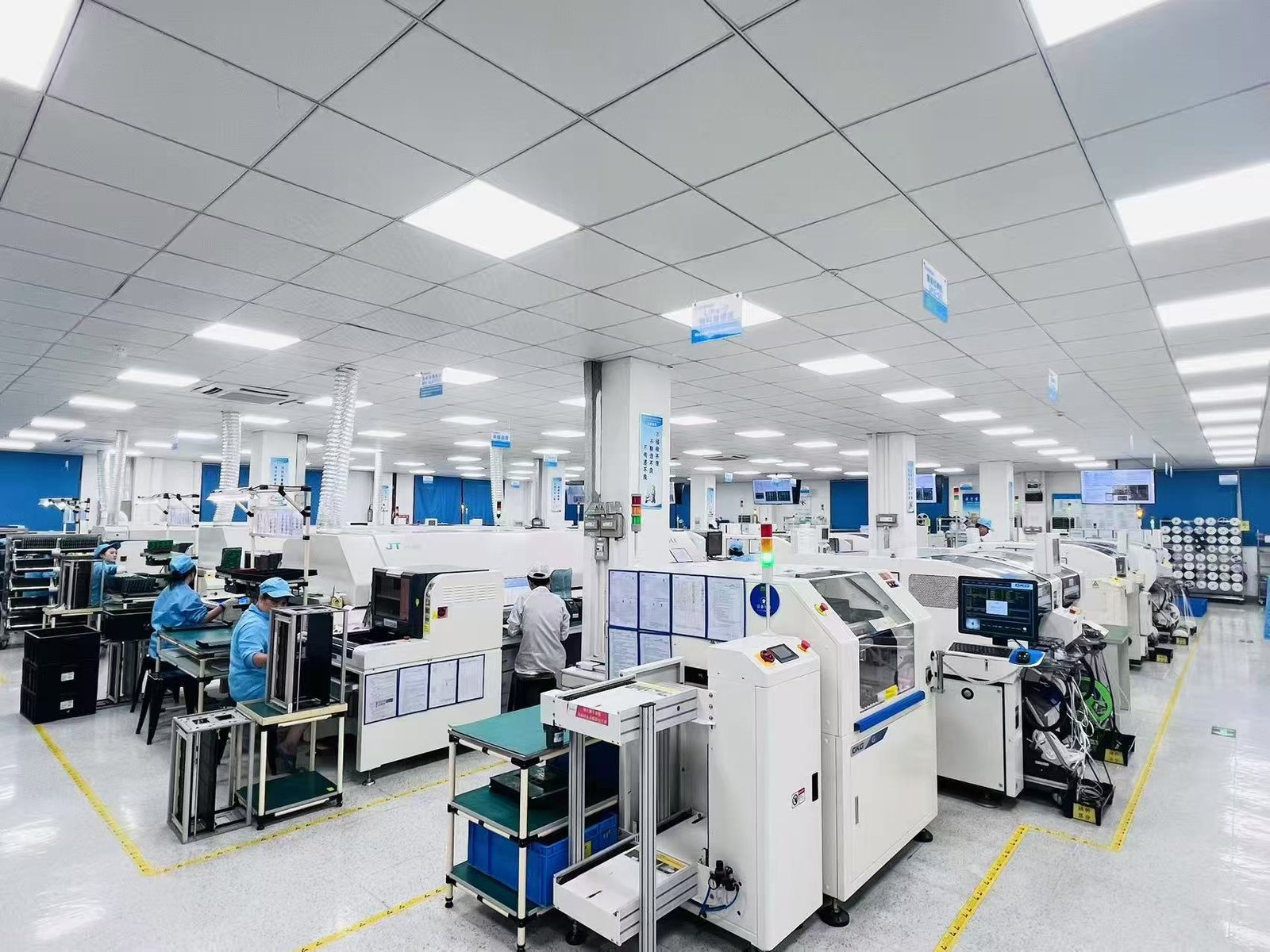
- The LCD Module (LCM) Manufacturers: This is who you are likely looking for. A premium TFT LCD display manufacturer buys the “open cell” (the glass) from the fabs, and then engineers and manufactures the backlight unit (BLU), the driver circuitry (FPC/PCBA), the structural bezel, and integrates the touch panel.
Your goal is to find an LCM manufacturer that possesses flawless engineering capabilities, deep relationships with the glass fabs (to ensure supply stability), and the agility to customize the module to your precise specifications.
2. Quality Assurance: Beyond the ISO Certificate
In the Japanese and South Korean markets, “quality” is not a buzzword; it is a baseline expectation. A defect rate of 1% might be acceptable in cheap consumer toys, but in industrial automation, medical devices, or automotive applications, ppm (parts per million) failure rates must approach zero.
When auditing a potential TFT LCD display manufacturer, do not just look at the ISO 9001 certificate hanging in their lobby. You must dive into their Quality Management System (QMS).
A. The 8D Reporting Standard
Ask the manufacturer how they handle a field failure. A mature manufacturer will immediately provide an 8D (Eight Disciplines) Problem Solving report. This demonstrates that they don’t just replace a broken screen—they quarantine the batch, perform a root-cause analysis (e.g., finding out that a specific ACF bonding temperature was off by 2 degrees), and implement a permanent corrective action.
B. Reliability Testing Laboratories
A top-tier manufacturer does not guess how long their screens will last; they try to destroy them in controlled environments to find out. Your audit checklist should verify they have in-house equipment for:
- High Temperature & High Humidity Storage (HTHH): E.g., 85°C at 85% RH for 500 hours.
- Thermal Shock Testing: Rapid cycling between -30°C and +80°C to check for micro-cracks in the glass or delamination of the polarizers.
- ESD (Electrostatic Discharge) Testing: Ensuring the display’s driver IC won’t fry when a user touches the screen in a dry winter environment.
- Vibration and Drop Testing: Crucial for handheld terminals and automotive displays.
3. Engineering and Customization Capabilities (NRE)
Very rarely does an “off-the-shelf” display perfectly fit a complex industrial or consumer product. The true value of an excellent TFT LCD display manufacturer lies in their Non-Recurring Engineering (NRE) capabilities.
Mastering the Backlight Unit (BLU)
The backlight is the engine of the TFT LCD. If your product is an outdoor kiosk, an indoor 250-nit backlight is useless. You need a manufacturer capable of engineering a custom LED string that delivers 1,000+ nits of brightness while managing the thermal dissipation so the display doesn’t melt in direct sunlight.
Flexible Printed Circuit (FPC) Customization
The FPC is the umbilical cord connecting the display to your motherboard. A rigid, inflexible manufacturer will force your engineering team to redesign your entire PCB to match their display. A flexible, partner-oriented manufacturer will happily redesign the shape, length, and pinout of the FPC to match 당신의 existing board layout.
Optical Bonding and Touch Integration
Adding a touch screen isn’t just about slapping a piece of glass on top of the LCD. If there is an air gap between the touch sensor and the TFT LCD, you will get internal reflections that wash out the screen in bright environments.
Look for a manufacturer that offers in-house Optical Bonding (OCA/OCR). This process fills the air gap with a specialized liquid resin or dry adhesive, dramatically improving contrast, ruggedness, and moisture resistance.
4. Supply Chain Longevity and EOL Management
If there is one thing that gives procurement managers nightmares, it is the dreaded EOL (End of Life) Notice.
Imagine this: You have spent 18 months designing a medical ventilator around a specific 7.0-inch TFT LCD. You finally pass all medical regulatory certifications (which cost hundreds of thousands of dollars). Six months into mass production, your display supplier casually emails you to say they are discontinuing that panel next month.
In the medical, industrial, and automotive sectors, product lifecycles are 5, 7, or even 10+ years. Therefore, evaluating a TFT LCD display manufacturer requires evaluating their supply chain resilience.
How to Ensure Longevity:
- Ask for Longevity Guarantees: Reputable manufacturers focusing on the industrial sector will offer a 3-to-5-year longevity guarantee on specific modules.
- Understand Their Sourcing: Does the LCM manufacturer single-source their glass from one fab? If that fab stops making that size, you are in trouble. The best manufacturers design their modules to be compatible with glass from at least two different panel makers (e.g., BOE and Innolux) to mitigate risk.
- PCN (Product Change Notification) Policies: Insist on a strict PCN agreement. If the manufacturer changes anything—even a single resistor on the FPC or the supplier of the LED backlight—they must notify you 3 to 6 months in advance so your engineering team can re-validate the display.
5. The “Soft Skills”: Communication and Cultural Alignment
In cross-border procurement, especially when sourcing from China or Taiwan for the Japanese or Korean markets, technical specs are only half the battle. The other half is communication.
A common pitfall is the “Yes Culture.” You ask a supplier, “Can you achieve a 50,000-hour MTBF on the backlight?” The eager sales rep says, “Yes, no problem!” without consulting their engineering team, only to fail dramatically during the prototype phase.
A high-quality TFT LCD display manufacturer operates with transparency and engineering honesty.
- Direct Engineer-to-Engineer (E2E) Communication: You do not want your technical requirements playing a game of “telephone” through a salesperson who doesn’t understand the difference between an RGB and an LVDS interface. Look for a manufacturer that assigns dedicated Field Application Engineers (FAEs) to your account.
- Documentation Standards: Are their datasheets complete, accurate, and written in clear technical English (or localized for Japan/Korea)? A sloppy datasheet with missing initialization codes or incorrect mechanical tolerances is a massive red flag for how they manage their production lines.
6. The Procurement Evaluation Matrix
새로운 TFT LCD 디스플레이 제조업체를 평가할 때 결정을 객관화하려면 이 채점 매트릭스를 사용하십시오:
| 평가 기준 | 경고 신호 (회피) | 긍정적 신호 (후보 목록) |
| 시설 감사 | 먼지가 많은 바닥, 수동 납땜, 정리되지 않은 재고, ESD 프로토콜 미비. | ISO 등급 청정실, 자동화된 COG/FOG 본딩 장비, 엄격한 ESD 장비. |
| 품질 관리 | 출하 검사(OQC)만 수행. 수동 검사에 대한 높은 의존도. | 원자재에 대한 엄격한 수입 검사(IQC). 자동 광학 검사(AOI) 장비. |
| 사용자 지정 | FPC 수정을 거부하며 표준 기성 부품만 제공. | FPC, 백라이트, 맞춤형 커버 글라스를 위한 사내 설계 팀 보유. |
| 비즈니스 초점 | 비즈니스의 95% 이상이 저가 소비자용 태블릿과 장난감에 집중됨. | 의료, 자동차 또는 견고한 산업용 애플리케이션에서 강력한 포트폴리오 보유. |
| 수명 종료 정책 | “알려 드리도록 노력하겠습니다.” | 계약상 6개월 PCN/EOL 통지와 최종 구매(LTB) 옵션 제공. |
결론: 미래를 위한 협력
적합한 TFT LCD 디스플레이 제조업체를 선택하는 것은 중대한 책임입니다. 단위 경제성과 일본 및 한국 시장의 타협하지 않는 품질 기준 사이의 균형을 요구합니다.
초기 가격표를 넘어 그들의 엔지니어링 역량, 품질 관리 시스템 및 수명 종료 정책을 깊이 있게 감사함으로써, 단순히 “화면을 구매'하는 것에서 탄력적이고 장기적인 공급망을 구축하는 단계로 전환할 수 있습니다. 기억하십시오: 훌륭한 디스플레이 제조업체는 제품을 빛나게 만들지만, 좋지 않은 제조업체는 구매 팀의 모습을 처참하게 만듭니다. 현명하게 선택하십시오.
자주 묻는 질문(FAQ)
Q1: 맞춤형 TFT LCD의 일반적인 최소 주문 수량(MOQ)은 얼마인가요?
A: 이는 제조업체에 따라 크게 다릅니다. 표준 소비자 등급 공장의 경우 맞춤형 MOQ는 10K~50K 단위에 이를 수 있습니다. 그러나 산업 및 의료 부문에 특화된 제조업체들은 종종 이러한 시장의 낮은 볼륨과 높은 가치를 인정하여 맞춤형 모듈에 대해 훨씬 낮은 MOQ(때로는 500~1,000 단위 범위)를 제공합니다.
Q2: 맞춤화 과정(NRE)은 보통 얼마나 걸리나요?
A: 기존 모듈을 수정하는 경우(예: FPC 재설계 또는 백라이트 업그레이드) 첫 프로토타입을 받기까지 3~5주의 리드 타임이 예상됩니다. 맞춤형 정전식 터치 패널과 광학 본딩이 포함된 완전히 새로운 맞춤형 모듈을 개발하는 경우 타임라인은 대략 6~8주로 연장됩니다.
Q3: TFT LCD에서 TN, VA, IPS의 차이점은 무엇인가요?
A: 이들은 액정이 정렬되는 방식을 나타냅니다.
- TN (Twisted Nematic): 가장 오래되고 저렴한 기술입니다. 빠른 응답 시간을 제공하지만 시야각이 매우 나쁩니다(측면에서 보면 색상이 반전됨).
- VA (Vertical Alignment): 우수한 명암비(깊은 검은색)를 제공하지만 시야각은 보통 수준입니다.
- IPS (In-Plane Switching): IPS (In-Plane Switching):.
프리미엄 표준입니다. 초광각 178도 시야각과 정확한 색 재현을 제공합니다. 의료, 자동차 및 고급 산업용 장치에 필수적입니다.
A: Q4: 도쿄의 여름과 홋카이도의 겨울 같은 실외 환경에서 작동하는 디스플레이가 필요합니다. 어떤 사양을 지정해야 하나요?
- TFT LCD 디스플레이 제조업체에게 세 가지 중요한 사항을 지정해야 합니다: 광온도 액정:.
- 표준 액정은 극한 온도에서 얼거나 검게 변합니다. 최소 -30°C ~ +80°C의 작동 온도 범위를 지정하십시오. 햇빛 가독성:.
- 백라이트는 최소 800~1,000 니트 이상이어야 합니다. UV 보호 및 광학 본딩:.
커버 글라스는 자외선 차단 및 안티글레어(AG) 코팅이 있어야 하며, 급격한 온도 변화 시 스크린 내부에 응결이 생기는 것을 방지하기 위해 광학 본딩되어야 합니다.
A: Q5: 디스플레이의 드라이버 IC에 영향을 미치는 갑작스러운 칩 부족으로부터 어떻게 보호할 수 있나요?.