2026년 10월 21일 기준 시장 분석. 예측은 출처 보고서의 날짜와 범위를 유지합니다.
LCD 생산능력 통합으로 OEM이 물어야 할 질문이 달라진다
LCD 공장 폐쇄, 생산 이전, 가동률 변화는 서로 다른 공급 조건을 설명합니다. 산업용 OEM에게 유용한 질문은 변화가 승인된 디스플레이 모듈 내부의 패널에 영향을 미치는지 여부입니다. 글로벌 생산능력 추세만으로는 모듈이 수명 종료에 도달하거나, 희소해지거나, 비용이 상승할 것임을 입증할 수 없습니다.
2026년 증거는 LCD 생산능력이 어디에 위치하는지와 생산자가 이를 어떻게 활용하는지의 변화를 가리킵니다. 이러한 변화는 특히 장기 서비스 약정이 있는 장비에 주목할 가치가 있습니다. 구매 대응은 시장 이벤트와 실제 패널, 모듈, 생산 경로 간의 연결에 따라 달라져야 합니다. 이 글은 보고된 이벤트와 분석가 예측을 분리한 후, OEM이 각 신호를 어떻게 활용할 수 있는지 설명합니다.
2026년 가용 증거가 보여주는 것
생산능력이 새로운 생산 세대로 이동하고 있다
2026년 3월, TrendForce는 Gen 8.6이 2026년 글로벌 LCD 생산능력의 약 26%를 차지할 것으로 추정했습니다. Gen 5 및 이전 라인의 비중은 4.7%로, 0.5%포인트 감소했습니다.[1] 이는 분석가 추정치입니다. 세대 라벨은 공장 기술과 기판 형식을 설명하며, 특정 산업용 모듈에 공급 가능한 물량을 직접적으로 나타내지는 않습니다.
구매자 시사점은 조건부입니다: 새로운 생산능력의 비중이 크다고 해서 특정 레거시 패널에 승인된 후속 제품이 있다는 것이 입증되지는 않습니다. 새로운 라인은 다른 제품에 공급될 수 있습니다. 마찬가지로 이전 라인의 비중 감소가 해당 라인에서 생산되는 모든 패널이 즉각적인 단종에 직면한다는 것을 입증하지는 않습니다.
생산 이전은 제품 종료와 다르다
TrendForce는 8월에 AUO가 L5D의 자동차, 산업용, 의료용 생산을 L6B와 L6A로 이전할 계획이라고 보도했습니다. Hwa Ya L3D 및 L5D 시설의 생산은 2027년 상반기에 중단될 것으로 예상했습니다. 이는 예정된 변경이었으며, 확인된 완료된 폐쇄가 아니었습니다. 보고서는 또한 Innolux와 AUO가 2028년까지 합계 LCD 모니터 패널의 10% 미만, 노트북 패널의 약 20%를 공급할 것으로 전망했습니다.[2]
이전 계획은 인증 및 연속성에 관한 질문을 제기합니다. 모니터 및 노트북 전망은 해당 시장에 관한 것이며, 산업용 디스플레이 모듈의 가용성을 측정하는 것은 아닙니다.
가동률 예측은 더 짧은 시간 범위를 설명한다
9월에 TrendForce는 2026년 10월 Gen 5 이상 LCD 팹의 가동률을 79.6%로 전망했으며, 이는 전월 대비 4.2%포인트 감소입니다. 논의는 대형 LCD 응용 분야와 관련된 수요 및 비용 압력에 집중되었습니다.[3] 이는 10월 전망치이며, 측정된 10월 실적이 아닙니다. 산업용 OEM 모듈의 가격 추세를 입증하지는 않습니다.
폐쇄가 실제로 발생했는지 확인하라
Japan Display의 2026년 2월 재무 발표에 따르면 Mobara 생산은 2025년 11월에 종료되었습니다.[4] 이는 완료된 생산 이벤트입니다. 발표된 미래 기한이나 공장이 중단될 시점에 관한 예측과는 다릅니다. 조달 기록은 이러한 구분을 보존해야 합니다.
구조적 통합과 주기적 감산은 공존할 수 있다
우리의 해석은 보고서가 서로 다른 속도의 두 가지 조정을 설명한다는 것입니다. 공장 세대의 변화와 선택적 생산 이전은 장기 제조 기반에 관한 것입니다. 월간 가동률 감소는 생산자가 단기간에 해당 기반을 얼마나 활용하는지에 관한 것입니다. 둘 다 동시에 발생할 수 있으며, 일반적인 LCD 부족이나 모든 응용 분야에 대한 공급 과잉을 입증하지는 않습니다.

구조적 질문은 어떤 생산 경로가 투자를 유지할 만큼 충분히 경쟁력을 갖추고 있는지입니다. TrendForce는 세대 전환을 업그레이드 및 비용 압력과 연결합니다.[1] 별도의 질문은 현재 주문이 가용 라인을 더 높은 비율로 가동하는 것을 정당화하는지 여부입니다. 9월 전망은 약한 수요에 대응한 일시적 감산을 설명했습니다.[3] 따라서 이전 경로를 제거하면서 다른 곳에서 생산량을 줄이는 것은 모순이 아닙니다.
선택적 이전은 세 번째 구분을 추가합니다: 제조사는 특정 제품 라인을 유지할 계획하면서 공장 규모를 줄일 수 있습니다. AUO 계획은 이러한 가능성을 보여주지만, 이전된 모든 패널이 변경 없이 유지된다는 것을 입증하지는 않습니다.[2] 산업용 구매자에게는 단순한 공장 수보다 전환 증거가 더 중요합니다.
이러한 지표는 분모도 다릅니다. 생산능력 비중, 생산 면적, 출하 패널, 완성 모듈은 상호 교환 가능한 측정치가 아닙니다. 더 큰 기판 형식이 특정 크기나 설계의 사용 가능한 패널 수를 그 자체로 입증하지는 않습니다. 공개 자료는 산업용 모듈 가용성을 계산하기에 충분한 세부 정보를 제공하지 않습니다. 이는 생산 구조 변화에 대한 관점을 뒷받침하며, 이후 제품별 확인이 필요합니다.
시장 신호를 제품 노출로 전환하라
다음 분석은 의사결정 프레임워크이며, 현재 부족 위험의 측정치가 아닙니다. 각 중요 모듈의 업스트림 패널 모델을 식별하는 것부터 시작하십시오. 모듈 공급업체의 부품 번호는 백라이트, 터치 센서, 커버 글라스, 케이블 또는 컨트롤러를 포함하는 어셈블리를 설명할 수 있습니다. 공장 이벤트는 공급업체가 더 광범위한 영향을 확인하지 않는 한 해당 어셈블리의 일부에만 관련됩니다.
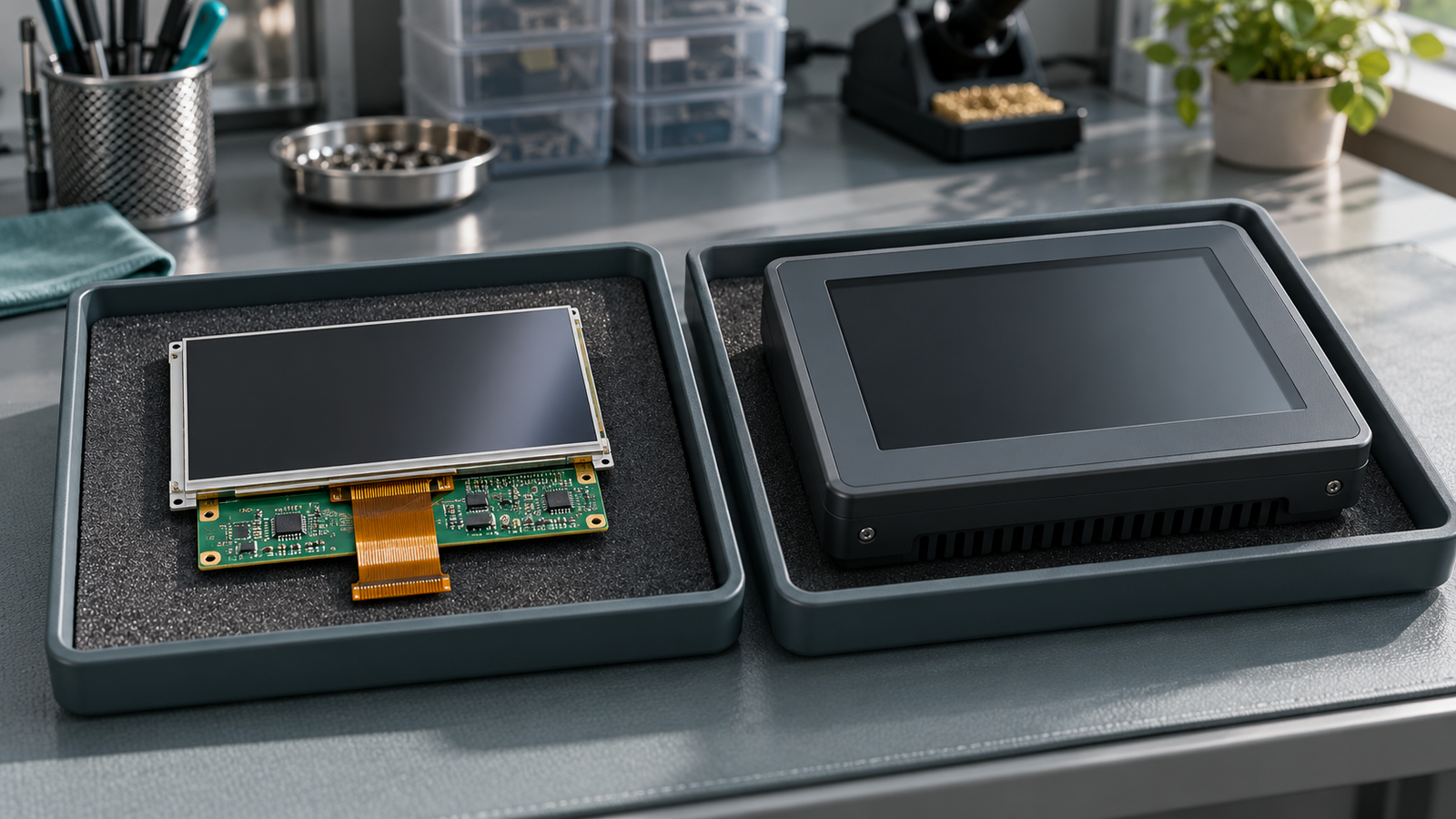
공급업체에 이벤트를 명명된 부품 및 제조 경로와 연결하도록 요청하십시오. 패널이 영향을 받은 공장에서 생산됩니까? 생산이 이전됩니까? 이전이 승인된 구성 및 사양을 유지합니까? 제조사가 제품 변경 통지 또는 수명 종료 통지를 발행했습니까? 유통업체의 헤드라인 해석은 제조사를 대신하여 이러한 질문에 답할 수 없습니다.
공급업체가 전체 업스트림 체인을 공개할 수 없는 경우, 영향을 받은 부품에 대한 서면 진술을 요청하십시오. 유용한 진술은 이벤트를 식별하고, 공급된 모듈이 변경되는지 여부를 명시하며, 어떤 세부 사항이 미확인으로 남아 있는지 설명합니다. 미해결 답변은 후속 조치가 필요한 정보 격차로 취급하십시오. 이는 임박한 부족의 증거가 아닙니다.
대응을 변경 유형에 맞춰라
| 신호 | 나타낼 수 있는 것 | 모듈에 필요한 증거 | 비례적 대응 |
|---|---|---|---|
| 영구적 생산 폐쇄 | 제조 경로가 더 이상 운영되지 않을 것임. | 패널 노출, 이전 상태, 공식 제품 통지. | 버퍼 구매 또는 재설계를 약정하기 전에 연속성을 확립하십시오. |
| 생산 이전 | 생산 위치 또는 공정이 변경될 수 있음. | 변경 통지, 샘플 가용성, 승인 요건, 전환 일정. | 문서화된 변경을 중심으로 검증을 계획하십시오. |
| 가동률 감소 | 생산자가 일정 기간 동안 가용 생산능력을 덜 활용할 계획임. | 주문 부품에 대한 확인된 리드 타임, 할당 조건, 견적 유효성. | 영구적 생산능력 손실을 가정하지 않고 납기 약정을 검토하십시오. |
| New-generation capacity | The industry’s production mix is changing. | A suitable panel, commercial availability, and a feasible approval path. | Assess candidates for future designs if they meet the application requirements. |
| More concentrated upstream supply | Several purchasing channels may depend on fewer manufacturing sources. | Panel origin and actual independence of alternate sources. | Separate channel backup from manufacturing backup. |
These responses can overlap. A transfer may coincide with a temporary delivery constraint. The supplier’s product notice and confirmed order commitments should determine the action; the market headline sets the reason to investigate.
Count independent sources, not distributor names
Two distributors can sell modules built around the same panel. They may offer different inventory positions, payment terms, or local support, yet share exposure to the same upstream production change. That provides commercial flexibility without necessarily providing a second manufacturing source.
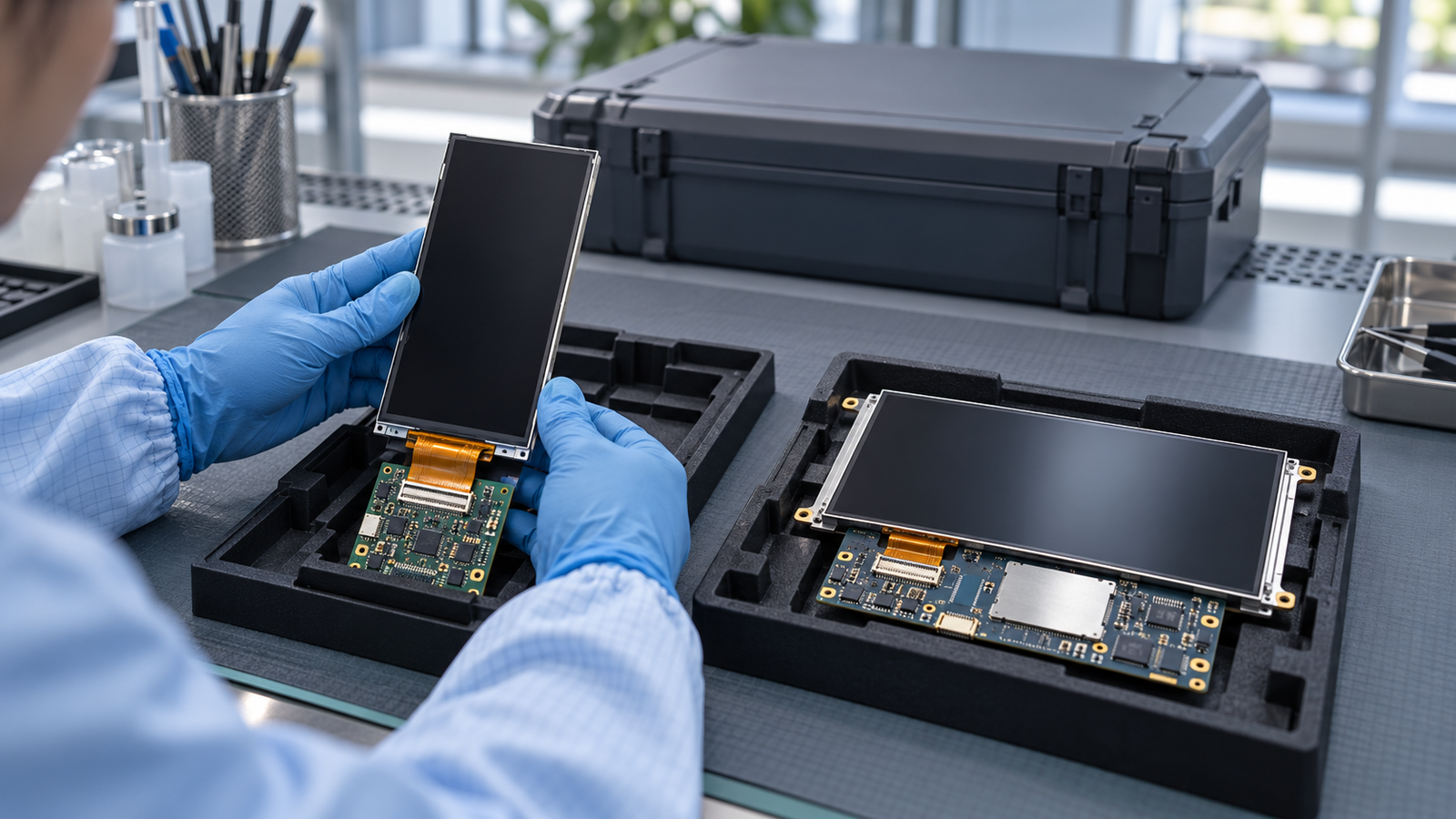
An alternate module may use a different panel manufacturer, but its independence is only useful if the equipment can accept it. Optical performance, outline dimensions, mounting, electrical connections, timing, backlight requirements, and touch behavior can constrain substitution. Qualification time matters as much as the number of supplier names in a purchasing system.
RJY’s guide to LCD panel manufacturers and suppliers explains supplier roles. For this market analysis, the relevant point is narrower: establish which underlying manufacturing dependencies the purchasing options actually share.
A market trend does not set your module price or lifecycle
Capacity share, utilization, price, and lifecycle are related concepts, but they answer different questions. Capacity share describes a production mix. Utilization describes how much available capacity producers use. A quote sets commercial terms for a particular order. A lifecycle notice states what the manufacturer intends for a particular product.
A module quote also covers more than the LCD cell. Assembly, backlight, touch integration, order quantity, testing, freight, and contractual terms can affect the offer. A broad panel-market indicator therefore cannot explain every movement in a finished module’s price.
When quotes change, compare the same part revision, quantity, delivery terms, and validity period. Ask the supplier which element changed. When lead times change, distinguish production lead time from available distributor stock. Those comparisons can support a purchasing decision; a general claim that consolidation must raise prices cannot.
Apply the same discipline to lifecycle claims. Request the manufacturer’s documented position on the exact panel or module. If a discontinuation is confirmed, use a separate discontinued TFT LCD module replacement process. A closure headline alone does not justify treating an approved module as discontinued.
Use the evidence to choose the next action
For a new design, ask how the proposed module’s supply plan fits the equipment’s production and service period. Request the known production route, change-notification process, and any documented lifecycle commitments. Avoid turning an industry forecast into a supplier guarantee.
For an existing design, prioritize modules where the supplier confirms exposure to an announced event. Agree on the next evidence milestone: a formal notice, transferred-production samples, an updated delivery commitment, or an end-of-life schedule. Link internal review dates to those milestones.
Buffer stock can buy time when the required quantity, usable storage period, and transition plan are known. It can also tie up funds without resolving a technical dependency. Evaluate it against verified service demand and the time needed to approve an alternative, rather than against an unsupported shortage prediction.
If your module may be affected, send RJY the module model, available datasheet, application, and required production or service period. State the reported factory event or supplier notice. RJY can use those details to discuss TFT LCD and controller options based on existing modules. Suitability, required customization, and the supply position need project-specific verification; the discussion does not establish a continuity guarantee.
참고문헌
- TrendForce, LCD capacity analysis, March 13, 2026. Analyst estimates for 2026.
- TrendForce, Taiwanese LCD production and supply outlook, August 3, 2026. Planned transfers and prospective supply shares.
- TrendForce, October LCD fab utilization outlook, September 21, 2026. Forecast rather than measured October utilization.
- Japan Display, FY26/3 Q3 Corporate Presentation, February 12, 2026, slide 12. Mobara production cessation.