







1. The Reality of the TFT LCD Supply Chain
Before you send out a single Request for Quotation (RFQ), it is vital to understand the structure of the modern display industry. Not every company that calls itself a “TFT LCD display manufacturer” actually manufactures the core glass.
The Glass Makers vs. The Module Assemblers
The TFT LCD supply chain is heavily tiered:
- The Fab (Panel Makers): These are the multi-billion-dollar conglomerates operating massive cleanrooms (Gen 6, Gen 8, Gen 10 fabs). They produce the raw “motherglass” and the TFT backplane. They deal in millions of units and rarely entertain custom projects for mid-volume buyers.
- The LCD Module (LCM) Manufacturers: This is who you are likely looking for. A premium TFT LCD display manufacturer buys the “open cell” (the glass) from the fabs, and then engineers and manufactures the backlight unit (BLU), the driver circuitry (FPC/PCBA), the structural bezel, and integrates the touch panel.
Your goal is to find an LCM manufacturer that possesses flawless engineering capabilities, deep relationships with the glass fabs (to ensure supply stability), and the agility to customize the module to your precise specifications.
2. Quality Assurance: Beyond the ISO Certificate
In the Japanese and South Korean markets, “quality” is not a buzzword; it is a baseline expectation. A defect rate of 1% might be acceptable in cheap consumer toys, but in industrial automation, medical devices, or automotive applications, ppm (parts per million) failure rates must approach zero.
When auditing a potential TFT LCD display manufacturer, do not just look at the ISO 9001 certificate hanging in their lobby. You must dive into their Quality Management System (QMS).
A. The 8D Reporting Standard
Ask the manufacturer how they handle a field failure. A mature manufacturer will immediately provide an 8D (Eight Disciplines) Problem Solving report. This demonstrates that they don’t just replace a broken screen—they quarantine the batch, perform a root-cause analysis (e.g., finding out that a specific ACF bonding temperature was off by 2 degrees), and implement a permanent corrective action.
B. Reliability Testing Laboratories
A top-tier manufacturer does not guess how long their screens will last; they try to destroy them in controlled environments to find out. Your audit checklist should verify they have in-house equipment for:
- High Temperature & High Humidity Storage (HTHH): E.g., 85°C at 85% RH for 500 hours.
- Thermal Shock Testing: Rapid cycling between -30°C and +80°C to check for micro-cracks in the glass or delamination of the polarizers.
- ESD (Electrostatic Discharge) Testing: Ensuring the display’s driver IC won’t fry when a user touches the screen in a dry winter environment.
- Vibration and Drop Testing: Crucial for handheld terminals and automotive displays.
3. Engineering and Customization Capabilities (NRE)
Very rarely does an “off-the-shelf” display perfectly fit a complex industrial or consumer product. The true value of an excellent TFT LCD display manufacturer lies in their Non-Recurring Engineering (NRE) capabilities.
Mastering the Backlight Unit (BLU)
The backlight is the engine of the TFT LCD. If your product is an outdoor kiosk, an indoor 250-nit backlight is useless. You need a manufacturer capable of engineering a custom LED string that delivers 1,000+ nits of brightness while managing the thermal dissipation so the display doesn’t melt in direct sunlight.
Flexible Printed Circuit (FPC) Customization
The FPC is the umbilical cord connecting the display to your motherboard. A rigid, inflexible manufacturer will force your engineering team to redesign your entire PCB to match their display. A flexible, partner-oriented manufacturer will happily redesign the shape, length, and pinout of the FPC to match под ваш existing board layout.
Optical Bonding and Touch Integration
Adding a touch screen isn’t just about slapping a piece of glass on top of the LCD. If there is an air gap between the touch sensor and the TFT LCD, you will get internal reflections that wash out the screen in bright environments.
Look for a manufacturer that offers in-house Optical Bonding (OCA/OCR). This process fills the air gap with a specialized liquid resin or dry adhesive, dramatically improving contrast, ruggedness, and moisture resistance.
4. Supply Chain Longevity and EOL Management
If there is one thing that gives procurement managers nightmares, it is the dreaded EOL (End of Life) Notice.
Imagine this: You have spent 18 months designing a medical ventilator around a specific 7.0-inch TFT LCD. You finally pass all medical regulatory certifications (which cost hundreds of thousands of dollars). Six months into mass production, your display supplier casually emails you to say they are discontinuing that panel next month.
In the medical, industrial, and automotive sectors, product lifecycles are 5, 7, or even 10+ years. Therefore, evaluating a TFT LCD display manufacturer requires evaluating their supply chain resilience.
How to Ensure Longevity:
- Ask for Longevity Guarantees: Reputable manufacturers focusing on the industrial sector will offer a 3-to-5-year longevity guarantee on specific modules.
- Understand Their Sourcing: Does the LCM manufacturer single-source their glass from one fab? If that fab stops making that size, you are in trouble. The best manufacturers design their modules to be compatible with glass from at least two different panel makers (e.g., BOE and Innolux) to mitigate risk.
- PCN (Product Change Notification) Policies: Insist on a strict PCN agreement. If the manufacturer changes anything—even a single resistor on the FPC or the supplier of the LED backlight—they must notify you 3 to 6 months in advance so your engineering team can re-validate the display.
5. The “Soft Skills”: Communication and Cultural Alignment
In cross-border procurement, especially when sourcing from China or Taiwan for the Japanese or Korean markets, technical specs are only half the battle. The other half is communication.
A common pitfall is the “Yes Culture.” You ask a supplier, “Can you achieve a 50,000-hour MTBF on the backlight?” The eager sales rep says, “Yes, no problem!” without consulting their engineering team, only to fail dramatically during the prototype phase.
A high-quality TFT LCD display manufacturer operates with transparency and engineering honesty.
- Direct Engineer-to-Engineer (E2E) Communication: You do not want your technical requirements playing a game of “telephone” through a salesperson who doesn’t understand the difference between an RGB and an LVDS interface. Look for a manufacturer that assigns dedicated Field Application Engineers (FAEs) to your account.
- Documentation Standards: Are their datasheets complete, accurate, and written in clear technical English (or localized for Japan/Korea)? A sloppy datasheet with missing initialization codes or incorrect mechanical tolerances is a massive red flag for how they manage their production lines.
6. The Procurement Evaluation Matrix
Для объективизации вашего решения используйте данную матрицу оценки при выборе нового производителя TFT LCD дисплеев:
| Критерии оценки | Тревожные сигналы (Избегать) | Благоприятные признаки (В шорт-лист) |
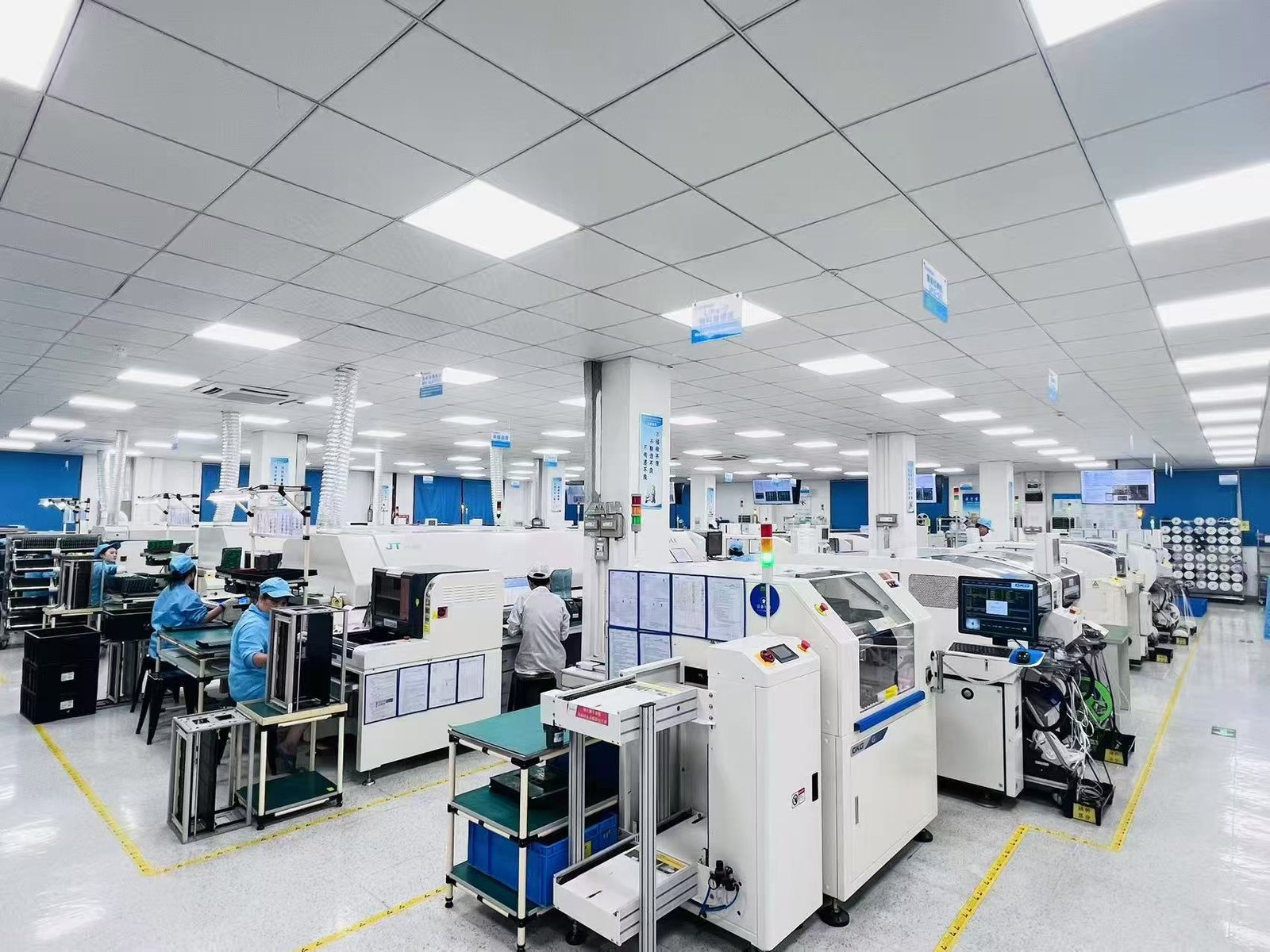
| Аудит производственных мощностей | Пыльные полы, ручная пайка, неорганизованный склад, отсутствие протокола защиты от электростатического разряда (ESD). | Чистые помещения класса ISO, автоматизированные машины для COG/FOG монтажа, строгое соблюдение требований к ESD-экипировке. |
| Контроль качества | Проверяют только готовую продукцию (OQC). Высокая зависимость от ручного контроля. | Строгий входной контроль (IQC) сырья и материалов. Автоматизированные оптические инспекционные установки (AOI). |
| Кастомизация | Отказываются вносить изменения в гибкую печатную плату (FPC); предлагают только стандартные готовые компоненты. | Наличие собственной команды разработчиков для проектирования FPC, подсветки и нестандартного защитного стекла. |
| Бизнес-фокус | 95% их бизнеса — это дешёвые потребительские планшеты и игрушки. | Сильное портфолио в медицинской, автомобильной отраслях или в сегменте надёжных промышленных применений. |
| Политика окончания срока производства (EOL) | “Мы постараемся вас уведомить”.” | Контрактное обязательство об уведомлении об изменениях продукции/прекращении выпуска (PCN/EOL) за 6 месяцев с опцией последнего заказа (LTB). |
Заключение: Партнёрство на будущее
Выбор правильного производителя TFT LCD дисплеев — это большая ответственность. Он требует баланса между стоимостью единицы продукции и бескомпромиссными стандартами качества японского и южнокорейского рынков.
Взглянув дальше первоначальной цены и глубоко проаудировав инженерные возможности, системы менеджмента качества и политики EOL, вы переходите от простой “покупки экранов” к построению устойчивой, долгосрочной цепочки поставок. Помните: хороший производитель дисплеев делает ваш продукт блестящим; плохой — заставляет вашу закупочную команду выглядеть ужасно. Выбирайте мудро.
Часто задаваемые вопросы (ЧЗВ)
В1: Каков типичный минимальный объём заказа (MOQ) для нестандартного TFT LCD?
О: Это сильно варьируется в зависимости от производителя. Для стандартных фабрик, ориентированных на потребительский сегмент, MOQ для нестандартных изделий может достигать 10 000–50 000 единиц. Однако производители, специализирующиеся на промышленном и медицинском секторах, часто предлагают гораздо более низкие MOQ для кастомизированных модулей, иногда в диапазоне от 500 до 1000 единиц, учитывая меньшие объёмы, но более высокую ценность этих рынков.
В2: Сколько обычно занимает процесс кастомизации (NRE)?
О: Если вы модифицируете существующий модуль (например, изменяете FPC или улучшаете подсветку), ожидайте срок в 3–5 недель для получения первых прототипов. Если вы разрабатываете полностью нестандартный модуль с индивидуальной ёмкостной сенсорной панелью и оптическим склейкой, срок увеличивается примерно до 6–8 недель.
В3: В чём разница между TN, VA и IPS в TFT LCD?
О: Это обозначает способ ориентации жидких кристаллов.
- TN (Twisted Nematic, скрученные нематики): Самая старая и дешёвая технология. Быстрое время отклика, но очень плохие углы обзора (цвета инвертируются при взгляде сбоку).
- VA (Vertical Alignment, вертикальное выравнивание): Обеспечивает отличную контрастность (глубокий чёрный цвет), но углы обзора лишь умеренные.
- IPS (In-Plane Switching): IPS (In-Plane Switching, переключение в плоскости):.
Премиальный стандарт. Обеспечивает сверхширокие углы обзора в 178 градусов и точную цветопередачу. Необходим для медицинских, автомобильных и высококлассных промышленных устройств.
О: В4: Нам нужен дисплей для работы на улице как в токийское лето, так и в зимнюю Хоккайдо. Какие характеристики нам нужно указать?
- Вам необходимо указать производителю три критически важных параметра: Широкотемпературный жидкокристаллический состав:.
- Стандартные жидкие кристаллы замерзают или чернеют при экстремальных температурах. Укажите рабочий температурный диапазон не менее -30°C до +80°C. Читаемость при солнечном свете:.
- Яркость подсветки должна составлять не менее 800–1000 нит. Защита от УФ-излучения и оптическое склеивание:.
Защитное стекло должно иметь анти-УФ и антибликовое (AG) покрытие, а также должно быть оптически склеено с дисплеем для предотвращения образования конденсата внутри экрана при резких перепадах температуры.
О: В5: Как мы можем защититься от внезапной нехватки чипов, влияющей на драйверную ИС дисплея?.