Facing a bottleneck in your Embedded Display Project?
Don’t let complex integration or supply chain issues slow your time-to-market. Book a free consultation with the RJY expert team for tailored design and manufacturing support.

A comprehensive analysis of the strategic impact of touch technology on modern HMI design. This guide examines the technical evolution of interactive displays and provides professional insights into selecting the right touch architecture to optimize user interaction and accessibility for future-ready businesses.
In the professional landscape of 2026, the interface has transcended its role as a mere peripheral to become the primary driver of user satisfaction and operational efficiency. Touch technology represents the pinnacle of intuitive Human-Machine Interface (HMI) design, removing the traditional barriers between digital data and physical action. This report examines the technical architecture, strategic advantages, and industry-specific applications of modern touch solutions.
Enhancing User Experience (UX) in professional environments requires a reduction in cognitive load. Touch technology achieves this by facilitating “Direct Manipulation”—the ability for a user to interact with digital elements in a way that mimics physical reality. By eliminating the abstraction of mice or keyboards, businesses can accelerate transaction speeds and reduce the learning curve for complex software.
To select the appropriate hardware for a specific UX goal, professionals must distinguish between the three dominant sensing technologies:
Modern Touch Screen Desktop Monitors integrate high-fidelity IPS panels with zero-latency controllers. These are essential for creative professionals and financial analysts who require both color accuracy and rapid data manipulation.
Interactive Digital Displays have redefined the modern boardroom. By utilizing Touch Screen Wall Displays, organizations can facilitate real-time collaboration, allowing multiple users to manipulate data simultaneously on a unified digital canvas.
Direct physical interaction with content has been shown to increase user “dwell time” in retail and improve information retention in training environments. The tactile feedback loop reinforces the digital experience.
Touch interfaces are inherently more accessible. They allow for the integration of haptic feedback, scalable user interfaces (UI), and simplified navigation paths that assist users with motor or visual impairments, ensuring compliance with ADA (Americans with Disabilities Act) standards.
A single touch-enabled display can serve multiple functions—acting as a point-of-sale (POS) terminal, a wayfinding kiosk, or a collaborative workstation—simply by switching software layers, providing an exceptional return on investment (ROI).
As we look beyond 2026, the trajectory of touch technology is moving toward Tactile Haptics and Mid-Air Gestures. The future of UX lies in displays that can simulate textures or detect inputs without physical contact, further bridging the gap between human intent and machine execution.
Share your display size, resolution, interface, brightness, touch requirement, controller board requirement, and application environment.
Continue reading related display technology guides and application references.
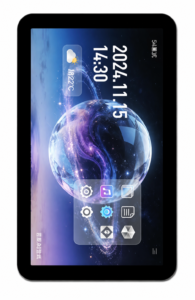
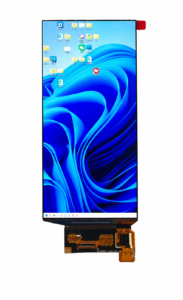
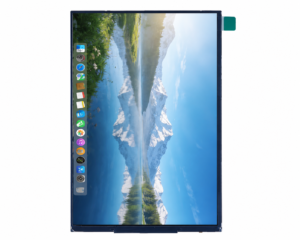
Explore product pages related to this article topic.

Talk to RJY’s engineering team for display matching, controller board review, and customization discussion.