







- Innovation 1: The Ascent of IGZO and High-Mobility Metal Oxide Backplanes
- Innovation 2: Mini-LED Local Dimming Architectures
- Innovation 3: In-Cell and On-Cell Touch Integration
- Innovation 4: Free-Form CNC Cutting and Gate-On-Array (GOA)
- Innovation 5: Next-Generation Optical Bonding and Ruggedization
- Il Punto Saliente della Consulenza: Navigare il Prossimo Decennio
- Domande frequenti (FAQ)
- D1: Perché dovrei scegliere un modulo TFT invece di un display OLED per un prodotto industriale?
- D2: Qual è il tipico costo NRE (attrezzaggio) per un modulo TFT personalizzato a forma libera?
- Q3: How do I solve the "washed out" look of my display when used outdoors?
- Il modulo TFT In-Cell stesso è più sottile e strutturalmente leggermente più fragile di uno spesso stack di sensori a doppio vetro. Tuttavia, la durabilità finale del prodotto è determinata dal Vetro di Copertura (CG). Quando un modulo TFT In-Cell è incollato otticamente a un pezzo spesso di vetro di copertura chimicamente rinforzato (come Corning Gorilla Glass o Dragontrail), l'assieme risultante è eccezionalmente robusto e supera senza sforzo i test standard industriali di caduta e impatto con sfera d'acciaio.
- Generalmente, no. Un produttore di display affidabile integrerà i circuiti integrati driver necessari direttamente sull'FPC del modulo TFT. Il vostro microcontrollore (MCU) o microprocessore (MPU) comunicherà con il display IGZO utilizzando protocolli standard (come MIPI DSI, LVDS o SPI) esattamente come farebbe con un vecchio display a-Si. Tuttavia, per sfruttare le funzionalità di risparmio energetico dell'IGZO, il vostro team software dovrà scrivere una logica che abbassi dinamicamente la frequenza di aggiornamento quando lo schermo visualizza un'immagine statica.
In the high-stakes arena of global hardware manufacturing, display technology is often the most heavily scrutinized component on the Bill of Materials (BOM). Over the past decade, consumer media has been captivated by the rise of OLED and foldable screens. However, for hardware engineers, product managers, and procurement executives in the European and North American markets—particularly those developing for industrial automation, medical devices, automotive interiors, and smart home appliances—the true revolution has quietly occurred elsewhere: within the architecture of the TFT module.
For nearly thirty years, the Thin-Film Transistor (TFT) Liquid Crystal Display (LCD) has been the workhorse of the global electronics industry. But today’s TFT module is practically unrecognizable compared to the generic, low-contrast, thick panels of the early 2010s. Driven by the relentless pressure to match OLED’s visual performance while maintaining the rugged durability, low cost, and long product lifecycles demanded by professional industries, display fabs have engineered extraordinary innovations.
This consulting brief deconstructs the top five TFT module innovations of the past decade. It provides a technical analysis of how these advancements operate, their strategic implications for your supply chain, and actionable advice on how to specify them for your next hardware platform.
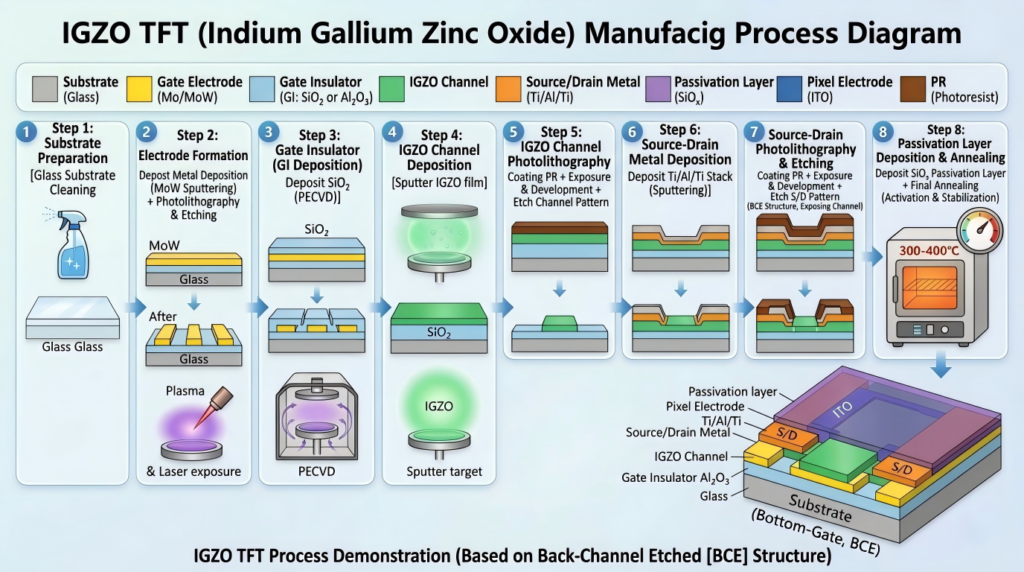
Innovation 1: The Ascent of IGZO and High-Mobility Metal Oxide Backplanes
For decades, the standard substrate for a TFT module was Amorphous Silicon (a-Si). While cost-effective to manufacture in massive volumes, a-Si suffers from a fatal flaw in an era demanding ultra-high resolutions and lower power consumption: low electron mobility. The transistors on an a-Si backplane must be physically large to allow enough current to flow, which blocks the backlight (reducing the aperture ratio), leading to a dimmer screen that requires more power to illuminate.
The introduction and subsequent maturation of IGZO (Indium Gallium Zinc Oxide) technology over the last decade fundamentally altered the power-to-performance ratio of the TFT module.
The Technical Breakthrough
IGZO is a transparent amorphous oxide semiconductor. Its primary advantage is its electron mobility, which is 20 to 50 times higher than that of traditional a-Si. This hyper-efficiency allows display engineers to drastically shrink the physical size of the transistors on the glass.
- Higher Aperture Ratio: Smaller transistors mean more light passes through the pixel. This allows you to either achieve a much brighter screen using the same backlight power, or achieve standard brightness while drastically reducing battery drain.
- Zero-Flicker Static Display: Unlike a-Si, which constantly leaks current and requires the display to be refreshed 60 times a second (60Hz) even if the image is static, an IGZO TFT module can hold its electrical charge for an extended period. The refresh rate can be dropped dynamically to 1Hz (one frame per second) for static images, cutting the display panel’s power consumption by up to 80%.
Strategic Implication for OEMs
If your product operates on battery power (e.g., portable medical diagnostics, logistics scanners, smart wearables) and primarily displays static dashboards, an IGZO TFT module is a mandatory specification. While the initial component cost is marginally higher than an a-Si module, the savings in battery capacity (allowing you to specify a smaller, cheaper lithium-ion cell) often result in a net-negative impact on your total BOM cost, while simultaneously enabling a thinner, lighter product design.
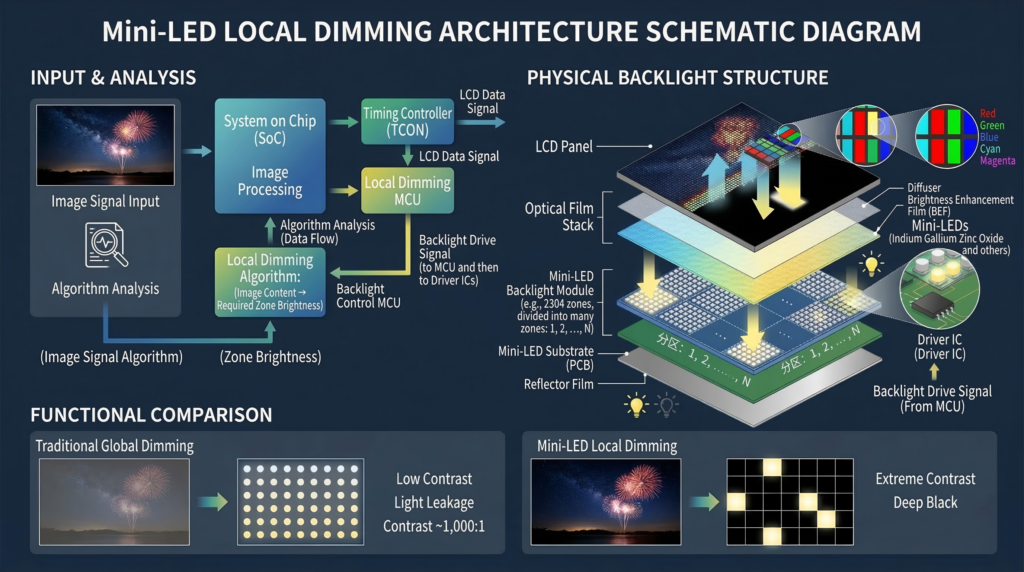
Innovation 2: Mini-LED Local Dimming Architectures
The most persistent criticism of the standard TFT module has been its contrast ratio. Because an LCD panel relies on a continuously illuminated LED backlight, “true black” is impossible to achieve; some light inevitably bleeds through the liquid crystals, resulting in a dark gray appearance in dimly lit environments. This limitation drove premium laptops and automotive displays toward OLED—until the commercialization of Mini-LED backlighting.
The Technical Breakthrough
A traditional TFT module utilizes edge-lit LEDs or a sparse array of direct-lit LEDs (perhaps 10 to 50 diodes) that illuminate the entire screen simultaneously.
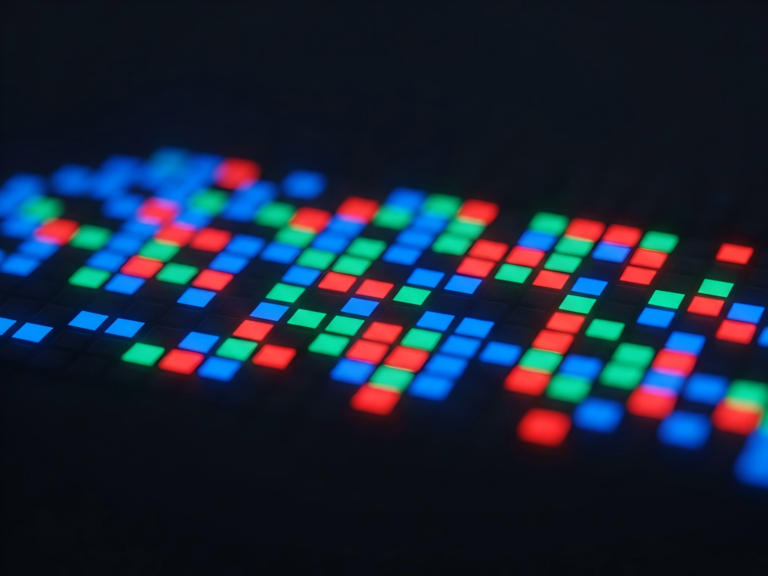
Il Mini-LED revolution replaces this simple backlight unit (BLU) with a densely packed matrix of microscopic LEDs—often numbering in the thousands or tens of thousands. More importantly, these LEDs are divided into hundreds of independent “Local Dimming Zones.” When a section of the image is supposed to be black (e.g., the night sky in a video, or the black background of an automotive instrument cluster), the TFT controller physically turns off the LEDs directly behind those specific pixels.
- OLED-Level Contrast: This achieves contrast ratios exceeding 1,000,000:1, effectively eliminating the “halo effect” and backlight bleed.
- Extreme Luminance: Unlike OLEDs, which suffer from burn-in and thermal degradation when driven at peak brightness, a Mini-LED TFT module can comfortably sustain 1,000 to 2,500 nits of brightness.
Strategic Implication for OEMs
Mini-LED has salvaged the TFT module’s dominance in the automotive and medical imaging sectors. In the European market, where medical displays must comply with strict DICOM (Digital Imaging and Communications in Medicine) standards for grayscale accuracy in X-ray and MRI diagnostics, the high contrast and zero-burn-in reliability of Mini-LED TFT modules make them the superior choice over OLED. Similarly, for outdoor digital signage or marine chartplotters exposed to direct sunlight, Mini-LED provides the necessary luminance without sacrificing deep black levels.
Innovation 3: In-Cell and On-Cell Touch Integration
Historically, adding a touch screen to a TFT module was a cumbersome, multi-layered process. You started with the LCD module, added a discrete layer of sensor glass or film (the touch panel), and then added the protective cover glass (the G+G or G+F architecture). This multi-component stack was thick, heavy, prone to optical reflections between the layers, and required complex supply chain logistics (buying the LCD from one vendor, the touch panel from another, and paying a third to bond them together).
The last decade saw the aggressive shift toward In-Cell and On-Cell touch technologies, representing a masterclass in semiconductor integration.

The Technical Breakthrough
Instead of adding an external sensor layer, display fabricators figured out how to embed the capacitive touch sensors directly into the TFT array itself.
- On-Cell: The Indium Tin Oxide (ITO) touch sensors are deposited on the outer surface of the TFT module’s color filter glass.
- In-Cell: The touch sensors are embedded entirely inside the liquid crystal cell, often sharing the very same electrodes used to manipulate the liquid crystals via time-division multiplexing (switching rapidly between driving the display and scanning for touches).
Strategic Implication for OEMs
For North American and European hardware designers, In-Cell technology is a supply chain miracle.
- Optical Perfection: By eliminating the external touch layers and the adhesive that bonds them, light transmittance increases by roughly 10%, making the display brighter and more vibrant.
- Ultra-Thin Form Factors: In-Cell TFT modules shave critical millimeters off the product’s thickness, essential for modern handheld point-of-sale (POS) systems and premium smart home control panels.
- Procurement Simplicity: You no longer manage multiple vendors. You purchase a single, fully integrated TFT module from the fab, complete with a single FPC (Flexible Printed Circuit) that carries both display data and touch coordinates. This drastically reduces assembly time and points of failure on your manufacturing line.
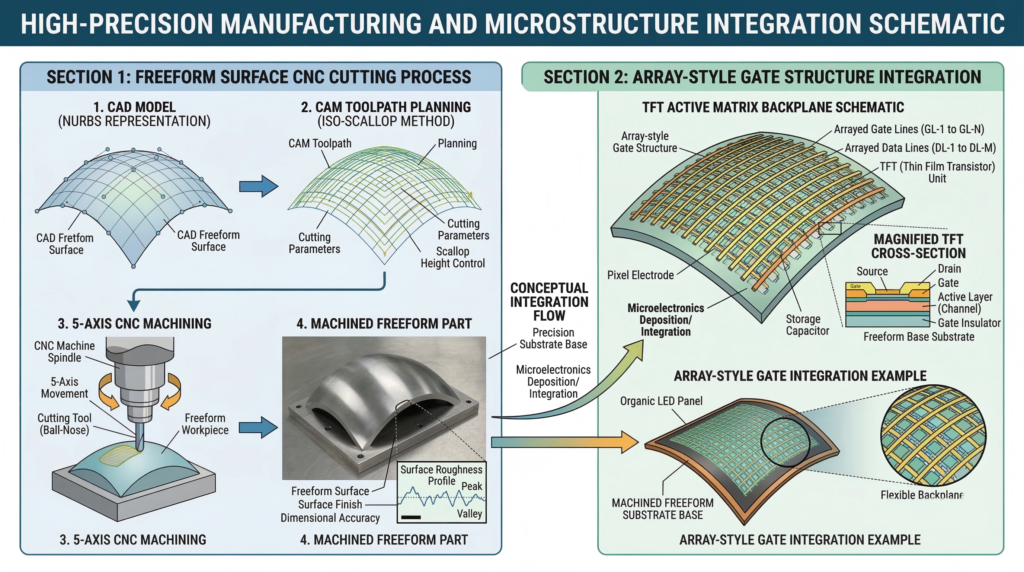
Innovation 4: Free-Form CNC Cutting and Gate-On-Array (GOA)
For the first forty years of its existence, the TFT module was rigidly restricted to a single geometric shape: the rectangle. This was due to the complex routing of the Gate and Source driver circuits that sat on the physical borders of the glass, as well as the limitations of glass-cutting machinery. This forced industrial designers to create boxy, unimaginative product enclosures.
The simultaneous maturation of Free-Form CNC Glass Cutting e Gate-On-Array (GOA) technology has finally broken the tyranny of the rectangle.
The Technical Breakthrough
- Gate-On-Array (GOA): Previously, the driver ICs required to scan the rows of pixels were mounted on a physical ledge outside the active display area, creating thick, asymmetrical bezels. GOA technology moves these scanning circuits directly into the active matrix area of the TFT backplane. This allows for “borderless” or ultra-narrow bezel designs (often less than 1.5mm).
- Free-Form Cutting: Advanced laser and CNC chamfering techniques now allow fabs to cut the TFT module glass into circles, ovals, or complex polygons with physical cutouts (holes) directly through the active screen area without fracturing the glass or breaking the liquid crystal seal.
Strategic Implication for OEMs
This innovation has been driven heavily by the European automotive sector (e.g., Mercedes-Benz, BMW), which demands sweeping, curved, non-rectangular digital dashboards that blend seamlessly into the car’s interior architecture.
For consumer appliance and smart home device manufacturers, circular TFT modules are now the gold standard for high-end thermostats, smart dials, and wearable devices. If your industrial design team is fighting against the constraints of a rectangular screen, consult your display manufacturer about free-form GOA panels. While the NRE (Non-Recurring Engineering) tooling costs for custom glass cutting are high, the aesthetic differentiation it provides in a crowded market is often unparalleled.
Innovation 5: Next-Generation Optical Bonding and Ruggedization
While not an innovation of the silicon itself, the advancements in how a TFT module is packaged and protected have fundamentally expanded where these screens can be deployed. Ten years ago, putting a large TFT module outdoors in direct sunlight or in a high-vibration heavy machinery environment was a recipe for disaster. Condensation would form behind the cover glass, the display would wash out in the sun, and the internal polarizers would peel.
Il perfezionamento di l'Optical Bonding (OCA/OCR) e dei materiali resistenti ai raggi UV ha trasformato il modulo TFT standard in un componente robusto di grado militare.
The Technical Breakthrough
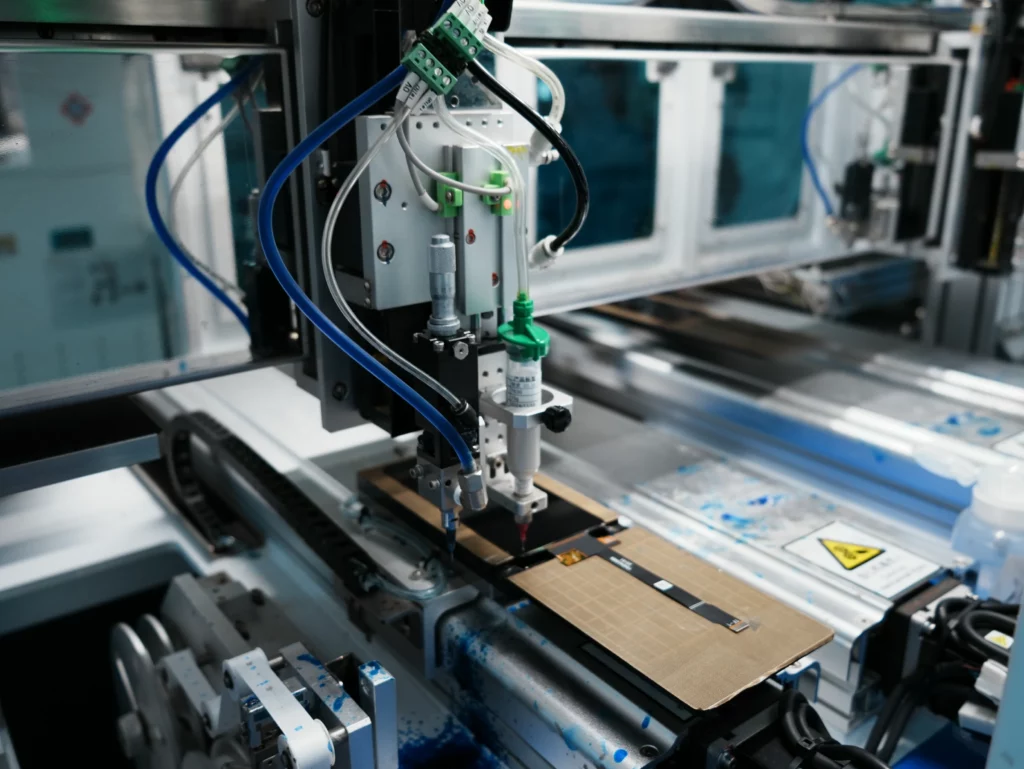
Incollaggio ottico è il processo di iniezione di una resina liquida di grado ottico (OCR) o di un adesivo a film solido (OCA) tra il modulo TFT e il vetro di copertura protettivo, eliminando completamente l'intercapedine d'aria.
- Miglioramento Ottico: Un'intercapedine d'aria provoca riflessi luminosi interni, rimbalzando la luce solare ambientale negli occhi dell'utente e sbiadendo lo schermo. Riempire questo spazio con un adesivo che corrisponde all'indice di rifrazione del vetro riduce la riflessione interna fino al 90%, creando un effetto “dipinto” e migliorando enormemente la leggibilità alla luce solare senza aumentare la potenza della retroilluminazione.
- Integrità Strutturale: Il blocco solido di resina indurita assorbe l'energia cinetica, aumentando notevolmente la resistenza agli urti del display. Elimina inoltre completamente la possibilità di ingresso di umidità e appannamento, fattore critico per applicazioni marine, agricole e militari.
- Siliconi Avanzati: I primi adesivi per incollaggio ottico (come gli acrilici di base) ingiallivano e si crepavano dopo una prolungata esposizione alle radiazioni UV. I siliconi moderni stabili ai UV garantiscono oltre 10 anni di trasparenza ottica, anche sotto il sole intenso dell'Arizona o della Spagna.
Strategic Implication for OEMs
Se il vostro prodotto è impiegato all'aperto, in un ambiente di fabbrica o in un ambiente medico sterile (dove verrà costantemente pulito con sostanze chimiche aggressive), specificare l'incollaggio ottico per il vostro modulo TFT non è più opzionale; è un requisito ingegneristico di base. Riduce le RMA (Autorizzazioni di Reso Materiale) legate all'appannamento dello schermo e ai danni da impatto, proteggendo la reputazione del vostro marchio per affidabilità.
Il Punto Saliente della Consulenza: Navigare il Prossimo Decennio
L'evoluzione del modulo TFT da un semplice componente passivo a un sistema elettro-ottico altamente integrato e intelligente richiede un cambiamento nell'approccio delle aziende occidentali di hardware all'approvvigionamento e al design.
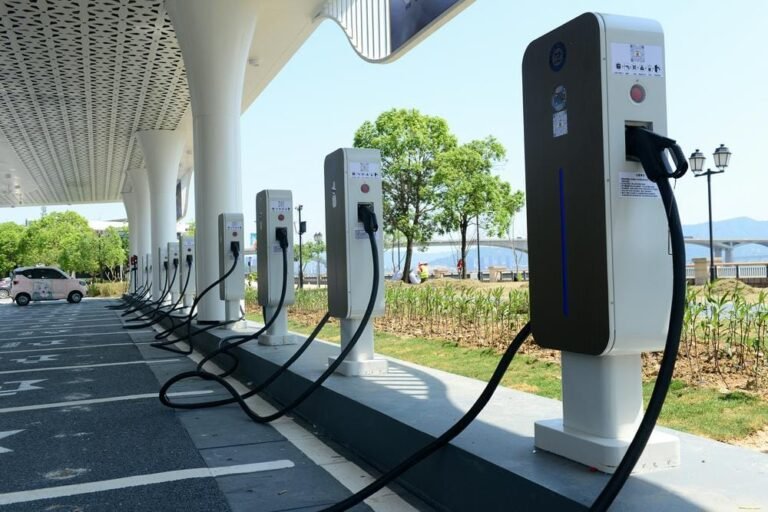
- Smettete di Sovra-specificare: Non avete bisogno di un display OLED per un'interfaccia uomo-macchina (HMI) industriale o per una stazione di ricarica per veicoli elettrici. Un modulo TFT Mini-LED o IPS ad alta luminosità offrirà una longevità superiore, rischio zero di burn-in e un'economia di unità molto migliore.
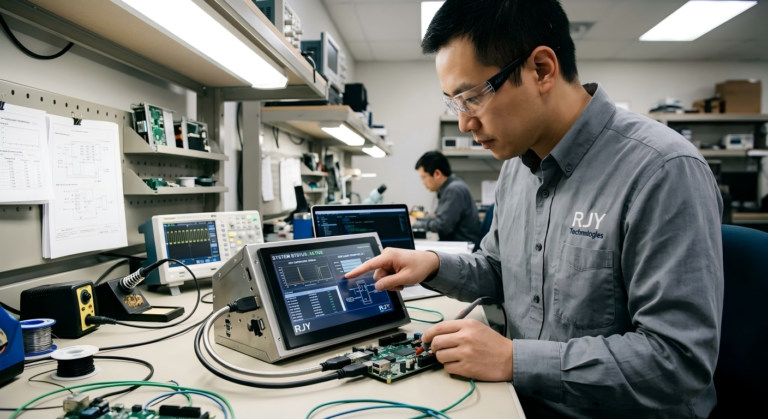
- Integrate Presto: Non progettate l'involucro del vostro prodotto e poi cercate di “trovare uno schermo che si adatti”. Coinvolgete un produttore di primo livello di moduli TFT fin dall'inizio della fase di design industriale. Sfruttate le loro capacità In-Cell e GOA per ridurre l'ingombro del vostro prodotto.
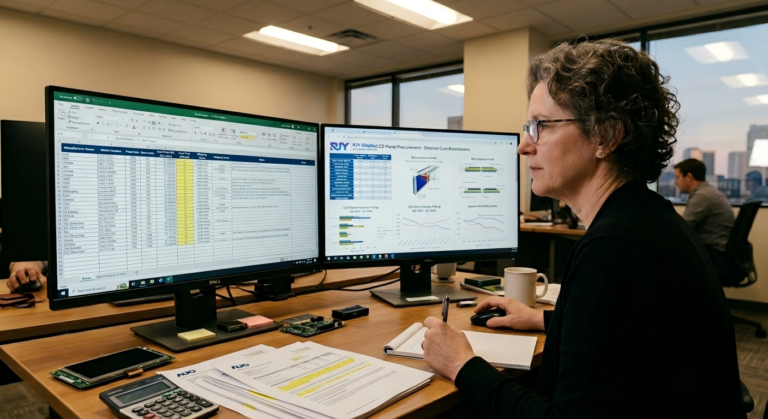
- TCO (Costo Totale di Proprietà) su BOM (Distinta Base): Un modulo TFT IGZO personalizzato con incollaggio ottico avrà un costo unitario iniziale più elevato rispetto a un generico modulo a-Si con intercapedine d'aria. Tuttavia, considerando la ridotta dimensione della batteria (grazie al risparmio energetico), l'eliminazione dei costi di assemblaggio del pannello touch esterno e la drastica riduzione dei guasti sul campo e delle richieste di garanzia, il Costo Totale di Proprietà (TCO) favorisce fortemente la tecnologia avanzata.
Il modulo TFT è tutt'altro che obsoleto. Per l'ingegnere hardware professionista, rimane la tecnologia di display più versatile, affidabile e in continua innovazione sul pianeta.
Domande frequenti (FAQ)
D1: Perché dovrei scegliere un modulo TFT invece di un display OLED per un prodotto industriale?
A: I display OLED soffrono di due difetti critici negli ambienti industriali: “Burn-in” (ritenzione permanente dell'immagine quando elementi statici dell'interfaccia utente vengono visualizzati a lungo) e degrado termico (la durata si riduce significativamente se operati continuamente ad alta luminosità o alte temperature). Un moderno modulo TFT, specialmente uno dotato di pannello IPS e retroilluminazione Mini-LED, offre prestazioni visive comparabili con una durata che supera le 50.000-100.000 ore, indipendentemente da immagini statiche o temperature estreme.
D2: Qual è il tipico costo NRE (attrezzaggio) per un modulo TFT personalizzato a forma libera?
A: Dipende fortemente dal livello di personalizzazione. Se state semplicemente prendendo un modulo TFT rettangolare standard e chiedete al produttore di tagliare su misura il vetro di protezione in una forma unica, l'NRE è relativamente basso (tipicamente $2.000 – $5.000). Tuttavia, se richiedete che il vetro LCD attivo vero e proprio venga tagliato in una forma non rettangolare (personalizzazione di Livello 3), dovete pagare la fabbrica per creare nuovi fotomaschere. Questo NRE può facilmente variare da $50.000 a oltre $200.000, rendendolo fattibile solo per produzioni di grandi volumi consumer o automotive.
D3: Come posso risolvere l'aspetto “sbiadito” del mio display quando usato all'aperto?
A: Dovete affrontare sia la luminanza che la riflessione. Primo, specificate un modulo TFT con una retroilluminazione ad alta luminosità (minimo 800 nit, idealmente 1.000+ nit). Secondo, e più importante, imponete l'incollaggio ottico. Se c'è un'intercapedine d'aria tra il vetro di copertura e il modulo TFT, nessuna quantità di luminosità della retroilluminazione riuscirà a contrastare completamente il riverbero del sole che rimbalza sulle superfici interne del vetro. Incollaggio ottico. D4: I display touch In-Cell sono più fragili dei tradizionali display G+G (Vetro+Vetro)?.
Il modulo TFT In-Cell stesso è più sottile e strutturalmente leggermente più fragile di uno spesso stack di sensori a doppio vetro. Tuttavia, la durabilità finale del prodotto è determinata dal Vetro di Copertura (CG). Quando un modulo TFT In-Cell è incollato otticamente a un pezzo spesso di vetro di copertura chimicamente rinforzato (come Corning Gorilla Glass o Dragontrail), l'assieme risultante è eccezionalmente robusto e supera senza sforzo i test standard industriali di caduta e impatto con sfera d'acciaio.
A: D5: La transizione all'IGZO richiederà modifiche alla mia scheda madre o al software?.
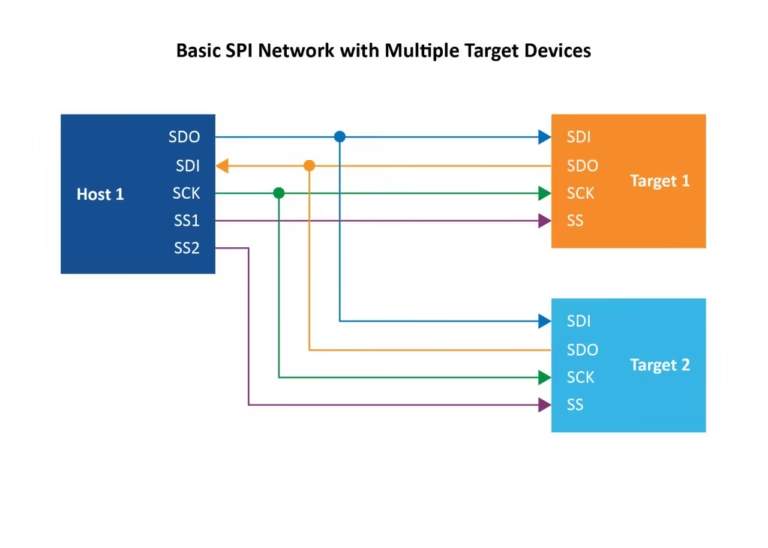
Generalmente, no. Un produttore di display affidabile integrerà i circuiti integrati driver necessari direttamente sull'FPC del modulo TFT. Il vostro microcontrollore (MCU) o microprocessore (MPU) comunicherà con il display IGZO utilizzando protocolli standard (come MIPI DSI, LVDS o SPI) esattamente come farebbe con un vecchio display a-Si. Tuttavia, per sfruttare le funzionalità di risparmio energetico dell'IGZO, il vostro team software dovrà scrivere una logica che abbassi dinamicamente la frequenza di aggiornamento quando lo schermo visualizza un'immagine statica.
A: Generally, no. A reputable display manufacturer will integrate the necessary driver ICs directly onto the TFT module’s FPC. Your microcontroller (MCU) or microprocessor (MPU) will interface with the IGZO display using standard protocols (like MIPI DSI, LVDS, or SPI) just as it would with an older a-Si display. However, to take advantage of IGZO’s power-saving features, your software team will need to write logic that dynamically lowers the refresh rate when the screen is displaying a static image.