組込み表示プロジェクトでボトルネックに直面していませんか?
複雑な統合作業やサプライチェーンの問題が市場投入までの時間を遅らせないようにしましょう。RJYの専門家チームによる無料コンサルテーションを予約し、お客様に合わせた設計・製造サポートをご利用ください。.

2026年のディスプレイ市場をナビゲートしますか?タッチスクリーン付きTFT LCDモジュールに関する究極の調達ガイドをお読みください。カスタム静電容量式タッチスクリーン、サプライチェーンリスク、産業用IC選定のトレンドを発見してください。.
タッチスクリーン付きTFT LCDモジュールは、単一の交換可能な部品ではありません。LCD、タッチセンサー、タッチコントローラー、カバー材、ボンディング構造、ディスプレイおよびタッチFPC、ホストインターフェース、ドライバー、ファームウェア、機械的取り付けを含む統合されたアセンブリです。.
この区別は製品選定において重要です。ディスプレイが正しい画像を表示していても、タッチ座標が回転している場合があります。タッチコントローラーがホストと通信できても、最終的なカバーガラスの背後で信頼性が低下する場合があります。モジュールが前面開口部に適合しても、2つのFPCがPCBまたは筐体のサポートと干渉する場合があります。.
したがって、選定プロセスはアプリケーション、ユーザー入力、ホストプラットフォーム、および機械構造から開始する必要があります。静電容量式と抵抗膜式タッチの選択は重要ですが、完全なシステム内の1つの決定事項にすぎません。.
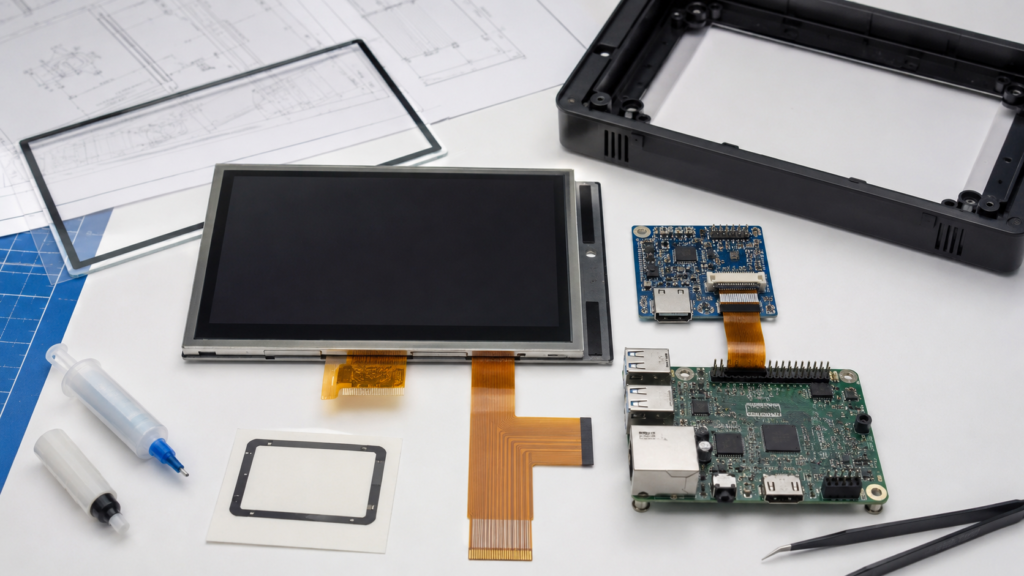
ディスプレイ機能とタッチ機能は通常、別々の電気経路をたどります。これらは個別に仕様を定義し、その後まとめて検証する必要があります。.
| システム要素 | 主な機能 | 確認すべき事項 |
|---|---|---|
| TFT LCDモジュール | 画像を生成する | 有効エリア、解像度、ネイティブタイミング、インターフェース、電源、バックライト、FPC、ドライバーIC、および初期化 |
| タッチセンサー | 指、スタイラス、またはその他のサポートされる入力を検出する | 技術、有効エリア、電極構造、サポートされる入力ツール、カバースタック、および環境挙動 |
| タッチコントローラー | センサーを測定し、座標またはタッチイベントを報告する | コントローラーモデル、ファームウェア、ホストインターフェース、電圧、割り込み、リセット、接触数、およびドライバーサポート |
| カバーガラスまたは前面レンズ | 完成した前面表面を提供し、センサーを保護する | 材料、厚さ、外形、印刷、表面処理、開口部、エッジ詳細、および接着エリア |
| 接着構造 | LCD、センサー、およびカバーガラスを接合またはスペーシングする | ボンディング方法、光学的外観、ギャップ、接着剤、公差、リワーク、および環境要件 |
| ホストシステム | 画像を駆動し、タッチ入力を受け取る | ディスプレイ出力、タッチ入力、ドライバー、オペレーティングシステム、向き、電源、スリープ、ウェイク、およびリカバリ動作 |
「7インチ静電容量式ディスプレイ」としてのみ説明された製品では、これらの決定事項のほとんどが未定義のままになります。有用な見積もりとサンプル承認には、完全な構成を特定する必要があります。.
投影型静電容量式タッチ(一般にPCAPまたはPCTと呼ばれる)と抵抗膜式タッチは、異なる感知原理を使用します。正しい選択は、意図する入力ツール、カバー構造、環境、ユーザーインターフェース、ホストソフトウェア、および検証要件によって異なります。.
| 決定領域 | 投影型静電容量式タッチ | 抵抗膜方式 |
|---|---|---|
| 入力原理 | 静電容量センサーフィールドの変化を検出する | 圧力が加えられたときの抵抗層間の接触を検出する |
| 一般的な入力 | 指および選択されたセンサー・コントローラー構成によってサポートされるその他の入力 | 指、パッシブスタイラス、または適切な圧力を加えることができるその他の物体 |
| マルチタッチ | センサー、コントローラー、ファームウェア、ドライバー、およびオペレーティングシステムによってサポートされる場合に利用可能 | 特定の抵抗膜式技術とコントローラーに依存する。従来の4線式システムは単一接触入力に一般的に使用される |
| 前面表面 | 定義されたカバーガラス構造の背後に配置できる | 感知層に圧力を機械的に伝達できる構造が必要 |
| 主な工学的リスク | カバー厚、センサー形状、接地、ディスプレイノイズ、湿気挙動、グローブ要件、およびチューニング | 機械的層挙動、圧力閾値、表面摩耗、校正、整定、およびコントローラー変換 |
| 最適な選定基準 | ジェスチャーおよびマルチコンタクト要件、前面レンズ設計、ユーザー期待、および検証済みの環境性能 | 入力ツール要件、圧力ベースの操作、UI構造、機械的耐久性、および検証済みの環境性能 |
Texas Instrumentsは、4線式抵抗膜スクリーンを、絶縁スペーサーによって分離された2つの透明な抵抗層として説明しています。タッチ位置は、スクリーンが押された箇所の抵抗変化から決定され、適切なコントローラーがX/Y位置とタッチ圧力を測定できます。.[2]
PCAPは単に新しいという理由で選択すべきではなく、抵抗膜式タッチも単に古い技術であるという理由で拒否すべきではありません。決定は、必要なユーザー操作と、提供される構成について利用可能なエビデンスに従うべきです。.
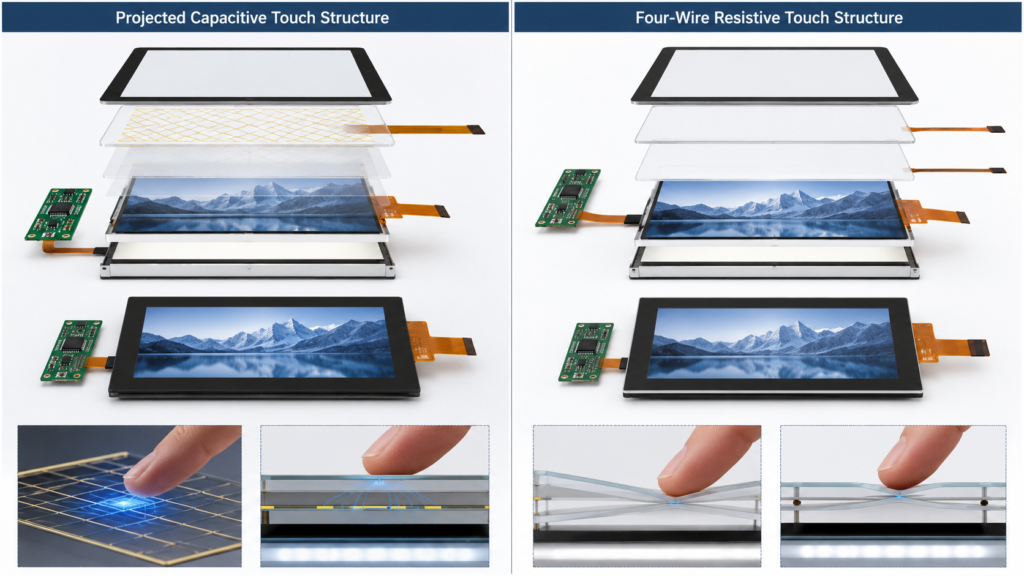
静電容量式感知の詳細な説明については、以下を参照してください PCAPタッチスクリーン技術.
「マルチタッチ」「グローブタッチ」「濡れた状態での操作」「スタイラスサポート」などの用語は、受け入れ試験に結び付けられない限り不完全です。.
| タッチ要件 | 定義のための質問 |
|---|---|
| 接触点数 | アプリケーションは同時に何点の接触を認識する必要があり、各ジェスチャはそれらのうちどれを使用するか。 |
| 入力ツール | ユーザーは素手、指定された手袋、パッシブスタイラス、アクティブスタイラス、またはその他のツールで製品を操作するか。 |
| タッチターゲットサイズ | 最小のコントロールは何か。また、想定される視認距離および操作距離でユーザーがそれらを操作できるか。 |
| エッジ動作 | コントロールはベゼル、印刷枠、または湾曲した筐体エッジの近くで動作する必要があるか。 |
| 湿気条件 | 要件は、断続的な水滴、結露、洗浄液、継続的な曝露、または濡れた状態での操作か。 |
| 誤タッチ防止 | 手のひら、袖、水、筐体接触、または電気的干渉に対して、システムはどのように応答すべきか。 |
| 応答特性 | 汎用のタッチ仕様ではなく、アプリケーションが要求するレイテンシおよびレポート動作は何か。 |
実際のワークフローをテストすること。複数の接触点をレポートするコントローラがあっても、最終的なカバーガラスの背後かつ意図した環境において、完全な製品が要求されるジェスチャを確実に実行できることは証明されない。.
LCDアクティブ領域、タッチセンサ領域、カバーガラス開口部、印刷枠、筐体ベゼル、およびレポートされる座標範囲は、常に整合している必要がある。.
機械図面には以下を明記する必要がある:
ディスプレイからわずかにずれたセンサは、中央の座標が正しく見えても、エッジ入力の不正確さを引き起こす可能性がある。同様に、不透明な印刷枠は、カバーガラスの開口部がUIと整合していない場合、ピクセルやタッチターゲットを隠す可能性がある。.
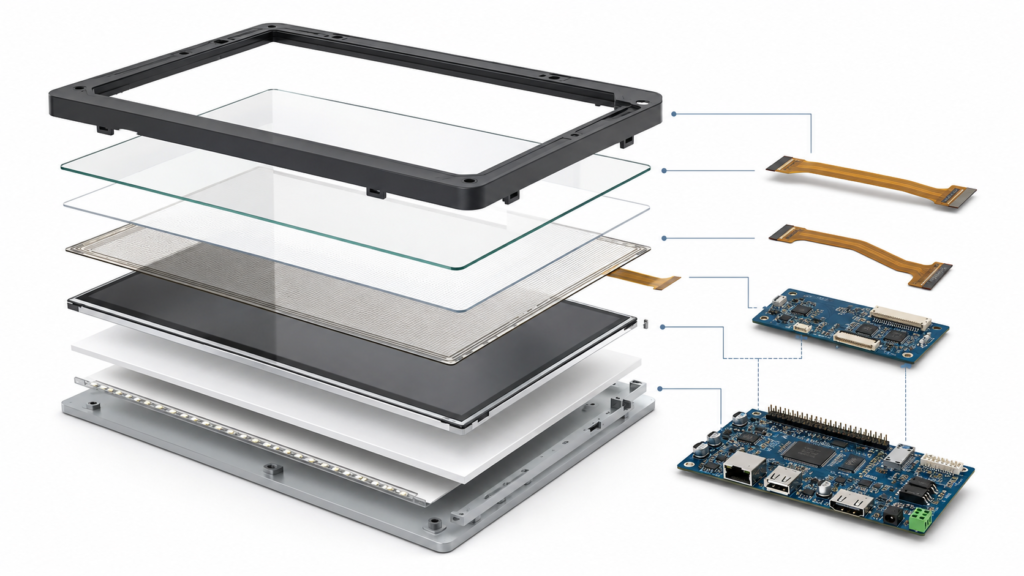
ツーリングを承認する前に、図面を筐体CAD、PCB配置、および代表的な実寸UIと併せてレビューすること。.
カバーガラスは単なる外観部品ではない。その厚さ、誘電特性、印刷領域、コーティング、接着剤、エアギャップ、およびセンサからの距離は、タッチ性能に影響を与える可能性がある。.
Microchipの静電容量式タッチ設計ガイドによると、カバーが厚くなると指とセンサ電極間の距離が増加し、静電容量とタッチ感度が低下する。また、電極形状は変化した電界を補償する方法の一つとして説明されている。.[3]
| カバー要件 | Engineering Impact |
|---|---|
| 厚さの増加 | 感度が変化し、センサとコントローラの協調設計が必要になる場合がある |
| カスタム外形 | 前面筐体の適合、接着領域、エッジクリアランス、およびツーリングに影響する |
| 印刷枠 | LCD、センサ、タッチターゲット、およびディスプレイ開口部と整合している必要がある |
| 表面処理 | 光学的外観、洗浄、タッチ感触、および該当するバリデーションのレビューが必要 |
| 湾曲または段差のある形状 | 利用可能なセンサおよび接着プロセスが提案構造をサポートすることを確認する必要がある |
| 顧客指定の材料 | 図面、材料定義、公差、外観基準、およびタッチバリデーションが必要 |
カスタムカバーガラスを単独で承認し、既存のタッチファームウェアが有効なままであると想定しないこと。完全なレンズ、センサ、コントローラ、接着剤、筐体、接地、およびソフトウェア構成を評価すること。.
タッチセンサは、異なる接着および接合構成を通じてLCDまたはカバーガラスに接合される場合がある。最適な構造は、光学要件、モジュール構造、環境曝露、保守性、製造能力、およびコストに依存する。.
| 接合方法 | 潜在的な利点 | 検証項目 |
|---|---|---|
| 周辺またはテープ接着によるエアギャップ方式 | より簡単な組立が可能であり、部品の分離が容易になる場合がある | 反射、内部汚染、機械的間隔、圧力痕、位置合わせ、シール、および長期的な接着剤の挙動 |
| 光接合 | 内部の空気界面を減らし、より統合された光学および機械的スタックを実現できる | 材料適合性、気泡、異物、外観基準、プロセス歩留まり、リワーク、温度挙動、およびタッチ性能 |
| 事前統合型タッチディスプレイアセンブリ | 定義されたLCD、センサ、コントローラ、および接着構成を提供する | 正確なリビジョン、入手可能性、カバーガラス適合性、コントローラサポート、機械的外形、および承認文書 |
光学接着は、すべての本格的な製品に自動的に必須というわけではなく、それ自体で太陽光下での視認性、環境シール性、耐衝撃性、または製品信頼性を証明するものではない。これらの要件は、個別に定義およびバリデーションする必要がある。.
より広範な生産プロセスについては、以下を参照のこと: 産業用タッチディスプレイ組立ガイド.
タッチコントローラは、センサ測定値をホストが使用できる座標または入力イベントに変換する。その選択は、対応接触点数、スキャン動作、ファームウェア、インターフェース、電力、割り込みロジック、リセット、環境チューニング、およびオペレーティングシステム統合に影響を与える。.
コントローラを承認する前に以下を確認すること:
NXPのMIPI DSIディスプレイシステムに関する注記は、LCDインターフェースだけではモジュール全体を機能させることはできないことを示している。同注記は、バックライト制御の要件を別途特定し、一部のタッチパネルではI2CまたはSPIが必要であることも指摘している。.[4]
この分離はMIPIに限定されない。LCDはRGB、LVDS、eDP、HDMI、またはその他の経路を通じて画像データを受信する一方、タッチコントローラは異なるインターフェースを介して通信する場合がある。.
コントローラの具体的な役割については、 タッチICチップとは何か?. を参照のこと。ディスプレイ側の接続については、 LCDディスプレイインターフェースガイド.
を参照のこと。.
ホストがタッチコントローラを認識しても、入力が表示画像に正しくマッピングされていることは証明されない。オペレーティングシステムまたはアプリケーションは、デバイスを正しいディスプレイに関連付け、必要に応じて報告された座標を変換しなければならない。.[5]
| Androidのタッチデバイスに関するドキュメントは、直接タッチスクリーンとタッチパッドおよびポインタを区別し、入力プロパティと設定ファイルを使用してデバイスを分類し、ディスプレイの向きが変わるときに方向認識型の座標回転をサポートしている。 | ソフトウェア項目 |
|---|---|
| 検証質問 | デバイス認識 |
| 最終オペレーティングシステムイメージは、コールドブート後および再接続後もコントローラを一貫して識別するか。 | ディスプレイ関連付け |
| システムに複数の画面がある場合、タッチは意図したディスプレイに割り当てられているか。 | 軸マッピング |
| XおよびY方向、原点、スケーリング、範囲は正しいか。 | 回転 |
| 90度、180度、または270度の回転後、タッチ座標はディスプレイに追従するか。 | 起動およびリカバリ |
| タッチは、起動、リカバリ、診断、およびアプリケーションモードにおいて、必要な場所で機能するか。 | スリープおよびウェイク |
| コントローラは、入力の喪失や誤タッチの発生なしに、意図した電力状態に移行および復帰するか。 | ファームウェアリビジョン |
承認されたタッチ構成は、管理されたコントローラファームウェアバージョンに紐付けられているか。 HDMIが画像を伝送しUSBがタッチ入力を返す外部ビデオディスプレイについては、専用の.
AndroidタッチおよびHDMIタッチ統合ガイド.
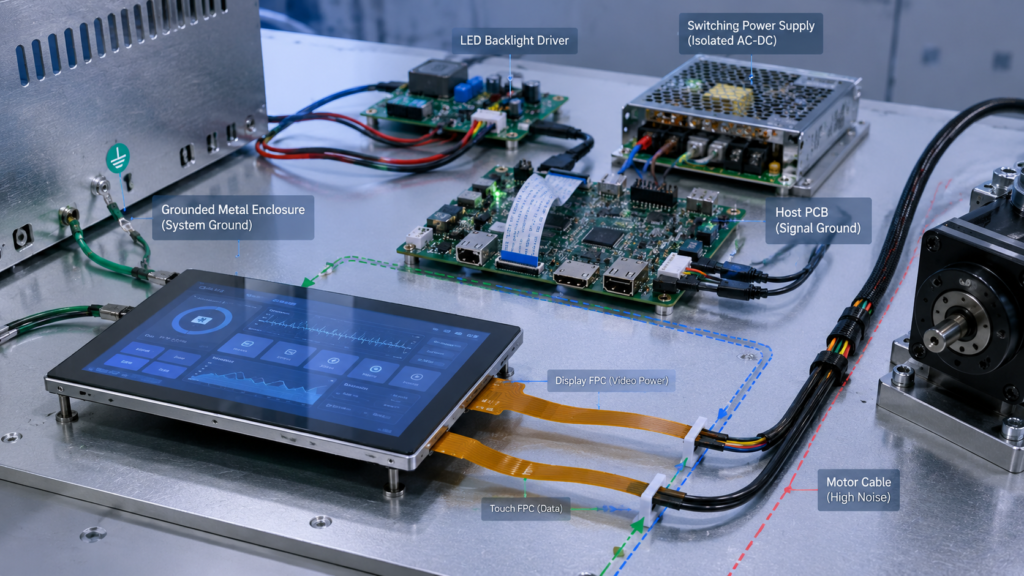
静電容量式タッチセンサは、完全な電気システムの一部として動作する。ディスプレイ信号、LEDバックライトドライバ、スイッチング電源、モータ、充電器、ケーブル、筐体接地、および近傍の導体は、信号環境に影響を与える可能性がある。.[3]
静電容量式タッチディスプレイに関する電気的ノイズ、接地、バックライト、電源、およびケーブルに関する考慮事項
量産ケーブル長およびコネクタ保持力.
“承認サンプルで使用されたタッチコントローラのチューニング.
| 開発用電源を使用したベンチテストは、最終製品に異なるパワーエレクトロニクス、ケーブル、モータ、または筐体材料が含まれる場合には十分ではない。組み立て済み機器において、代表的な動作状態の下でタッチ検証を繰り返すこと。 | 「産業用タッチ」、「医療用タッチ」、「屋外用タッチ」、「車載用タッチ」は、普遍的な仕様を定義するものではない。各ラベルは、完成した機器に関連する測定可能な条件に変換されなければならない。 |
|---|---|
| 温度 | 環境領域 |
| 定義すべき要件 | 動作および保管限界、起動条件、曝露時間、ならびに許容されるディスプレイおよびタッチ動作 |
| 湿気 | 水滴、結露、清掃、継続的曝露、動作状態、シール責任、および誤タッチ基準 |
| 手袋 | 正確な手袋の材質および厚さ、ユーザー操作、必要な操作、および受入率 |
| 洗浄用化学薬品 | 指定された化学薬品、濃度、接触方法、頻度、カバー材質、印刷、コーティング、接着剤、およびエッジ保護 |
| 機械的負荷 | 衝撃、振動、押圧力、取り付け応力、筐体変形、および該当する受入基準 |
| 電気的イミュニティ | 機器レベルの試験要件、接地、ケーブル、電力状態、筐体、および動作モード |
周囲光.
設置場所、カバー反射、画面内容、視認方向、および必要な可読性.
| 機械項目 | レビュー質問 |
|---|---|
| タッチ技術のみに基づいて、IP等級、化学的適合性、車載認定、医療適合性、またはコンプライアンスを主張してはならない。正確な製品構成、試験方法、責任者、レポート、および完成機器の要件を確認すること。 | タッチディスプレイには通常、ディスプレイFPCと別のタッチFPCがある。それらの位置、折り曲げ領域、コネクタ、補強材、シールド、および組み立て順序は、モジュールが製品に適合するかどうかを決定づける可能性がある。 |
| LCDとタッチの位置合わせ | アクティブエリアと可視開口部は、完全な公差スタック内で位置合わせされているか。 |
| コネクタアクセス | 各コネクタは組み立て中に操作および点検が可能ですか? |
| カバーガラス支持 | 筐体は、アクティブLCDまたはタッチセンサーに負荷をかけずに承認領域を支持しますか? |
| 接着剤およびシーリング | 接着幅、圧縮、表面処理、汚染管理、および環境責任は定義されていますか? |
| 金属構造 | ベゼル、ブラケット、ネジ、または接地要素が静電容量式センシングに影響を与える可能性はありますか? |
| サービスアクセス | カバーガラス、FPC、コネクタ、または筐体を損傷することなくディスプレイを取り外すことはできますか? |
サプライヤー図面と筐体CADを併せて確認してください。ディスプレイ開口部、PCB、および取り付け構造を独立した公称寸法から設計しないでください。.
RJY Displayの現在の ディスプレイモジュールポートフォリオ 初期エンジニアリングレビューのための既存製品パスを提供します。.[1] 製品ページは、自動的な互換性承認ではなく、候補発見ページとして扱う必要があります。.
コアLCDプラットフォームが適切な場合、プロジェクトは以下の周辺変更を評価できます:
この範囲は利用可能なLCDプラットフォームから始まります。任意のLCDサイズ、ピクセルマトリクス、またはパネルアーキテクチャをゼロから作成できる能力として解釈されるべきではありません。.
小型組み込み製品については、 小型タッチスクリーンディスプレイガイド. を確認してください。より広範な開発プロセスについては、 カスタムTFT LCDディスプレイガイド.
| 決定領域 | 候補A | 候補B | 必要な証拠 |
|---|---|---|---|
| LCDモデルおよびリビジョン | 記録 | 記録 | 現在管理されているデータシートおよび図面 |
| タッチ技術 | 記録 | 記録 | タッチ仕様およびアプリケーション要件 |
| センサーおよびコントローラ | 記録 | 記録 | 正確なコントローラー、ファームウェア、センサー定義、およびホストインターフェース |
| カバーガラス | 記録 | 記録 | 図面、材料、厚さ、印刷、および表面要件 |
| 接着 | 記録 | 記録 | 組み立て定義および外観合格基準 |
| タッチ動作 | テスト | テスト | 必要な接触、工具、手袋、湿気、エッジ、およびジェスチャー |
| ホストサポート | 確認 | 確認 | ドライバー、電圧、リセット、割り込み、座標マッピング、およびOSイメージ |
| 機械的適合性 | 評価 | 評価 | LCD、タッチ、レンズ、FPC、PCB、および筐体図面 |
| 環境適合性 | 評価 | 評価 | 定義されたアプリケーションテストおよび構成固有のエビデンス |
| 変更管理 | 確認 | 確認 | リビジョン、代替品、ファームウェア、PCN、およびEOL手順 |
低コストの候補は、そのコントローラー、ドライバー、カバー構造、機械図面、または環境動作が未定義のままである場合、比較を通過すべきではありません。.
| 検証領域 | 最小限のレビュー |
|---|---|
| 表示画像 | ネイティブタイミング、全画面パターン、向き、起動、スリープ、ウェイク、繰り返し再起動、およびエラー状態 |
| タッチ座標 | 中央、エッジ、コーナー、X/Y方向、回転、スケーリング、マルチディスプレイ関連付け、およびアプリケーションターゲット |
| ユーザー入力 | 必要な指、スタイラス、手袋、ジェスチャー、接触数、圧力、およびUIワークフロー |
| カバーおよび接着 | 外観、感度、位置合わせ、気泡、異物、境界領域、接着剤、および筐体支持 |
| 電気動作 | 生産電源、バックライト状態、充電器、モーター、無線、ケーブル、接地、および周辺機器の動作 |
| 環境 | 定義された温度、湿気、洗浄、機械的、および電気的イミュニティ条件 |
| ファームウェア | コントローラーバージョン、ホストドライバー、向き、スリープ、ウェイク、起動、更新、およびリカバリ動作 |
| 機械的組み立て | 適合性、位置合わせ、FPC配線、コネクタアクセス、接着領域、公差スタック、およびサービス手順 |
| 構成記録 | LCD、センサー、コントローラー、カバーガラス、FPC、基板、ファームウェア、ケーブル、接着剤、筐体、および未解決事項 |
製品名のみを承認するのではなく、承認されたハードウェアおよびソフトウェア構成を記録してください。LCD、タッチコントローラー、センサー、カバーガラス、接着剤、基板リビジョン、ファームウェア、ケーブル、または筐体を変更する場合は、部分的な再検証が必要になる場合があります。.
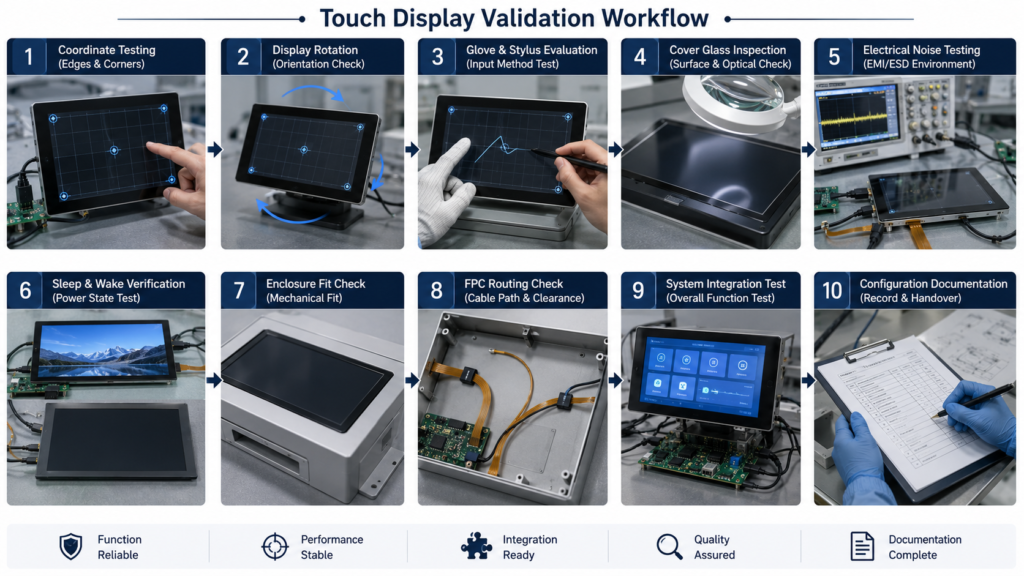
有用な推奨事項および見積もりを提供するには、以下の情報を提供してください:
RJY Displayは、既存のTFT LCDプラットフォームを、お客様のタッチ技術、コントローラ、カバーガラス、接着、インターフェース、FPC、ファームウェア、バックライト、ホスト基板、および機械的要件に照らしてレビューできます。.
現在のTFT LCDディスプレイモジュールを参照する, 、レビューする RJY Displayのカスタムソリューション範囲または ホスト基板、UI、カバーガラス、および筐体の要件をエンジニアリングレビューのために送付する.
これは、TFT LCDとタッチセンサーを含む統合ディスプレイアセンブリであり、通常はタッチコントローラ、FPC、カバー構造、接着またはスペーシング配置、およびホストへの個別の電気接続を備えています。正確な構成部品は各モジュールごとに確認する必要があります。.
必要な入力ツール、ジェスチャー、接触点数、カバー構造、ユーザーインターフェース、環境、ホストサポート、および検証結果から選択してください。投影型静電容量方式と抵抗膜方式は異なる検出方法を使用しており、どちらの技術もすべての製品に普遍的に適切であるとは限りません。.
通常は異なります。LCDはディスプレイインターフェースを介して画像データを受信しますが、タッチコントローラは一般的にI2C、USB、またはSPIなどの別のホスト接続を使用します。両方のインターフェース、その電源要件、ファームウェア、およびコネクタをレビューする必要があります。.
自動的にはできません。ユーザーと静電容量センサー間の距離が大きくなると、感度が低下する可能性があります。カバー材質、厚み、センサー形状、コントローラファームウェア、接着、筐体、および必要な入力動作は、一つの構成として評価する必要があります。.
ディスプレイの向きとタッチ座標変換が、同じ回転、原点、軸方向、またはスケーリングを使用していない可能性があります。サポートされる各向きについて、タッチドライバ、オペレーティングシステム設定、ディスプレイ関連付け、コントローラ範囲、およびアプリケーション動作を確認してください。.
アプリケーション、LCDサイズと解像度、機械的エンベロープ、ホスト基板、ディスプレイおよびタッチインターフェース、入力ツール、接触点数、カバーガラス図面、接着要件、環境、FPC制約、ファームウェア要件、検証要件、数量、および利用可能な図面またはデータシートを提供してください。.
ディスプレイサイズ、解像度、インターフェース、輝度、タッチ要件、コントローラーボード要件、およびアプリケーション環境を共有してください。.
関連するディスプレイ技術ガイドとアプリケーションリファレンスを引き続きお読みください。.
この記事のトピックに関連する製品ページをご覧ください。.
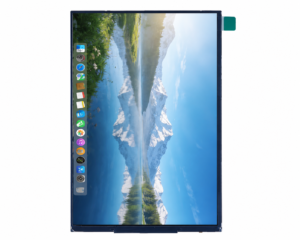
RJYのエンジニアリングチームにご相談いただき、ディスプレイマッチング、コントローラーボードの確認、およびカスタマイズについて話し合ってください。.