Facing a bottleneck in your Embedded Display Project?
Don’t let complex integration or supply chain issues slow your time-to-market. Book a free consultation with the RJY expert team for tailored design and manufacturing support.

If you've ever browsed tech specs for a new monitor or device, chances are you've seen terms like IPS, PLS, or even ADS thrown around. They often appear together, and they seem similar—but are they really the same?The short answer: not exactly. The longer, more useful answer? Let’s break down what a PLS screen is, how it compares to IPS panels, and what the technical and real-world implications are for developers, designers, and everyday users.
PLS and IPS are two LCD panel technologies commonly used in TFT LCD displays. Both are designed to improve viewing angle, color stability, and image consistency compared with older TN LCD panels. For most end users, the difference between a good PLS panel and a good IPS panel may not be obvious. For OEM product teams, however, the choice can affect brightness targets, display availability, cost structure, interface compatibility, supply planning, and long-term product design.
This guide explains the practical differences between PLS and IPS panels from an engineering and sourcing perspective. It is written for hardware engineers, product managers, procurement teams, and OEM buyers evaluating TFT LCD modules for embedded products, HMI systems, industrial equipment, smart devices, and custom display projects.
IPS stands for In-Plane Switching. It is an LCD technology in which the liquid crystal molecules rotate mainly within the same plane as the display glass. This structure helps the panel maintain more stable color and contrast when viewed from different angles.
IPS panels are widely used in monitors, tablets, industrial displays, medical devices, automotive interfaces, control panels, and many embedded display products. Their main advantage is consistent image performance across wide viewing angles. This makes IPS a practical choice when users may look at the screen from the side, above, below, or from changing operating positions.
For OEM projects, IPS panels are often selected when the application requires stable visual quality, broad supplier availability, and predictable display behavior across different viewing positions.
???? Related: AMOLED vs IPS Displays
PLS stands for Plane-to-Line Switching. It is an LCD panel technology developed as an IPS-type alternative. Like IPS, PLS is designed to provide wide viewing angles and improved image stability compared with older TN panel structures.
In practical terms, PLS and IPS are closely related technologies. Both are used to improve viewing angle, color consistency, and general display quality. The differences are usually found in the panel structure, optical efficiency, supplier ecosystem, cost target, and available product options.
For OEM buyers, the key question is not whether PLS is universally better or worse than IPS. The better question is whether the available PLS or IPS module matches the project’s size, resolution, brightness, interface, touch, mechanical, and lifecycle requirements.
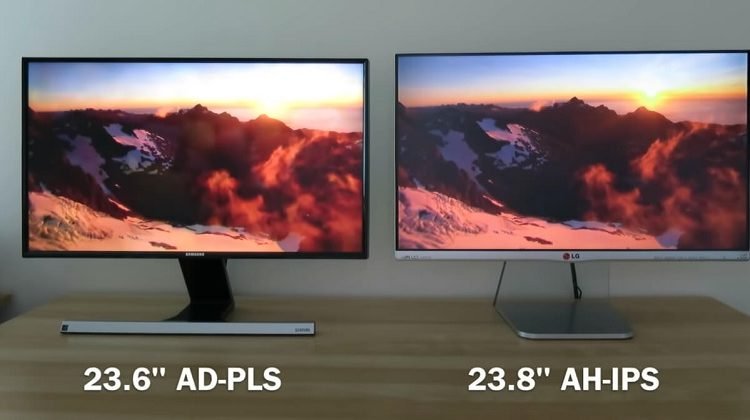
The comparison below summarizes the practical differences buyers should review before selecting a panel type.
| Factor | PLS Panel | IPS Panel |
|---|---|---|
| Technology type | IPS-class LCD technology | In-plane switching LCD technology |
| Viewing angle | Generally wide | Generally wide |
| Color consistency | Good for many commercial and embedded applications | Often strong, especially in premium display grades |
| Brightness efficiency | Can be competitive depending on panel design | Depends on panel generation, backlight design, and supplier |
| Supplier ecosystem | More limited in some sizes and markets | Broad availability across many panel and module suppliers |
| Cost position | Can be cost-effective depending on sourcing | Wide range from standard to premium grades |
| Application fit | General displays, smart devices, some cost-sensitive embedded projects | Industrial displays, HMI systems, medical devices, automotive interfaces, and color-sensitive applications |
| OEM risk factor | Availability and lifecycle should be checked carefully | Broader sourcing options may reduce replacement risk |
The exact result depends on the specific panel, not only the panel category. A premium IPS panel may outperform a basic PLS panel, while a well-designed PLS module may be suitable for many general display applications.
Both PLS and IPS panels are designed to provide wide viewing angles. This is one of the main reasons they are often preferred over traditional TN LCD panels.
For embedded products, viewing angle matters because users may not always face the display directly. Industrial operators may view the screen from the side. A smart appliance may be mounted at a fixed height. A control panel may be installed above or below eye level. In these cases, poor viewing angle can make text, icons, warnings, and UI elements harder to read.
IPS panels are widely known for stable viewing performance and are commonly used where consistent image quality is important. PLS panels can also provide strong wide-angle performance, but the final result should be verified from the supplier’s datasheet and sample testing.
Brightness is not determined by panel type alone. It depends on the LCD cell, polarizer, backlight structure, LED design, optical films, cover lens, bonding method, and power design.
Some PLS panels may offer good light efficiency, while some IPS modules may achieve high brightness through optimized backlight design. For outdoor, automotive, industrial, or sunlight-readable applications, buyers should avoid choosing based only on the terms “PLS” or “IPS.” Instead, they should confirm actual brightness, contrast, viewing angle, surface treatment, backlight current, thermal behavior, and power consumption.
For high-brightness display projects, the full display module design is more important than the panel label alone.
IPS panels are often selected for applications that require stable color and image consistency. Examples include industrial control interfaces, medical equipment displays, automotive dashboards, premium tablets, and professional display products.
PLS panels can also provide good color performance for many commercial and embedded applications. However, if the project requires strict color consistency, grayscale accuracy, or visual calibration, the buyer should request measured data from the supplier rather than relying on the panel type name.
For OEM projects, important visual factors include:
These factors should be reviewed at the module level, not only at the panel level.
Response time can vary widely across both PLS and IPS panels. A panel designed for office or industrial HMI use may have different response behavior from a gaming monitor panel or automotive display panel.
For embedded products, response time usually matters when the display shows animation, video, moving indicators, real-time machine status, camera feed, or dynamic UI elements. For static menus, parameter settings, and simple status screens, response time may be less critical.
Buyers should check the datasheet values and test real samples under the expected operating temperature. Low temperature can affect LCD response, so industrial and outdoor projects should pay special attention to environmental performance.
Cost is one of the most common reasons buyers compare PLS and IPS panels. However, panel cost should not be evaluated in isolation.
A lower-cost panel may increase total project cost if it creates issues with interface compatibility, mechanical structure, touch integration, backlight performance, driver support, or future supply replacement. A slightly higher module cost may be acceptable if it reduces engineering risk and supports a smoother path from prototype to production.
For OEM buyers, the practical cost comparison should include:
The lowest unit price is not always the lowest lifecycle cost.
For embedded display projects, the panel choice should be driven by the complete product requirement.
| Project Requirement | Practical Recommendation |
|---|---|
| General indoor interface | PLS or IPS may both be suitable |
| Industrial HMI panel | IPS is often preferred, but qualified PLS may also work |
| High-brightness display | Evaluate actual module brightness and thermal behavior |
| Color-sensitive display | Premium IPS is often safer, but sample testing is required |
| Cost-sensitive product | Compare available PLS and IPS modules at the same specification level |
| Long lifecycle project | Prioritize supplier stability and replacement planning |
| Custom touch display | Evaluate panel, touch, cover lens, and controller together |
| Multi-source procurement | IPS may offer broader supplier availability in many categories |
The right decision depends on the exact module and project constraints. Panel type is only one part of display selection.
Choose PLS if the available module meets your requirements for size, resolution, brightness, viewing angle, interface, touch integration, mechanical design, and lifecycle support. PLS can be a practical option for many general display applications and cost-sensitive embedded products.
Choose IPS if your project requires broad supplier availability, strong viewing consistency, premium visual quality, long-term sourcing flexibility, or stricter color performance. IPS is often a safer default for industrial HMI, medical equipment, automotive interfaces, and applications where display readability is critical.
Do not choose only by technology name. Choose based on verified datasheets, sample testing, supplier support, and system-level compatibility.
Before selecting a PLS or IPS panel, confirm these details with your supplier:
Clear answers help the supplier recommend a suitable module and reduce the risk of redesign.
RJY supports OEM teams in selecting and customizing TFT LCD modules for embedded products, industrial equipment, smart devices, and HMI systems. For a display project, RJY can help review panel type, size, resolution, brightness, viewing angle, interface, touch method, cover lens, FPC design, control board compatibility, and mechanical structure.
For projects that need more than a standard screen, RJY can also support display-computing integration, Android HMI control board matching, enclosure requirements, and prototype validation.
If your product requires a special display format, RJY offers round LCD display and bar LCD display options for embedded interfaces. If your system requires display and control board integration, RJY’s RK3566 Android control board can also be evaluated for HMI and smart display applications.
PLS and IPS are closely related LCD panel technologies. Both can provide wide viewing angles and better image stability than older TN LCD panels. IPS is often preferred when broad availability, color consistency, and long-term sourcing flexibility matter. PLS can be a practical option when the available module meets the project’s optical, electrical, mechanical, and commercial requirements.
For OEM display projects, the final decision should not be based only on whether the panel is PLS or IPS. The better approach is to compare the full TFT LCD module, including brightness, interface, touch integration, FPC design, cover lens, operating environment, supply stability, and control board compatibility.
Send your display project requirements to RJY. Include display size, resolution, interface, touch type, brightness, operating environment, target application, annual volume, prototype quantity, project timeline, customization requirements, software or firmware needs, and enclosure requirements. RJY can help evaluate suitable display module options for your embedded product.
Not always. PLS and IPS are closely related LCD technologies. The better choice depends on the specific module, brightness, color requirements, interface, touch structure, supplier availability, and lifecycle needs.
IPS is commonly used in industrial displays because it offers stable viewing angles and broad supplier availability. However, a qualified PLS module may also work if it meets the project’s optical, electrical, mechanical, and environmental requirements.
Only if the key specifications match. You need to confirm size, resolution, interface, timing, connector, FPC layout, brightness, mechanical dimensions, touch structure, and driver compatibility before replacement.
Panel type alone does not determine brightness. High-brightness performance depends on the panel, backlight, optical films, power design, cover lens, bonding, and thermal structure. Buyers should compare actual module specifications and samples.
Premium IPS panels are often preferred for color-sensitive applications, but buyers should verify color gamut, gamma, white point, uniformity, and viewing performance using supplier data and sample testing.
Provide display size, resolution, interface, touch type, brightness, operating environment, mechanical requirements, application, prototype quantity, annual volume, project timeline, and customization needs.
Reference Resources
Share your display size, resolution, interface, brightness, touch requirement, controller board requirement, and application environment.
Continue reading related display technology guides and application references.
Explore product pages related to this article topic.
Talk to RJY’s engineering team for display matching, controller board review, and customization discussion.