임베디드 디스플레이 프로젝트에 병목 현상을 겪고 계신가요?
복잡한 통합 작업이나 공급망 문제로 출시 시기가 지연되지 않도록 하십시오. 맞춤형 설계 및 제조 지원을 위해 RJY 전문가 팀과의 무료 상담을 예약하세요.

An epaper 화면 매우 적은 디스플레이 전력으로 페이지를 표시 상태로 유지할 수 있으며 밝은 주변광에서도 판독 가능한 상태를 유지한다. 이러한 강점은 전자종이를 전자책 리더, 필기 기기, 라벨, 사이니지 및 안정적인 콘텐츠를 표시하는 기타 제품에 매력적으로 만든다. 그러나 이것이 모든 TFT LCD를 직접 대체할 수 있다는 의미는 아니다.
제품 팀은 화면이 무엇을 표시할지, 이미지가 얼마나 자주 변경될지, 사용자가 어떻게 상호작용할지, 그리고 기기가 어디에서 작동할지를 고려해야 한다. 주로 문서용으로 사용되는 e ink 모니터는 컬러 산업용 HMI와 요구사항이 다르다. 필기용으로 설계된 epaper 태블릿은 비디오를 재생하고 애니메이션 애플리케이션을 실행하는 기존 태블릿과 우선순위가 다르다.
이 가이드는 전자종이와 TFT LCD 기술 간의 실질적인 차이점을 설명한다. 또한 디스플레이를 선택하기 전에 전면 조명, 리프레시 동작, 색상, 터치, 컨트롤러 아키텍처, 전력 및 기계적 통합을 평가하는 방법을 보여준다.
전자종이는 종이와 유사한 반사형 이미지를 생성하도록 설계된 디스플레이 기술군이다. 이 용어 ePaper 는 일반적인 명칭이다. E Ink는 회사 이름이자 잘 알려진 전자잉크 기술 제공업체의 이름이지만, 사람들은 전자종이 디스플레이를 의미할 때 비공식적으로 “E Ink 화면”이라는 표현을 자주 사용한다.
많은 상용 전자종이 화면은 전기영동 기술을 사용한다. 일반적인 흑백 설계에서 전하를 띤 밝은 색과 어두운 색의 안료 입자가 미세한 캡슐 또는 셀 안에 위치한다. 인가된 전기장이 선택된 입자를 시청 표면 쪽으로 이동시킨다. 보이는 입자가 해당 영역이 밝게 보이는지 어둡게 보이는지를 결정한다. E Ink는 이 과정을 백플레인에 라미네이팅되고 구동 전자장치에 연결된 전자잉크 필름으로 설명한다.1
이는 TFT LCD와 다르다. LCD는 액정 셀과 컬러 필터를 통해 얼마나 많은 빛이 통과하는지를 제어한다. 대부분의 LCD 모듈은 디스플레이 스택 뒤에 백라이트가 필요하다. 전자종이는 일반적으로 환경으로부터의 빛을 반사하므로, 시청자는 디스플레이 전면에 닿았다가 되돌아온 빛을 보게 된다.
전자종이는 또한 일반적으로 쌍안정성을 가진다. 컨트롤러가 입자를 정의된 광학 상태로 이동시킨 후, 기존 능동 디스플레이에서 사용되는 연속적인 픽셀 구동 없이도 이미지가 표시 상태로 유지될 수 있다. 시스템은 이미지를 업데이트하기 위해 여전히 전력이 필요하며, 완전한 기기는 프로세서, 메모리, 터치 컨트롤러, 무선 통신, 전면 조명 및 기타 회로를 통해 계속 전력을 소비할 수 있다.
전자종이 화면은 임의의 비디오 신호를 받아들이는 자체 완결형 페이지가 아니다. 작동하는 제품은 여러 광학 및 전자 레이어를 결합한다:
파형은 특히 중요하다. 컨트롤러는 일반적인 풀컬러 비디오 프레임 시퀀스를 전송하는 것 이상을 수행한다. 이전 및 목표 광학 상태, 업데이트 모드, 온도 및 선택된 패널의 특성을 관리해야 한다. 더 빠른 부분 업데이트는 속도를 위해 이미지 품질을 희생할 수 있다. 전체 업데이트는 이미지 균일성을 향상시킬 수 있지만 더 오래 걸리고 눈에 띄는 전환을 발생시킬 수 있다.

이러한 패널별 동작은 전자종이 모듈이 일반적으로 전용 전자종이 구동단 없이 표준 TFT LCD 컨트롤러를 사용할 수 없는 이유 중 하나이다. 커넥터 모양과 인터페이스 이름만으로는 호환성이 확립되지 않는다.
이 표현은 e ink 디스플레이 백라이트 는 흔한 검색 질문을 반영하지만, 대부분의 반사형 전자종이 제품에는 잘못된 용어를 사용한 것이다. 일반적인 전자종이 디스플레이는 이미지 레이어 뒤에 광원이 필요하지 않다. 인쇄된 종이와 거의 같은 방식으로 주변광을 사용한다.
방이 어두울 때, 기기는 전면 조명. 을 사용할 수 있다. 얇은 도광판이 시청 표면 전체에 빛을 분산시킨다. LED는 일반적으로 가장자리를 따라 위치하며 빛을 도광판으로 유도한다. 빛은 전자종이 표면 위를 이동하고, 아래쪽으로 향한 뒤, 사용자에게 다시 반사된다. E Ink의 기술 설명은 이 구조를 LCD에서 사용되는 백라이트와 구분한다.2
| 조명 방식 | 광 경로 | 일반적인 디스플레이 | 설계 결과 |
|---|---|---|---|
| 주변광 반사 | 외부 광이 전면 표면에 도달하여 시청자 쪽으로 반사됨 | 전자종이 | 유용한 주변광이 있을 때 가시성이 향상됨 |
| 전면광 | 가장자리 LED와 표면 도광판이 반사층을 조명함 | 전자종이 리더 또는 태블릿 | 두께, 전력 수요, 광학층, 균일도 요구사항이 추가됨 |
| 백라이트 | LED 광이 디스플레이 스택 뒤에서 시청자 쪽으로 통과함 | 투과형 TFT LCD | 주변광 없이 시청이 가능하지만 지속적인 동작 전력을 소비함 |
“백라이트 없음”이 절대적인 건강 주장이 되어서는 안 됩니다. 시각적 편안함은 조명, 대비, 텍스트 크기, 시청 거리, 표면 반사, 전면광 설정, 콘텐츠, 그리고 개별 사용자에 따라 달라집니다. 제품 사양은 화면이 피로를 방지하거나 완전히 청색광이 없다고 약속하는 대신 광학 구조를 설명해야 합니다.
올바른 기술은 작업 부하에 따라 달라집니다. 전자종이는 제품이 안정적인 정보를 유지하고 반사광을 사용해야 할 때 강점을 발휘합니다. TFT LCD는 인터페이스가 자주 변경되거나 유동적인 움직임, 풍부한 색상, 예측 가능한 실시간 응답에 의존할 때 강점을 발휘합니다.
| 결정 요인 | 전자종이 화면 | TFT LCD |
|---|---|---|
| 광학 방식 | 일반적으로 반사형 | 일반적으로 LED 백라이트를 갖춘 투과형 |
| 정적 이미지 | 지속적인 픽셀 업데이트 없이 이미지를 유지할 수 있음 | 가시 이미지를 유지하기 위해 능동 동작이 필요함 |
| 움직임 | 업데이트 동작은 패널과 파형에 크게 의존함 | 연속 애니메이션과 비디오에 더 적합함 |
| 색상 | 흑백에서 제한적 또는 풀컬러 시스템까지 범위가 있으며, 기술별 트레이드오프가 있음 | 일반적으로 광범위하고 빠르게 변화하는 컬러 콘텐츠를 지원함 |
| 밝은 주변광 | 유용한 광이 증가해도 반사 이미지가 선명하게 유지될 수 있음 | 반사를 극복하기 위해 더 높은 휘도와 광학 제어가 필요할 수 있음 |
| 어두운 환경 | 외부 광 또는 통합 전면광이 필요함 | 백라이트가 이미지를 조명함 |
| 전력 프로파일 | 빈번하지 않은 업데이트에 매력적이며, 총 시스템 전력도 여전히 중요함 | 백라이트와 능동 디스플레이 동작이 더 연속적인 부하를 생성함 |
| 일반적인 적합성 | 읽기, 라벨, 표지판, 정적 상태, 저빈도 업데이트 기기 | HMI, 멀티미디어, 카메라 이미지, 계측기, 동적 제어 |
이는 모든 패널에 대한 사양이 아닌 시스템 수준의 경향입니다. 현대 전자종이 제품은 더 빠른 업데이트 모드를 사용할 수 있으며, 일부 LCD 시스템은 신중한 백라이트 제어로 전력을 줄일 수 있습니다. 엔지니어링 결정은 실제 모듈 데이터, 의도된 콘텐츠, 온도 범위, 동작 주기를 사용해야 합니다.
An eink 모니터 안정적인 텍스트가 주를 이루는 작업에 유용할 수 있습니다. 예로는 보고서 읽기, 긴 문서 작성, 참고 자료 보기, 화면이 제한된 영역에서만 변경되는 터미널에서 작업하기 등이 있습니다. 반사 표면은 밝은 사무실에서도 매력적일 수 있습니다.
작업 부하에 지속적인 움직임이 포함되면 한계가 더 명확해집니다. 스크롤은 페이지의 많은 부분을 움직입니다. 마우스 포인터는 초당 여러 번 위치가 변경됩니다. 창 효과, 비디오, 애니메이션 웹 페이지, 라이브 대시보드는 모두 빈번한 업데이트를 필요로 합니다. 전자종이는 부분 또는 더 빠른 업데이트 모드를 사용할 수 있지만, 이러한 모드는 대비, 계조, 이미지 청결도 또는 전력 사용에 영향을 미칠 수 있습니다. 잔상을 제거하기 위해 전체 리프레시가 필요할 수 있습니다.

E Ink는 자사 모듈이 다양한 업데이트 모드를 지원하며 변경된 영역만 업데이트하면 된다고 밝힙니다. 또한 지속적인 업데이트는 이 기술의 전력 이점을 감소시키며, 현재 양산 모듈이 기존의 비디오 레이트 사용을 지원한다고 가정해서는 안 된다고 명시합니다.1 따라서 제품 개발자는 일반적인 “빠른 전자종이”라는 표현에 의존하지 말고 정확한 모니터, 컨트롤러, 펌웨어, 운영 체제, 콘텐츠를 테스트해야 합니다.”
따라서 e ink 모니터는 전문화된 생산성 도구이지, 범용 업그레이드가 아닙니다. 구매자는 실제로 수행하는 작업에 맞춰 선택해야 합니다.
An 전자종이 태블릿, 전자종이 태블릿 또는 e paper 태블릿이라고도 하며, 일반적으로 읽기, 필기, 주석 달기 및 문서 정리에 초점을 맞춥니다. 디스플레이가 그 목적을 정의하는 데 도움을 줍니다. 기존의 LCD 또는 OLED 태블릿은 훨씬 더 넓은 범위의 앱과 미디어를 지원하는 것을 목표로 합니다.
| 사용 | 전자종이 태블릿 | 기존 태블릿 |
|---|---|---|
| 책 및 긴 문서 | 안정적인 텍스트와 밝은 방에서의 읽기에 매우 적합 | 양호하며, 발광 풀컬러 화면 탑재 |
| 필기 메모 | 펜, 표면 및 지연 시간이 잘 통합되면 집중적인 필기 제품을 제공할 수 있습니다 | 빠른 시각적 응답과 함께 고급 펜 입력을 지원할 수 있습니다 |
| 영상 및 게임 | 일반적으로 주요 용도가 아닙니다 | 매우 적합 |
| 컬러가 풍부한 앱 | 전자종이 기술 및 업데이트 모드에 따라 다릅니다 | 일반적인 설계 목표 |
| 야간 사용 | 전면 조명 또는 실내 조명이 필요합니다 | 발광 또는 백라이트 디스플레이를 사용합니다 |
| 배터리 수명 | 정적 콘텐츠로부터 이점을 얻을 수 있지만, 전체 시스템이 결과를 제어합니다 | 디스플레이 밝기, 워크로드, 배터리, 프로세서 및 무선 통신에 따라 다릅니다 |
필기 성능은 별도로 검증할 가치가 있습니다. 펜 센서, 샘플링 경로, 프로세서, 렌더링 소프트웨어, 업데이트 영역, 디스플레이 파형 및 표면 구조가 모두 체감 지연과 필기 감각에 영향을 미칩니다. 전자종이 패널의 존재 자체만으로 저지연 필기가 보장되지는 않습니다.

제품 사양서 또는 구매 비교는 화면 이름만이 아닌 완전한 기기를 다루어야 합니다:
Battery-life claims are particularly difficult to compare when vendors use different brightness, wireless, refresh, and workload conditions. Ask for the test conditions or run a device-level test based on the intended duty cycle.
Electronic paper creates the most value when information remains useful for long periods between updates. The display can continue showing a label, instruction, schedule, or status even when the system is not continuously driving every pixel.
Price and product information changes occasionally but must remain visible all day. Wireless communication, store infrastructure, update reliability, and battery strategy still matter, yet the display duty cycle aligns well with electronic paper.
Meeting-room schedules, employee names, directions, and occupancy states are mostly static. A reflective screen can blend into an architectural environment without behaving like a bright video display.
A reusable electronic paper label can show routing, item, or process information. The design must still account for wireless range, mechanical protection, update confirmation, temperature, and the cost of managing many endpoints.
Schedules and notices may suit a large reflective display when updates are periodic. Outdoor installation adds environmental, optical, power, communication, enclosure, and service requirements that cannot be inferred from the display technology alone.
Sensors, smart-home panels, badges, and battery-operated instruments may use electronic paper when their main task is to present a stable result. If the user needs live graphs, animated guidance, or camera content, another display technology may fit better.
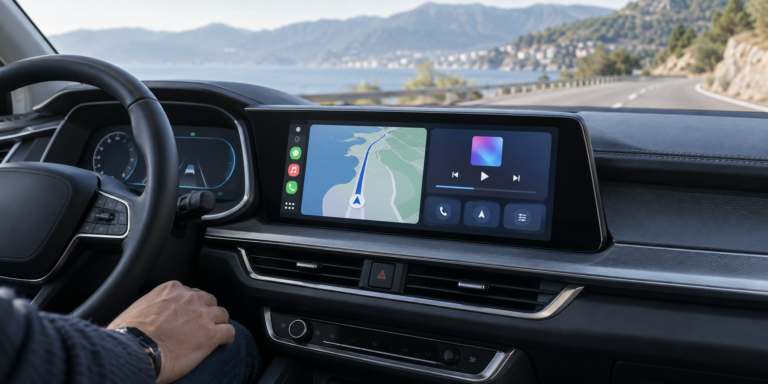
TFT LCD remains a practical choice for interfaces where the screen is active, colorful, and responsive. Typical examples include machine controls, robot interfaces, vehicle displays, medical-equipment interfaces, self-service terminals, smart appliances, and video monitoring systems. Any regulated or safety-related qualification must be confirmed for the specific module and program.
An LCD is usually the clearer starting point when the device requires:
The trade-off is that the backlight and active display path use power while the screen operates. Product teams can manage that load through luminance control, sleep modes, interface selection, backlight design, and system power policy. The final decision should compare the whole device, not an isolated panel under ideal conditions.
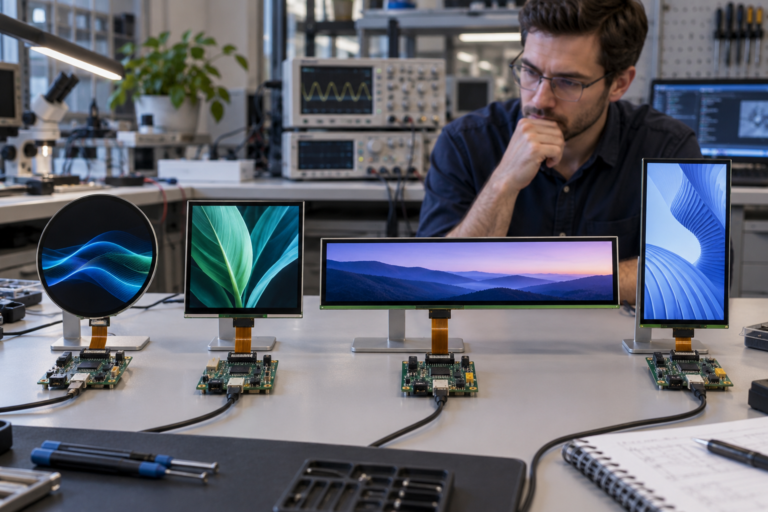
A display interface describes how two components communicate, but it does not define the full compatibility of a screen. Electronic paper and TFT LCD systems often require different controllers, power rails, timing, initialization, temperature compensation, and image-processing logic.
An electronic paper controller may need to:
A TFT LCD controller typically produces a continuous pixel stream with the resolution, timing, color format, lane configuration, and clock behavior required by the panel. It may also control the backlight and provide a separate connection for touch.
SPI, USB, HDMI, MIPI, LVDS, and eDP labels can appear in different parts of these systems. They do not mean that one panel can replace another. HDMI-to-MIPI conversion, for example, is an active, panel-specific process that depends on output timing, firmware, cable design, backlight, and the exact LCD. See RJY’s HDMI-to-MIPI 컨트롤러 보드 호환성 가이드 그리고 LCD 디스플레이 인터페이스 가이드 for the information required in an LCD review.
Electronic paper is often described as a low-power display because a stable image can remain without continuous refresh. That statement is useful, but incomplete. The energy used by a finished product depends on the number and type of updates, controller efficiency, front-light use, processor activity, wireless connections, sensors, storage, and sleep design.
A shelf label that wakes briefly to receive a new price has a favorable electronic-paper workload. An e paper monitor that redraws large areas throughout the workday has a different power profile. A tablet that synchronizes files, runs applications, scans for networks, and keeps its front light on cannot be evaluated from display bistability alone.
For an LCD device, the backlight is often a major power load, but content updates do not require the particle-moving waveforms used by electronic paper. Lowering luminance, using efficient LEDs, dimming by ambient conditions, and entering sleep at the right time can reduce the total. Compare both technologies with the same content, lighting, update rate, processor, and use schedule.
A paper-like image can still be difficult to read if the front stack produces glare or poor contrast. Cover material, air gaps, bonding, touch layers, front-light guides, surface treatments, bezel shadows, and viewing angle all affect the result.
An electronic paper product may need extra protection, but every added layer changes reflection and clarity. A front light must distribute illumination evenly across the active area without obvious bright edges. A touch sensor must work through the selected cover. A pen product must balance optical distance, surface friction, structural strength, and input accuracy.
LCD integration has related trade-offs. A high-brightness backlight cannot solve every visibility problem if cover-glass reflections dominate. Optical bonding, anti-glare or anti-reflection treatments, correct viewing direction, and a suitable UI may improve the result, subject to project feasibility and validation.
Use the intended content as the first filter:
If most content remains fixed and the product benefits from reflective viewing, electronic paper deserves evaluation. If the interface depends on smooth motion, live color, or continuous interaction, TFT LCD is usually the more direct platform. Some products can also use two displays, assigning persistent information to electronic paper and dynamic tasks to an LCD, although that increases system and mechanical complexity.
Prepare the following information before requesting an engineering review:
RJY Display focuses on TFT LCD modules, touch assemblies, controller boards, and customization based mainly on existing display platforms. Depending on the project, the review may cover cover glass, touch, backlight, interface, FPC, controller-board, firmware, and display-related mechanical coordination. It should not be assumed that RJY supplies an electronic paper panel or complete epaper tablet unless a specific offering is confirmed.
An electronic paper screen is valuable because it behaves differently from an LCD. It can keep stable information visible, use reflected light, and support products built around reading or infrequent updates. Those strengths become less decisive as the interface demands more motion, color, rapid feedback, or continuous multimedia.
Do not begin with the question, “Which display technology is better?” Begin with, “What must the user see and do?” The answer will show whether an e paper screen, an LCD, or a more specialized architecture fits the product.
If your project requires a dynamic TFT display, review RJY custom display solutions 또는 RJY Display에 문의하십시오 with the panel, touch, interface, controller-board, firmware, and mechanical requirements for a project-specific evaluation.
An epaper screen is a reflective electronic display designed to present a paper-like image. Many products use electrically controlled pigment particles and can retain a static image without continuous pixel updates.
Epaper is a general display category. E Ink is a company and technology brand associated with many electrophoretic electronic paper products. Not every paper-like or reflective display should automatically be called an E Ink display.
A typical reflective electronic paper display does not use an LCD-style backlight. Devices intended for dark environments may add a front light that spreads LED light across the surface and directs it toward the reflective display.
It can suit document reading, writing, and other text-heavy work, but it may not fit video, rapid scrolling, color-critical work, or motion-rich interfaces. Test the exact monitor and intended software before treating it as an LCD replacement.
Video is usually not the primary use of an epaper tablet. Refresh speed, gray or color behavior, ghosting, and power use differ from conventional tablets. An LCD or OLED tablet is generally better for continuous multimedia.
The display can retain a static optical state with little or no continuous pixel-driving power, depending on the technology. The complete device can still consume power through its processor, memory, touch system, front light, radios, and other circuits.
Not normally. Electronic paper needs panel-specific voltage sequences and update waveforms, while a TFT LCD usually receives a continuous pixel stream. Compatibility must be reviewed from the exact panel and controller documentation.
Use epaper when content is mostly static and reflective viewing or infrequent updating is valuable. Consider TFT LCD when the device needs animation, video, live data, rich color, or fast interactive feedback. Validate the decision with the real workload and environment.
E Ink is a trademark of E Ink Holdings Inc. This article uses “electronic paper” and “epaper” as general technology terms and does not imply endorsement or a supply relationship.
디스플레이 크기, 해상도, 인터페이스, 밝기, 터치 요구 사항, 컨트롤러 보드 요구 사항 및 적용 환경을 공유해 주십시오.
관련 디스플레이 기술 가이드 및 응용 참고 자료를 계속 읽어보십시오.