Um display TFT LCD personalizado deve resolver um problema de integração definido. Não deve começar como uma solicitação aberta para criar um novo tamanho de painel, resolução ou arquitetura de pixels.
Para muitos projetos OEM, a rota prática é identificar um módulo TFT LCD existente cuja área ativa, resolução, interface, temporização, comportamento óptico e envelope mecânico sejam adequados. O projeto pode então avaliar alterações em torno dessa plataforma, incluindo a touchscreen, o vidro de cobertura, a retroiluminação, o FPC, o conector, a placa controladora, o firmware, a estrutura de adesão e o invólucro.
Essa distinção afeta a viabilidade, o escopo de desenvolvimento, a documentação, a ferramentaria, a validação e o controle do ciclo de vida. Também ajuda as equipes de engenharia a comparar propostas que podem ser todas descritas como “displays personalizados”, mas envolvem trabalhos muito diferentes.
O que é um Display TFT LCD Personalizado?
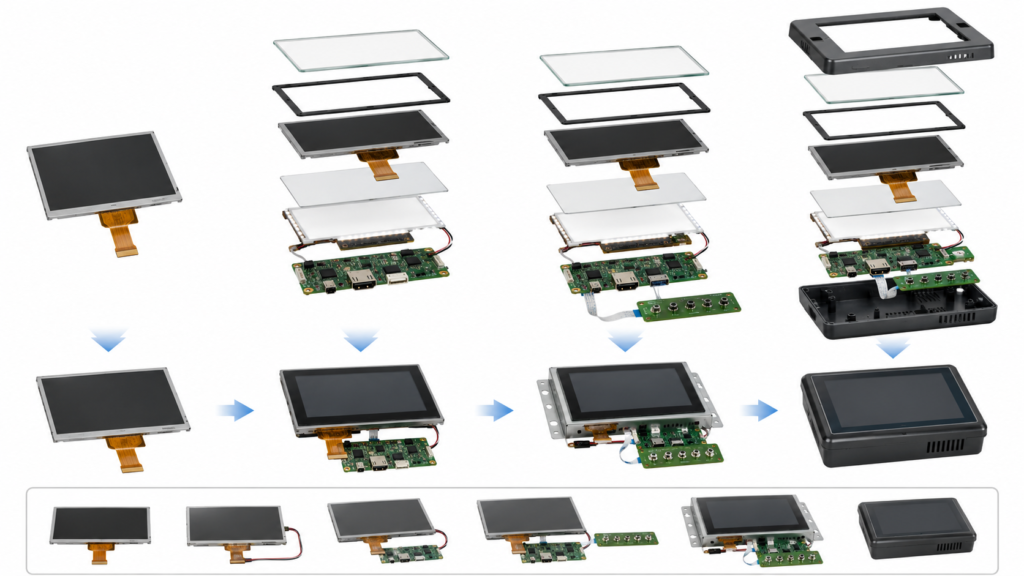
Um display TFT LCD personalizado é uma plataforma de display existente coordenada ou modificada para atender aos requisitos de um produto específico. O escopo pode variar desde um desenho diferente do vidro de cobertura até uma montagem completa de display, toque, placa controladora, firmware e mecânica.
| Nível do Projeto | Escopo Típico | Principal trabalho de engenharia |
|---|---|---|
| Módulo Padrão | Um TFT LCD existente é usado sem modificação física | Compatibilidade com o host, cabo, energia, retroiluminação, firmware, toque e validação mecânica |
| Módulo Configurado | Um LCD existente é combinado com uma configuração disponível de toque, cobertura, cabo ou controlador | Seleção de configuração, desenhos, drivers, montagem e teste completo da amostra |
| Display Semicustomizado | O LCD principal permanece enquanto as peças circundantes são adaptadas | Vidro de cobertura, toque, retroiluminação, FPC, conector, adesão, firmware, ferramentaria e coordenação mecânica |
| Sistema de Display Integrado | Um LCD existente é fornecido com uma placa controladora ou de computação e integração específica do produto | Saída de display, driver do painel, entrada de toque, energia, retroiluminação, software, cabos e validação do invólucro |
| Solicitação de Nova Plataforma de Painel | O tamanho, matriz ativa ou resolução necessária não está disponível em uma plataforma existente | Viabilidade separada, volume, investimento, qualificação, fornecimento e avaliação do ciclo de vida |
A rota prática de personalização da RJY Display começa com um módulo de display existente. Não deve ser interpretada como desenvolvimento irrestrito de qualquer tamanho, resolução, área ativa ou arquitetura de painel TFT LCD arbitrária.
Quando a Personalização é Realmente Necessária?
A personalização não é automaticamente melhor do que um módulo padrão. Se um display existente atende aos requisitos obrigatórios elétricos, ópticos, mecânicos, de toque, ambientais, de software e de ciclo de vida, usá-lo sem alterações pode reduzir o escopo do projeto.
A personalização se torna relevante quando um requisito documentado não pode ser satisfeito pela configuração padrão preferida.
| Problema Observado | Possível Resposta do Projeto | Evidência Necessária |
|---|---|---|
| O design frontal requer um contorno ou borda impressa diferente | Vidro de cobertura personalizado com base no LCD e na estrutura de toque selecionados | Desenho da cobertura, materiais, tolerâncias, critérios de aparência, área de adesão e CAD do invólucro |
| O FPC do display entra em conflito com a PCB ou o invólucro | Avaliar um módulo alternativo, adaptador, cabo ou uma alteração viável no FPC | Pinagem do LCD, definição do conector, layout da PCB, requisitos de sinal e envelope mecânico |
| O display finalizado é difícil de ler no ambiente pretendido | Revisar retroiluminação, pilha de cobertura, tratamento de superfície, adesão, interface do usuário e instalação | Condição de luz ambiente, direção de visualização, pilha óptica, orçamento de energia e teste físico da amostra |
| O host não implementa a interface do painel | Selecionar outro LCD, revisar o host ou avaliar um controlador ativo ou ponte | Revisão da placa, informações esquemáticas, modos de saída suportados, temporização do painel, pinagem e firmware |
| O comportamento de toque necessário não é suportado | Revisar o sensor, controlador, firmware, vidro de cobertura, aterramento e driver do host | Ferramenta de entrada, número de contatos, ambiente, dados do controlador, estrutura da cobertura e teste de aceitação |
| O módulo não se encaixa na montagem | Comparar outra plataforma existente antes de iniciar a personalização mecânica | Desenho completo do display, pilha de tolerâncias, PCB, cobertura, cabo e CAD do invólucro |
Um requisito deve ser classificado como obrigatório, preferencial ou negociável. Isso evita que uma preferência estética crie trabalho de ferramentaria ou firmware que não forneça benefício útil ao produto.
Estabeleça a Base de Requisitos Antes de Selecionar o Display
Uma revisão útil de TFT LCD personalizado começa com o produto, e não com uma especificação genérica de tela.
| Área de Requisito | Perguntas a Resolver |
|---|---|
| Aplicação | O que o produto faz, quem o utiliza e quais informações ou controles devem permanecer disponíveis? |
| Geometria do display | Qual área ativa, área de visualização, contorno, orientação, espessura e envoltório do componente traseiro o produto pode aceitar? |
| Interface do usuário | Qual resolução, tamanho físico do texto, carga gráfica, idiomas, avisos e estados do sistema são necessários? |
| Plataforma hospedeira | Qual MCU, processador de aplicação, módulo de computação, placa controladora ou fonte de vídeo acionará o display? |
| Entrada por toque | Qual dedo, luva, caneta, número de contatos, gesto, umidade e comportamento de toque falso devem ser validados? |
| Ambiente de visualização | Quais condições de luz ambiente, distância de visualização, ângulo de montagem, dimerização, reflexão e temperatura se aplicam? |
| Montagem mecânica | Onde estão o moldura, tampa, suportes, adesivo, FPC, conector, PCB, fixadores, cabos e fontes de calor? |
| Ciclo de vida | Quais processos de protótipo, piloto, produção, controle de revisão, notificação de alteração e substituição são necessários? |
Forneça artworks e desenhos representativos da IU antecipadamente. Apenas o tamanho diagonal não define a imagem física, o contorno do módulo, a abertura visível, a carga de pixels ou a geometria do alvo de toque.
Selecione a Plataforma TFT LCD Existente
O módulo base determina quais alterações posteriores são realistas. Utilize a ficha técnica controlada atual e o desenho mecânico, em vez de um resumo de página de produto.
Compare candidatos utilizando:
- Modelo exato, revisão, driver IC e status atual de fornecimento
- Área ativa, área de visualização, contorno do módulo, espessura e orientação nativa
- Resolução, formato de pixel, temporização nativa e requisitos de inicialização
- Interface, níveis elétricos, lanes ou canais, pinagem e conector
- Requisitos elétricos da retroiluminação, habilitação, dimerização e comportamento térmico
- Posição do FPC, direção do contato, reforçador, componentes e região segura de curvatura
- Características ópticas e condições de visualização pretendidas
- Limites operacionais e de armazenamento documentados para a configuração exata
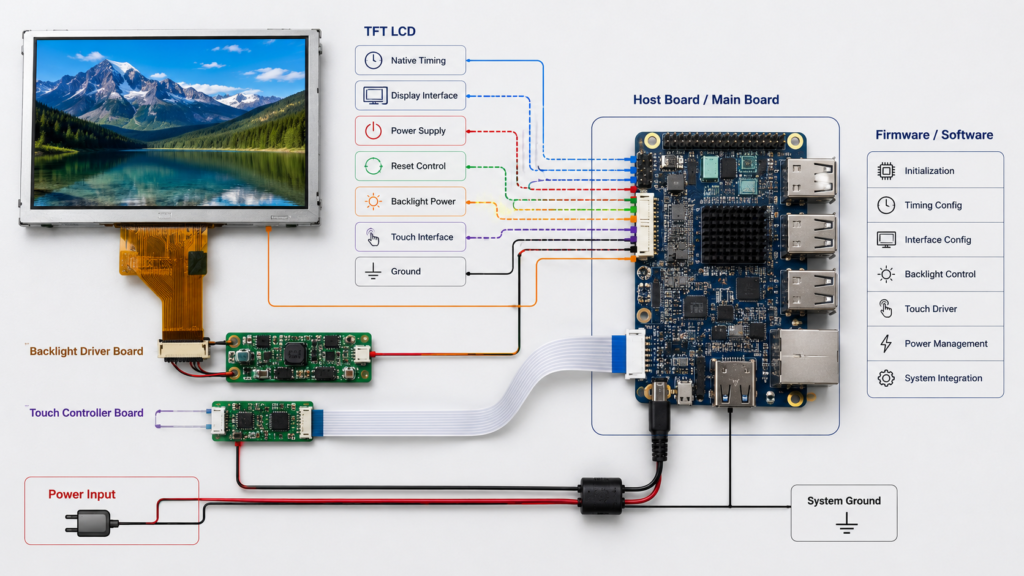
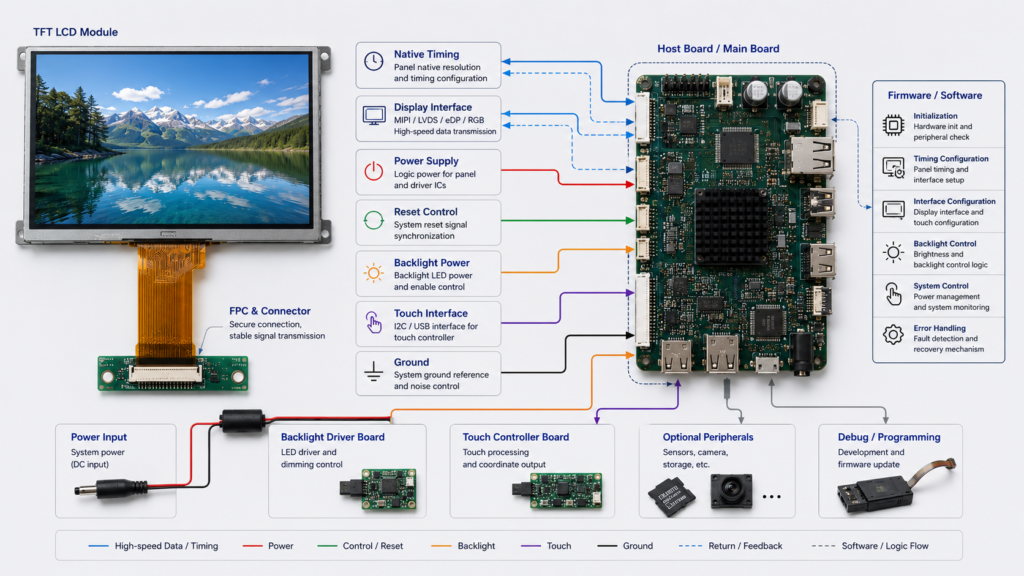
O exemplo de sistema de display embarcado da NXP mostra que um caminho funcional de LCD requer temporização nativa coordenada, polaridade de sinal, alimentação, reset, controle de retroiluminação, clocks de interface e um driver específico do painel.[1] Portanto, uma resolução ou etiqueta de interface correspondente não é suficiente para aprovar um módulo base.
Utilizar o Guia de seleção de módulo TFT LCD para uma revisão mais aprofundada de candidatos, em seguida, navegue pelo portfólio atual de módulos de display para plataformas existentes.
Personalize a Touchscreen e o Vidro de Cobertura em Conjunto
O sensor de toque, controlador de toque, vidro de cobertura, estrutura de ligação, display, driver hospedeiro, aterramento e invólucro formam um sistema de entrada. Uma alteração na lente frontal pode alterar o design do toque, mesmo quando o LCD permanece inalterado.
| Área de Toque ou Cobertura | O que Definir |
|---|---|
| Tecnologia tátil | Capacitivo projetado, resistivo ou outra configuração de entrada suportada |
| Controlador de toque | Controlador exato, firmware, interface hospedeira, tensão, reset, interrupção, contatos e driver |
| Ferramentas de entrada | Dedo nu, luva especificada, caneta passiva, caneta ativa ou entrada baseada em pressão |
| Vidro de cobertura | Contorno, espessura, abertura, borda impressa, material, detalhes de borda, requisitos de superfície e área adesiva |
| Ligação | Estrutura com entreferro ou colada, adesivo, alinhamento, aparência, tolerâncias e requisitos de retrabalho |
| Comportamento do software | Faixa de coordenadas, origem, escala, rotação, associação ao display, suspensão, ativação e recuperação |
| Ambiente | Umidade, limpeza, estruturas metálicas, ruído elétrico, operação nas bordas e critérios de toque falso |
A Microchip descreve o desenvolvimento de sensor de toque capacitivo como um problema de design mecânico e elétrico combinado e inclui especificamente os efeitos da cobertura de toque dentro do processo de design.[2] Isso significa que um vidro de cobertura personalizado não deve ser liberado independentemente da revisão do sensor-controlador.
Em sistemas Android, a configuração de toque também pode controlar a associação ao display, calibração e mapeamento de coordenadas sensível à orientação.[3] Valide o firmware do controlador aprovado e o software hospedeiro com a rotação final, vidro de cobertura, moldura, aterramento e invólucro.
Para seleção detalhada de toque, consulte o Guia do módulo TFT LCD com tela de toque.
Personalize a Retroiluminação com Base em Requisitos Ópticos e de Energia
Uma solicitação de retroiluminação deve começar com o requisito de visualização do produto final. O brilho mais alto disponível não é automaticamente o alvo correto.
Revise:
- Condições de luz ambiente e visualização necessárias
- Pilha de LCD, polarizador, toque, ligação, vidro de cobertura e tratamento de superfície
- Configuração de LED e dados elétricos da retroiluminação
- Circuito driver disponível, corrente, sinal de habilitação e método de dimerização
- Orçamento de energia e estados operacionais
- Aquecimento local e temperatura do invólucro final
- Comportamento de dimerização em baixo nível e controle da aplicação
- Critérios de aparência e consistência para a amostra aprovada
Não infira legibilidade sob luz solar, adequação para uso externo, desempenho térmico ou vida útil operacional a partir de um valor nominal de brilho. Essas conclusões exigem dados específicos da configuração e validação do produto final.
Coordene a Interface, o FPC, o Conector e a Placa Hospedeira
A personalização da interface não é simplesmente alterar o nome impresso ao lado de um conector. O LCD e o hospedeiro devem concordar elétrica, lógica, mecânica e em software.
| Área de Integração | Itens a Confirmar |
|---|---|
| Interface de exibição | RGB, MIPI DSI, LVDS, eDP, SPI ou outra rota implementada e sua configuração completa |
| Temporização nativa | Dimensões ativas, clock de pixel, sincronização, porches, faixa de atualização, formato e polaridade |
| Definição dos pinos do FPC | Todas as conexões de display, controle, alimentação, terra, reset, retroiluminação e toque |
| Conector | Número da peça, passo, lado do contato, altura, direção de inserção, peça de acoplamento e acesso |
| Mecânica do FPC | Direção de saída, comprimento, reforçador, região de curvatura, envelope do componente, retenção e sequência de montagem |
| Caminho de alta velocidade | Placa, conector, FPC, cabo, aterramento, caminho de retorno e revisão de integridade de sinal, quando aplicável |
| Software | Driver do painel, inicialização, reguladores, GPIOs, orientação, suspensão, ativação e recuperação de erros |
A MIPI Alliance define MIPI DSI como uma interface serial de alta velocidade entre um processador host e um módulo de exibição.[4] Uma etiqueta DSI comum ainda não prova que um host e um painel compartilham as vias necessárias, modo de operação, temporização, comandos, sequência de alimentação, conector ou suporte de software.
Um FPC personalizado pode redirecionar sinais compatíveis ou melhorar a integração mecânica. Ele não pode criar um controlador de display ausente, adicionar vias não suportadas, corrigir níveis de tensão incompatíveis ou substituir firmware de painel ausente.
Utilizar o Guia de interface de display LCD para contexto entre interfaces e o Guia personalizado de TFT LCD MIPI para integração específica de DSI.
Defina as Responsabilidades da Placa Controladora e do Firmware
Um controlador ou placa de computação deve ser avaliado em nível de placa. Uma folha de dados do processador pode listar interfaces que a PCB finalizada não expõe ou que a imagem de software atual não suporta.
Registro:
- Modelo exato da placa, configuração de memória e revisão de hardware
- Saída de display implementada e conector
- Temporização nativa suportada e configuração do painel
- Circuitos de energia, reset, habilitação e retroiluminação do painel
- Entrada de toque e caminho do driver
- Versão do Android, Linux, RTOS, MCU SDK, kernel, BSP ou bootloader
- Driver do painel e entregáveis de inicialização
- Fonte, binário, configuração, compilação e limites de propriedade
- Comportamento de atualização, recuperação, suspensão, ativação e interrupção de alimentação
“Firmware personalizado” não é um entregável ilimitado. Um escopo válido identifica a placa, LCD, controlador de toque, plataforma de software, versão, comportamento necessário, entregáveis, propriedade e testes de aceitação.
Para projetos Android, siga o guia para combinar um módulo TFT LCD com uma placa de controle Android. Os caminhos atuais de produtos em nível de placa estão disponíveis em Módulos de Computação.
Coordene a Estrutura Mecânica Antes da Ferramentaria
O desenho do LCD, desenho da tampa, sensor de toque, FPC, PCB, cabo, suportes, adesivo, fixadores e CAD do invólucro devem ser revisados como uma única pilha de tolerâncias.
| Pergunta de Revisão | Requisito de Revisão |
|---|---|
| Áreas ativa e de visualização | Alinhamento com a abertura do bezel, impressão da tampa, área de toque e IU |
| Envelope do módulo | Vidro do LCD, retroiluminação, moldura, adesivo, FPC, reforçador e componentes traseiros |
| Suporte e retenção | Regiões aprovadas de suporte, adesivo, suporte e fixadores sem carregamento localizado no vidro |
| Caminho do cabo | Alcance do FPC, curvatura, acesso ao conector, retenção, calor, peças móveis e sequência de montagem |
| Alinhamento da tampa e do toque | Abertura, borda impressa, adesivo, estrutura de referência e tolerâncias acumuladas |
| Acesso para serviço | Operação do conector, inspeção, substituição e proteção do conjunto do display |
Não libere o invólucro apenas com base nas dimensões nominais do display. Use o desenho controlado e inclua condições de material máximo e tolerâncias de montagem, quando aplicável.
Utilize um Processo Controlado de Desenvolvimento de Display Personalizado
| Etapa | Saída Necessária | Pergunta de Aprovação |
|---|---|---|
| Definição de requisitos | Requisitos de produto obrigatórios, preferenciais e negociáveis | A especificação descreve o produto e as condições de aceitação? |
| Seleção do módulo base | Folhas de dados candidatas, desenhos, revisão de compatibilidade e questões em aberto | Uma plataforma LCD existente é tecnicamente adequada? |
| Revisão de viabilidade | Limite de personalização, responsabilidades, ferramentas, software, plano de teste e premissas comerciais | Cada alteração solicitada é viável e controlada? |
| Liberação de desenho e configuração | Definições de LCD, toque, tampa, FPC, conector, placa, firmware e mecânicas | Todas as partes estão revisando a mesma revisão? |
| Construção de amostra | Amostras de hardware e software rastreáveis com desvios registrados | A amostra representa a configuração de produção proposta? |
| Validação do sistema | Resultados de teste contra critérios de aceitação acordados | O produto completo funciona sob as condições exigidas? |
| Liberação de produção | Configuração aprovada, critérios de inspeção, embalagem, controle de revisão e encerramento de itens em aberto | O produto lançado possui a mesma configuração que foi validada? |
Não inicie a ferramentaria apenas porque um display consegue exibir uma imagem em uma placa de avaliação. A operação elétrica é apenas uma parte da aprovação.
Valide a Amostra Completa do Display TFT LCD Personalizado
| Área de Validação | Revisão Mínima |
|---|---|
| Identidade e documentação | Modelo do LCD, CI do driver, desenho, controlador de toque, revisão da placa, firmware, cabos e desvios |
| Imagem do display | Temporização nativa, padrões de tela cheia, orientação, cores, telas de interface do usuário, inicialização, suspensão, ativação e reinicialização |
| Entrada por toque | Coordenadas, bordas, rotação, ferramentas de entrada necessárias, vidro de cobertura, ruído, critérios de umidade, suspensão e ativação |
| Desempenho óptico | Interface do usuário necessária, luz ambiente, direções de visualização, pilha de cobertura, reflexos, escurecimento e aparência |
| Energia e retroiluminação | Inicialização, operação normal, ativação, escurecimento, desligamento, interrupção de energia e temperatura do invólucro |
| Software | Bootloader, driver do painel, BSP ou SDK, aplicativo, atualização, recuperação e estados de erro |
| Montagem mecânica | Alinhamento, suporte, roteamento do FPC, acesso ao conector, adesivo, tolerância de empilhamento, retenção e procedimento de serviço |
| Ambiente | Condições de temperatura, limpeza, umidade, mecânicas, luz ambiente e elétricas definidas pela aplicação |
| Controle de configuração. | Lista completa de materiais aprovada, desenhos, firmware, imagem de software, registro de teste e questões não resolvidas |
Aprove a configuração completa, e não apenas o modelo do LCD. Uma alteração posterior no CI do driver do painel, controlador de toque, vidro de cobertura, FPC, revisão da placa, firmware, adesivo, retroiluminação, cabo ou invólucro pode exigir revalidação parcial.
Prepare uma RFQ Completa para o Display TFT LCD Personalizado
Forneça:
- Produto alvo, usuários, fluxo de trabalho e mercados de destino
- Área ativa necessária, resolução, orientação, contorno e envelope mecânico
- Artefato de interface do usuário em escala real representativo e carga de trabalho gráfica
- MCU, processador, placa controladora, módulo de computação ou fonte de vídeo exatos
- Revisão da placa, saída de vídeo implementada, conector e plataforma de software
- Tecnologia de toque, controlador, ferramentas de entrada, contagem de contatos e requisitos ambientais
- Desenho do vidro de cobertura, material, espessura, impressão, borda, abertura e requisitos de superfície
- Requisitos de retroiluminação, escurecimento, energia, luz ambiente e visualização
- Direção do FPC, posição do conector, layout da PCB, cabo e restrições de montagem
- Firmware, driver, BSP, bootloader, atualização e escopo de recuperação
- CAD do invólucro e informações de tolerância
- Testes, normas, relatórios, declarações e partes responsáveis necessários
- Protótipo, piloto, produção e quantidades anuais esperadas
- Expectativas de ciclo de vida, revisão, notificação de alteração e substituição
- Documentação existente do display ao substituir outro módulo
Para preparação específica de custos, consulte o guia de preços de display TFT LCD personalizado.
Solicite uma Revisão de Engenharia do Display TFT LCD Personalizado
A RJY Display pode revisar uma plataforma TFT LCD existente em relação aos seus requisitos de toque, vidro de cobertura, retroiluminação, FPC, interface, placa controladora, firmware, energia, ópticos e mecânicos.
Navegue pelos módulos de exibição atuais., revise Escopo da solução personalizada da RJY Display, ou Envie seus documentos de display, placa, interface do usuário e invólucro para revisão de engenharia.
FAQ
O que é um display TFT LCD personalizado?
Um display TFT LCD personalizado é normalmente uma plataforma de display existente configurada ou modificada para um produto específico em áreas como toque, vidro de cobertura, retroiluminação, FPC, interface, placa controladora, firmware, colagem ou estrutura mecânica.
A RJY Display pode desenvolver qualquer novo tamanho ou resolução de LCD?
Não. A rota prática de personalização começa com um módulo de display existente. Uma solicitação por um tamanho, matriz ativa, resolução ou nova arquitetura de painel indisponível requer uma revisão de viabilidade separada e não deve ser considerada como disponível.
Quais partes de um módulo TFT LCD podem ser personalizadas?
Dependendo do módulo base selecionado e da viabilidade do projeto, o trabalho pode incluir vidro de cobertura, tela de toque, colagem, retroiluminação, FPC, conector, coordenação de interface, placa controladora, firmware e estrutura mecânica.
Alterar o FPC torna qualquer LCD compatível com minha placa?
Não. Um FPC pode rotear sinais compatíveis e melhorar o ajuste mecânico, mas não pode adicionar um controlador de display ausente, criar lanes não suportadas, corrigir tensão ou temporização incompatível, ou substituir firmware de painel ausente.
O que deve ser testado em uma amostra de display personalizado?
Teste a temporização e imagem documentadas do display, comportamento do toque, pilha de cobertura, desempenho óptico, energia e retroiluminação, firmware, inicialização e recuperação, carga de trabalho da aplicação, montagem mecânica, condições ambientais necessárias e identidade completa da configuração.
Quais informações são necessárias para um orçamento de TFT LCD personalizado?
Forneça a aplicação, geometria do display, resolução, artefato da interface do usuário, placa hospedeira, interface, requisitos de toque e vidro de cobertura, necessidades de retroiluminação e energia, restrições de FPC e conector, escopo do firmware, desenhos do invólucro, requisitos de validação, quantidades e expectativas de ciclo de vida.
Referências
- NXP Semiconductors, “AN12940: Use Case of RT1170 LCD Display System Based on MIPI DSI.” https://www.nxp.com/docs/en/application-note/AN12940.pdf
- Microchip Technology, “AN2934: Projeto de Sensor de Toque Capacitivo,” 24 de julho de 2020. https://www.microchip.com/en-us/application-notes/an2934
- Android Open Source Project, “Touch Devices.” https://source.android.com/docs/core/interaction/input/touch-devices
- MIPI Alliance, “MIPI Display Serial Interface (MIPI DSI).” https://www.mipi.org/specifications/dsi