








Verständnis des Touch-IC-Chips
A Touch-IC (Integrierter Schaltkreis)-Chip ist ein spezialisierter Mikrocontroller oder ASIC (anwendungsspezifischer integrierter Schaltkreis), der Eingangssignale von einem Touchscreen-Sensor verarbeitet. Er fungiert als das “Gehirn” der Touch-Schnittstelle und interpretiert physische Berührungen in digitale Signale, die der Hauptprozessor des Geräts verstehen kann.
Im Gegensatz zu universellen Prozessoren ist ein Touch-IC speziell für kapazitive oder resistive Berührungserkennung ausgelegt und gewährleistet so hohe Genauigkeit, geringe Latenz und zuverlässige Leistung unter verschiedenen Umgebungsbedingungen.
Funktionsweise eines Touch-ICs
Das Funktionsprinzip eines Touch-ICs hängt von der Art der unterstützten Touchscreen-Technologie ab – typischerweise kapazitiv oder widerstandsfähig.
- Signalerfassung
- Bei kapazitiven Touchscreens überwacht der Touch-IC Änderungen im elektrostatischen Feld, wenn ein Finger oder Stift mit dem Glas in Kontakt kommt.
- Bei resistiven Touchscreens erkennt der IC Änderungen des elektrischen Widerstands, wenn zwei leitfähige Schichten zusammengedrückt werden.
- Signalverarbeitung
- Der Chip verstärkt, filtert und digitalisiert die analogen Berührungssignale.
- Fortschrittliche Algorithmen helfen dabei, beabsichtigte Berührungen, versehentlichen Kontakt und Störungen zu unterscheiden.
- Koordinatenberechnung
- Der IC berechnet die genauen X- und Y-Koordinaten der Berührung.
- Bei Multi-Touch-Bildschirmen verfolgt er mehrere Berührungspunkte gleichzeitig.
- Datenübertragung
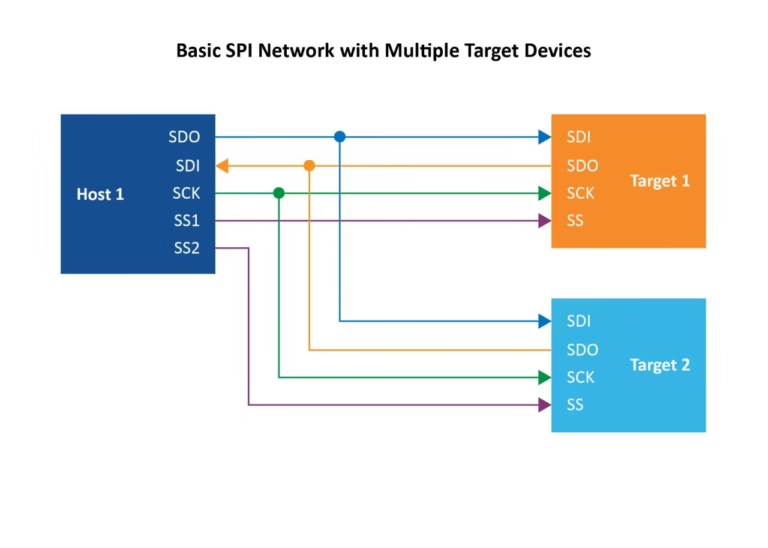
- Der Touch-IC sendet verarbeitete Berührungsdaten über Kommunikationsschnittstellen wie I²C, SPI, oder USB.
Kernfunktionen eines Touch-IC-Chips
Ein gut gestalteter Touch-IC erfüllt mehrere kritische Funktionen:
- Berührungserkennung: Präzise Erkennung einzelner oder mehrerer Berührungspunkte.
- Gestenerkennung: Erkennen von Wischbewegungen, Zwei-Finger-Zoom und Drehungen.
- Rauschfilterung: Minimierung von Störungen durch Anzeigesignale oder Spannungsschwankungen.
- Wasser- und Handschuhbedienung: Aufrechterhaltung der Reaktionsfähigkeit unter anspruchsvollen Bedingungen.
- Betrieb mit geringem Stromverbrauch: Reduzierung des Energieverbrauchs für batteriebetriebene Geräte.
- Firmware-Aktualisierbarkeit: Ermöglicht Leistungsverbesserungen oder Funktionserweiterungen nach der Bereitstellung.
Arten von Touch-IC-Chips
Kapazitive Touch-ICs
Diese ICs werden in den meisten modernen Verbrauchergeräten verwendet und bieten aufgrund ihrer Glasoberfläche hohe Empfindlichkeit, Multi-Touch-Unterstützung und Langlebigkeit. Üblich in Smartphones, Tablets, Kiosksystemen und Auto-Infotainmentsystemen.
Resistive Touch-ICs
Häufiger in industriellen und robusten Anwendungen eingesetzt, funktionieren resistive ICs mit jedem Eingabewerkzeug und bieten hohe Genauigkeit, jedoch mit geringerer optischer Klarheit und ohne Multi-Touch-Unterstützung.
Hybride Touch-ICs
Einige ICs können sowohl kapazitive als auch resistive Eingaben verarbeiten oder integrieren Funktionen wie Stiftdruckempfindlichkeit für spezielle Anwendungen.
Wichtige Leistungsparameter
Bei der Bewertung eines Touch-ICs achten Ingenieure oft auf:
- Touch-Genauigkeit: Präzision der Koordinatenerkennung.
- Berichtsrate: Geschwindigkeit, mit der Berührungsdaten an den Host-Prozessor gesendet werden.
- Stromverbrauch: Wichtig für tragbare Geräte.
- Umgebungstoleranz: Betrieb bei hoher Luftfeuchtigkeit, extremen Temperaturen oder Sonneneinstrahlung.
- EMI-Immunität: Widerstandsfähigkeit gegen elektromagnetische Störungen von anderen Komponenten.
- Schnittstellenunterstützung: Kompatibilität mit der Architektur des Geräts.
Häufige Anwendungen
Touch-IC-Chips finden sich in:
- Unterhaltungselektronik: Smartphones, Tablets, Smartwatches und E-Readern.
- Automobilindustrie: Armaturenbrett-Displays, Infotainmentsysteme und Navigationseinheiten.
- Industrielle Schalttafeln: Touch-basierte HMIs (Human Machine Interfaces).
- Medizinische Geräte: Patientenüberwachungssysteme und Diagnosegeräte.
- Einzelhandel und Gastgewerbe: POS-Terminals, Selbstbedienungskioske und Ticketing-Automaten.
Auswahl des richtigen Touch-IC-Chips
Die Wahl des richtigen Touch-ICs hängt ab von:
- Anzeige Typ: Kapazitive vs. resistive Technologie.
- Bildschirmgröße und Auflösung: Größere Displays erfordern möglicherweise leistungsstärkere ICs.
- Betriebsumgebung: Wird das Gerät im Freien, unter nassen Bedingungen oder in staubigen Umgebungen eingesetzt?
- Eingabearten: Finger, Handschuhe, Stift oder Multitouch-Gesten.
- Energieeinschränkungen: Batteriebetriebene Geräte benötigen möglicherweise Ultra-Low-Power-Chips.
- Integrationsanforderungen: Kompatibilität mit Displaytreibern und Hauptprozessoren.
Beliebte Touch-IC-Hersteller
Während viele Unternehmen Touch-ICs entwickeln, zählen zu den bekanntesten Namen:
- Goodix – Weit verbreitet in Smartphones und Tablets.
- Synaptics – Bekannt für hochwertige Touch-Controller und Fingerprint-Integration.
- FocalTech – Beliebt auf Konsumgüter- und Industriemärkten.
- Cypress/Infineon – Bietet robuste Automotive-gerechte Touch-Lösungen.
- ELAN Microelectronics – Häufig in Mittelklasse-Konsumgeräten zu finden.
Zukünftige Trends in der Touch-IC-Technologie
Die Touch-IC-Branche entwickelt sich weiter mit:
- Ultra-Low-Power-Designs: Für Wearables und IoT-Geräte.
- Höhere Touch-Abtastraten: Für flüssigere Gaming- und Zeichenerlebnisse.
- KI-basierte Gestenerkennung: Für intuitivere Interaktionen.
- Unterstützung flexibler und faltbarer Bildschirme: Da Display-Formfaktoren vielfältiger werden.
Schlussfolgerung
Die Touch-IC-Chips sind unbesungene Helden der modernen Elektronik, die leise sicherstellen, dass jedes Tippen, Wischen und Zupfen präzise erkannt und ausgeführt wird. Ob in Smartphones, Auto-Armaturenbrettern oder Industrie-Panels – diese winzige Komponente ist zentral für die intuitiven, touchbasierten Schnittstellen, auf die wir täglich angewiesen sind.
Ihr Verständnis für Rolle und Fähigkeiten hilft Produktdesignern und Ingenieuren, die bestmögliche Touch-Lösung auszuwählen – eine, die Leistung, Haltbarkeit und Benutzererfahrung in Einklang bringt.