








- 1. The Reality of the TFT LCD Supply Chain
- 2. Quality Assurance: Beyond the ISO Certificate
- 3. Engineering and Customization Capabilities (NRE)
- 4. Supply Chain Longevity and EOL Management
- 5. The "Soft Skills": Communication and Cultural Alignment
- 6. The Procurement Evaluation Matrix
- Conclusion : Un partenariat pour l'avenir
- Foire aux questions (FAQ)
- Q1 : Quelle est la quantité minimale de commande (MOQ) typique pour un écran LCD TFT sur mesure ?
- Q2 : Combien de temps prend généralement le processus de personnalisation (NRE) ?
- Q3 : Quelle est la différence entre TN, VA et IPS dans les écrans LCD TFT ?
- Q4 : Nous avons besoin d'un écran qui fonctionne en extérieur, l'été à Tokyo et l'hiver à Hokkaido. Quelles spécifications devons-nous indiquer ?
- Q5 : Comment pouvons-nous nous protéger contre les pénuries soudaines de puces affectant le circuit intégré pilote de l'écran ?
1. The Reality of the TFT LCD Supply Chain
Before you send out a single Request for Quotation (RFQ), it is vital to understand the structure of the modern display industry. Not every company that calls itself a “TFT LCD display manufacturer” actually manufactures the core glass.
The Glass Makers vs. The Module Assemblers
The TFT LCD supply chain is heavily tiered:
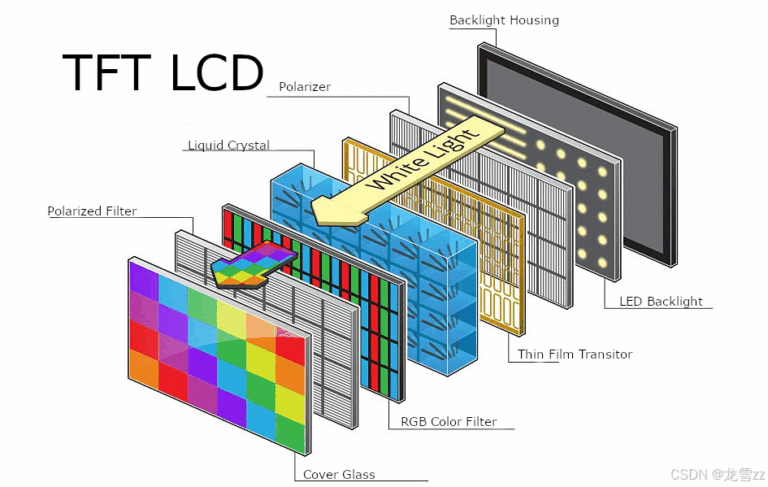
- The Fab (Panel Makers): These are the multi-billion-dollar conglomerates operating massive cleanrooms (Gen 6, Gen 8, Gen 10 fabs). They produce the raw “motherglass” and the TFT backplane. They deal in millions of units and rarely entertain custom projects for mid-volume buyers.
- The LCD Module (LCM) Manufacturers: This is who you are likely looking for. A premium TFT LCD display manufacturer buys the “open cell” (the glass) from the fabs, and then engineers and manufactures the backlight unit (BLU), the driver circuitry (FPC/PCBA), the structural bezel, and integrates the touch panel.
Your goal is to find an LCM manufacturer that possesses flawless engineering capabilities, deep relationships with the glass fabs (to ensure supply stability), and the agility to customize the module to your precise specifications.
2. Quality Assurance: Beyond the ISO Certificate
In the Japanese and South Korean markets, “quality” is not a buzzword; it is a baseline expectation. A defect rate of 1% might be acceptable in cheap consumer toys, but in industrial automation, medical devices, or automotive applications, ppm (parts per million) failure rates must approach zero.
When auditing a potential TFT LCD display manufacturer, do not just look at the ISO 9001 certificate hanging in their lobby. You must dive into their Quality Management System (QMS).
A. The 8D Reporting Standard
Ask the manufacturer how they handle a field failure. A mature manufacturer will immediately provide an 8D (Eight Disciplines) Problem Solving report. This demonstrates that they don’t just replace a broken screen—they quarantine the batch, perform a root-cause analysis (e.g., finding out that a specific ACF bonding temperature was off by 2 degrees), and implement a permanent corrective action.
B. Reliability Testing Laboratories
A top-tier manufacturer does not guess how long their screens will last; they try to destroy them in controlled environments to find out. Your audit checklist should verify they have in-house equipment for:
- High Temperature & High Humidity Storage (HTHH): E.g., 85°C at 85% RH for 500 hours.
- Thermal Shock Testing: Rapid cycling between -30°C and +80°C to check for micro-cracks in the glass or delamination of the polarizers.
- ESD (Electrostatic Discharge) Testing: Ensuring the display’s driver IC won’t fry when a user touches the screen in a dry winter environment.
- Tests de Vibration et de Chute : Crucial for handheld terminals and automotive displays.
3. Engineering and Customization Capabilities (NRE)
Very rarely does an “off-the-shelf” display perfectly fit a complex industrial or consumer product. The true value of an excellent TFT LCD display manufacturer lies in their Non-Recurring Engineering (NRE) capabilities.
Mastering the Backlight Unit (BLU)
The backlight is the engine of the TFT LCD. If your product is an outdoor kiosk, an indoor 250-nit backlight is useless. You need a manufacturer capable of engineering a custom LED string that delivers 1,000+ nits of brightness while managing the thermal dissipation so the display doesn’t melt in direct sunlight.
Flexible Printed Circuit (FPC) Customization
The FPC is the umbilical cord connecting the display to your motherboard. A rigid, inflexible manufacturer will force your engineering team to redesign your entire PCB to match their display. A flexible, partner-oriented manufacturer will happily redesign the shape, length, and pinout of the FPC to match votre existing board layout.
Optical Bonding and Touch Integration
Adding a touch screen isn’t just about slapping a piece of glass on top of the LCD. If there is an air gap between the touch sensor and the TFT LCD, you will get internal reflections that wash out the screen in bright environments.
Look for a manufacturer that offers in-house Optical Bonding (OCA/OCR). This process fills the air gap with a specialized liquid resin or dry adhesive, dramatically improving contrast, ruggedness, and moisture resistance.
4. Supply Chain Longevity and EOL Management
If there is one thing that gives procurement managers nightmares, it is the dreaded EOL (End of Life) Notice.
Imagine this: You have spent 18 months designing a medical ventilator around a specific 7.0-inch TFT LCD. You finally pass all medical regulatory certifications (which cost hundreds of thousands of dollars). Six months into mass production, your display supplier casually emails you to say they are discontinuing that panel next month.
In the medical, industrial, and automotive sectors, product lifecycles are 5, 7, or even 10+ years. Therefore, evaluating a TFT LCD display manufacturer requires evaluating their supply chain resilience.
How to Ensure Longevity:
- Ask for Longevity Guarantees: Reputable manufacturers focusing on the industrial sector will offer a 3-to-5-year longevity guarantee on specific modules.
- Understand Their Sourcing: Does the LCM manufacturer single-source their glass from one fab? If that fab stops making that size, you are in trouble. The best manufacturers design their modules to be compatible with glass from at least two different panel makers (e.g., BOE and Innolux) to mitigate risk.
- PCN (Product Change Notification) Policies: Insist on a strict PCN agreement. If the manufacturer changes anything—even a single resistor on the FPC or the supplier of the LED backlight—they must notify you 3 to 6 months in advance so your engineering team can re-validate the display.
5. The “Soft Skills”: Communication and Cultural Alignment
In cross-border procurement, especially when sourcing from China or Taiwan for the Japanese or Korean markets, technical specs are only half the battle. The other half is communication.
A common pitfall is the “Yes Culture.” You ask a supplier, “Can you achieve a 50,000-hour MTBF on the backlight?” The eager sales rep says, “Yes, no problem!” without consulting their engineering team, only to fail dramatically during the prototype phase.
A high-quality TFT LCD display manufacturer operates with transparency and engineering honesty.
- Direct Engineer-to-Engineer (E2E) Communication: You do not want your technical requirements playing a game of “telephone” through a salesperson who doesn’t understand the difference between an RGB and an LVDS interface. Look for a manufacturer that assigns dedicated Field Application Engineers (FAEs) to your account.
- Documentation Standards: Leurs fiches techniques sont-elles complètes, précises et rédigées dans un anglais technique clair (ou localisées pour le Japon/la Corée) ? Une fiche technique négligée, avec des codes d'initialisation manquants ou des tolérances mécaniques incorrectes, est un signal d'alarme majeur quant à la manière dont ils gèrent leurs lignes de production.
6. The Procurement Evaluation Matrix
Pour objectiver votre décision, utilisez cette matrice de notation lors de l'évaluation d'un nouveau fabricant d'écrans LCD TFT :
| Critères d'évaluation | Signaux d'alarme (À éviter) | Signaux positifs (Pré-sélection) |
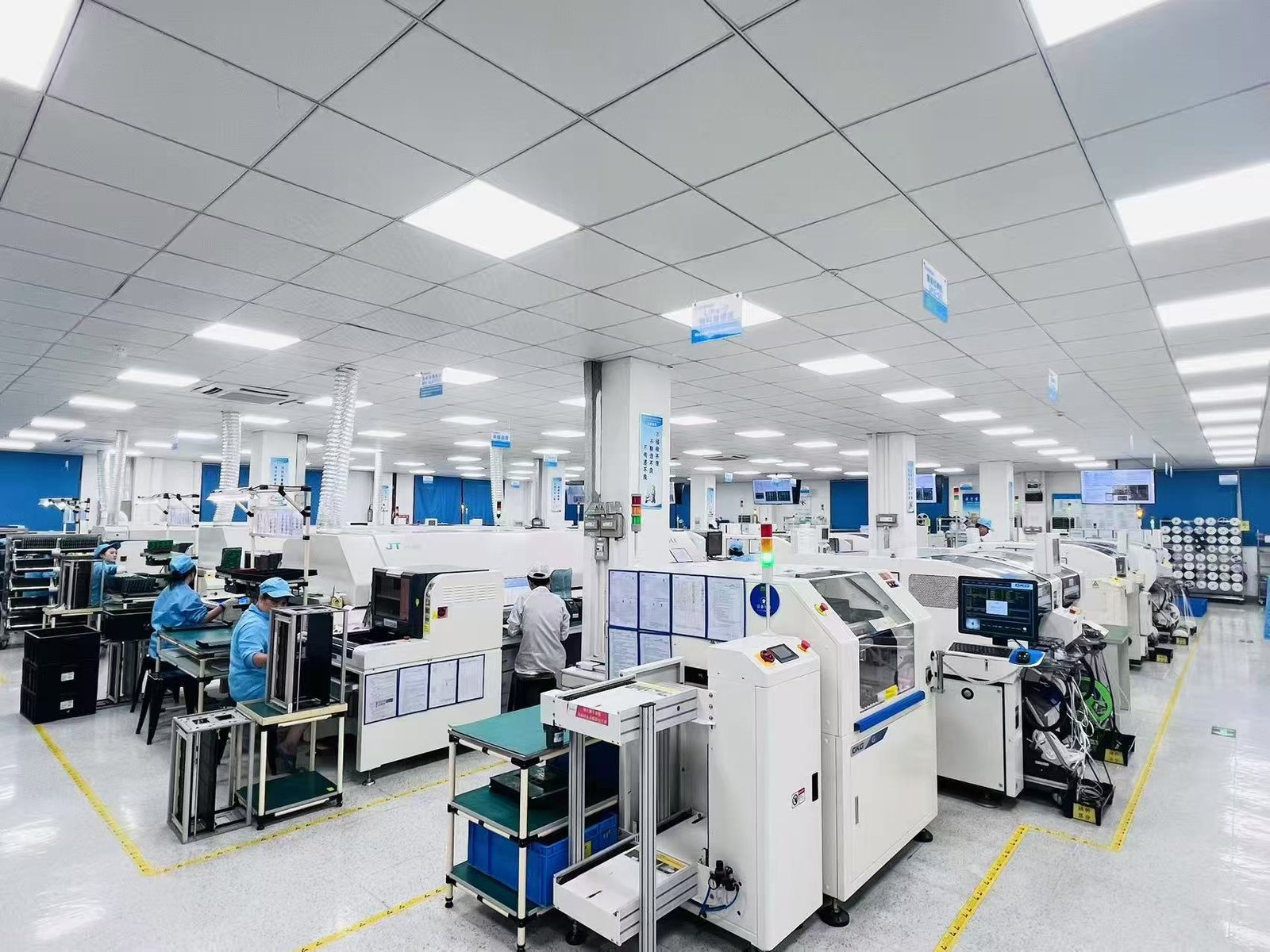
| Audit des installations | Sols poussiéreux, soudure manuelle, inventaire désordonné, absence de protocole ESD. | Salles blanches de classe ISO, machines automatisées de collage COG/FOG, équipement ESD strict. |
| Contrôle qualité | Vérifie uniquement les produits finis (OQC). Forte dépendance à l'inspection manuelle. | Contrôle qualité entrant strict (IQC) pour les matières premières. Machines d'inspection optique automatisée (AOI). |
| Personnalisation | Refuse de modifier le FPC ; ne propose que des pièces standard prêtes à l'emploi. | Équipe de conception interne pour le FPC, le rétroéclairage et les verres de protection sur mesure. |
| Orientation commerciale | 95% de leur activité concerne des tablettes grand public et des jouets bon marché. | Portefeuille solide dans les applications médicales, automobiles ou industrielles robustes. |
| Politique de fin de vie | “ Nous essaierons de vous prévenir. ” | Préavis contractuel de 6 mois pour les avis de changement/Fin de vie (PCN/EOL) avec options d'achat final (LTB). |
Conclusion : Un partenariat pour l'avenir
Choisir le bon fabricant d'écrans LCD TFT est une lourde responsabilité. Il s'agit d'équilibrer l'économie à l'unité avec les normes de qualité intransigeantes des marchés japonais et sud-coréens.
En regardant au-delà du prix initial et en auditant en profondeur leurs capacités d'ingénierie, leurs systèmes de gestion de la qualité et leurs politiques de fin de vie, vous passez du simple “ achat d'écrans ” à la construction d'une chaîne d'approvisionnement résiliente et à long terme. N'oubliez pas : un excellent fabricant d'écrans rend votre produit brillant ; un mauvais rend votre équipe d'approvisionnement désastreuse. Choisissez judicieusement.
Foire aux questions (FAQ)
Q1 : Quelle est la quantité minimale de commande (MOQ) typique pour un écran LCD TFT sur mesure ?
A : Cela varie énormément selon le fabricant. Pour les usines standard grand public, les MOQ sur mesure peuvent atteindre 10 000 à 50 000 unités. Cependant, les fabricants spécialisés dans les secteurs industriel et médical proposent souvent des MOQ bien inférieures pour les modules sur mesure, parfois de 500 à 1 000 unités, tenant compte des volumes plus faibles mais de la valeur plus élevée de ces marchés.
Q2 : Combien de temps prend généralement le processus de personnalisation (NRE) ?
A : Si vous modifiez un module existant (par exemple, en redessinant le FPC ou en améliorant le rétroéclairage), prévoyez un délai de 3 à 5 semaines pour recevoir les premiers prototypes. Si vous développez un module entièrement personnalisé avec un écran tactile capacitif sur mesure et un collage optique, le délai s'étend à environ 6 à 8 semaines.
Q3 : Quelle est la différence entre TN, VA et IPS dans les écrans LCD TFT ?
A : Ces termes représentent la manière dont les cristaux liquides sont alignés.
- TN (Nématique torsadé) : La technologie la plus ancienne et la moins chère. Temps de réponse rapides mais angles de vision très faibles (les couleurs s'inversent si on regarde de côté).
- VA (Alignement vertical) : Offre d'excellents rapports de contraste (noirs profonds) mais des angles de vision seulement modérés.
- IPS (In-Plane Switching) : La norme premium. Offre des angles de vision ultra-larges de 178 degrés et une reproduction précise des couleurs. Essentiel pour les dispositifs médicaux, automobiles et industriels haut de gamme.
Q4 : Nous avons besoin d'un écran qui fonctionne en extérieur, l'été à Tokyo et l'hiver à Hokkaido. Quelles spécifications devons-nous indiquer ?
A : Vous devez spécifier trois éléments critiques à votre fabricant d'écrans LCD TFT :
- Fluide à large plage de température : Les cristaux liquides standard gèlent ou noircissent à des températures extrêmes. Spécifiez une plage de température de fonctionnement d'au moins -30°C à +80°C.
- Lisibilité en plein soleil : Le rétroéclairage doit être d'au moins 800 à 1 000 nits.
- Protection UV et collage optique : Le verre de protection doit avoir un revêtement anti-UV et anti-reflets (AG), et il doit être optiquement collé pour éviter la formation de condensation à l'intérieur de l'écran lors de changements rapides de température.
Q5 : Comment pouvons-nous nous protéger contre les pénuries soudaines de puces affectant le circuit intégré pilote de l'écran ?
A : Il s'agit d'un risque critique pour la chaîne d'approvisionnement. Assurez-vous que votre fabricant utilise des circuits intégrés pilotes provenant de fonderies majeures et stables (comme Ilitek, FocalTech ou Novatek). Deuxièmement, pendant la phase d'ingénierie, demandez au fabricant de concevoir le FPC pour qu'il soit “ compatible broche à broche ” avec un circuit intégré de secours alternatif. Si le circuit intégré principal est en rupture de stock, ils peuvent passer au circuit intégré de secours sans que vous ayez à reconcevoir votre carte mère.