








- 1. The "Off-the-Rack" Suit: Standard TFT Modules
- 2. The Bespoke Tailoring: Custom TFT Modules
- 3. The Money Talk: Unit Economics vs. NRE
- 4. The Time Dimension: Timelines and Patience
- 5. 業界別の選択基準
- スマートホーム市場では、デザインが全てです。スマートサーモスタットを開発する場合、標準的な長方形の画面では不十分です。洗練された曲面エッジ、シルクスクリーン印刷されたアイコン、デッドフロント処理(電源オフ時に画面が完全に不可視となり、黒いプラスチック筐体に溶け込む)を施したカスタムカバーガラスが必要です。
- 結論
- よくある質問(FAQ)
1. The “Off-the-Rack” Suit: Standard TFT Modules
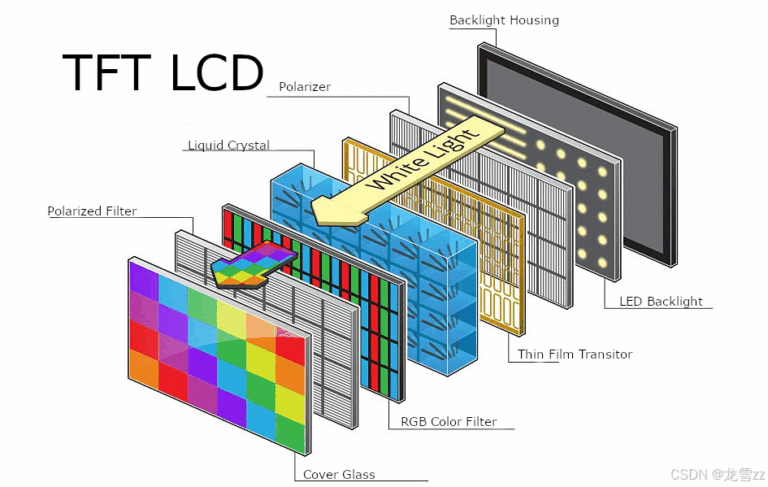
スタンダード TFT Modules are the workhorses of the display industry. These are pre-engineered, mass-produced screens designed by display manufacturers to appeal to the broadest possible market. They come with a fixed resolution, a fixed brightness, a predefined Flexible Printed Circuit (FPC) pinout, and a rigid, “take-it-or-leave-it” datasheet.
The Brilliant Advantages of Going Standard
- Speed to Market (The “Need it Yesterday” Factor): If your engineering team needs a display to start prototyping this week, standard TFT Modules are your best friend. Distributors generally have them in stock, allowing you to bypass the agonizing weeks of mechanical design and tooling.
- Zero NRE Fees: NRE stands for “Non-Recurring Engineering.” It’s the upfront fee manufacturers charge to design and build custom tools (like glass cutting masks or injection molds). With standard modules, the NRE is exactly zero. The factory has already absorbed the R&D costs.
- Low Minimum Order Quantities (MOQs): Because the manufacturer is likely selling this exact same display to forty other companies, they don’t care if you only want to buy 500 units for your initial pilot run.
- Proven Reliability: A standard module has likely been in the field for years. The bugs in the driver IC have been ironed out, the backlight thermal dissipation is well-understood, and the failure rates are mathematically predictable.
The Painful Reality of Standard Modules
- The “Square Peg, Round Hole” Dilemma: You have a brilliant, sleek, curved industrial design for your new IoT thermostat. But the only standard display that fits your budget is a chunky rectangle with a bezel that looks like it belongs in 2012. If you choose a standard display, your mechanical engineers must design the entire product enclosure around the screen.
- Interface Incompatibility: You might find a standard screen with the perfect size and brightness, but it uses a MIPI DSI interface, and your chosen microcontroller only supports RGB or SPI. Now you are forced to add a bridge chip to your motherboard, increasing your Bill of Materials (BOM) cost and PCB complexity.
- Supply Chain Surprises (EOL): When you buy standard TFT Modules, you are at the mercy of the market. If the manufacturer decides that the specific 4.3-inch screen you rely on is no longer profitable because consumer tablet trends have moved on, you will receive a terrifying End-of-Life (EOL) notice. Suddenly, you have six months to redesign your entire product.
2. The Bespoke Tailoring: Custom TFT Modules
If standard displays are off-the-rack suits, custom TFT Modules are the bespoke Savile Row tailoring of the electronics world. You get exactly what you want, fitting your product’s mechanical and electrical constraints flawlessly—but you are going to pay for the privilege, both in time and money.
However, “custom” is not a binary switch. It is a spectrum. Let’s break down the layers of customization, from mild tweaks to total overhauls.
Level 1: Semi-Custom (The “Tailored Fit”)
This is where 80% of European and American industrial designers end up. You take a standard piece of LCD glass and modify the peripherals around it.
- Custom FPC (Flexible Printed Circuit): The standard FPC is too short to reach your motherboard, or the pinout is backwards. Paying a small NRE to redesign the FPC shape, length, and pin arrangement is highly common and incredibly cost-effective.
- Custom Backlight Unit (BLU): The standard screen is 300 nits (great for a dark room, useless outdoors). You can pay to have a custom LED string installed behind the glass to pump the brightness up to a sunlight-readable 1,000+ nits.
Level 2: Touch & Cover Glass Customization (The “Face Lift”)
The actual LCD remains standard, but the glass the user touches is entirely yours.
- Projected Capacitive (PCAP) Touch Tuning: If your product is a medical device where nurses wear thick latex gloves, or a marine chartplotter that gets splashed with saltwater, a standard touch panel will fail miserably. You need custom firmware tuning for the touch controller IC.
- Cover Glass (CG) Aesthetics: You want edge-to-edge glass, custom cutouts for a mechanical button, your company logo silk-screened under the glass, and an Anti-Glare (AG) or Anti-Fingerprint (AF) coating. This requires custom tooling for the glass cutting and printing processes.
Level 3: Full Custom LCD Glass (The “Unicorn”)
You want an LCD panel shaped like a triangle, or an ultra-wide 21:3 aspect ratio that doesn’t exist anywhere in the world.
- The Reality Check: To get a custom cut of actual TFT glass (the active matrix itself), you must negotiate directly with the massive multi-billion-dollar panel fabs. The NRE fees for this run into the hundreds of thousands of dollars, and the MOQ will be in the hundreds of thousands of units. Unless you are building the next flagship smartphone or supplying a global automotive fleet, Level 3 is generally out of reach.
3. The Money Talk: Unit Economics vs. NRE
The battle between custom and standard TFT Modules usually takes place in the CFO’s office. It boils down to a classic ROI (Return on Investment) calculation.
Let’s say you need a display with a very specific, slightly longer ribbon cable (FPC).
- Option A (Standard): You buy a standard display and design a tiny, secondary “adapter board” inside your product to connect the short FPC to your main board. This adapter board and the extra connectors cost you $1.50 per unit.
- Option B (Custom): You pay a $2,000 NRE fee to the display manufacturer to design and tool a custom, elongated FPC. The display itself remains the same price.
The Math:
If you are only building 500 units, Option A costs you $750 in extra parts. Option B costs you $2,000 in NRE. Go standard.
If you are building 10,000 units, オプションAでは、追加部品と組み立て時間に$15,000のコストが発生します。オプションBは依然として$2,000の一時的なNRE(非再発生費用)のみです。. カスタムソリューションを採用する。.
カスタマイズには初期投資が必要ですが、量産段階ではほぼ常にユニットあたりのBOMコストを削減し、故障リスクを排除(コネクタ点数削減など)し、組み立てラインを大幅に簡素化します。.
4. The Time Dimension: Timelines and Patience
製品開発においては、部品コストよりも時間の方が高くつくことが多い。.
もし選択するならば 標準TFTモジュール, タイムラインは以下の通りです:
- サンプル発注: 3営業日。.
- プロトタイプへの評価・組み込み: 2週間。.
- 量産ロット発注: リードタイム 4~6週間。.
もし選択するならば カスタムTFTモジュール, 機械加工・検証の工程に入ります:.
- 要件を協議し、メーカーからCAD図面を受領: 1~2週間。.
- 図面承認および金型NRE費用支払い: 1週間。.
- 金型製作および初回試作品生産: 3~5週間。.
- 試作品を受領・テストし、必ず不具合を発見(例:バックライト100%時にタッチスクリーンが誤作動): 2週間。.
- 第二回試作品: 3週間。.
- 最終承認および量産リードタイム: 6~8週間。.
カスタム化により、製品開発サイクルは最低でも 2~3か月 延長されます。マーケティングチームが既に投資家に対し、本日からちょうど90日後の発売を約束している場合、選択肢は決まっています:標準品を購入すること。.
5. 業界別の選択基準
まだ迷っていますか?北米および欧州市場における特定の業界が、カスタム対標準の議論をどのように扱っているか見てみましょう。.
医療機器セクター
- 結論: セミカスタム。.
- 理由: 医療機器は極めて長い寿命(7~10年の製品寿命)が求められ、厳格なEN 60601 EMC試験に合格する必要があります。医療機器エンジニアは通常、極めて安定した標準的な産業用TFTパネルを選択しますが、高度にカスタマイズされたPCAPタッチパネルとカバーガラスを採用します。生理食塩水滴を検知せず、二重の手術用手袋越しに作動するよう調整されたタッチスクリーンが必要です。.
産業用・屋外セクター
- 結論: 高度なカスタマイズ。.
- 理由: 標準的な350ニットのディスプレイは、テキサスの油田やスペインの太陽光発電所の真昼には黒い四角にしか見えません。これらの用途には、カスタム高輝度バックライト、経時黄変を防ぐUVカット偏光板、および 光学ボンディング (反射防止と結露防止のため、タッチガラスをLCDに直接貼り合わせる光学接合).
が必要です。
- 結論: 民生電子機器・IoTセクター.
- 理由: 完全なカスタマイズ(美観が最優先)。.
スマートホーム市場では、デザインが全てです。スマートサーモスタットを開発する場合、標準的な長方形の画面では不十分です。洗練された曲面エッジ、シルクスクリーン印刷されたアイコン、デッドフロント処理(電源オフ時に画面が完全に不可視となり、黒いプラスチック筐体に溶け込む)を施したカスタムカバーガラスが必要です。
6. 最終判断マトリックス
| 判断要因 | 標準TFTモジュール推奨 | カスタムTFTモジュール推奨 |
| 年間数量(EAU) | 少量(< 1,000台/年) | 中~大量(> 5,000台/年) |
| 市場投入までの時間 | 3か月以内の発売 | 6か月以上後の発売 |
| 機械設計 | 筐体を画面に合わせて設計可能 around 画面が厳密に事前設計された筐体に適合する必要あり | 屋内、室温、清潔な手での使用 |
| 動作環境 | 屋外、極端な温度、水、手袋、厚手ガラスが必要な環境 | 予算制約 |
| 金型NRE費用の予算なし | 長期的なBOMコスト削減のためNREに投資可能 | カスタムと標準のTFTモジュールの選択は、どちらの技術が「優れているか」という問題ではありません。リスク管理、予算配分、開発思想に基づく計算された判断です。 |
結論
製品と市場の適合性を証明しようとする新興企業や、少量生産で高度に複雑な機械を製造する産業用メーカーであれば、.
標準品が収益化への最速かつ最も安全な道筋です。, 標準TFTモジュール しかし、ユーザー体験がブランドを定義する製品、過酷な環境での耐久性が求められる製品、または製造数量がBOMコストの徹底的な最適化を可能にする製品を開発する場合、.
カスタムモジュールは単なる費用ではなく、製品の競争優位性への戦略的投資です。, カスタムTFTモジュール Q: カスタムTFTモジュールの典型的なNRE費用は?.
よくある質問(FAQ)
カスタマイズの度合いに大きく依存します。
A: It depends heavily on the layer of customization.
- カスタムFPC: 約$500 – $1,500。.
- カスタムバックライト: 約$1,000 – $3,000(導光板の治具費用による)。.
- カスタムカバーガラス&タッチパネル: 約$1,500 – $5,000。.
- 注記:NRE(非再発費用)は通常一回限りの費用です。治具が完成した時点で、設計の所有権はお客様に帰属します。.
Q:ディスプレイをカスタマイズすると、CEやFCC認証の取得は難しくなりますか?
A: 適切に行えば、むしろ 容易になる 場合があります。標準ディスプレイの主な課題は、汎用FPCから放射される電磁干渉(EMI)です。カスタムFPCを設計する際には、専用のグラウンド層、EMIシールドテープ、最適化された配線パターンを追加することで、欧州CEおよび北米FCCのエミッションテストを初回で確実に通過させることが可能です。.
Q:「光学接合(Optical Bonding)」とは何ですか?また、それはカスタム工程ですか?
A: 光学接合とは、TFT LCDとタッチガラスの間に光学用樹脂(OCAまたはOCR)の層を注入し、空気層を除去する工程です。これは一般的にカスタム組立工程と見なされます。太陽光下での視認性と物理的耐久性を劇的に向上させます。屋外で使用する製品には必須です。.
Q:標準のTFT LCDを購入し、インターフェースだけLVDSからHDMIに変更することはできますか?
A: TFTガラス自体のネイティブインターフェースは変更できません(これはガラスに実装された駆動ICで決定されます)。ただし、メーカーはカスタム「ブリッジボード」(モジュール背面に取り付ける小型PCB)を設計し、ディスプレイのネイティブなLVDSまたはMIPI信号をHDMIに変換することで、Raspberry Piや産業用PCなどのシステム向けにプラグアンドプレイ化することが可能です。.
Q:カスタム治具の費用を支払った場合、設計の所有権は誰にありますか?
A: お客様にあります。信頼できるディスプレイメーカーは、秘密保持契約(NDA)および治具契約を締結し、お客様のために設計されたカスタムFPC、バックライト、またはタッチパネルが競合他社に販売されないことを保証します。.