Facing a bottleneck in your Embedded Display Project?
Don’t let complex integration or supply chain issues slow your time-to-market. Book a free consultation with the RJY expert team for tailored design and manufacturing support.

NXP’s planned withdrawal from the 5G RF power amplifier market marks a significant turning point for the global RF power supply chain. For more than a decade, NXP was one of the most important suppliers in base-station RF power, with strong historical capabilities in LDMOS technology and later investment in GaN manufacturing. Its decision to wind down this business reflects a broader shift in the 5G infrastructure cycle, RF technology requirements, and semiconductor resource allocation.
The impact is not limited to NXP. Base-station manufacturers, ISM equipment makers, RF power supply companies, and other industrial customers now face an urgent question: how should they manage product continuity, replacement design, and long-term supply security before the transition window closes?
NXP’s strength in RF power was built on a long technical foundation. After acquiring Freescale in 2015, NXP inherited deep experience in RF LDMOS products, including technologies widely used in 2G, 3G, and 4G base-station power amplifier systems.
During the LTE deployment cycle, LDMOS remained a practical and cost-effective technology for many sub-3 GHz base-station applications. Its maturity, reliability, and manufacturing economics helped NXP become a major supplier to global telecom equipment manufacturers.
The shift to 5G changed the technical requirements. As C-band and higher-frequency deployments expanded, base stations required higher efficiency, higher power density, and stronger thermal performance. This pushed the market toward GaN-on-SiC power devices, especially for 5G massive MIMO and higher-frequency RF front-end architectures.
To respond to this transition, NXP opened its 150 mm RF GaN fab in Chandler, Arizona, in 2020. At launch, the fab represented NXP’s ambition to extend its RF power leadership into the 5G era. However, the market environment changed faster than expected.
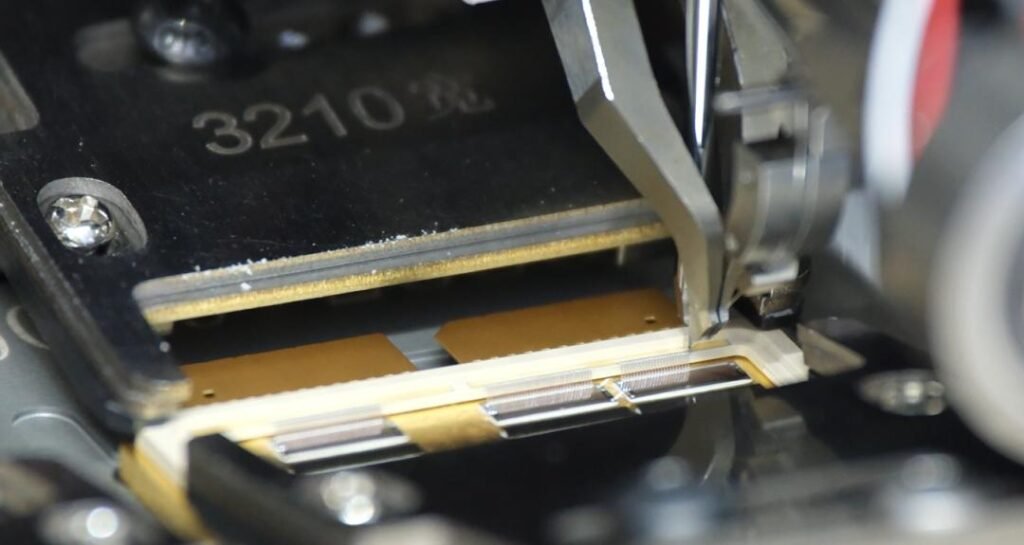
NXP’s exit should not be understood as a simple failure of one factory. It reflects several overlapping pressures.
First, global 5G infrastructure deployment did not grow as smoothly as many suppliers expected. China moved quickly in early 5G construction, while the United States and Europe followed different investment rhythms. In several markets, operators faced pressure from uncertain 5G monetization, high capital expenditure, and slower-than-expected return on investment.
Second, RF power technology moved into a more demanding competitive phase. GaN-on-SiC devices require strong process maturity, thermal performance, reliability control, and cost management. In this environment, suppliers with mature GaN platforms and established telecom qualifications gained an advantage.
Third, NXP’s internal business priorities shifted. Automotive, industrial, and other high-margin semiconductor segments became increasingly important to the company’s overall strategy. RF power, especially in a slower 5G infrastructure cycle, had to compete for capital, engineering resources, and manufacturing attention.
The result is a strategic retreat: NXP is expected to continue supporting customers through a transition period while winding down GaN wafer production at the ECHO fab. For the RF PA market, this creates both supply-chain uncertainty and a replacement opportunity.
When a major RF power supplier exits, customers usually face two immediate choices: place last-time-buy orders or redesign around alternative devices. Neither path is simple.
A last-time-buy strategy can help maintain short-term production, but it also creates financial and operational pressure. Customers may need to forecast several years of demand, allocate inventory budget, manage storage risk, and accept uncertainty around future design changes. Smaller customers are often under greater pressure because they have less bargaining power and less working capital available for large inventory commitments.
Redesign is the more sustainable path, but it requires time. RF PA replacement is not always a simple part-number swap. Engineers must verify package compatibility, frequency band coverage, gain, output power, efficiency, linearity, thermal behavior, ruggedness, bias conditions, matching networks, and system-level performance. In Doherty PA architectures, even a small difference in device behavior can require circuit adjustment and revalidation.
This creates a critical transition window before 2027. Customers that begin replacement evaluation early will have more time to qualify alternatives, adjust circuit designs, and reduce supply-chain risk.
NXP’s exit opens space for established RF power suppliers, including global players in LDMOS and GaN technologies. Companies with qualified product portfolios, stable manufacturing capacity, and strong telecom customer relationships are likely to compete for replacement demand.
At the same time, the change creates a rare opening for Chinese RF power amplifier suppliers. The key question is no longer only whether a supplier can offer a lower price. Customers need proven reliability, validated technology platforms, replacement support, packaging capability, and stable delivery.
For Chinese suppliers, this is a chance to move from alternative sourcing to strategic replacement. But the opportunity will only be captured by companies that can pass technical qualification, support redesign work, and provide supply continuity across both high-volume telecom customers and smaller industrial RF customers.
Hiwafer, also known as Huatai Electronics, is one of the Chinese RF power suppliers positioned to benefit from this transition. The company has focused on RF power process platforms and PA products since 2010 and has developed product lines based on both LDMOS and GaN technologies. Its public materials describe coverage for macro base stations, mMIMO, small cells, private radio communication, and RF power-related applications.
Hiwafer’s relevance comes from three factors.
First, it has a broad RF PA technology portfolio. LDMOS remains important for many sub-6 GHz and legacy replacement applications, while GaN is increasingly important for higher-frequency, higher-efficiency, and higher-power-density applications.
Second, replacement demand is not only concentrated in new 5G base stations. Many customers also need continuity for ISM, RF energy, private communication, medical RF, industrial RF power supplies, and other specialized markets. These customers often need stable product support more than cutting-edge roadmap claims.
Third, package and pin compatibility can reduce redesign difficulty. In markets where SOT-89, DFN, or other standard packages are used, replacement speed depends heavily on package availability, thermal behavior, and RF performance consistency. A supplier that can support practical replacement work has a stronger chance of winning customers during the transition period.
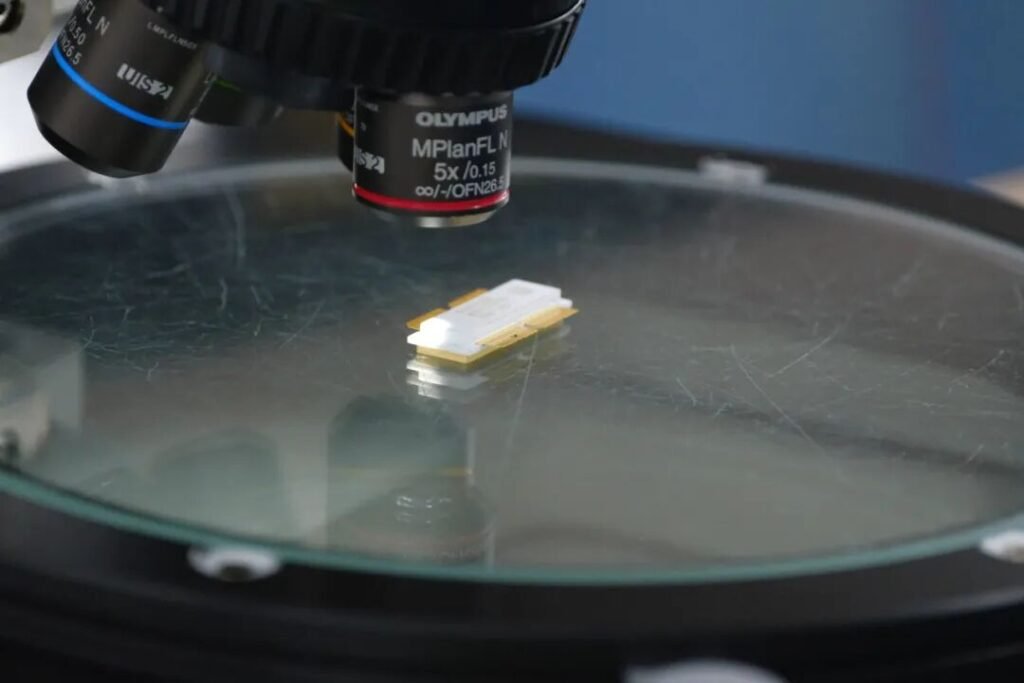
The replacement opportunity is not only about RF chip design. It is also about supply-chain control.
RF power devices depend heavily on process technology, packaging, thermal materials, test capability, and application engineering. For high-power devices, packaging is not a secondary detail. It directly affects heat dissipation, reliability, impedance behavior, and long-term performance stability.
Hiwafer’s vertical integration strategy is therefore important. A more integrated chain—covering device design, foundry cooperation, packaging, testing, and key material development—can improve response speed and reduce dependence on external bottlenecks.
This matters especially for customers trying to replace discontinued RF PA products. They need more than a datasheet. They need sample support, application guidance, thermal review, circuit matching advice, test correlation, and stable delivery planning.
RF PA customers are conservative for good reason. A base-station PA, ISM RF amplifier, or industrial RF power device is not a commodity component. Failure can affect system efficiency, thermal stability, regulatory performance, and field reliability.
For Hiwafer and other replacement suppliers, the path to global adoption depends on qualification. Customers will evaluate production history, shipment scale, process consistency, quality systems, RoHS/REACH alignment, telecom customer audits, application engineering capability, and field return performance.
International expansion also requires local support. Customers in Europe, North America, South Korea, Japan, and Southeast Asia often expect fast technical response, English documentation, logistics stability, and local commercial coordination. A supplier that can combine China-based manufacturing strength with overseas support capability will have an advantage during the NXP transition window.
The peak phase of early 5G infrastructure build-out may have passed in some markets, but RF power demand is not disappearing. It is shifting.
Future growth may come from 5G-Advanced, sub-6 GHz network upgrades, private networks, satellite communication, low-altitude economy applications, industrial RF energy, radar, medical RF, and early 6G research. These markets may not all develop at the same speed, but they share a common requirement: efficient, reliable, and supply-secure RF power devices.
For suppliers, the next phase will be less about simply following a telecom build-out cycle and more about serving diversified RF power applications. This favors companies with flexible product platforms, practical packaging capability, and strong application engineering support.
NXP’s planned exit from the RF power amplifier market is more than the end of one company’s RF PA chapter. It is a reset of the supply chain.
Customers now need to reduce dependence on discontinued product lines, evaluate qualified alternatives, and rebuild long-term sourcing strategies. Global suppliers will compete for the released share, but the transition also gives Chinese RF PA companies a stronger opportunity to prove themselves in high-value international markets.
For Hiwafer, the opportunity is clear but demanding. Winning replacement demand will require more than cost advantage. It will require verified performance, stable manufacturing, strong packaging and testing capability, fast redesign support, and global customer trust.
In the next phase of the RF PA market, agility, supply security, and engineering support may matter as much as any single device specification.
Share your display size, resolution, interface, brightness, touch requirement, controller board requirement, and application environment.
Continue reading related display technology guides and application references.
Talk to RJY’s engineering team for display matching, controller board review, and customization discussion.