Столкнулись с трудностями в проекте встраиваемого дисплея?
Не позволяйте сложной интеграции или проблемам цепочки поставок замедлить ваш выход на рынок. Забронируйте бесплатную консультацию с экспертной командой RJY для получения индивидуальной поддержки в проектировании и производстве.
Как устроен ЖК-модуль? Объяснение структуры TFT-дисплея
Современные ЖК-дисплеи представляют собой сложные сборки точных оптических, электронных и конструктивных элементов. Понимание составных частей ЖК-дисплея не только проясняет принцип работы этих устройств, но и помогает инженерам и покупателям выбрать правильную конфигурацию для их применения.
Published:
14 минут чтения
Updated:
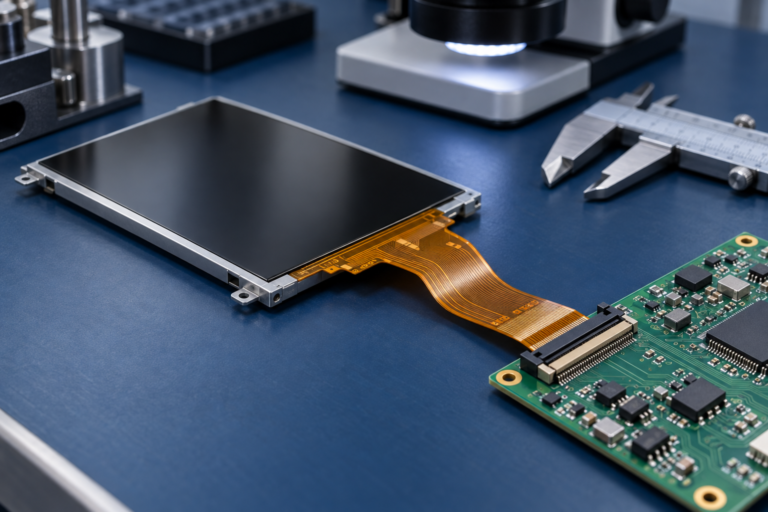
Жидкокристаллический модуль (LCD-модуль) не является цельным куском стекла. Это многослойная дисплейная сборка, объединяющая оптические материалы, управление жидкими кристаллами, коммутацию на тонкопленочных транзисторах (TFT), подсветку, управление сигналами, механическую поддержку, а иногда и сенсорный ввод. Для инженеров и OEM-покупателей понимание состава LCD-модуля полезно, поскольку каждый слой влияет на производительность дисплея, сложность интеграции, стоимость и возможности кастомизации.
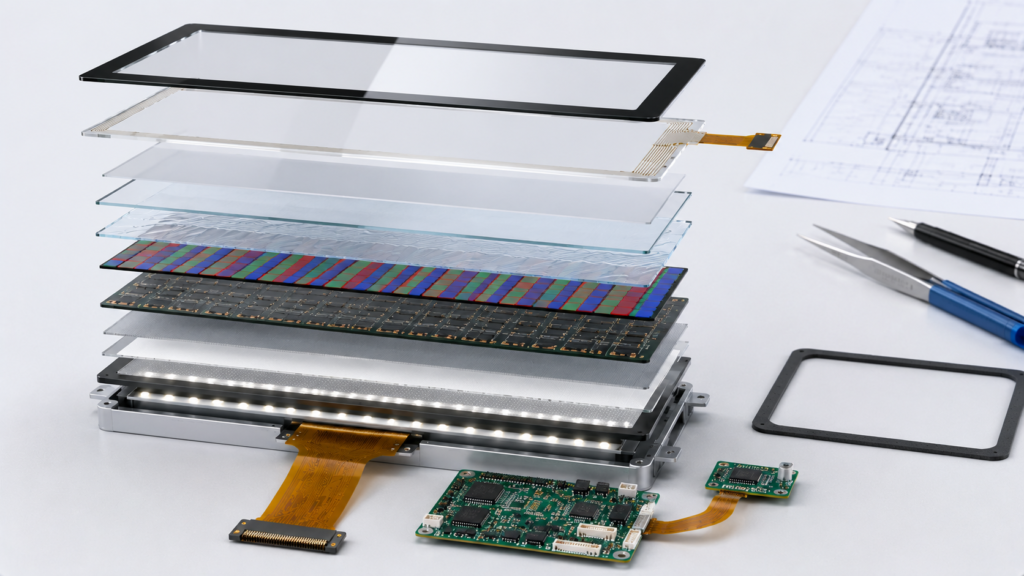
Типичный TFT LCD-модуль может включать поляризаторы, стеклянные подложки, слой жидких кристаллов, цветовой фильтр, TFT-матрицу, блок подсветки, драйверные микросхемы (IC), гибкий печатный кабель (FPC), разъемы, а также опционально сенсорную панель или защитное стекло. Компания Corning описывает LCD-модуль как TFT-LCD структуру, содержащую матрицу, цветовой фильтр и жидкие кристаллы, и, в зависимости от контекста, может также включать подсветку и драйверные микросхемы.[1]
В разработке продуктов эта структура важна, потому что LCD-модуль редко выбирается только по разрешению. Яркость, угол обзора, интерфейс, тип сенсора, конструкция подсветки, положение FPC, защитное стекло, драйверная микросхема, совместимость с контроллерной платой и механическая подгонка — все это влияет на возможность работы модуля в конечном продукте.
Состав TFT LCD-модуля с отображением поляризатора, слоя жидких кристаллов, цветового фильтра, подсветки, драйверной микросхемы, FPC и сенсорной панели.
Что такое LCD модуль?
LCD-модуль, часто называемый LCM, представляет собой дисплейный блок, построенный на основе LCD-панели и вспомогательных компонентов, необходимых для его использования в электронном изделии. Сама LCD-панель управляет прохождением света через пиксельную структуру, в то время как компоненты модульного уровня обеспечивают подсветку, электрическое соединение, управление сигналами и механическую интеграцию.
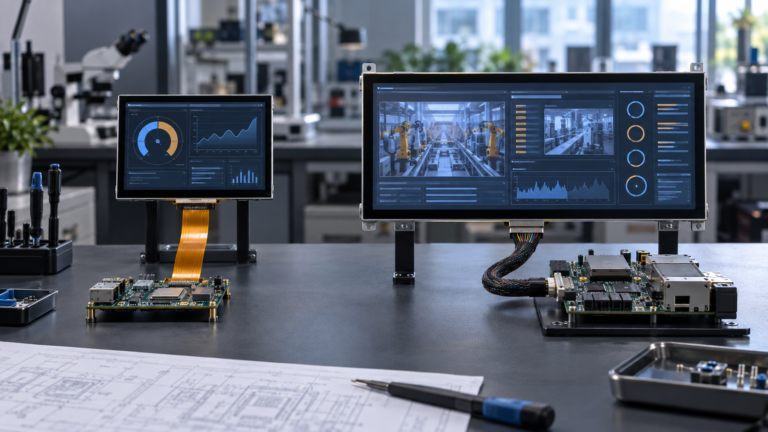
Для простых встраиваемых устройств LCD-модуль может быть компактным дисплеем с подсветкой, драйверной микросхемой и FPC-кабелем. Для более сложных продуктов LCD-модуль может быть объединен с сенсорной панелью, защитным стеклом, оптическим склеиванием, контроллерной платой, пользовательской прошивкой или корпусной конструкцией. Именно поэтому два LCD-модуля с одинаковым размером экрана и разрешением могут вести себя совершенно по-разному в реальных приложениях.
С инженерной точки зрения, LCD-модуль следует оценивать как законченную дисплейную систему, а не только как панель. Внутренние слои определяют оптические характеристики, в то время как внешнее подключение и механическая структура определяют, может ли дисплей быть надежно интегрирован в конечное устройство.
Поляризаторы: Управление световым потоком
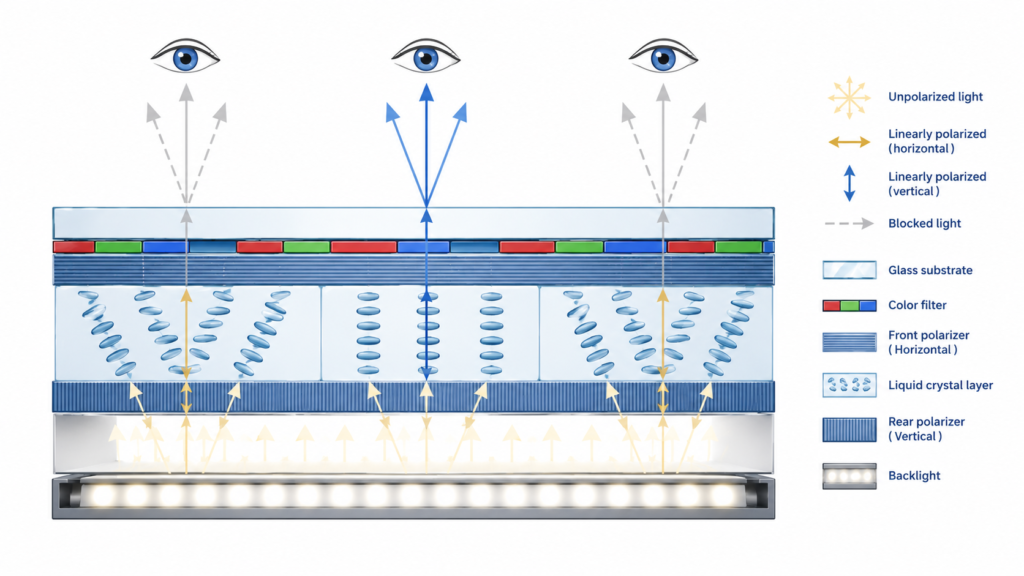
Поляризаторы — это тонкие оптические пленки, размещаемые с передней и задней сторон LCD-ячейки. Их роль заключается в управлении направлением световых волн. ЖК-дисплеи используют взаимодействие между поляризованным светом и ориентацией жидких кристаллов для создания ярких, темных и промежуточных полутоновых состояний. Учебные справочники по дисплеям обычно описывают работу ЖК-дисплея как использование жидких кристаллов совместно с поляризаторами для управления пикселями.[2]
Задний поляризатор принимает свет со стороны подсветки и выравнивает его перед тем, как он попадет в слой жидких кристаллов. Передний поляризатор фильтрует свет после его прохождения через слой жидких кристаллов. В зависимости от электрического состояния жидкого кристалла, через передний поляризатор проходит больше или меньше света, создавая видимый контраст.
Поляризаторы напрямую влияют на читаемость дисплея. Их качество и соответствие структуре LCD могут влиять на контраст, угол обзора, эффективность яркости и работу в условиях внешнего освещения. Если поляризатор поцарапан, расслоился, выгорел или деградировал под воздействием окружающей среды, дисплей может по-прежнему включаться, но будет показывать плохой контраст, неравномерный цвет или видимые дефекты поверхности.
Для большинства LCD-модулей поляризаторы не рассматриваются как заменяемые пользователем детали. Если поляризатор поврежден, ремонт на прикладном уровне обычно непрактичен. Для промышленных продуктов или продуктов для наружного применения долговечность поляризатора следует рассматривать вместе с защитным стеклом, обработкой поверхности, рабочей температурой и риском воздействия УФ-излучения.
Поперечное сечение поляризатора ЖК-дисплея, показывающее, как поляризованный свет проходит через слой жидких кристаллов.
Стеклянные подложки: Структурная основа LCD-ячейки
LCD-ячейка построена на двух стеклянных подложках. Эти стеклянные слои обеспечивают физическую структуру, которая удерживает жидкокристаллический материал на месте и поддерживает точную пиксельную архитектуру. В типичной конструкции TFT LCD одна подложка несет TFT-матрицу, а другая — структуру цветового фильтра.
Расстояние между стеклянными подложками должно тщательно контролироваться, так как толщина слоя жидких кристаллов влияет на оптическое поведение. Если зазор неравномерен, дисплей может показывать неравномерную яркость, изменение цвета или муар. Это одна из причин, по которой производство LCD требует точного обращения со стеклом, выравнивания и герметизации.
Стеклянные подложки также влияют на механическую прочность и конструкцию продукта. Голая LCD-панель хрупка. Она должна быть правильно поддержана во время сборки модуля и конечной интеграции устройства. Чрезмерное давление, изгиб, напряжение от корпуса или неправильный монтаж могут повредить стекло, вызвать утечку света или повлиять на равномерность дисплея.
При разработке продуктов на основе LCD-модуля инженерам следует избегать оказания давления на активную область дисплея. Механическая конструкция должна поддерживать модуль через рекомендуемую рамку, ободок или монтажную зону, а не заставлять стекло панели нести структурную нагрузку.
Слой жидких кристаллов: Основной световой клапан
Слой жидких кристаллов является функциональным ядром ЖК-дисплея. Он сам по себе не генерирует свет. Вместо этого он изменяет прохождение поляризованного света через панель. При подаче напряжения ориентация молекул жидких кристаллов меняется, что изменяет количество света, пропускаемого через каждый пиксельный участок.
Такое поведение позволяет ЖК-дисплею управлять яркостью, полутонами и контрастом. В TFT LCD каждый субпиксель может управляться электрическими сигналами через TFT-матрицу. В результате формируется полноценное изображение, состоящее из множества индивидуально управляемых красных, зеленых и синих субпикселей.
Режим жидких кристаллов также влияет на угол обзора, время отклика, контраст и стабильность цвета. Структуры TN, IPS и VA LCD используют жидкие кристаллы, но их молекулярное выравнивание и поведение при просмотре различаются. Вот почему выбор LCD-модуля требует большего, чем проверка диагонального размера и разрешения. Технология панели должна соответствовать среде применения и положению пользователя при просмотре.
Цветовой фильтр: Создание красных, зеленых и синих субпикселей
Цветной TFT LCD использует слой цветового фильтра для преобразования управляемой подсветки в полноцветные изображения. Каждый пиксель обычно разделен на красные, зеленые и синие субпиксели. Регулируя светопропускание этих субпикселей, дисплей воспроизводит различные цвета.
Цветовой фильтр влияет на насыщенность цвета, равномерность цвета, коэффициент пропускания и общее визуальное качество. В простом индикаторном дисплее цветопередача может не быть основным фактором выбора. В интеллектуальной панели управления, интерфейсе медицинского устройства, дисплее для транспортных средств или пользовательском HMI постоянство цвета может стать более важным.
Цветовой фильтр также работает совместно со спектром подсветки. Даже если LCD-панель имеет хороший цветовой фильтр, неудачный выбор подсветки может снизить точность цветопередачи или привести к несоответствию внешнего вида между партиями. Для OEM-проектов требования к цветопередаче дисплея следует обсуждать на ранних этапах, если интерфейс продукта зависит от точных фирменных цветов, предупредительных индикаторов или визуальной дифференциации.
TFT-матрица: Пиксельное электрическое управление
TFT-матрица — это активный матричный управляющий слой TFT LCD. Она содержит тонкопленочные транзисторы, которые действуют как переключающие элементы для отдельных субпикселей. Эти переключатели позволяют дисплею управлять каждым пиксельным участком с большей точностью, чем старые технологии пассивной матрицы LCD.
TFT-матрица является одной из причин, по которой TFT LCD-модули могут поддерживать изображения высокого разрешения, быстрое обновление экрана и стабильное управление полутонами. Она работает совместно с драйверной микросхемой для адресации строк и столбцов пикселей в соответствии с данными изображения, поступающими от главной системы.
Для инженеров сама TFT-матрица обычно не является настраиваемым элементом на уровне проекта. Однако технология панели, разрешение, угол обзора, яркость, интерфейс и конфигурация драйвера — все это зависит от конструкции LCD-панели. Модуль, который выглядит механически подходящим, все равно может не соответствовать проекту, если его интерфейс, временные характеристики или требования к драйверу несовместимы с главной системой.
Блок подсветки: Источник света за ЖК-дисплеем
Поскольку большинство ЖК-дисплеев не излучают свет самостоятельно, им требуется блок подсветки. Подсветка обеспечивает освещение, которое проходит через структуру LCD и становится видимым изображением. DigiKey описывает подсветки дисплеев как компоненты, используемые для улучшения видимости и читаемости дисплея.[3]
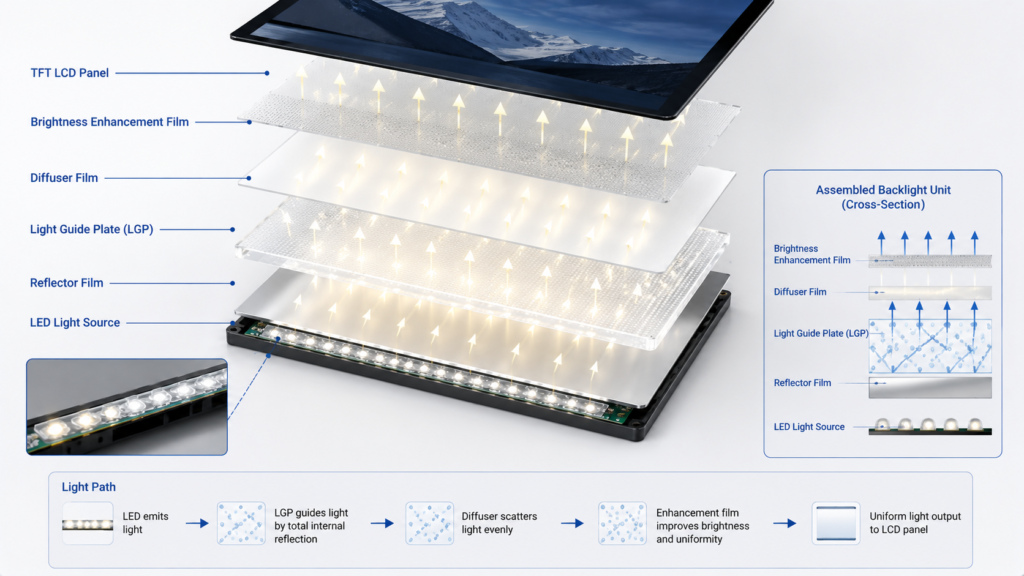
Типичный блок подсветки LCD может включать светодиоды (LED), световодную пластину, диффузионные пленки, отражающие пленки, пленки для повышения яркости и FPC или соединительную структуру. Цель состоит в том, чтобы равномерно распределить свет по всей площади дисплея. Неудачная конструкция подсветки может привести к появлению темных участков, ярких пятен, краевой утечки света, неравномерности цвета или плохой читаемости.
Конструкция подсветки влияет на яркость, энергопотребление, тепловыделение, толщину, срок службы и читаемость на улице. Подсветка с высокой яркостью может улучшить видимость при сильном внешнем освещении, но также может увеличить потребляемую мощность и тепловую нагрузку. Для герметичного или компактного оборудования управление нагревом следует проверять перед увеличением яркости.
Для промышленных устройств, устройств «умного дома», систем безопасности, устройств для транспортных средств или наружного применения подсветка должна выбираться в соответствии с реальными условиями эксплуатации. Вопрос не в том, насколько ярким может быть дисплей. Лучший вопрос — остается ли дисплей читаемым при ожидаемых условиях освещения, не создавая неприемлемых проблем с питанием или нагревом.
Структура блока подсветки LCD с отображением светодиодного источника, световодной пластины, диффузора, отражателя и TFT LCD-панели.
Драйверная микросхема (Driver IC): Преобразование данных изображения в сигналы дисплея
Драйверная микросхема — это компонент, который управляет подачей электрических сигналов на дисплейную панель. Она преобразует данные изображения и синхросигналы в шаблоны напряжений, необходимые для TFT-матрицы и слоя жидких кристаллов. Без правильной конфигурации драйвера LCD-панель не может корректно отображать intended изображение.
Драйверная микросхема тесно связана с разрешением, интерфейсом, поведением при обновлении, гамма-характеристиками, последовательностью подачи питания и временными параметрами дисплея. Во многих компактных LCD-модулях драйверная микросхема может быть интегрирована непосредственно на стекле или подключена через структуру FPC. В более крупных или сложных дисплейных системах могут потребоваться дополнительные контроллерные платы для преобразования сигналов, таких как HDMI, LVDS, MIPI, eDP, RGB или других интерфейсов.
Для разработки продуктов именно здесь возникает множество проблем совместимости. Дисплей может иметь правильный размер и внешний вид, но материнская плата заказчика может не поддерживать интерфейс панели или ее временные характеристики. В таких случаях может потребоваться подходящая контроллерная плата или адаптация прошивки.
FPC и разъемы: Электрический мост к системе
FPC, или гибкая печатная плата, соединяет LCD-модуль с платой или контроллером заказчика. В зависимости от структуры модуля, она передает сигналы дисплея, питание, линии подсветки, сенсорные сигналы или управляющие сигналы.
Конструкция FPC влияет на интеграцию продукта больше, чем ожидают многие покупатели. Ее длина, направление изгиба, положение разъема, распиновка, шаг и конструкция усиления могут определить, поместится ли дисплей в конечный корпус. Если FPC выходит в неправильном направлении, продукт может потребовать механической переработки, даже если сам дисплей подходит.
Разъемы также важны. Разъем должен соответствовать компоновке печатной платы заказчика, методу сборки, ожиданиям по надежности и производственному процессу. В промышленном или встраиваемом оборудовании следует избегать прокладки кабеля через резкие изгибы, движущиеся части, зоны с высоким уровнем шума и чрезмерное механическое натяжение.
При запросе нестандартного или заменяющего LCD-модуля покупателям следует, по возможности, предоставлять существующий чертеж FPC, распиновку, информацию о разъеме и механические ограничения. Это помогает сократить количество ненужных итераций образцов.
Сенсорная панель и защитное стекло: Опционально, но часто критически важно
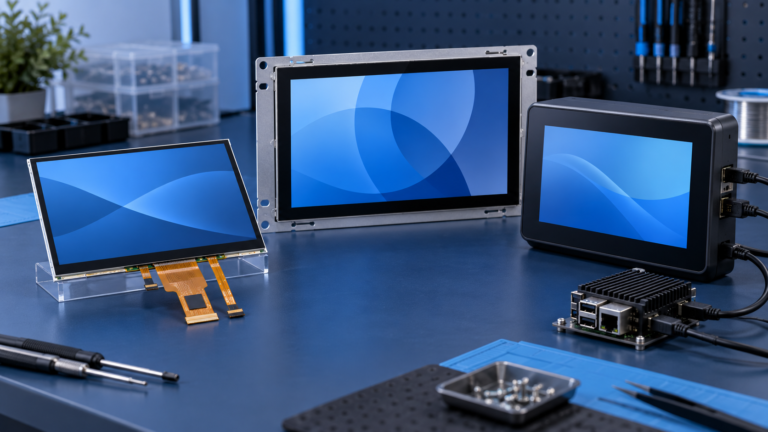
Многие LCD-модули являются только дисплеями. Другие интегрированы с сенсорными панелями и защитным стеклом. Сенсорная панель обеспечивает пользовательский ввод, а защитное стекло защищает поверхность дисплея и определяет внешний вид передней части продукта.
Проек.
Cover glass customization may include size, thickness, black border printing, logo area, hole design, edge treatment, and shape adjustment. It should be designed together with the enclosure and touch requirements. Thick cover glass, gloves, water, or electrical noise may require touch tuning, especially for PCAP touch systems.
For B2B projects, touch and cover glass should not be added at the end as cosmetic accessories. They should be considered during the display selection stage because they can affect brightness, touch sensitivity, optical clarity, mechanical fit, and final product assembly.
How LCD Module Components Work Together
An LCD module works because its layers are coordinated. The backlight creates illumination. The rear polarizer aligns light. The liquid crystal layer modulates the light under electrical control. The color filter creates RGB subpixels. The TFT array controls individual subpixels. The front polarizer filters the modulated light to produce contrast. The driver IC and FPC provide the electrical control path. The optional touch panel and cover glass add interaction and protection.
If one part is poorly matched, the final module performance can suffer. A strong backlight cannot fully solve poor viewing angle. A good LCD panel can still fail if the FPC position does not fit the housing. A high-quality touch panel may behave poorly if the cover glass thickness or controller tuning is wrong. A display with the correct resolution may still be unusable if the interface is incompatible with the customer’s board.
Компонент
Основная функция
Engineering Impact
Поляризаторы
Control polarized light transmission
Affect contrast, viewing angle, and readability
Стеклянные подложки
Support LCD cell structure and pixel alignment
Affect mechanical stability and display uniformity
Жидкокристаллический слой
Modulate light under voltage control
Affect contrast, grayscale, response, and viewing behavior
Цветовой фильтр
Create red, green, and blue subpixels
Affect color performance and image quality
TFT-матрица
Control individual subpixels
Affect resolution, refresh behavior, and image precision
Блок подсветки
Обеспечить подсветку за ЖК-панелью
Влиять на яркость, энергопотребление, нагрев и читаемость
Драйверная ИС
Преобразовывать данные изображения в сигналы управления дисплеем
Влиять на интерфейс, синхронизацию, гамму и совместимость дисплея
FPC и разъём
Соединять модуль с печатной платой или контроллером заказчика
Влиять на механическую посадку, назначение выводов и надёжность интеграции
Сенсорная панель
Обеспечивать ввод данных пользователем
Влиять на взаимодействие с пользователем, конструкцию защитного стекла и настройку контроллера
Защитное стекло
Защищать лицевую поверхность и определять внешний вид
Влиять на долговечность, герметизацию, оптическую прозрачность и дизайн изделия
Что инженеры должны проверить перед выбором ЖК-модуля
Перед выбором ЖК-модуля инженеры должны подтвердить как характеристики дисплея, так и детали интеграции. Основные параметры дисплея включают размер, разрешение, активную область, яркость, угол обзора, контрастность, интерфейс, рабочую температуру и требования к подсветке. Эти параметры определяют, способен ли модуль удовлетворять видимым и электрическим требованиям изделия.
Механические детали и аспекты интеграции не менее важны. Покупатели должны проверить габаритные размеры, толщину, положение FPC, тип разъёма, монтажное пространство, требования к защитному стеклу, сенсорную структуру, метод скрепления, зазоры корпуса и прокладку кабелей. Если дисплей должен подключаться к конкретной материнской плате, необходимо до получения образца подтвердить синхронизацию интерфейса и требования к драйверу.
Для индивидуальных проектов также важно определить, нужен ли заказчику стандартный ЖК-модуль, сенсорный дисплейный модуль, дисплей с индивидуальным защитным стеклом, подсветка повышенной яркости, модификация FPC, поддержка платы контроллера, адаптация прошивки или более полная сборка дисплея. Чёткие требования снижают риск выбора модуля, который выглядит подходящим, но выходит из строя при интеграции в изделие.
Варианты кастомизации ЖК-модулей
Кастомизация ЖК-модуля обычно наиболее практична, если она начинается с существующего дисплейного модуля и модифицирует окружающую структуру. Распространённые области кастомизации включают яркость, конструкцию подсветки, FPC, интерфейс, сенсорную панель, защитное стекло, плату контроллера, прошивку и механическую координацию.
Кастомизация яркости может быть полезна при использовании дисплея в условиях высокой освещённости. Кастомизация подсветки может поддерживать различные требования к энергопотреблению или видимости. Кастомизация FPC может помочь дисплею поместиться в компактный корпус. Кастомизация защитного стекла может поддерживать внешний вид изделия, защиту лицевой панели и интеграцию сенсора. Поддержка платы контроллера может помочь подключить ЖК-модуль к HDMI, LVDS, MIPI, eDP, USB или другим системным интерфейсам в зависимости от проекта.
Не каждый компонент ЖК-модуля может быть свободно изменён без затрат или риска. Например, изменение активного размера дисплея с нуля сильно отличается от модификации защитного стекла или подсветки вокруг существующего модуля. Покупатели должны обсуждать цели кастомизации на раннем этапе, чтобы поставщик мог рекомендовать осуществимую структуру и путь разработки.
Сотрудничество с RJY Display по выбору ЖК-модуля
RJY Display предлагает TFT ЖК-продукцию, платы контроллеров и поддержку кастомизации для B2B-проектов в области дисплеев. Для команд разработчиков, которым требуется выбор или кастомизация ЖК-модуля, RJY Display может помочь проанализировать размер дисплея, разрешение, интерфейс, яркость, угол обзора, требования к сенсору, конструкцию FPC, требования к подсветке, совместимость с платой контроллера и механическую структуру.
Если ваш проект требует стандартный TFT ЖК-модуль, сенсорный ЖК-модуль, дисплей с индивидуальным защитным стеклом, дисплей повышенной яркости, дисплей с поддержкой платы контроллера или кастомизацию на основе существующего ЖК-модуля, свяжитесь с RJY Display, предоставив детали вашего проекта. Полезная информация включает размер дисплея, разрешение, интерфейс, яркость, тип сенсора, рабочую среду, конструкцию корпуса, годовую потребность, требования к образцу, а также любую эталонную модель или техническое описание.
Часто задаваемые вопросы
Из чего состоит LCD модуль?
ЖК-модуль обычно состоит из поляризаторов, стеклянных подложек, слоя жидких кристаллов, цветного фильтра, TFT-матрицы, блока подсветки, драйверных микросхем, FPC-кабеля, разъёмов, а также опционально сенсорной панели или защитного стекла.
Какая часть ЖК-модуля наиболее важна?
Ни одна часть не работает сама по себе. Слой жидких кристаллов, TFT-матрица, подсветка, драйверная микросхема и поляризаторы необходимы для формирования изображения, в то время как FPC, сенсорная панель и защитное стекло влияют на интеграцию и удобство использования.
Почему ЖК-модулю требуется подсветка?
Большинство ЖК-дисплеев не излучают свет самостоятельно. Подсветка обеспечивает освещение за ЖК-панелью, чтобы изображение было видно.
Какую функцию выполняет TFT-матрица в ЖК-модуле?
TFT-матрица управляет отдельными субпикселями с помощью тонкоплёночных транзисторов. Это позволяет дисплею отображать изображения высокого разрешения с точным управлением на уровне пикселей.
Можно ли использовать ЖК-модуль без сенсорной панели?
Да. Сенсорная панель является опциональной. Некоторые изделия используют ЖК-модули только для отображения, в то время как другие требуют PCAP или резистивного сенсора в зависимости от пользовательского интерфейса и условий применения.
Какие компоненты ЖК-модуля можно кастомизировать?
Распространённые области кастомизации включают яркость, подсветку, FPC, интерфейс, сенсорную панель, защитное стекло, плату контроллера, прошивку и механическую структуру. Осуществимость зависит от существующего модуля и требований проекта.