Facing a bottleneck in your Embedded Display Project?
Don’t let complex integration or supply chain issues slow your time-to-market. Book a free consultation with the RJY expert team for tailored design and manufacturing support.


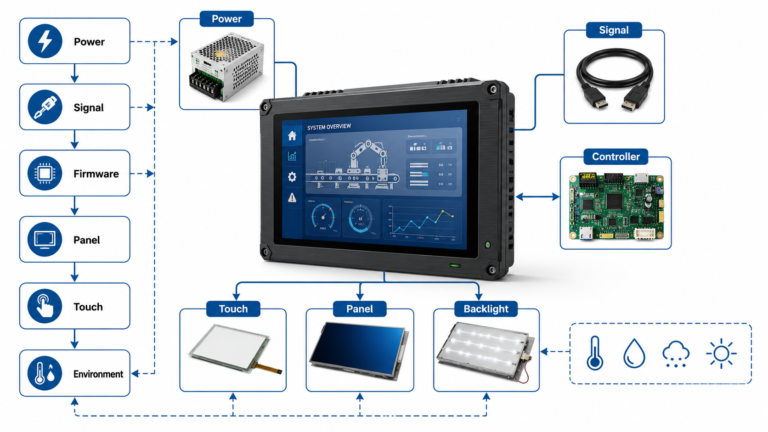
Industrial environments demand reliable, high-performance displays to ensure seamless operation, safety, and productivity. However, even the most rugged LCD modules can suffer from issues like LCD spot damage, flickering, or touch malfunctions over time.
This guide walks you through the most common industrial display screen defects, how to identify them quickly, what causes them, and how to fix and prevent them effectively.
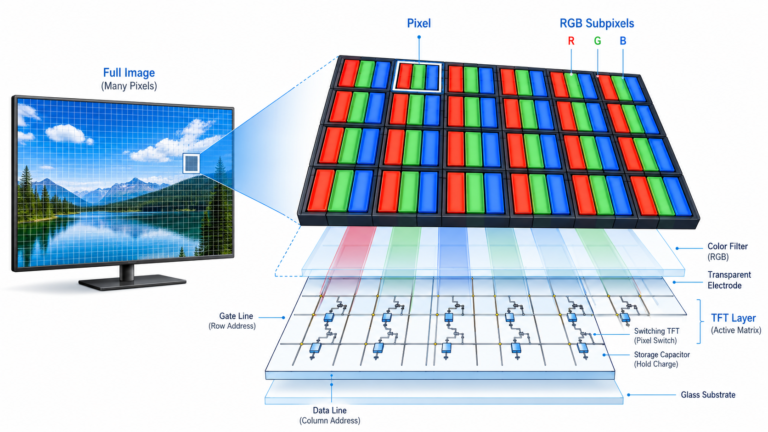
When building a custom TFT LCD display—whether for medical monitors, wearable devices, or factory automation—understanding core concepts like display pixel, resolution, and aspect ratio is critical. These elements directly affect image clarity, content compatibility, battery efficiency, and the overall user experience.
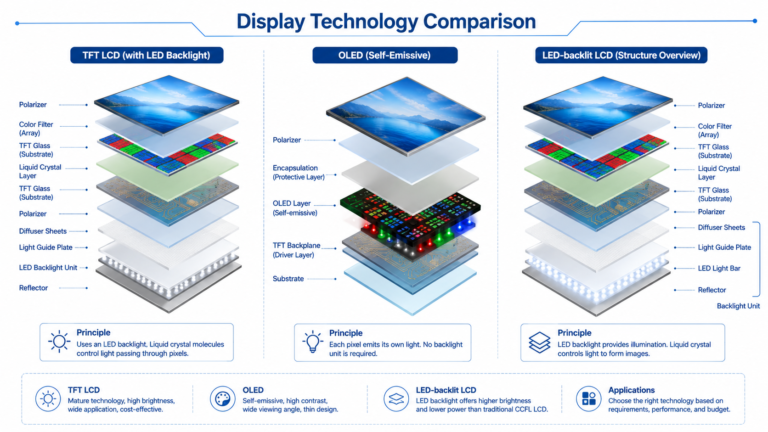
In the world of display technology, "TFT vs OLED vs LCD" is a common comparison that confuses many. Whether you're choosing a screen for a smartphone, television, industrial panel, or digital signage, it's crucial to understand the core differences between these technologies. This article explores how TFT LCDs, OLED displays, and LED-backlit LCDs stack up in terms of performance, cost, viewing angle, and more.