Facing a bottleneck in your Embedded Display Project?
Don’t let complex integration or supply chain issues slow your time-to-market. Book a free consultation with the RJY expert team for tailored design and manufacturing support.

The difference between IPS and TFT LCD is often misunderstood. Many buyers search for “IPS vs TFT” as if IPS and TFT were two separate display technologies. Technically, this comparison is not precise.
TFT LCD means thin-film transistor liquid crystal display. It describes an active-matrix LCD structure where pixels are controlled by thin-film transistors. IPS, or in-plane switching, is a specific LCD panel technology used to improve viewing angle and color stability. In most modern product discussions, an IPS display is usually an IPS TFT LCD.
In simple terms: IPS is not the opposite of TFT. IPS is a type of TFT LCD panel technology.
This distinction matters for engineers, procurement teams, and product developers selecting displays for industrial HMIs, smart home panels, vehicle-related devices, medical-related interfaces, security equipment, and embedded systems. Choosing the right display requires more than reading the label. Buyers need to evaluate panel type, viewing angle, brightness, resolution, interface, touch requirement, controller board compatibility, mechanical fit, and operating environment.
TFT LCD is a broad display category. It refers to an LCD panel that uses a thin-film transistor active matrix to control pixels. The TFT layer helps the display address pixels more accurately than older passive-matrix LCD designs.
IPS is one panel technology within the LCD family. It describes how liquid crystal molecules move inside the panel. In an IPS panel, the liquid crystals rotate in a plane that helps maintain more consistent color and contrast when the screen is viewed from different angles.
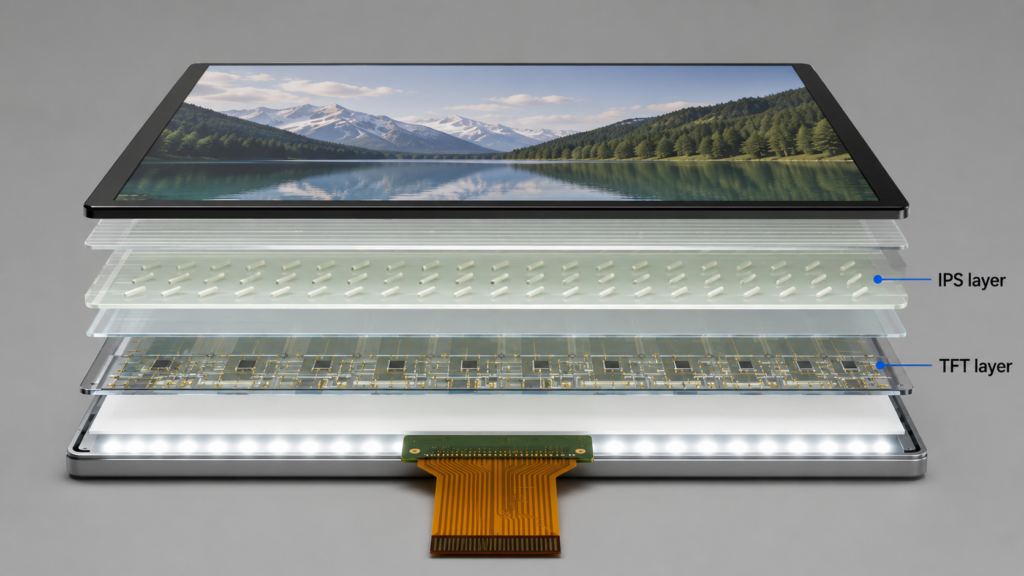
The relationship can be summarized clearly:
The phrase “IPS vs TFT” is misleading because it compares two terms from different technical layers. TFT is the active-matrix backplane technology. IPS is the liquid crystal panel mode.
A display can be both TFT and IPS. Product descriptions often use terms such as “IPS TFT LCD,” “TFT IPS display,” or “IPS LCD module” to show that the panel combines TFT active-matrix control with IPS viewing-angle performance.
When a buyer asks whether IPS is better than TFT, the real question is usually one of these:
These questions are more useful than a simple “IPS vs TFT” comparison.
TFT LCD stands for thin-film transistor liquid crystal display. It is a type of active-matrix LCD. In a TFT LCD, thin-film transistors help control individual pixels or subpixels, allowing the display to show images with better stability, detail, and response than many older passive-matrix LCDs.
A TFT LCD still needs a backlight because liquid crystal material does not emit light by itself. The backlight passes light through the LCD structure, while the liquid crystal layer and color filters control image formation.
TFT LCD technology is widely used in embedded products because it offers a practical balance of display quality, cost, size availability, interface options, and customization flexibility.
IPS stands for in-plane switching. It is a panel technology used in LCD displays. IPS was developed to improve some of the limitations of earlier LCD panel structures, especially viewing angle and color shift.
In an IPS panel, liquid crystal molecules move more parallel to the display surface. This structure helps the screen maintain more stable color and contrast when viewed from different directions.
For embedded products and industrial interfaces, IPS is often selected when users need to read the screen from side angles, when several operators may view the same display, or when the interface uses colors that need to remain understandable from different positions.
The most useful comparison is not IPS vs TFT. It is usually IPS TFT LCD vs TN TFT LCD.
TN stands for twisted nematic. TN is another LCD panel mode. TN TFT LCD panels can be cost-effective and may support fast response in some applications, but they usually have narrower viewing angles and more visible color shift than IPS panels.
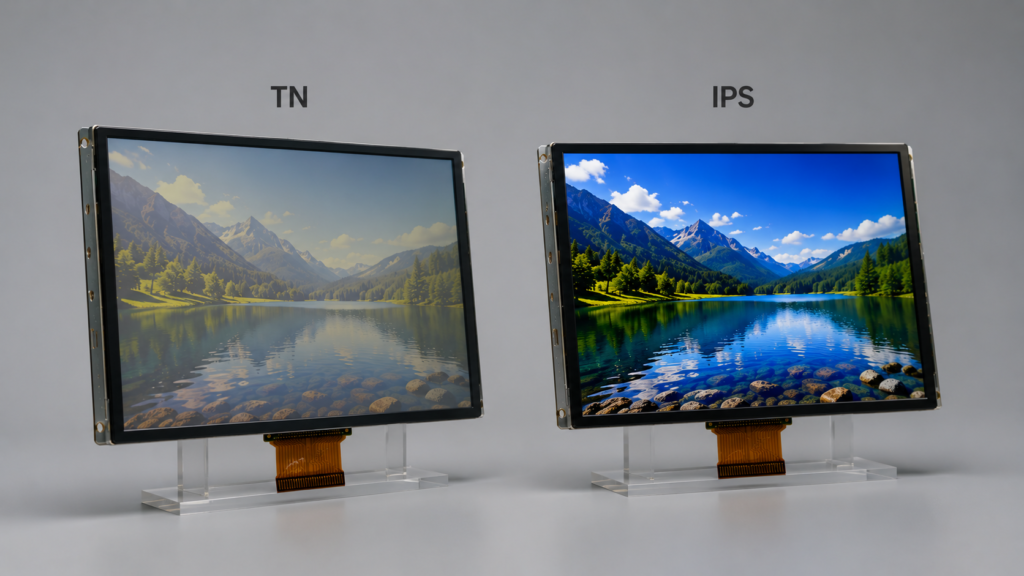
IPS TFT LCD panels are usually preferred when the display must remain readable from multiple angles, when color consistency matters, or when the product will be used as a touch interface in a real operating environment.
| Feature | TN TFT LCD | IPS TFT LCD |
|---|---|---|
| Technical layer | TFT LCD with TN liquid crystal mode | TFT LCD with IPS liquid crystal mode |
| Viewing angle | More limited, especially from certain directions | Wider and more stable in typical use |
| Color shift | More likely at side viewing angles | Usually less noticeable |
| Cost | Often more cost-effective | Often higher than basic TN options |
| Touch display suitability | Usable, but viewing angle should be checked | Often preferred for touch panels and multi-angle viewing |
| Best fit | Simple interfaces, single-view products, cost-sensitive applications | HMI, smart panels, equipment displays, shared viewing, user-facing products |
VA stands for vertical alignment. VA is another LCD panel mode used in some TFT LCD products. VA panels are often considered when contrast is important, but their viewing behavior and response characteristics depend on the specific panel design.
For many B2B display projects, the practical comparison is among TN, IPS, and VA TFT LCD panels. Each panel type has trade-offs. IPS is not always the only correct answer, but it is often a strong choice when viewing angle and color stability are important.
| Panel Type | Main Advantage | Main Limitation | Typical Application Fit |
|---|---|---|---|
| TN TFT LCD | Cost-effective and simple | Narrower viewing angle and more color shift | Basic controls, single-view devices, cost-sensitive products |
| IPS TFT LCD | Wide viewing angle and stable color appearance | May cost more than basic TN options | Touch panels, HMIs, smart devices, equipment displays |
| VA TFT LCD | Good contrast potential | Performance depends heavily on panel design | Applications where contrast is a priority |
No. This question is technically incorrect because IPS is usually a type of TFT LCD. A better question is whether IPS TFT LCD is better than TN TFT LCD or VA TFT LCD for the target application.
IPS is often better when the display will be viewed from different angles, when the product has a graphical UI, when several users may view the screen, or when color consistency matters. However, TN TFT LCD may still be practical for simple interfaces, single-view applications, and projects with strict cost targets.
The correct choice depends on the application, not on a single display label.
IPS TFT LCD is usually a good direction when display readability and viewing angle are important. It is especially useful when users do not always stand directly in front of the display.
Consider IPS TFT LCD for:
IPS may also be useful when a display is installed in a vertical panel, wall-mounted device, dashboard, or shared-control environment where the viewer angle is not fixed.
IPS is not necessary for every project. A TN or other non-IPS TFT LCD may be enough when the user views the display directly from the front, the UI is simple, the product is cost-sensitive, and color stability is not a major requirement.
Non-IPS TFT LCD options may be considered for:
The key is to test the display in the actual viewing condition. A panel that looks acceptable on a desk may behave differently after installation inside an enclosure or equipment cabinet.
IPS itself does not define the touch technology. Touch performance depends on the touch panel, touch controller, cover glass, bonding structure, firmware, grounding, and operating environment.
However, IPS TFT LCD is often a good match for touch display products because touch screens are usually viewed and operated from different angles. A user may stand to the side, reach across the panel, or view the display while interacting with equipment. In these situations, wider viewing behavior can improve usability.
For touch projects, buyers should evaluate IPS panel performance together with cover glass, capacitive or resistive touch type, controller board, touch interface, glove use, moisture exposure, and mechanical structure.
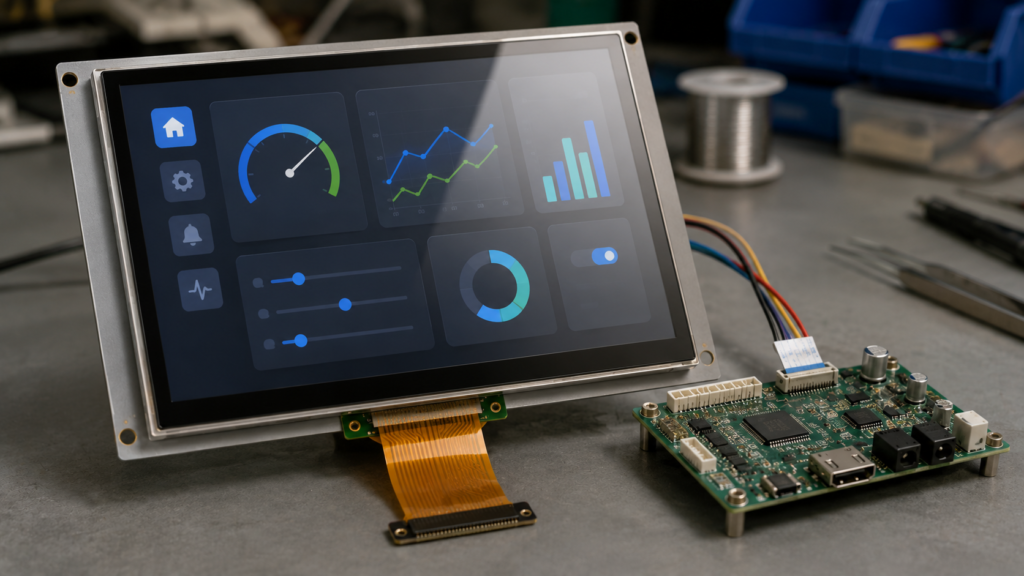
Brightness and power consumption are not determined by IPS alone. They depend on the LCD panel, backlight design, optical films, display size, brightness target, driving condition, and controller board configuration.
Since LCDs require a backlight, the backlight is often a major part of the power budget. A high-brightness IPS TFT LCD may require careful backlight and thermal design, especially in compact enclosures or battery-powered equipment.
For outdoor or semi-outdoor use, do not choose IPS only because of viewing angle. Also check brightness, cover glass reflection, anti-glare treatment, operating temperature, backlight current, enclosure heat, and power supply design.
Some datasheets or product listings use terms such as “TFT IPS,” “IPS TFT,” or “IPS LCD.” These terms usually mean that the display is a TFT LCD module using IPS panel technology.
For sourcing and engineering review, the label is only the starting point. Buyers should still confirm:
A short product label cannot replace a full specification review.
| Project Requirement | Recommended Direction | Reason |
|---|---|---|
| Wide side viewing required | IPS TFT LCD | Better viewing stability from different angles |
| Simple front-facing status display | TN or standard TFT LCD may be enough | Cost and simplicity may matter more than wide viewing |
| Touchscreen control panel | IPS TFT LCD is often preferred | Users may interact from different positions |
| Color-sensitive UI | IPS TFT LCD | More stable color appearance than many TN options |
| Strict cost target | Compare TN, IPS, and VA options | IPS may not be necessary if viewing angle is controlled |
| Outdoor or high-brightness use | Review backlight and optical structure | Panel type alone does not determine sunlight readability |
| Controller-board-based product | Confirm LCD and controller compatibility | Interface, timing, firmware, and backlight must match |
One common mistake is assuming that IPS and TFT are opposite technologies. They are not. IPS can be part of a TFT LCD module.
Another mistake is assuming that all TFT LCDs have poor viewing angles. This is not accurate. TFT LCD is a broad category. IPS TFT LCD panels are specifically used to improve viewing behavior compared with many TN panels.
A third mistake is assuming that IPS automatically solves every display problem. IPS improves viewing angle and color stability, but it does not automatically guarantee outdoor readability, low power consumption, touch reliability, wide temperature performance, or controller board compatibility.
A fourth mistake is choosing a panel only by viewing angle. Display selection should also include size, resolution, brightness, interface, backlight, touch, mechanical fit, firmware, operating environment, and supply considerations.
RJY Display supports TFT LCD modules, controller boards, and custom display solution discussions for engineering-driven projects. IPS TFT LCD can be reviewed when a project needs wider viewing behavior, touch interaction, graphical UI, or a display installed in a multi-angle viewing environment.
For custom projects, the practical path is usually to start from an existing display module and adjust related parts around it, such as cover glass, backlight, touchscreen, FPC, interface, controller board, firmware, or mechanical structure coordination.
If your project requires IPS TFT LCD, TN TFT LCD, touch display, high-brightness display, controller board matching, or custom display support, prepare your display size, resolution, interface, brightness requirement, touch requirement, operating environment, and expected demand before inquiry.
Send Your IPS TFT LCD Requirements
The difference between IPS and TFT LCD is not a difference between two competing display technologies. TFT describes the active-matrix transistor structure used to control pixels. IPS describes a liquid crystal panel mode that improves viewing angle and color stability.
An IPS display used in modern LCD modules is usually an IPS TFT LCD. The real comparison is usually IPS TFT LCD vs TN TFT LCD or VA TFT LCD.
IPS TFT LCD is often a strong choice for industrial HMIs, smart home panels, touch displays, equipment interfaces, and products viewed from multiple angles. TN or other TFT LCD options may still be suitable for simple, single-view, or cost-sensitive applications.
The correct display decision should be based on the complete product requirements: display size, resolution, viewing angle, brightness, interface, touch, cover glass, controller board, firmware, mechanical fit, operating environment, and production plan.
TFT LCD is an active-matrix LCD technology that uses thin-film transistors to control pixels. IPS is a type of LCD panel technology used to improve viewing angle and color stability. Most IPS LCD modules are also TFT LCDs.
This question is not technically precise because IPS is usually a type of TFT LCD. IPS TFT LCD is often better than TN TFT LCD for viewing angle and color stability, but the right choice depends on the application.
No. TFT describes the pixel control structure. IPS describes the liquid crystal alignment method. A display can be both IPS and TFT.
IPS TFT usually means a TFT LCD module that uses IPS panel technology. It combines TFT active-matrix pixel control with IPS viewing-angle performance.
IPS TFT LCD is often suitable for industrial HMI applications where users may view the screen from different angles or interact with a touch interface. The final choice should also consider brightness, touch type, interface, controller board, and operating environment.
Yes. IPS LCD is still an LCD technology, so it normally needs a backlight to make the image visible.
TN TFT LCD may be considered when the display is viewed mainly from the front, the UI is simple, and cost control is more important than wide viewing angle or color stability.
Choose based on viewing angle, contrast, color requirements, cost target, touch requirement, brightness, interface, controller board compatibility, operating environment, and mechanical design.
Share your display size, resolution, interface, brightness, touch requirement, controller board requirement, and application environment.
Continue reading related display technology guides and application references.
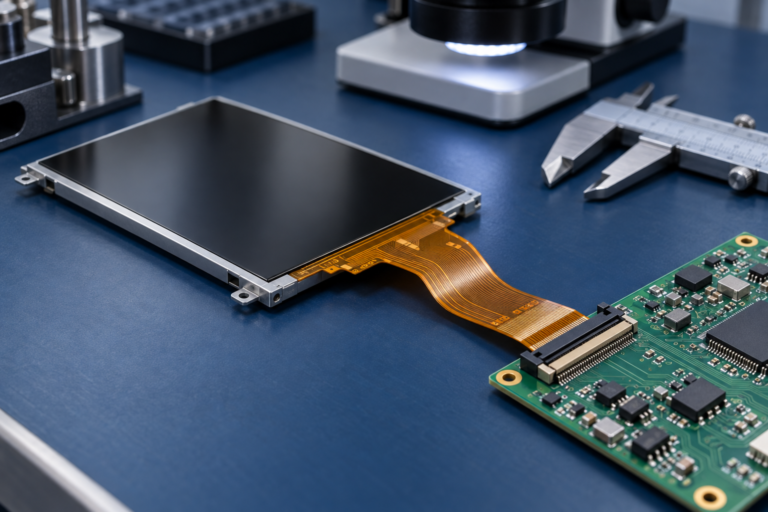
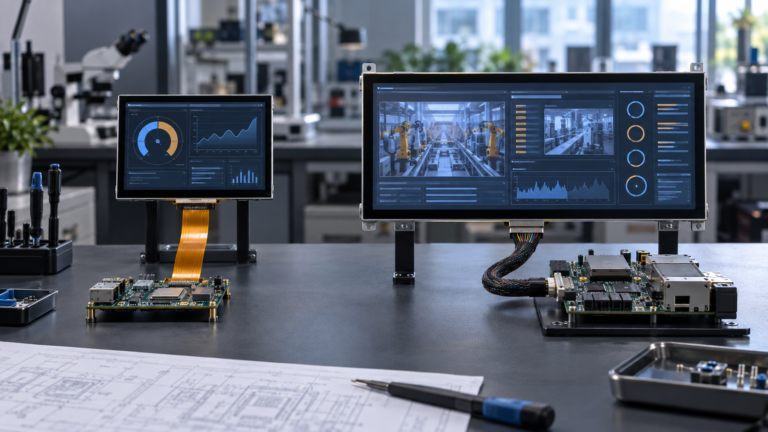
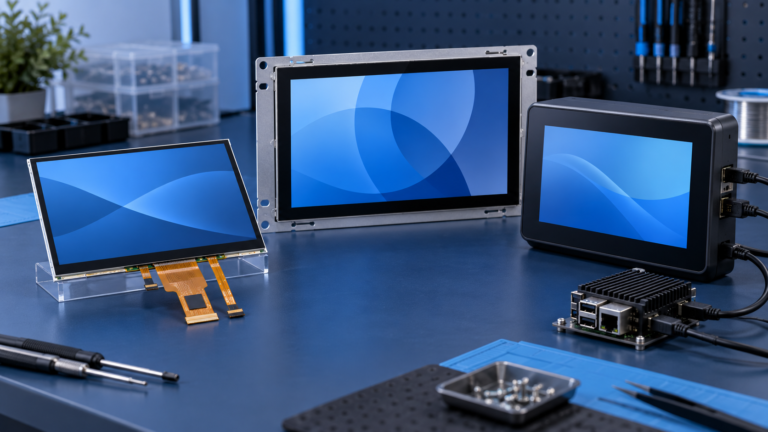
Explore product pages related to this article topic.
Talk to RJY’s engineering team for display matching, controller board review, and customization discussion.