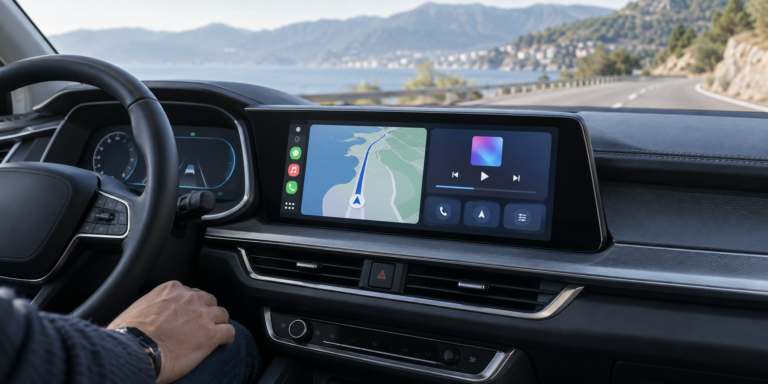
Facing a bottleneck in your Embedded Display Project?
Don’t let complex integration or supply chain issues slow your time-to-market. Book a free consultation with the RJY expert team for tailored design and manufacturing support.

Aviation equipment can place unusually strict demands on a display assembly. Whether the display is used in an aircraft-installed system, a cabin or service interface, a ground-support device, or a specialized aviation instrument, the LCD is not merely a screen. It must fit a defined enclosure, connect correctly with the host electronics, remain usable in its intended lighting conditions, and be evaluated within the equipment’s environmental and compliance program.
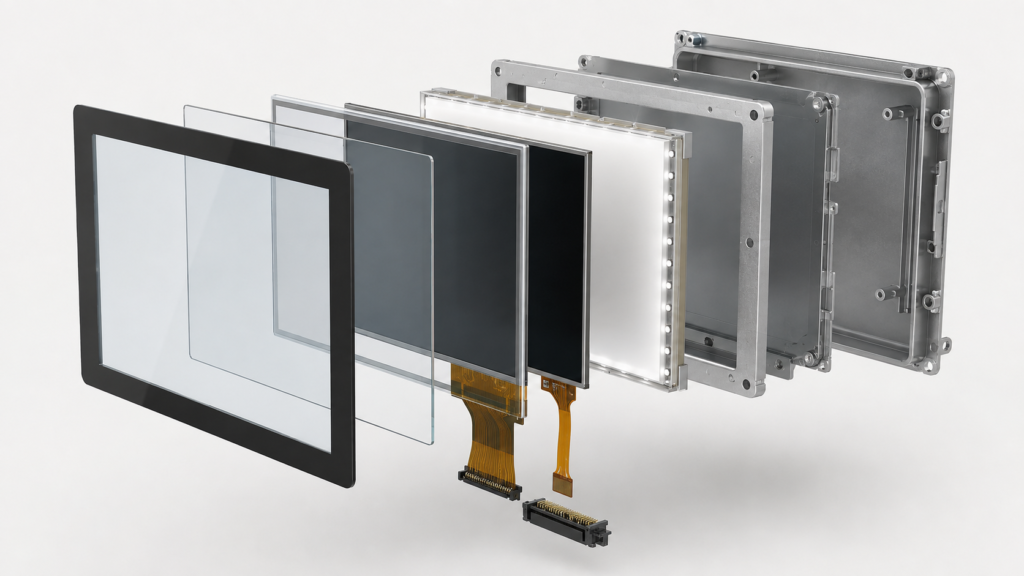
For this reason, a standard TFT LCD module is often only the starting point. A custom LCD approach—built around an existing module—can help engineering teams adapt the display stack, interface, mechanical integration, touch solution, backlight, and front cover to the real constraints of an aviation equipment project.
LCD assemblies appear across aviation-related equipment, but their function and integration risk vary significantly by application. Common examples include:
These use cases should not be treated as technically identical. A display intended for a ground-support terminal may have different environmental, mechanical, power, and approval requirements from a display intended for installation in an airborne system. The correct starting point is therefore the equipment’s intended installation location, operating profile, and applicable project requirements—not a generic claim that one LCD is suitable for every aviation application.
In many projects, the display module is only one part of a wider electronic assembly. The final LCD solution must be considered together with its mounting structure, connectors, cables, controller electronics, power design, and intended operating environment.
Temperature can affect LCD optical behavior, backlight performance, mechanical materials, adhesives, and the behavior of surrounding electronics. Engineers should define the installation location, expected operating range, storage conditions, heat sources, airflow, and power profile before selecting a module or finalizing a backlight configuration.
Aircraft and aviation equipment can expose an assembly to vibration, shock, and repeated mechanical loading. In practice, this makes bezel design, mounting-point placement, FPC routing, connector retention, display-frame support, and clearance management important engineering considerations. A module that works on a bench may still require an adapted mechanical stack before it can be evaluated in its intended equipment enclosure.
Ambient lighting can vary widely between an enclosed cabin, a flight deck, a hangar, and an outdoor service environment. Display readability is influenced by the complete optical stack, including panel characteristics, backlight selection, cover-glass design, touch layer, viewing angle, reflections, and the intended user interface. Brightness alone does not define readability, and no sunlight-readability or performance claim should be made without project-specific validation.
Display integration also involves signal integrity, grounding strategy, power stability, cable routing, controller-board compatibility, and the behavior of the display in the complete equipment assembly. The interface must be confirmed from the actual panel documentation, including resolution, timing, pin definition, backlight requirements, and touch requirements where applicable.
For airborne equipment, environmental and electromagnetic considerations are generally evaluated as part of the equipment’s defined compliance and qualification path. RTCA/DO-160 is widely referenced for environmental conditions and test procedures for airborne equipment, while the applicable categories and acceptance approach remain project- and installation-specific.[1]
Standard LCD modules can reduce initial development time when their size, interface, optical characteristics, and mechanics already fit the product. However, an aviation equipment project may have constraints that a standard module does not directly address:
These are integration questions rather than reasons to discard standard modules immediately. In many cases, the practical solution is to begin with a stable existing TFT LCD platform and adapt the surrounding display assembly to the project.
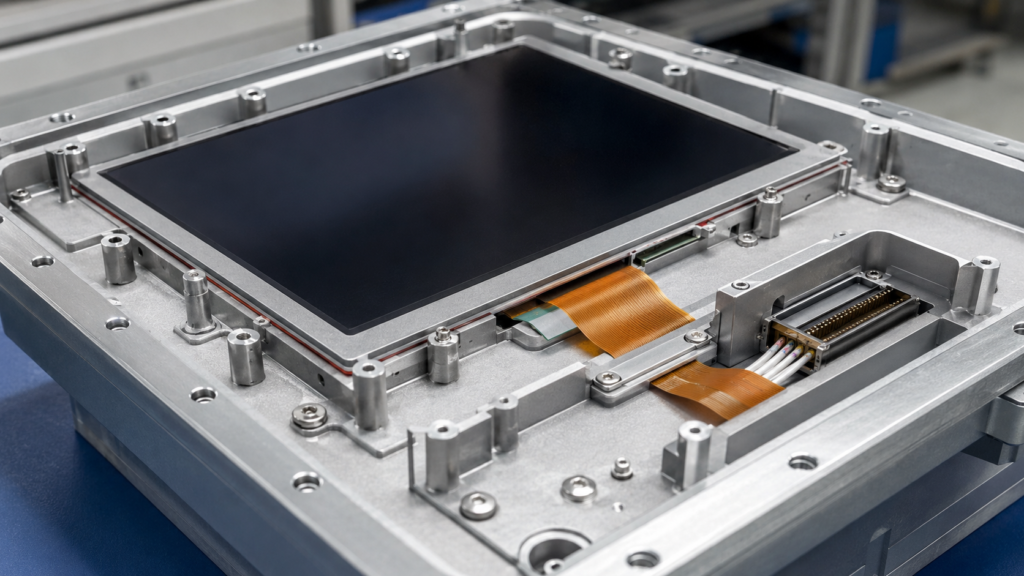
RJY Display supports project-specific customization based primarily on existing display modules. The final scope depends on the selected module and the technical information available for evaluation.
A custom cover glass can help align the display with the equipment’s front-panel opening and user-interface layout. The project may also require a particular edge treatment, printed border, mechanical outline, or integration approach with the surrounding bezel. Requirements should be reviewed with the enclosure drawing and display-stack information rather than assumed from a reference image alone.
Touch requirements depend on the user interaction model, cover-glass structure, controller interface, intended environment, and system software. The touch panel and touch controller should be evaluated as part of the complete display assembly, not as an isolated add-on.
Backlight customization may be considered when a project needs to evaluate visibility, power use, thermal behavior, or service life in its intended operating context. Optical decisions should account for cover glass, touch layers, bonding approach where applicable, and enclosure reflections. Specific brightness, lifetime, or optical performance values should only be stated after a selected configuration is defined and validated.
FPC routing and interface requirements can be important when internal space is limited or when the host electronics are located away from the display. For controller-board projects, compatibility must be reviewed against the actual panel model, resolution, interface, pin definition, backlight data, input signal, touch interface, firmware needs, and operating environment.
Mechanical coordination can help the LCD fit the target equipment more cleanly. This may include the relationship between the module, front glass, mounting points, support frame, rear clearance, connector access, and cable bend radius. RJY Display can discuss display-related housing and mechanical coordination; this should not be interpreted as a promise of complete enclosure design or manufacture.
A tailored display stack helps designers resolve front-panel geometry, mounting, cable access, and serviceability earlier in the project. This reduces the risk of designing an enclosure around assumptions that later conflict with the selected module.
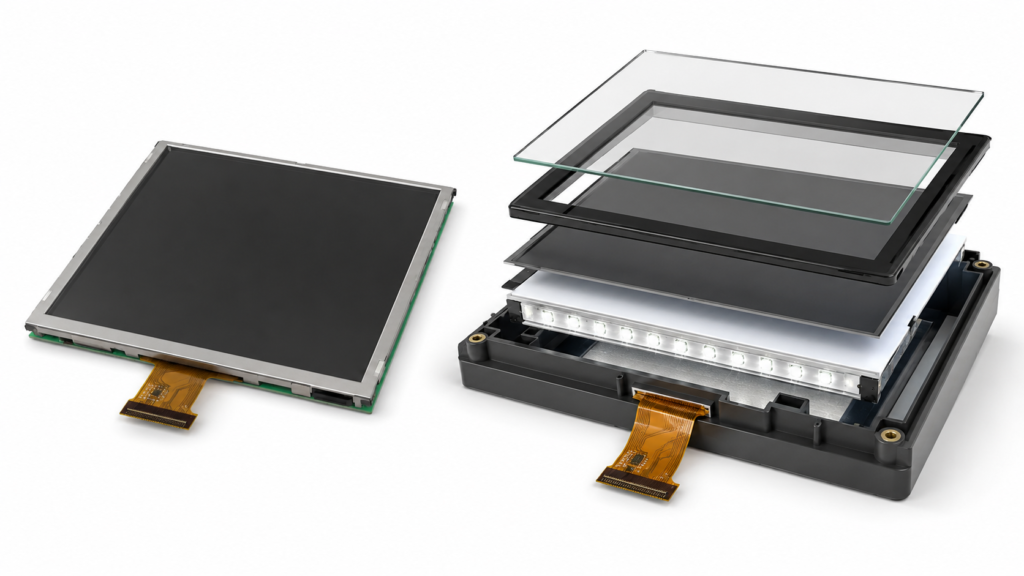
Instead of treating the LCD, touch panel, cover glass, and bezel as unrelated components, a project can evaluate them as one assembly. This is especially useful where the front surface, visible area, touch behavior, and mounting approach must work together.
For many B2B projects, adapting an existing LCD platform is a more practical route than attempting to develop an entirely new panel size. It can focus engineering work on the components that most affect system fit: cover glass, backlight, interface, FPC, touch, controller board, firmware, and mechanics.
Customization gives the project team a defined set of design inputs to review. Instead of asking whether a generic display is “aviation-ready,” the team can identify the exact assembly, installation conditions, interface dependencies, and verification tasks that apply to the product.
A customized display assembly should not be confused with a certified airborne product. Aircraft certification and approval depend on the aircraft, system function, installation, equipment classification, applicable regulations, development assurance activities, environmental test evidence, and the responsible approval pathway.
For example, the FAA describes development-assurance guidance for airborne electronic hardware in the context of type certification or Technical Standard Order authorization, including the need for defined processes and documented objectives where applicable.[2] The display supplier’s role is to provide accurate configuration information and support the evaluation of the display assembly against the requirements defined by the customer’s program.
Before describing a display as suitable for a specific aviation installation, the project should confirm the exact test categories, installation conditions, documentation requirements, and approval responsibilities with the appropriate engineering and certification stakeholders.
A useful technical review begins with complete project inputs. Please provide:
RJY Display can help engineering teams evaluate a custom TFT LCD assembly based on an existing display module. Share your application, drawings, display reference, interface information, and environmental requirements so the display, touch, backlight, FPC, controller board, and mechanical integration scope can be assessed before a configuration is proposed.
Possibly, but suitability depends on the intended installation, environmental requirements, mechanical integration, interface, and project verification path. A standard module should be evaluated against the actual equipment requirements rather than assumed to fit every aviation application.
Customization can help align an existing LCD module with the project’s front panel, cover glass, touch solution, backlight, FPC routing, controller-board needs, and mechanical installation constraints.
RJY Display focuses on customization based on existing display modules. Support may include cover glass, backlight, touchscreen, interface, FPC, controller board, firmware, and mechanical coordination. Completely new panel-size development should not be assumed.
No. RTCA/DO-160 categories and test requirements are defined for the specific equipment and installation context. A custom display assembly must be evaluated within the customer’s applicable verification and compliance program.
Please provide the LCD panel model, resolution, interface, pin definition or datasheet, backlight information, touch requirements, input source, firmware or operating-system needs, and application environment. Compatibility should be confirmed after technical review.
Share your display size, resolution, interface, brightness, touch requirement, controller board requirement, and application environment.
Continue reading related display technology guides and application references.
Talk to RJY’s engineering team for display matching, controller board review, and customization discussion.