Facing a bottleneck in your Embedded Display Project?
Don’t let complex integration or supply chain issues slow your time-to-market. Book a free consultation with the RJY expert team for tailored design and manufacturing support.

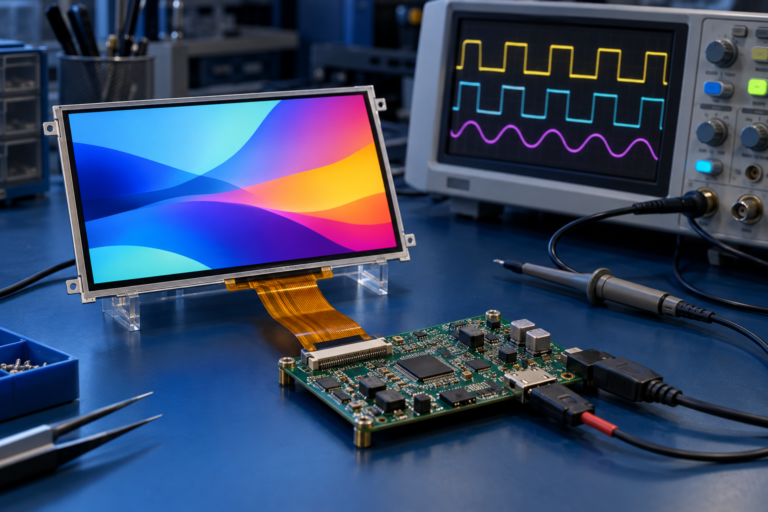
Powering a TFT LCD correctly isn’t just about plugging it into a battery. Between logic circuits, backlights, and sometimes touch sensors, there are multiple voltage rails and sequencing requirements to meet. Get this wrong, and you could see flicker, false colors, or even damage your display. This guide explains the essentials with clarity—and without guesswork.
In embedded systems and custom hardware, the display is typically the most sensitive component in the power tree. Driving a thin-film transistor (TFT) liquid crystal display involves more than simply connecting the battery to the VCC pin. Multiple power domains exist between logic gates, LED strings, and liquid crystal bias rails, each requiring specific voltages and strict timing sequences.
Failure to adhere to these parameters results in “ghosting,” flickering, or even permanent “gate lock-up” damage to the silicon backplane. Therefore, understanding how to properly power up the display is an essential task for both engineers and sales personnel.
A modern TFT module is essentially three different devices sharing one piece of glass. Each has its own electrical profile:
Liquid crystals are susceptible to DC polarization. If you apply data signals before the logic is stable, or leave the bias rails on after the logic is killed, you can cause permanent “burn-in.”
The Standard Turn-On Sequence:
RST pin high.The Shutdown Sequence: Reverse the order. Turn the backlight off first, then send the “Sleep” command, then kill VCC.
For a standard 2.8″ SPI display, the logic can be pulled from the 3.3V regulator of the MCU. However, the backlight should be powered via a BJT or MOSFET (like the 2N7002) connected to a PWM-capable pin for brightness control.
Warning: Attempting to power a 100mA backlight directly from an MCU pin will eventually brown out the processor or fry the GPIO.
When running off a Li-Po battery (3.7V–4.2V), you need two paths:
Q: Why is my TFT screen white even though it’s powered?
A: A “White Screen” usually means the backlight is on, but the logic isn’t initialized. Check your $V_{CC}$ levels and ensure your software reset sequence matches the datasheet.
Q: Can I use a current-limiting resistor for the backlight?
A: For small displays (under 2.4″), a small resistor (e.g., 10–22 $\Omega$) is acceptable for 3.3V power. For anything larger, you must use a constant-current driver to prevent thermal runaway and brightness fluctuations as the LEDs heat up.
Q: My display flickers when the SD card is reading. Why?
A: Backlights and SD cards are both “bursty” power consumers. Your 3.3V rail is likely sagging during the SD read. Use a larger bulk capacitor (100µF+) on the power rail or use separate regulators.
Newhaven Display: TFT LCD Support and Knowledge Base
DisplayMate: Display Technology Comparisons
Texas Instruments: TPS65150 Datasheet (TFT Power Solutions)
STMicroelectronics: AN4861: LCD-TFT Display Controller Application Note
Share your display size, resolution, interface, brightness, touch requirement, controller board requirement, and application environment.
Continue reading related display technology guides and application references.
Explore product pages related to this article topic.
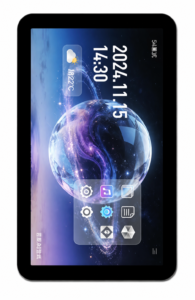
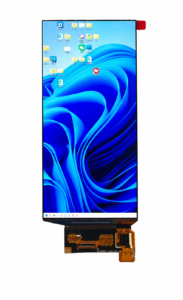

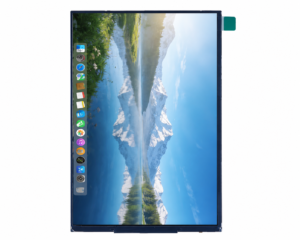
Talk to RJY’s engineering team for display matching, controller board review, and customization discussion.