Facing a bottleneck in your Embedded Display Project?
Don’t let complex integration or supply chain issues slow your time-to-market. Book a free consultation with the RJY expert team for tailored design and manufacturing support.



The world’s leading display manufacturers possess enormous production capacity, advanced process technology, extensive patent portfolios, and access to major consumer-electronics markets. For televisions, smartphones, laptops, vehicles, and other high-volume products, their scale is a decisive advantage. Yet that advantage does…
The world’s leading display manufacturers possess enormous production capacity, advanced process technology, extensive patent portfolios, and access to major consumer-electronics markets. For televisions, smartphones, laptops, vehicles, and other high-volume products, their scale is a decisive advantage. Yet that advantage does…

Trying to save money on digital signage hardware does not have to mean choosing the lowest-priced LCD, processor or enclosure. In many projects, the largest avoidable costs come from buying specifications the application cannot use, combining incompatible components or discovering…
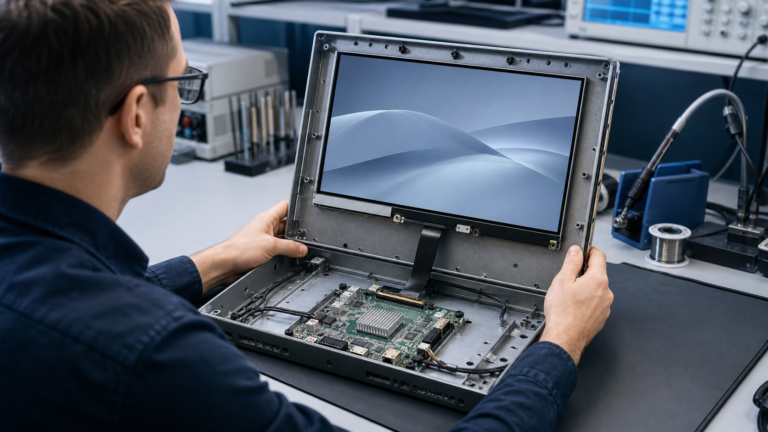
Embedded DisplayPort, commonly abbreviated as eDP, is widely used between embedded computing platforms and internal flat-panel displays. However, identifying an eDP connector on both a host board and an LCD datasheet does not establish compatibility. A working design depends on…
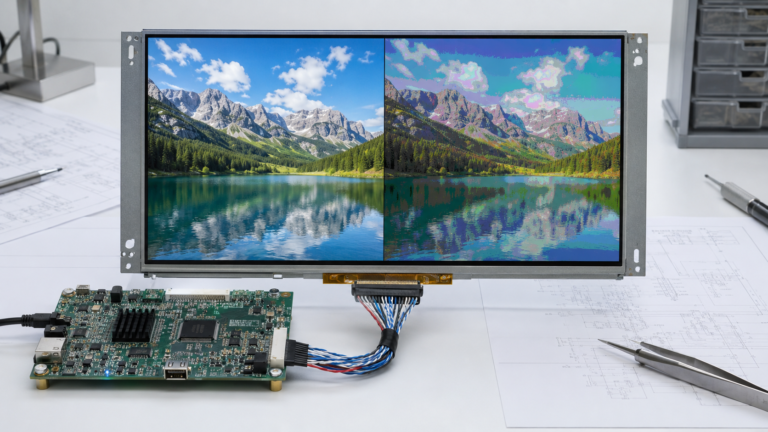
An LVDS TFT LCD can power up, lock to the incoming signal, and show a stable image while still rendering colors incorrectly. When resolution and synchronization look correct but gradients are posterized, dark tones are crushed, or colors appear unnaturally…
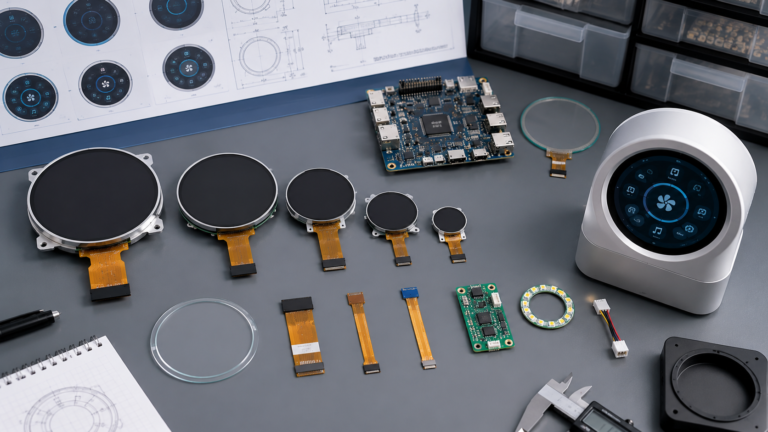
A round LCD display can support a product architecture that would be difficult to achieve with a conventional rectangular screen. Circular control panels, instrument-style interfaces, rotary appliances, vehicle-related equipment, smart-home terminals, and specialized HMIs can all benefit from a display…
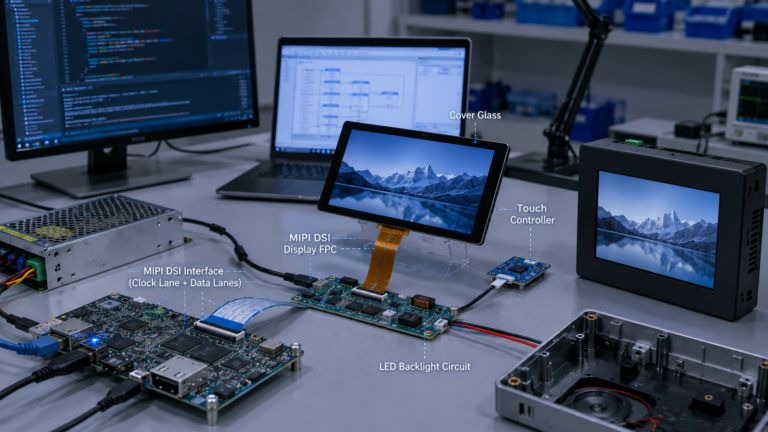
A custom MIPI TFT LCD display project is not completed by selecting a panel with “MIPI” in its interface field. The display module and host must agree on the DSI implementation, lane configuration, native timing, pixel format, initialization commands, power…
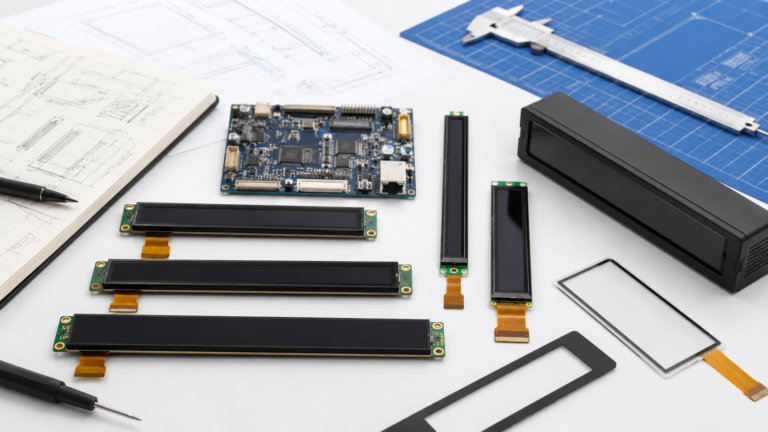
A bar LCD display can place status information, controls, navigation, or equipment data inside a space that cannot accommodate a conventional rectangular screen. Its unusual shape, however, changes how the display must be selected and integrated. Diagonal size alone is…
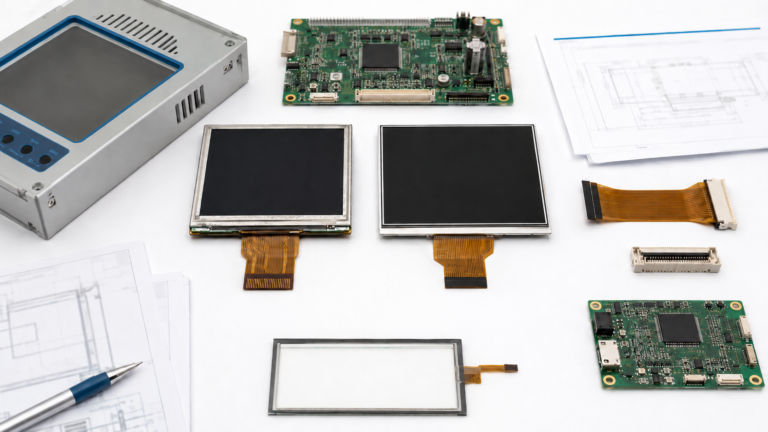
A discontinued TFT LCD can create a disproportionate problem for an otherwise stable product. The equipment may still be in production, installed in the field, or expected to remain serviceable for years, yet the original display module is no longer…