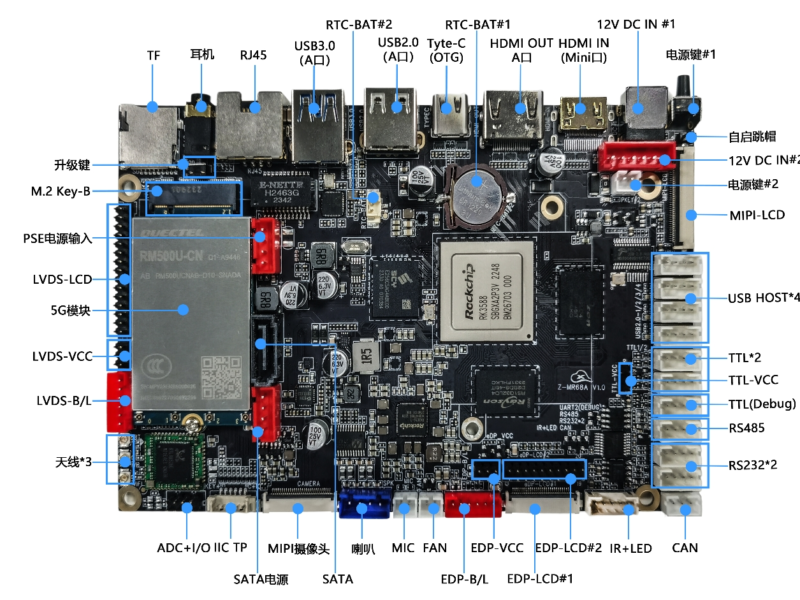
Produktübersicht
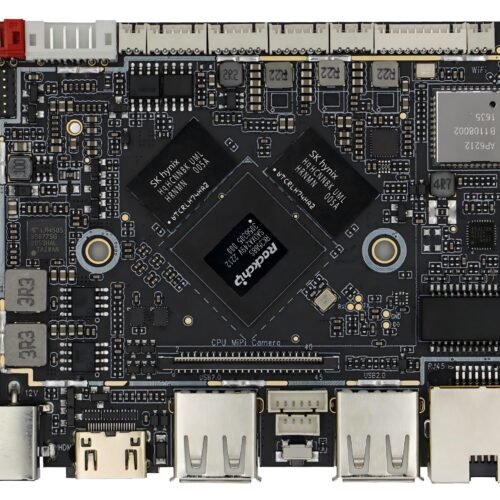
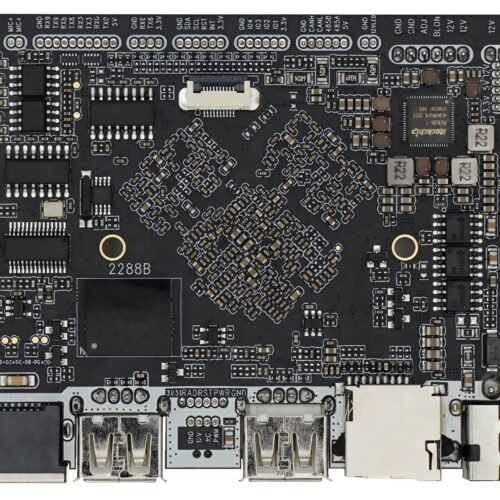
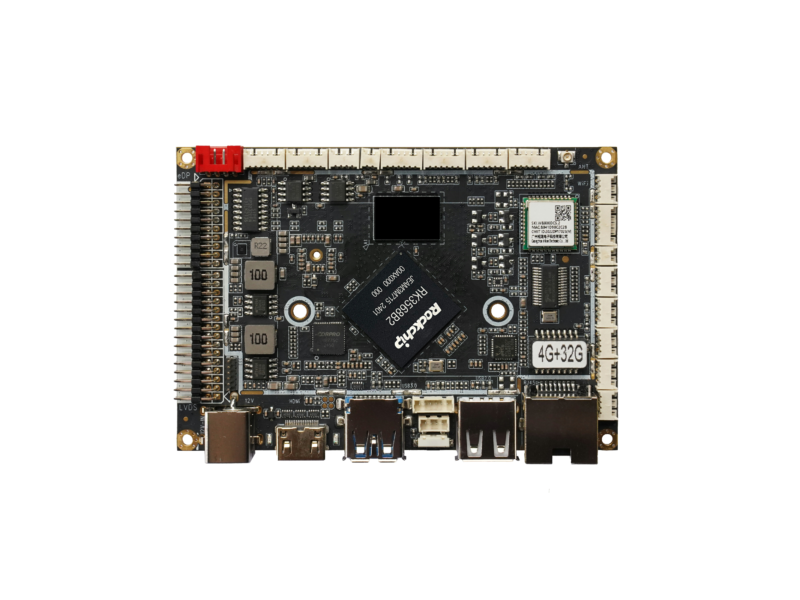
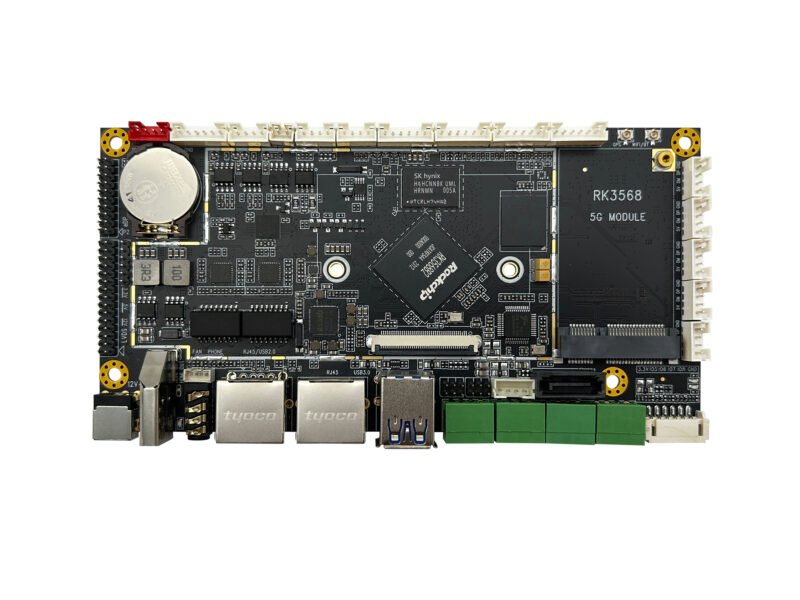
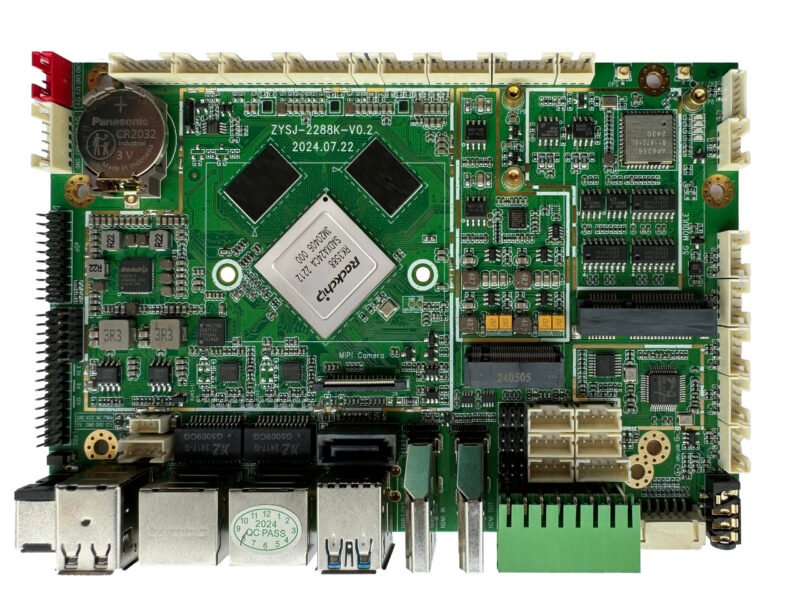
Die RJY-2288B ist ein Hochleistungs-Mainboard, angetrieben von Rockchips nächster Generation des Flaggschiff- RK3588S AIoT-Prozessor, unterstützt Android 12.0, Linux, Ubuntu 20.04, und andere Betriebssysteme. Der RK3588S basiert auf 8nm LP-Prozesstechnologie und verfügt über einen Octa-Core 64-Bit-CPU mit einem Cortex-A76 + A55-Architektur, erreicht eine maximale Taktfrequenz von 2,4 GHz. Er bietet außergewöhnliche Allzweck-Rechenleistung.
Die GPU ist eine hochwertige Quad-Core Mali-G610, und die CPU integriert eine AI Neural Processing Unit (NPU) , die IN4 / IN8 / INT16 Mixed-Precision-Berechnungen, erreicht bis zu 6,0 TOPS. Die Plattform unterstützt mehrere KI-Entwicklungswerkzeuge und Schnittstellen, ermöglicht nahtlose Integration mit Frameworks wie TensorFlow, Caffe, MxNet, PyTorch, und bietet APIs einschließlich Android NN API, RKNN plattformübergreifende API und TensorFlow-Entwicklungsschnittstellen.
Dieses Mainboard unterstützt Multi-Screen-Unabhängigdarstellung, LVDS 1080P-Ausgabe, eDP- und MIPI-Displayschnittstellenund HDMI 8K-Ausgabe. Sie bietet außerdem eine umfangreiche Palette an Schnittstellen und Funktionen, darunter Gigabit-Ethernet, Wi-Fi/Bluetooth, USB-Erweiterung, Gravitationssensor, CAN, RS232/RS485, I/O-Erweiterung, Aufhelllicht, I2C-Erweiterung, MIPI-Kameraeingang und Infrarot-Fernbedienung.
Mit seinem leistungsstarken Octa-Core-KI-Prozessor und umfangreichen Konnektivitätsoptionen ist der ZYSJ-2288B ideal für Anwendungen in KI-Robotik, Cloud-Servern, intelligenten NVRs, intelligenten Cockpits, ARM-PCs, Gesichtserkennungszahlgeräten, Sicherheit, Medizin, Verkehr, Finanzen, Industrieautomatisierung, intelligenter Bildung und intelligentem Einzelhandel. Die Kombination aus Hardware-Plattformisierung und und ermöglicht ein optimales Mensch-Maschine-Interaktionserlebnis und nahtlose Integration mit vernetzten Geräten.
Technische Spezifikationen
| Kategorie | Spezifikation |
|---|
| Betriebssystem | Android 12.0 / Linux / Ubuntu 20.04 |
| Prozessor (CPU) | Rockchip RK3588S (8nm LPP) Octa-Core 64-Bit CPU: 4 × Cortex-A76 + 4 × Cortex-A55, bis zu 2,4 GHz |
| Grafik (GPU) | Mali-G610 MP4 (Quad-Core) Unterstützt OpenGL ES 3.2, OpenVG 1.1, OpenCL 2.2, 450 GFLOPS |
| Neuronales Netzwerk-Prozessor (NPU) | Unterstützt IN4 / IN8 / INT16 / FP16 Berechnung Bis zu 6,0 TOPS Kompatibel mit Caffe, MxNet, TensorFlow, TFLite, ONNX, Darknet Bietet KI-Entwicklungswerkzeuge und schnelle Modellkonvertierung |
| Speicher (RAM) | LPDDR4 4GB (wahlweise 8GB / 16GB / 32GB) |
| Lagerung | eMMC 32GB (wahlweise 64GB / 128GB / 256GB) TF-Kartenerweiterung (wahlweise) |
| Netzwerk | 1 × Ethernet 10/100/1000 Mbps Wi-Fi 2,4 GHz 802.11b/g/n (5 GHz wahlweise) Bluetooth V2.1+EDR / 3.0 / 3.0+HS / 4.1 / 4.2 / BLE |
| Display & Video | 1 × eDP 1.3 (4 Lanes, 5,4 Gbps, 3,3V/5V) 1 × LVDS (einfach/dual, 6/8-Bit, 1080P60, 3,3V/5V/12V) 1 × HDMI 2.1 (8K60Hz, HDMI/eDP wählbar) 1 × MIPI (unterstützt 5,7 Gbps) Unterstützt mehrfache unabhängige Bildschirmanzeige Onboard-Hintergrundbeleuchtungssteuerung 12V |
| Audio | 1 × Lautsprecherausgang (2 × 18W, 4Ω) 1 × Mikrofoneingang |
| Kamera | 2 × MIPI-Kameraeingang (bis zu 48 MP, wahlweise) Unterstützt USB-Kameras (wahlweise) |
| RTC | Externe RTC-Batterie, unterstützt zeitgesteuertes Ein-/Ausschalten |
| USB-Schnittstellen | 4 × USB 2.0 HOST 1 × CPU USB 2.0 1 × USB 2.0 OTG |
| Infrarot | 1 × IR-Empfänger, unterstützt Fernbedienung |
| LEDs | 1 × Stromversorgungs-LED (rot) 1 × System-LED (blau, blinkend) |
| Tasten | 1 × Reset 1 × Power 1 × Upgrade |
| Serielle Schnittstellen | 4 × RS232 1 × UART TTL 1 × RS485 |
| I/O & Erweiterung | 4 × GPIO (10-polig) 1 × CAN 1 × I2C 1 × AD-Schnittstelle Lüfteranschluss unterstützt 5V/12V |
| Stromversorgung | AC 100–240 V, 50–60 Hz Eingang DC 12V / 5,5 mm innen 2,1 mm, 2–5A Ausgang Überspannung <18V, Welligkeit <100 mV Unterstützt automatisches Einschalten oder Tastenschaltung |
| Betriebsbedingungen | Temperatur: -10°C ~ 70°C Lagerung: -20°C ~ 70°C Luftfeuchtigkeit: 10%–80% |
| Platinenabmessungen | 100 × 70 × 11 mm |
| Multimedia | Unterstützt 8K60fps H.265/H.264 Decodierung 8K30fps H.265/H.264 Codierung Gleichzeitige Codierung/Decodierung Bis zu 32 × 1080P30fps Decodierung, 16 × 1080P60fps Codierung |
| Sprache & Eingabe | Mehrsprachenunterstützung Standard-Android-Tastatur, optionale Drittanbieter-Tastaturen (Chinesisch/Koreanisch/Japanisch) Native Android mit Root-Zugang für individuelle Entwicklung |
| Systemverwaltung | Echtzeit-Fernüberwachung Automatische Wiederherstellung bei Systemabsturz 7×24h unbeaufsichtigter Betrieb Unterstützt OTA-Upgrades Wi-Fi Display-Unterstützung Software-Watchdog |