組込み表示プロジェクトでボトルネックに直面していませんか?
複雑な統合作業やサプライチェーンの問題が市場投入までの時間を遅らせないようにしましょう。RJYの専門家チームによる無料コンサルテーションを予約し、お客様に合わせた設計・製造サポートをご利用ください。.

カスタムTFT液晶ディスプレイを構築する際には、医療用モニター、ウェアラブルデバイス、またはファクトリーオートメーション向けであるかを問わず、表示画素、解像度、アスペクト比などの基本概念を理解することが極めて重要です。これらの要素は、画像の明瞭さ、コンテンツの互換性、バッテリー効率、および全体的なユーザーエクスペリエンスに直接影響を与えます。
ピクセル、解像度、ピクセル密度、アスペクト比は基本的なディスプレイ用語ですが、LCDモジュール選定時には誤解されることがよくあります。高解像度の画面が自動的に最良の選択とは限りません。同じ解像度のディスプレイでも、小型画面では鮮明に見え、大型画面では鮮明さが低下することがあります。アスペクト比が適切でないディスプレイは、ユーザーインターフェースが引き伸ばされたり、窮屈に感じられたり、製品筐体との整合性が悪くなったりする可能性があります。.
ピクセル(画素)とは、picture elementの略であり、デジタルディスプレイ上でアドレス指定可能な最小の画像単位です。数百万のピクセルが画面上に配置されることで、テキスト、アイコン、画像、動画、ユーザーインターフェースが形成されます。.
カラーLCDでは、各ピクセルは通常、赤、緑、青のサブピクセルで構成されています。これらのサブピクセルの輝度を制御することで、ディスプレイは異なる色を生成します。正確なピクセル構造は、パネル設計、カラーフィルター配置、駆動方式、およびディスプレイ技術に依存します。.
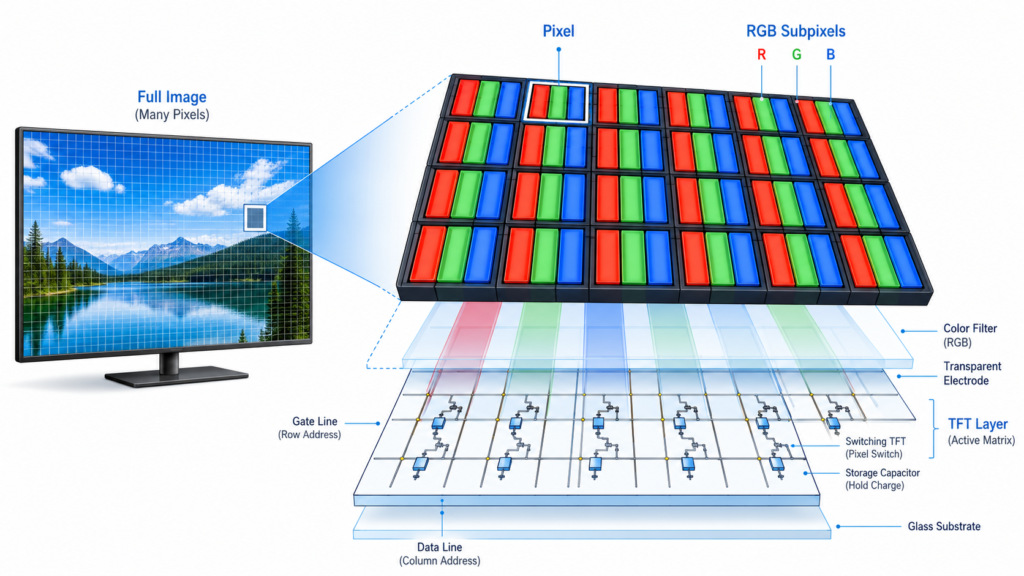
TFT LCDでは、各ピクセルは薄膜トランジスタ回路によって制御されます。このアクティブマトリクス制御により、従来のパッシブマトリクスLCD構造よりも精密にピクセルをアドレス指定できます。.
ピクセルは、画面が表示できる視覚情報の量に影響を与えます。ピクセル数が多いほど詳細表示が可能になりますが、その結果は画面サイズ、視聴距離、光学品質、UI設計、およびディスプレイ駆動性能にも依存します。.
例えば、800×480ピクセルは、シンプルなボタンとステータスインジケータを備えた小型産業用制御パネルには十分な場合があります。より大型のHMI、スマート端末、または画像ベースのインターフェースでは、より多くのデータ、より鮮明なアイコン、または細かいテキストを表示するために、より高い解像度が必要になる場合があります。.
ピクセルが重要な理由は、以下に影響を与えるためです:
ディスプレイはピクセル数のみで選定すべきではありません。重要なのは、ピクセル構造、解像度、物理サイズ、インターフェース、および視聴距離が製品アプリケーションに適合するかどうかです。.
ディスプレイ解像度は、画面上に水平および垂直に配置されたピクセル数を表します。通常は幅×高さで表記されます。.
例えば:
総ピクセル数は、幅と高さを乗算して計算できます。1920×1080のディスプレイは2,073,600ピクセルを持ち、これは一般にフルHDと呼ばれます。.

より高い解像度はより詳細な表示を可能にしますが、送信および処理しなければならないデータ量も増加させます。組み込みシステムでは、これはプロセッサ、メモリ、グラフィックス性能、インターフェース選定、ファームウェア構成、および電力予算に影響を与える可能性があります。.
| 決議 | 一般名称またはフォーマット | 最初の質問は単純です:Android制御基板はTFT LCDモジュールと同じ表示インターフェースをサポートしていますか? |
|---|---|---|
| 480 × 272 | WQVGAクラス | 小型制御パネル、基本HMIインターフェース、コンパクトな組み込みデバイス |
| 800 × 480 | WVGA | 産業用タッチパネル、スマートホームパネル、組み込み制御インターフェース |
| 1024 × 600 | WSVGA | 7インチクラスディスプレイ、HMI端末、機器インターフェース |
| 1280 × 720 | HD | マルチメディアインターフェース、スマート制御パネル、ダッシュボード型ディスプレイ |
| 1280 × 800 | WXGA | 産業用パネル、医療機器インターフェース、タブレット型組み込みディスプレイ |
| 1920 × 1080 | フルHD | 高精細インターフェース、画像処理システム、大型組み込みディスプレイ |
| 1080 × 1080 | 正方形フォーマット | 正方形ディスプレイ、ダッシュボード、カスタムUIレイアウト、特殊組み込み製品 |
| 1920×720または類似 | バーまたはストレッチフォーマット | バーLCDディスプレイ、サイネージ、車両関連インターフェース、パノラマ制御パネル |
最適な解像度はアプリケーションに依存します。シンプルな制御インターフェースにはフルHDは不要な場合があります。画像、地図、チャート、カメラ映像、または高密度データを表示する製品には、より高解像度のパネルが必要になる場合があります。.
解像度は画面のピクセル数を示します。画面サイズはディスプレイの物理的なサイズを示し、通常は対角線の長さで測定されます。これらは関連していますが、同じではありません。.
例えば、5インチディスプレイと15.6インチディスプレイは、どちらも1920×1080の解像度を持つことができます。小型ディスプレイは1インチあたりにより多くのピクセルが詰め込まれるため、近距離での視聴では通常より鮮明に見えます。大型ディスプレイは同じ数のピクセルをより広い領域に広げるため、各ピクセルは物理的に大きくなります。.
このため、エンジニアは解像度を物理サイズおよび視聴距離と併せて確認する必要があります。.
ピクセル密度は、ディスプレイ領域内にピクセルがどれだけ密に配置されているかを表します。一般的にはPPI(1インチあたりのピクセル数)で測定されます。.
基本式は次のとおりです:
PPI = 対角ピクセル数 / 対角画面サイズ(インチ)
対角画素数は、水平解像度と垂直解像度から算出することができます。
対角画素数 = √(水平画素² + 垂直画素²)
例えば、1920 × 1080のディスプレイは約2203画素の対角画素数を持ちます。ディスプレイサイズが10.1インチの場合、画素密度は約218 PPIとなります。.
画素密度は知覚されるシャープネスに影響を与えるため重要です。高PPIのディスプレイは、特に短い視距離において、テキスト、アイコン、曲線、画像をより滑らかに見せることができます。ただし、非常に高い画素密度は、より多くのグラフィック処理能力と高いインターフェース帯域幅を必要とする場合もあります。.
ディスプレイの対角サイズを推定したり、幅、高さ、アスペクト比を比較したい場合は、RJY Displayの計算機をクイックリファレンスツールとしてご利用いただけます。.
アスペクト比とは、ディスプレイの幅と高さの比例関係です。通常は「幅:高さ」の形式で表記されます。.
例えば:
アスペクト比は、コンテンツが画面にどのように収まるかに影響します。UIレイアウト、動画再生、ダッシュボード設計、ボタン配置、チャート表示、カメラフィードレイアウト、エンクロージャ設計に影響を及ぼします。.

コンテンツとアスペクト比の不一致は、レターボックス表示、トリミング、引き伸ばし、または画面領域の非効率的な使用を引き起こす可能性があります。組み込み製品の場合、誤ったアスペクト比はフロントパネルのバランスを崩したり、タッチコントロールの操作性を低下させたりする可能性もあります。.
| アスペクト比 | 代表的なディスプレイスタイル | 一般的な用途 |
|---|---|---|
| 16:9 | ワイドスクリーン | マルチメディアインターフェース、スマートコントロールパネル、車載ディスプレイ、最新HMIレイアウト |
| 16:10 | やや縦長のワイドスクリーン | タブレット型インターフェース、機器パネル、生産性重視のレイアウト |
| 4:3 | 従来の長方形ディスプレイ | レガシー機器、産業用制御盤、コンパクトなデータインターフェース |
| 1:1 | 正方形ディスプレイ | 正方形ダッシュボード、特殊UIレイアウト、コンパクトな組み込み製品 |
| バーフォーマット | ウルトラワイドまたは横長ディスプレイ | デジタルサイネージ、棚用ディスプレイ、車両関連ディスプレイ、狭い制御エリア |
| 円形ディスプレイ | 円形表示領域 | ウェアラブル、スマートノブ、特殊ダッシュボード、カスタムデバイスインターフェース |
アスペクト比は製品設計プロセスの初期段階で選択されるべきです。後からアスペクト比を変更すると、UI、エンクロージャ、カバーガラス、タッチパネル、ディスプレイモジュールに大幅な変更が必要になる可能性があります。.
解像度とアスペクト比は関連しています。1920 × 1080の解像度を持つディスプレイは、1920を1080で割ると16:9に簡略化されるため、アスペクト比は16:9です。1080 × 1080の解像度を持つディスプレイは、幅と高さが等しいため、アスペクト比は1:1です。.
ただし、同じアスペクト比でも異なる解像度を持つことができます。例えば、800 × 450、1280 × 720、1920 × 1080はすべて16:9フォーマットですが、提供する詳細度は異なります。.
これは、アスペクト比が画面の形状を定義する一方、解像度がその形状内の画素構造を定義することを意味します。.
| 決議 | アスペクト比 | 設計上の意味 |
|---|---|---|
| 800 × 480 | 5:3 | コンパクトなHMI向けの一般的な組み込みワイドスクリーンフォーマット |
| 1024 × 600 | 約17:10 | 7インチクラスのディスプレイでよく使用されるワイドスクリーンフォーマット |
| 1280 × 720 | 16:9 | マルチメディアおよび最新UIレイアウト向けのHDワイドスクリーンフォーマット |
| 1280 × 800 | 16:10 | データおよび制御インターフェース向けのやや縦長のレイアウト |
| 1920 × 1080 | 16:9 | 高精細インターフェース向けのフルHDフォーマット |
| 1080 × 1080 | 1:1 | 特殊UIおよびダッシュボード設計向けの正方形フォーマット |
画素、解像度、画素密度、アスペクト比は製品設計に直接影響します。これらは、表示できる情報量、画面の読みやすさ、UIの設計方法、およびホストシステムに対するディスプレイの要求負荷に影響を及ぼします。.
高解像度ディスプレイはシャープに見えるかもしれませんが、より高性能なプロセッサやコントローラボードを必要とする場合もあります。広いアスペクト比はダッシュボードや動画に適しているかもしれませんが、小さな正方形のエンクロージャには適合しない可能性があります。高い画素密度は近距離での読みやすさを向上させるかもしれませんが、数メートル離れて見るディスプレイには必要ない場合もあります。.
適切なディスプレイ選択は、画質、機械的適合性、電力予算、ソフトウェア性能、インターフェース互換性、およびコストのバランスです。.
画素密度は視距離と合わせて評価されるべきです。ハンドヘルドデバイス、ウェアラブルディスプレイ、または近距離で使用する医療機器インターフェースは、ユーザーが画面を短い距離から見るため、通常はより高いPPIの恩恵を受けます。.
壁掛け式の産業用パネル、サイネージディスプレイ、または機器モニターは、ユーザーが遠くから見るため、同じPPIを必要としない場合があります。その場合、極端に高い画素密度よりも、輝度、コントラスト、視野角、耐久性がより重要になることがあります。.
このため、低PPIのディスプレイが自動的に低品質であるとは限りません。視距離とアプリケーション要件が適切であれば、十分に適合する可能性があります。.
より高い解像度は、より多くの画素データをディスプレイに転送する必要があることを意味します。これはインターフェースの選択に影響します。小型SPIディスプレイはシンプルな低解像度グラフィックスには機能するかもしれませんが、より高解像度のTFT LCDモジュールは、システムアーキテクチャに応じて、RGB、LVDS、MIPI DSI、HDMI、eDPなどのインターフェースを必要とすることがよくあります。.
コントローラボードプロジェクトでは、解像度はボードがサポートする出力、タイミング設定、ファームウェア、およびLCDパネルの要件と一致する必要があります。不一致があると、映像が表示されない、映像が不安定、スケーリングが正しくない、または視覚性能が低下する可能性があります。.
高解像度ディスプレイを選択する前に、購入者はホストプロセッサ、コントローラボード、インターフェース、メモリ、およびソフトウェアスタックがそれを確実にサポートできるかを確認する必要があります。.
アスペクト比はユーザーインターフェース設計に大きな影響を与えます。16:9画面は、水平レイアウト、動画コンテンツ、ダッシュボード、最新タッチインターフェースに適しています。4:3画面は、従来の制御盤やデータ量の多いレイアウトに適している場合があります。正方形画面は、対称的なダッシュボード、スマートデバイス、特殊な組み込み製品に適しています。バーディスプレイは、製品が細長い表示領域を持つ場合に有用です。.
UI設計は、不適切なアスペクト比に無理に適合させるべきではありません。レイアウトに多くの垂直コントロールが含まれている場合、非常に広い画面はスペースを無駄にする可能性があります。製品に広いダッシュボードが必要な場合、細いまたは正方形の画面はコンテンツの視認性を制限する可能性があります。.
ディスプレイの形状は、製品の実際のユーザーワークフローに一致する必要があります。.
より高い解像度は、より多くの画素を駆動し、より多くの画像データを処理する必要があるため、消費電力を増加させる可能性があります。LCDシステムではバックライトが主要な電力消費源であることが多いですが、解像度はプロセッサのワークロード、メモリ帯域幅、グラフィックレンダリング、インターフェースアクティビティにも影響します。.
バッテリー駆動のデバイスでは、利用可能な最高解像度を選択することは実用的でない場合があります。バランスの取れた解像度は、電力需要とシステムコストを削減しながら、十分な視覚的明瞭さを提供できます。.
主電源で動作する産業機器の場合、消費電力の制約は少ないかもしれませんが、熱、信頼性、コントローラボードの互換性は依然として重要です。.
よくある間違いの一つは、より高い解像度が常に優れていると想定することです。より高い解像度は詳細を向上させることができますが、コスト、電力使用量、データ帯域幅、システムの複雑さも増加させる可能性があります。.
別の間違いは、画面サイズを考慮せずに解像度を比較することです。1280 × 800の解像度は、小型ディスプレイではシャープに見えても、はるかに大きなディスプレイではそれほどシャープに見えない場合があります。.
三つ目の間違いは、アスペクト比を無視することです。ディスプレイが十分な画素数を持っていても、その形状がUIやエンクロージャに適合しない場合、最終製品は設計が不十分に感じられる可能性があります。.
四つ目の間違いは、ディスプレイモジュール単体で画質が決まると想定することです。画質は、バックライト、パネルタイプ、視野角、コントラスト、カバーガラス、タッチスタック、インターフェース、コントローラボード、ソフトウェアレンダリングにも依存します。.
適切なLCDディスプレイを選択するには、製品の実際の使用事例から始めてください。ユーザーが何を見る必要があるか、画面からどの程度の距離にいるか、利用可能なスペースはどれくらいか、どのようなシステムがディスプレイを駆動するかを問いかけてください。.
シンプルな組み込みデバイスには、中程度の解像度で十分な場合があります。画像ベースのインターフェースには、より高い解像度が必要になる場合があります。ダッシュボードの場合、アスペクト比は画素数と同じくらい重要かもしれません。バッテリー駆動のデバイスでは、解像度を上げる前に消費電力とインターフェース帯域幅を確認する必要があります。.
最終選択の前に、以下の点を確認してください:
RJY Displayは、エンジニアリング主導のプロジェクト向けに、TFT LCDモジュール、コントローラボード、およびカスタムディスプレイソリューションの検討をサポートしています。ディスプレイサイズ、解像度、アスペクト比、インターフェース、タッチパネル、カバーガラス、バックライト、コントローラボード、およびファームウェア要件は、対象製品に基づいて一緒に検討することができます。.
多くのプロジェクトにおいて、最適な選択は必ずしも最高解像度ではありません。製品構造、ユーザーインターフェース、動作環境、開発コスト、生産計画に適合するディスプレイ構成こそが重要です。.
プロジェクトで標準TFT LCDモジュール、スクエアディスプレイ、ラウンドディスプレイ、バー型LCD、高輝度ディスプレイ、タッチディスプレイ、コントローラーボード、またはカスタムディスプレイソリューションが必要な場合は、お問い合わせ前にプロジェクト要件をご準備ください。.
ピクセルは、ディスプレイ上でアドレス指定可能な最小の画像単位です。解像度は、ディスプレイが水平および垂直方向に持つピクセル数を示します。ピクセル密度は、それらのピクセルが画面領域にどれだけ密に配置されているかを示します。アスペクト比は、ディスプレイの形状の比率を示します。.
これらの用語は相互に関連します。解像度は詳細度に影響します。ピクセル密度は知覚されるシャープネスに影響します。アスペクト比はレイアウトとコンテンツの適合性に影響します。画面サイズと視聴距離は、解像度が適切かどうかを決定します。インターフェースとコントローラーボードのサポートは、ディスプレイが正しく駆動できるかどうかを決定します。.
LCDディスプレイプロジェクトにおいて、適切な判断とは単に最高解像度を選択することではありません。より良いアプローチは、ピクセル、解像度、ピクセル密度、アスペクト比、輝度、タッチ、インターフェース、コントローラーボード、および機械設計を実際の製品用途に適合させることです。.
ピクセルは、ディスプレイ上でアドレス指定可能な最小の画像単位です。カラーLCDでは、各ピクセルは通常、赤、緑、青のサブピクセルで構成され、これらが連携して異なる色を生成します。.
LCDディスプレイの解像度は、画面上に水平および垂直に配置されたピクセル数です。例えば、1920×1080は、幅方向に1920ピクセル、高さ方向に1080ピクセルを意味します。.
解像度は画面上の総ピクセル配置です。ピクセル密度は、通常PPIで測定され、それらのピクセルが物理的な画面サイズにどれだけ密に配置されているかを示します。.
いいえ。より高い解像度は詳細度を向上させる可能性がありますが、コスト、消費電力、グラフィックス負荷、およびインターフェース帯域幅を増加させることもあります。適切な解像度は、画面サイズ、視聴距離、アプリケーション、およびシステム能力に依存します。.
アスペクト比は、ディスプレイの幅と高さの比例関係です。一般的な例としては、16:9、16:10、4:3、1:1、およびウルトラワイドフォーマットが挙げられます。.
アスペクト比は、UIレイアウト、コンテンツの適合性、タッチコントロールの配置、筐体設計、およびユーザーエクスペリエンスに影響します。適切でないアスペクト比のディスプレイは、伸縮、トリミング、スペースの無駄、または使い勝手の低下を引き起こす可能性があります。.
画面サイズ、視聴距離、UIの複雑さ、画像の詳細度、電力予算、プロセッサ能力、インターフェース帯域幅、およびコントローラーボードのサポートに基づいて解像度を選択してください。.
ディスプレイのカスタマイズは、利用可能なLCDモジュールプラットフォームとプロジェクト要件に依存します。多くのプロジェクトでは、タッチパネル、カバーガラス、バックライト、FPC、インターフェース、コントローラーボード、ファームウェア、および機械的調整を含む既存モジュールをベースにしたカスタマイズがより実用的です。.
ディスプレイサイズ、解像度、インターフェース、輝度、タッチ要件、コントローラーボード要件、およびアプリケーション環境を共有してください。.
関連するディスプレイ技術ガイドとアプリケーションリファレンスを引き続きお読みください。.
この記事のトピックに関連する製品ページをご覧ください。.
RJYのエンジニアリングチームにご相談いただき、ディスプレイマッチング、コントローラーボードの確認、およびカスタマイズについて話し合ってください。.