Facing a bottleneck in your Embedded Display Project?
Don’t let complex integration or supply chain issues slow your time-to-market. Book a free consultation with the RJY expert team for tailored design and manufacturing support.

Small touchscreen displays are widely used in embedded devices where space is limited but user interaction still matters. From smart home controllers and handheld instruments to industrial control panels, compact medical devices, charging equipment, and portable terminals, a small display can become the main interface between the user and the product.
For OEM product teams, choosing a small touchscreen display is not only a question of screen size. The display must fit the enclosure, support the user interface, match the processor or control board, deliver reliable touch performance, and remain suitable for production over the product lifecycle.
A display that works during early prototyping may still create problems later if the brightness is too low, the touch panel is not tuned for the operating environment, the interface does not match the system architecture, or the mechanical structure does not fit the final enclosure.
This guide explains the main small touchscreen display options for embedded devices and what OEM buyers, hardware engineers, and product managers should consider before starting a project.
A small touchscreen display is a compact display module that combines a visual display with touch input. In embedded devices, it is commonly used as the local user interface for configuration, monitoring, control, status display, and menu navigation.
Small touchscreen displays are usually based on TFT LCD technology, although the exact structure depends on the product requirements. A typical small touchscreen display module may include:
For embedded devices, small touchscreen displays are often selected in sizes such as 2.4 inches, 2.8 inches, 3.5 inches, 4.0 inches, 4.3 inches, 5.0 inches, and 7.0 inches. However, size alone does not determine whether a display is suitable. Interface, brightness, touch type, resolution, operating environment, enclosure design, and long-term availability are equally important.
In many embedded products, the display is one of the few components that users directly see and touch. This makes the display important for both product functionality and user perception.
A well-selected small touchscreen display can help:
However, a poor display choice can create serious design problems. If the screen is too small for the user interface, users may struggle to read information. If the touch panel is not reliable, the product may feel unstable. If the display is too dim, it may fail in real-world use. If the interface is wrong, engineers may need extra adapter boards or redesign work.
For OEM buyers, the best small touchscreen display is not always the smallest, brightest, or highest-resolution option. It is the option that fits the product’s actual use case, mechanical structure, electronic architecture, and production requirements.
Small touchscreen displays are available in many sizes. Each size range has different strengths and limitations.
| Display Size Range | Typical Use Cases | Buyer Considerations |
|---|---|---|
| 1.3–2.0 inches | Wearables, compact indicators, control knobs, small status displays | Limited UI space, suitable for simple icons and short information |
| 2.4–2.8 inches | Handheld devices, compact smart controls, small HMI panels | Good balance between compact size and basic touch interaction |
| 3.2–3.5 inches | Portable instruments, meters, access control devices, industrial handhelds | More usable interface space while still compact |
| 4.0–4.3 inches | Smart home panels, medical instruments, embedded controllers | Common choice for menu-based interfaces and compact control systems |
| 5.0 inches | Industrial terminals, equipment controllers, smart device interfaces | Better readability and UI flexibility |
| 7.0 inches | Compact HMI systems, control panels, dashboards, smart equipment | Larger UI area, but requires more enclosure space and system resources |
For products with very limited space, a smaller display may be necessary. For products that require menus, charts, icons, or frequent touch interaction, a slightly larger screen may improve usability.
OEM teams should evaluate display size together with UI layout, viewing distance, touch target size, enclosure constraints, and processor capability.
Small touchscreen displays can be divided by shape, touch technology, interface, brightness, and integration level. The right option depends on the product design and use environment.
Rectangular TFT touchscreen displays are the most common option for embedded devices. They are available in many sizes and can support a wide range of interfaces and resolutions.
They are suitable for:
Rectangular displays are usually easier to integrate than special-shaped displays because they fit common UI layouts and enclosure structures. They are often the first choice when the product does not require a unique visual identity or special form factor.
Key buyer considerations include:
Small round touchscreen displays are useful when the product requires a circular interface, compact control surface, or distinctive industrial design.
They are often used in:
A round touchscreen display can make a product look more differentiated than a standard rectangular display. However, it also requires careful UI design. Menus, icons, text, and touch zones must be arranged around a circular active area.
OEM teams should review:
For compact smart devices, a small round TFT display such as a 2.8-inch round TFT LCD display may be relevant when the product design requires a circular screen format.
Bar-type touchscreen displays are used when the product has a narrow installation space or requires a stretched information layout.
They may be suitable for:
A bar-type display can show menus, status indicators, icons, warnings, or operating data in a horizontal or vertical strip format. This can be useful when a standard 4:3 or 16:9 display does not fit the product structure.
Buyer considerations include:
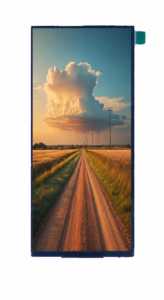
A stretched LCD option such as an 11.65-inch bar LCD display may be considered when the embedded product requires a long and narrow display area.
Some embedded products require more than a display module. They need a display, touch panel, control board, operating system, and software environment to work together.
A small touchscreen display with a control board may be suitable for:
This approach can reduce integration complexity when the OEM team does not want to develop the complete display control architecture from the beginning.
Important considerations include:
For embedded Android display applications, a control board such as the Rockchip RK3566 quad-core Android control board may be relevant when the project requires display and computing integration.
Touch technology is one of the most important decisions in small touchscreen display selection.
The two common options are capacitive touch and resistive touch.
| Touch Type | Advantages | Limitations | Common Use Cases |
|---|---|---|---|
| Capacitive touch | Modern appearance, multi-touch support, good clarity, smooth user experience | May require tuning for gloves, water, thick glass, or EMI environments | Smart devices, HMI panels, medical devices, consumer-facing products |
| Resistive touch | Can work with gloves, stylus, or pressure input; simple operation | Lower optical clarity, less premium feel, usually single-touch | Industrial controls, legacy systems, rugged handheld devices |
Capacitive touchscreens are now common in many embedded products because they provide a modern user experience and better optical performance. However, resistive touch may still be useful in environments where users operate the device with gloves, tools, or pressure-based input.
For OEM products, touch selection should be based on the actual operating environment rather than appearance alone.
A small touchscreen display should be selected as part of the full embedded system, not as an isolated component.
Below are the main factors OEM teams should review.
Small screens have limited space. A 2.8-inch display may work well for icons, simple menus, and basic status information, but it may not be suitable for complex charts, long text, or frequent data entry.
Before choosing the display size, define:
A common mistake is selecting a display based only on enclosure space and then trying to force a complex UI into a screen that is too small.
Resolution affects sharpness, UI detail, memory usage, graphics performance, and interface bandwidth.
A higher-resolution display can improve visual quality, but it may also increase the load on the processor and display interface. For embedded systems with limited processing power, a moderate resolution may be more practical.
OEM teams should match resolution with:
The goal is not always the highest resolution. The goal is reliable visual performance for the intended product.
Brightness should match the environment where the product will be used.
Indoor equipment may work well with moderate brightness. Outdoor devices, vehicle-mounted products, and public-facing equipment may need higher brightness, improved contrast, optical bonding, or surface treatment.
Key questions include:
Higher brightness can improve readability, but it may also increase power consumption and heat. Buyers should balance readability with system-level power and thermal design.
The display interface must match the processor, MCU, or control board. Interface selection affects PCB layout, signal routing, software development, driver support, and system complexity.
Common interfaces for small touchscreen displays include:
| Interface | Typical Fit | Notes |
|---|---|---|
| SPI | Small displays and MCU-based devices | Simple and low pin count, but limited bandwidth |
| RGB | MCU or application processor systems | Common for embedded displays, but may require more pins |
| MIPI | Compact Linux or Android systems | High bandwidth and fewer pins, but platform support must be confirmed |
| LVDS | Industrial or larger embedded displays | Stable and mature for many display systems |
| HDMI | Development boards and SBC-based systems | Easy for prototyping, less ideal for compact embedded production in some cases |
| eDP | Higher-resolution embedded platforms | Requires platform and driver compatibility review |
Interface selection should be confirmed early, before PCB and enclosure design are locked.
Small embedded devices often have strict space limitations. The FPC direction, connector location, cable length, and bending area can determine whether the display can be assembled properly.
Mechanical factors to review include:
A display that appears suitable electrically may still fail mechanically if these details are ignored.
Cover glass can improve appearance, protection, and touch performance. It can also help align the display with the product’s industrial design.
Customization options may include:
For products used in industrial, medical, or outdoor environments, cover glass design should be reviewed together with cleaning requirements, durability expectations, touch performance, and optical readability.
Small touchscreen displays used in embedded devices may face very different conditions depending on the application.
A display for a smart thermostat is not evaluated the same way as a display for industrial automation equipment, a medical instrument, or a vehicle-related device.
OEM buyers should define:
Long-term supply should also be considered. A small touchscreen display selected only for prototype convenience may not be the right choice for a product expected to remain in production for years.
Small touchscreen displays are used across many embedded product categories. The best display option depends on the application.
| Application | Suitable Display Direction | Key Concerns |
|---|---|---|
| Smart home controller | 2.8–5.0 inch capacitive touchscreen | Appearance, touch experience, UI clarity, cover glass |
| Industrial handheld device | 3.5–5.0 inch touchscreen | Durability, readability, gloves, interface stability |
| Medical instrument | 4.3–7.0 inch touchscreen | Readability, usability, cleaning, long-term support |
| Control knob or compact HMI | Small round touchscreen | Circular UI, touch target size, mechanical integration |
| Charging equipment | 4.3–7.0 inch display | Outdoor readability, touch reliability, enclosure fit |
| Smart appliance | 2.8–5.0 inch touchscreen | UI design, cover glass, brand appearance |
| Industrial status panel | Bar-type or compact rectangular display | Viewing angle, space limits, interface, mounting |
| Portable test equipment | 3.5–5.0 inch touchscreen | Power consumption, readability, mechanical protection |
This table should be treated as a starting point. Final display selection should be based on confirmed product requirements.
OEM teams can reduce development risk by avoiding several common mistakes.
A smaller screen may save space, but it can also reduce usability. If the UI requires menus, warnings, icons, or data input, the screen must provide enough room for readable content and reliable touch targets.
Touch performance should be tested in the real operating environment. Gloves, water, cover glass thickness, temperature, and electrical noise can all affect touch behavior.
Interface decisions should be made early. If the display interface does not match the processor or control board, redesign work may be required.
Unit price is only one part of the cost. Integration time, PCB redesign, tooling, testing, mechanical rework, and supply risk can create higher total cost than expected.
A display that is easy to buy for prototype testing may not be suitable for volume production. Buyers should review lifecycle, supplier support, and customization options before final selection.
A successful small touchscreen display project starts with clear technical and commercial requirements.
Before requesting a quote, OEM buyers should prepare:
| Requirement | Details to Provide |
|---|---|
| Product application | What device the display will be used in |
| Display size | Target size or enclosure opening |
| Resolution | Required resolution or UI readability need |
| Display shape | Rectangular, round, bar-type, or custom format |
| Interface | SPI, RGB, MIPI, LVDS, HDMI, eDP, or processor platform |
| Touch type | Capacitive, resistive, glove touch, wet touch, or no touch |
| Brightness | Indoor, outdoor, sunlight-readable, or target brightness |
| Cover glass | Shape, thickness, printing, coating, or bonding needs |
| Operating environment | Temperature, humidity, vibration, dust, water, sunlight |
| Mechanical constraints | FPC direction, connector location, mounting method, enclosure size |
| Control board | Existing board, MCU, Linux platform, Android board, or other |
| Software needs | Driver, firmware, GUI framework, or OS requirements |
| Prototype quantity | Sample quantity or validation batch |
| Annual volume | Estimated production quantity |
| Timeline | Prototype deadline and target production date |
| Customization scope | Touch, cover glass, FPC, backlight, interface, enclosure, or control board |
Clear requirements help the display supplier recommend a more suitable solution and reduce unnecessary sample iterations.
RJY supports OEM buyers with small touchscreen display solutions for embedded devices, smart controls, industrial equipment, compact HMI systems, and customized electronic products.
Depending on project requirements, RJY can support:
For products that require compact display and control integration, RJY can also help evaluate whether an Android control board, display interface solution, or integrated HMI architecture is suitable.
If your embedded device requires a small touchscreen display, RJY can help review your display size, resolution, interface, touch requirements, enclosure constraints, and project timeline.
Talk to an RJY engineer to discuss your small touchscreen display requirements.
A small touchscreen display can define how users interact with an embedded device. It affects usability, product appearance, mechanical structure, PCB design, processor selection, touch performance, power consumption, and production planning.
The right choice depends on more than size. OEM buyers should evaluate display shape, resolution, touch type, brightness, interface, cover glass, FPC design, mechanical fit, operating environment, and long-term supply requirements.
For simple products, a standard small touchscreen display may be enough. For OEM devices with unique enclosure, interface, touch, readability, or lifecycle needs, a custom display solution may reduce integration risk and improve the path from prototype to production.
Send your project requirements to RJY to explore small touchscreen display options for your embedded device.
A small touchscreen display is a compact display module that combines a visual display with touch input. It is commonly used in embedded devices, smart controls, handheld instruments, industrial equipment, and compact HMI systems.
There is no fixed definition, but many embedded projects use small touchscreen displays from about 1.3 inches to 7 inches. The right size depends on UI complexity, viewing distance, enclosure space, and user interaction requirements.
Capacitive touch is suitable for modern interfaces, multi-touch operation, and better optical clarity. Resistive touch may be useful when users need pressure input, stylus operation, or glove use. The best choice depends on the operating environment.
The best interface depends on the processor or control board. SPI is common for small MCU-based displays, RGB is used in many embedded systems, MIPI is common in compact Linux or Android systems, and LVDS or HDMI may be used in specific applications.
Yes. Small touchscreen displays can be customized in areas such as size, resolution, touch panel, cover glass, brightness, FPC direction, connector type, interface, optical bonding, and mechanical structure.
You should provide display size, resolution, interface, touch type, brightness needs, operating environment, cover glass requirements, mechanical constraints, control board platform, prototype quantity, annual volume, and project timeline.
Share your display size, resolution, interface, brightness, touch requirement, controller board requirement, and application environment.
Continue reading related display technology guides and application references.
Explore product pages related to this article topic.
Talk to RJY’s engineering team for display matching, controller board review, and customization discussion.