Ein kundenspezifisches TFT-LCD-Display sollte ein definiertes Integrationsproblem lösen. Es sollte nicht als offene Anfrage zur Schaffung einer neuen Panelgröße, Auflösung oder Pixelarchitektur beginnen.
Für viele OEM-Projekte besteht der praktische Weg darin, ein vorhandenes TFT-LCD-Modul zu identifizieren, dessen aktive Fläche, Auflösung, Schnittstelle, Timing, optisches Verhalten und mechanische Hülle geeignet sind. Das Projekt kann dann Änderungen rund um diese Plattform bewerten, einschließlich Touchscreen, Abdeckglas, Hintergrundbeleuchtung, FPC, Steckverbinder, Controller-Platine, Firmware, Bonding-Struktur und Gehäuse.
Diese Unterscheidung beeinflusst Machbarkeit, Entwicklungsrahmen, Dokumentation, Werkzeugerstellung, Validierung und Lebenszykluskontrolle. Sie hilft Entwicklungsteams auch dabei, Angebote zu vergleichen, die alle als “kundenspezifische Displays” beschrieben werden, aber sehr unterschiedliche Arbeiten umfassen.
Was ist ein kundenspezifisches TFT-LCD-Display?
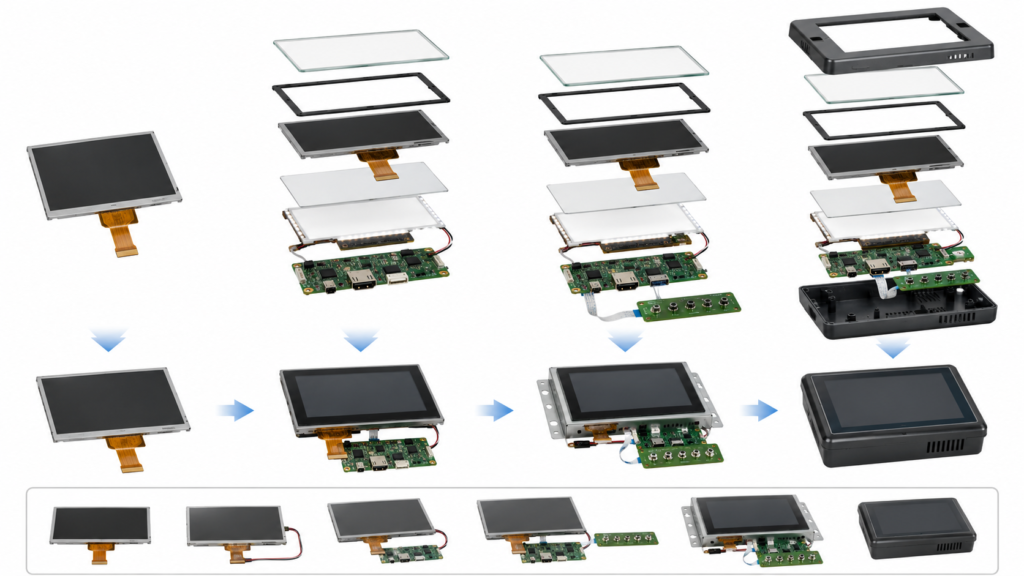
Ein kundenspezifisches TFT-LCD-Display ist eine vorhandene Display-Plattform, die koordiniert oder modifiziert wurde, um die Anforderungen eines bestimmten Produkts zu erfüllen. Der Umfang kann von einer anderen Abdeckglas-Zeichnung bis hin zu einer vollständigen Display-, Touch-, Controller-Platinen-, Firmware- und mechanischen Baugruppe reichen.
| Projektebene | Typischer Umfang | Hauptentwicklungsarbeit |
|---|---|---|
| Standardmodul | Ein vorhandenes TFT-LCD wird ohne physische Modifikation verwendet | Host-Kompatibilität, Kabel, Stromversorgung, Hintergrundbeleuchtung, Firmware, Touch und mechanische Validierung |
| Konfiguriertes Modul | Ein vorhandenes LCD wird mit einer verfügbaren Touch-, Abdeck-, Kabel- oder Controller-Konfiguration kombiniert | Konfigurationsauswahl, Zeichnungen, Treiber, Montage und vollständige Mustertests |
| Semi-kundenspezifisches Display | Das Kern-LCD bleibt erhalten, während die umgebenden Teile angepasst werden | Abdeckglas, Touch, Hintergrundbeleuchtung, FPC, Steckverbinder, Bonding, Firmware, Werkzeugerstellung und mechanische Koordination |
| Integriertes Displaysystem | Ein vorhandenes LCD wird mit einer Controller- oder Rechnerplatine und produktspezifischer Integration geliefert | Display-Ausgabe, Panel-Treiber, Touch-Eingabe, Stromversorgung, Hintergrundbeleuchtung, Software, Kabel und Gehäusevalidierung |
| Anfrage für neue Panel-Plattform | Die erforderliche Größe, aktive Matrix oder Auflösung ist von einer vorhandenen Plattform nicht verfügbar | Separate Machbarkeits-, Volumen-, Investitions-, Qualifikations-, Liefer- und Lebenszyklusbewertung |
Der praktische Individualisierungsweg von RJY Display beginnt mit einem vorhandenen Display-Modul. Es sollte nicht als uneingeschränkte Entwicklung einer beliebigen TFT-LCD-Größe, Auflösung, aktiven Fläche oder Panel-Architektur interpretiert werden.
Wann ist eine Individualisierung tatsächlich erforderlich?
Individualisierung ist nicht automatisch besser als ein Standardmodul. Wenn ein vorhandenes Display die zwingenden elektrischen, optischen, mechanischen, Touch-, Umwelt-, Software- und Lebenszyklusanforderungen erfüllt, kann die unveränderte Verwendung den Projektumfang reduzieren.
Individualisierung wird relevant, wenn eine dokumentierte Anforderung von der bevorzugten Standardkonfiguration nicht erfüllt werden kann.
| Beobachtetes Problem | Mögliche Projektantwort | Erforderliche Nachweise |
|---|---|---|
| Das Frontdesign erfordert einen anderen Umriss oder bedruckten Rand | Kundenspezifisches Abdeckglas basierend auf dem ausgewählten LCD und der Touch-Struktur | Abdeckzeichnung, Materialien, Toleranzen, Erscheinungskriterien, Bonding-Bereich und Gehäuse-CAD |
| Die Display-FPC kollidiert mit der Leiterplatte oder dem Gehäuse | Bewertung eines alternativen Moduls, Adapters, Kabels oder einer machbaren FPC-Änderung | LCD-Pinbelegung, Steckverbinderdefinition, PCB-Layout, Signalanforderungen und mechanische Hülle |
| Das fertige Display ist in seiner vorgesehenen Umgebung schwer lesbar | Überprüfung von Hintergrundbeleuchtung, Abdeckstapel, Oberflächenbehandlung, Bonding, Benutzeroberfläche und Installation | Umgebungslichtbedingung, Blickrichtung, optischer Stapel, Leistungsbudget und physischer Mustertest |
| Der Host implementiert die Panel-Schnittstelle nicht | Auswahl eines anderen LCDs, Überarbeitung des Hosts oder Bewertung eines aktiven Controllers oder einer Brücke | Board-Revision, Schaltplaninformationen, unterstützte Ausgabemodi, Panel-Timing, Pinbelegung und Firmware |
| Das erforderliche Touch-Verhalten wird nicht unterstützt | Überprüfung von Sensor, Controller, Firmware, Abdeckglas, Erdung und Host-Treiber | Eingabewerkzeug, Kontaktanzahl, Umgebung, Controller-Daten, Abdeckstruktur und Abnahmetest |
| Das Modul passt nicht in die Baugruppe | Vergleich einer anderen vorhandenen Plattform vor Beginn der mechanischen Individualisierung | Vollständige Display-Zeichnung, Toleranzstapel, PCB, Abdeckung, Kabel und Gehäuse-CAD |
Eine Anforderung sollte als zwingend, bevorzugt oder verhandelbar eingestuft werden. Dies verhindert, dass eine kosmetische Präferenz Werkzeug- oder Firmware-Arbeiten erzeugt, die keinen nutzbringenden Produktvorteil bieten.
Erstellen Sie die Anforderungsbasislinie vor der Auswahl des Displays
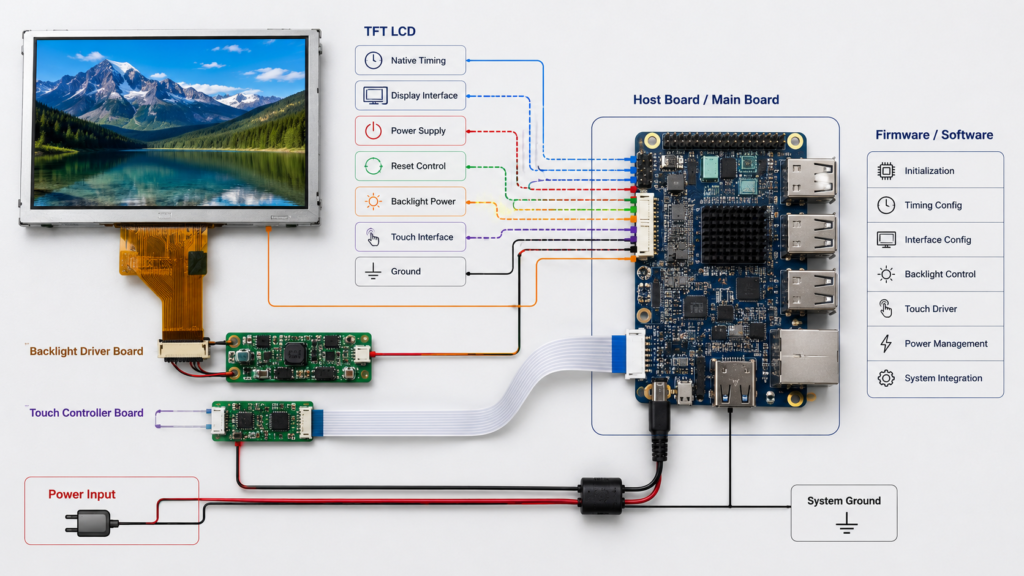
Eine nützliche Überprüfung eines kundenspezifischen TFT-LCDs beginnt mit dem Produkt und nicht mit einer generischen Bildschirmspezifikation.
| Anforderungsbereich | Zu klärende Fragen |
|---|---|
| Anmeldung | Was leistet das Produkt, wer verwendet es, und welche Informationen oder Steuerungen müssen stets verfügbar sein? |
| Anzeigegeometrie | Welche aktive Fläche, Sichtfläche, Kontur, Ausrichtung, Dicke und rückseitige Bauteilumgebung kann das Produkt aufnehmen? |
| Benutzerschnittstelle | Welche Auflösung, physische Textgröße, Grafiklast, Sprachen, Warnungen und Systemzustände sind erforderlich? |
| Host-Plattform | Welcher Mikrocontroller, Anwendungsprozessor, Rechenmodul, Controller-Platine oder Videoquelle steuert das Display? |
| Touch-Eingabe | Welcher Finger, Handschuh, Eingabestift, Anzahl der Berührungen, Geste, Feuchtigkeit und Fehlberührungsverhalten müssen validiert werden? |
| Betrachtungsumgebung | Welche Umgebungslicht-, Betrachtungsabstands-, Montagewinkel-, Dimm-, Reflexions- und Temperaturbedingungen gelten? |
| Mechanische Montage | Wo befinden sich Rahmen, Abdeckung, Stützen, Klebstoff, FPC, Steckverbinder, Leiterplatte, Befestigungselemente, Kabel und Wärmequellen? |
| Lebenszyklus | Welche Prozesse für Prototyp, Pilotserie, Produktion, Revisionskontrolle, Änderungsmitteilung und Austausch sind erforderlich? |
Stellen Sie frühzeitig repräsentative UI-Grafiken und Zeichnungen bereit. Eine alleinige Diagonalgröße definiert nicht das physische Bild, die Modulkontur, die sichtbare Öffnung, die Pixellast oder die Touch-Zielgeometrie.
Wählen Sie die bestehende TFT-LCD-Plattform aus
Das Basismodul bestimmt, welche späteren Änderungen realistisch sind. Verwenden Sie das aktuell kontrollierte Datenblatt und die mechanische Zeichnung anstelle einer Produktseitenzusammenfassung.
Vergleichen Sie Kandidaten anhand von:
- Genaues Modell, Revision, Treiber-IC und aktueller Versorgungsstatus
- Aktive Fläche, Sichtfläche, Modulkontur, Dicke und native Ausrichtung
- Auflösung, Pixelformat, natives Timing und Initialisierungsanforderungen
- Schnittstelle, elektrische Pegel, Datenbahnen oder Kanäle, Pinbelegung und Steckverbinder
- Elektrische Anforderungen der Hintergrundbeleuchtung, Einschalten, Dimmen und thermisches Verhalten
- FPC-Position, Kontaktrichtung, Versteifung, Bauteile und sicherer Biegebereich
- Optische Eigenschaften und vorgesehene Betrachtungsbedingungen
- Betriebs- und Lagergrenzen, dokumentiert für die genaue Konfiguration
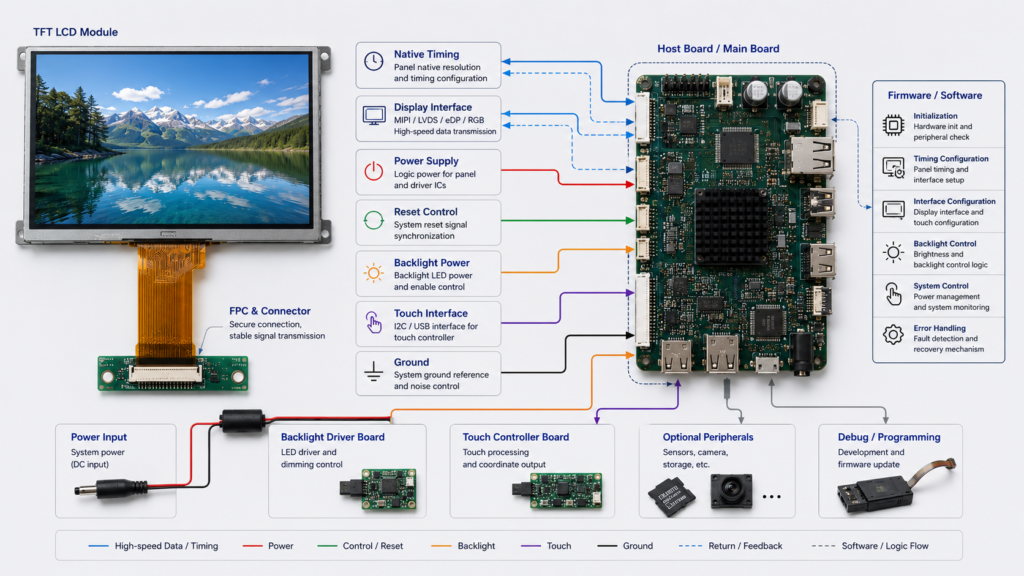
NXPs Beispiel eines eingebetteten Displaysystems zeigt, dass ein funktionierender LCD-Pfad koordiniertes natives Timing, Signalpolarität, Spannungsversorgung, Reset, Hintergrundbeleuchtungssteuerung, Schnittstellentakte und einen panelspezifischen Treiber erfordert.[1] Eine passende Auflösung oder Schnittstellenbezeichnung reicht daher nicht aus, um ein Basismodul freizugeben.
Verwenden Sie die TFT-LCD-Modul-Auswahlleitfaden Für eine vertiefte Kandidatenprüfung durchsuchen Sie dann das aktuelle Display-Modul-Portfolio für bestehende Plattformen.
Passen Sie Touchscreen und Abdeckglas gemeinsam an
Der Touch-Sensor, Touch-Controller, Deckglas, Bonding-Struktur, das Display, der Host-Treiber, die Erdung und das Gehäuse bilden ein Eingabesystem. Eine Änderung der Frontlinse kann das Touch-Design verändern, selbst wenn das LCD unverändert bleibt.
| Touch- oder Abdeckbereich | Was zu definieren ist |
|---|---|
| Berührungstechnologie | Projiziert kapazitiv, resistiv oder eine andere unterstützte Eingangskonfiguration |
| Touch-Controller | Genaue Controller, Firmware, Host-Schnittstelle, Spannung, Reset, Interrupt, Kontakte und Treiber |
| Eingabewerkzeuge | Bloßer Finger, bestimmter Handschuh, passiver Stift, aktiver Stift oder druckbasierte Eingabe |
| Abdeckglas | Kontur, Dicke, Öffnung, bedruckter Rand, Material, Kantendetails, Oberflächenanforderungen und Klebebereich |
| Bonding | Luftspalt- oder Bonding-Struktur, Klebstoff, Ausrichtung, Erscheinungsbild, Toleranzen und Nacharbeitsanforderungen |
| Softwareverhalten | Koordinatenbereich, Ursprung, Skalierung, Drehung, Display-Zuordnung, Schlaf-, Wach- und Wiederherstellungsmodi |
| Umgebung | Feuchtigkeit, Reinigung, Metallstrukturen, elektrisches Rauschen, Kantenbetrieb und Kriterien für Fehlberührungen |
Microchip beschreibt die Entwicklung kapazitiver Touch-Sensoren als kombiniertes mechanisches und elektrisches Designproblem und bezieht speziell die Auswirkungen der Touch-Abdeckung in den Designprozess ein.[2] Dies bedeutet, dass ein kundenspezifisches Deckglas nicht unabhängig von der Sensor-Controller-Prüfung freigegeben werden sollte.
Bei Android-Systemen kann die Touch-Konfiguration auch die Display-Zuordnung, Kalibrierung und ausrichtungsabhängige Koordinatenzuordnung steuern.[3] Validieren Sie die freigegebene Controller-Firmware und Host-Software mit der endgültigen Drehung, dem Deckglas, dem Rahmen, der Erdung und dem Gehäuse.
Für eine detaillierte Touch-Auswahl siehe die Anleitung zu TFT-LCD-Modulen mit Touchscreen.
Passen Sie die Hintergrundbeleuchtung entsprechend den optischen und Leistungsanforderungen an
Eine Hintergrundbeleuchtungsanforderung sollte mit der Betrachtungsanforderung des Endprodukts beginnen. Die höchste verfügbare Helligkeit ist nicht automatisch das richtige Ziel.
Prüfen Sie:
- Erforderliche Umgebungslicht- und Betrachtungsbedingungen
- LCD, Polarisator, Touch, Bonding, Deckglas und Oberflächenbehandlungs-Stapel
- LED-Konfiguration und elektrische Daten der Hintergrundbeleuchtung
- Verfügbarer Treiberschaltkreis, Strom, Einschaltsignal und Dimmverfahren
- Leistungsbudget und Betriebszustände
- Lokale Erwärmung und Temperatur des Endgehäuses
- Dimmverhalten auf niedriger Ebene und Anwendungssteuerung
- Erscheinungsbild- und Konsistenzkriterien für das freigegebene Muster
Leiten Sie Sonnenlichtlesbarkeit, Außentauglichkeit, thermische Leistung oder Betriebslebensdauer nicht aus einem nominalen Helligkeitswert ab. Diese Schlussfolgerungen erfordern konfigurationsspezifische Daten und eine Validierung des Endprodukts.
Koordinieren Sie Schnittstelle, FPC, Steckverbinder und Hauptplatine
Schnittstellenanpassung bedeutet nicht einfach, den gedruckten Namen neben einem Steckverbinder zu ändern. Das LCD und der Host müssen elektrisch, logisch, mechanisch und softwaretechnisch übereinstimmen.
| Integrationsbereich | Zu bestätigende Punkte |
|---|---|
| Display-Schnittstelle | RGB, MIPI DSI, LVDS, eDP, SPI oder ein anderer implementierter Weg und dessen vollständige Konfiguration |
| Native Timing | Aktive Abmessungen, Pixeltakt, Synchronisation, Austastlücken, Bildwiederholbereich, Format und Polarität |
| FPC-Pin-Definition | Jede Display-, Steuerungs-, Strom-, Masse-, Reset-, Hintergrundbeleuchtungs- und Touch-Verbindung |
| Steckverbinder | Teilenummer, Rastermaß, Kontaktseite, Höhe, Einsteckrichtung, Gegenstecker und Zugänglichkeit |
| FPC-Mechanik | Austrittsrichtung, Länge, Versteifung, Biegebereich, Bauteilumhüllung, Halterung und Montagereihenfolge |
| Hochgeschwindigkeitspfad | Platine, Steckverbinder, FPC, Kabel, Erdung, Rückflusspfad und Signalintegritätsprüfung, sofern zutreffend |
| Software | Panel-Treiber, Initialisierung, Spannungsregler, GPIOs, Ausrichtung, Schlafmodus, Aufwecken und Fehlerbehebung |
Die MIPI Alliance definiert MIPI DSI als eine serielle Hochgeschwindigkeitsschnittstelle zwischen einem Host-Prozessor und einem Display-Modul.[4] Eine gemeinsame DSI-Bezeichnung allein beweist nicht, dass ein Host und ein Panel die erforderlichen Lanes, den Betriebsmodus, das Timing, die Befehle, die Einschaltsequenz, den Steckverbinder oder die Softwareunterstützung gemeinsam nutzen.
Ein kundenspezifisches FPC kann kompatible Signale umleiten oder die mechanische Integration verbessern. Es kann keinen fehlenden Display-Controller erzeugen, keine nicht unterstützten Lanes hinzufügen, keine inkompatiblen Spannungspegel korrigieren oder keine fehlende Panel-Firmware ersetzen.
Verwenden Sie die Leitfaden für LCD-Display-Schnittstellen für Hintergrundinformationen zu schnittstellenübergreifenden Themen und den Leitfaden für kundenspezifische MIPI-TFT-LCDs für DSI-spezifische Integration.
Definieren Sie die Verantwortlichkeiten für Controller-Platine und Firmware
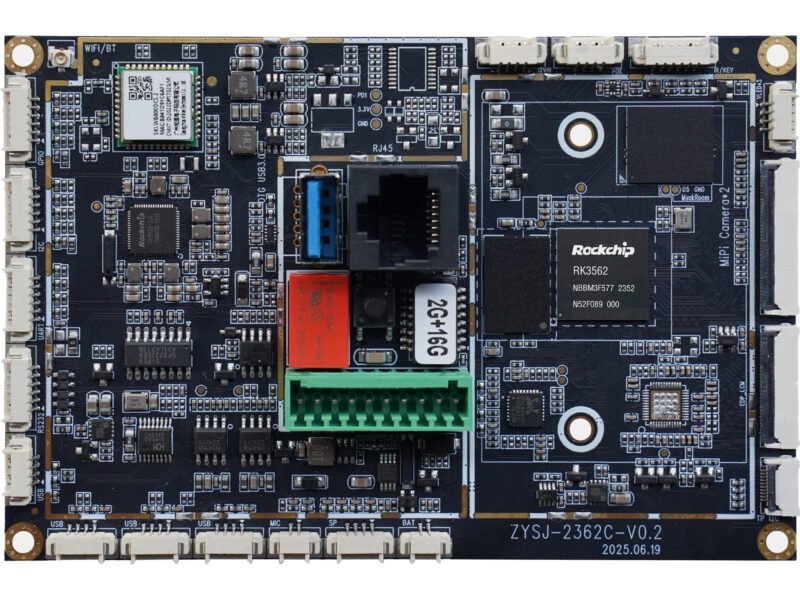
Ein Controller oder ein Rechnerboard sollte auf Board-Ebene bewertet werden. Ein Prozessor-Datenblatt kann Schnittstellen auflisten, die die fertige Leiterplatte nicht bereitstellt oder die das aktuelle Software-Image nicht unterstützt.
Dokumentieren Sie:
- Exaktes Board-Modell, Speicherkonfiguration und Hardware-Revision
- Implementierter Display-Ausgang und Steckverbinder
- Unterstütztes natives Timing und Panel-Konfiguration
- Panel-Stromversorgung, Reset, Enable und Hintergrundbeleuchtungsschaltungen
- Touch-Eingabe und Treiberpfad
- Android-, Linux-, RTOS-, MCU-SDK-, Kernel-, BSP- oder Bootloader-Version
- Panel-Treiber- und Initialisierungsergebnisse
- Quellcode, Binärdatei, Konfiguration, Build und Eigentumsgrenzen
- Verhalten bei Update, Wiederherstellung, Schlafmodus, Aufwecken und unterbrochener Stromversorgung
“Kundenspezifische Firmware” ist kein unbegrenztes Ergebnis. Ein gültiger Umfang identifiziert das Board, das LCD, den Touch-Controller, die Softwareplattform, die Version, das erforderliche Verhalten, die Ergebnisse, die Eigentumsverhältnisse und die Abnahmetests.
Befolgen Sie bei Android-Projekten die Anleitung, um ein TFT-LCD-Modul mit einem Android-Steuerboard abzugleichen. Aktuelle Produktpfade auf Board-Ebene sind verfügbar in Computing-Module.
Koordinieren Sie die mechanische Struktur vor der Werkzeugerstellung
Die LCD-Zeichnung, die Abdeckungszeichnung, der Touch-Sensor, das FPC, die Leiterplatte, das Kabel, die Stützen, das Klebematerial, die Befestigungselemente und das Gehäuse-CAD sollten als eine Toleranzkette betrachtet werden.
| Mechanisches Element | Prüfanforderung |
|---|---|
| Aktive und Betrachtungsbereiche | Ausrichtung mit der Blendenöffnung, dem Abdeckungsdruck, dem Touch-Bereich und der Benutzeroberfläche |
| Modul-Umhüllung | LCD-Glas, Hintergrundbeleuchtung, Rahmen, Klebematerial, FPC, Versteifung und rückseitige Komponenten |
| Unterstützung und Halterung | Zugelassene Unterstützungs-, Klebe-, Halterungs- und Befestigungsbereiche ohne lokale Glasbelastung |
| Kabelverlauf | FPC-Reichweite, Biegung, Steckverbinderzugang, Halterung, Wärme, bewegliche Teile und Montagereihenfolge |
| Ausrichtung von Abdeckung und Touch | Öffnung, gedruckter Rand, Klebematerial, Bezugssystem und akkumulierte Toleranzen |
| Servicezugang | Steckverbinderbetrieb, Inspektion, Austausch und Schutz der Display-Baugruppe |
Geben Sie das Gehäuse nicht nur auf Basis der nominalen Display-Abmessungen frei. Verwenden Sie die kontrollierte Zeichnung und berücksichtigen Sie gegebenenfalls die maximalen Materialbedingungen und Montagetoleranzen.
Nutzen Sie einen kontrollierten Entwicklungsprozess für kundenspezifische Displays
| Phase | Erforderliche Ausgabe | Genehmigungsfrage |
|---|---|---|
| Anforderungsdefinition | Zwingende, bevorzugte und verhandelbare Produktanforderungen | Beschreibt die Spezifikation das Produkt und die Abnahmebedingungen? |
| Basis-Modulauswahl | Kandidaten-Datenblätter, Zeichnungen, Kompatibilitätsprüfung und offene Punkte | Ist eine bestehende LCD-Plattform technisch geeignet? |
| Machbarkeitsprüfung | Anpassungsgrenzen, Verantwortlichkeiten, Werkzeuge, Software, Testplan und kommerzielle Annahmen | Ist jede angeforderte Änderung machbar und kontrolliert? |
| Freigabe von Zeichnung und Konfiguration | LCD-, Touch-, Abdeckungs-, FPC-, Steckverbinder-, Board-, Firmware- und mechanische Definitionen | Überprüfen alle Beteiligten dieselbe Revision? |
| Musterbau | Nachvollziehbare Hardware- und Softwaremuster mit dokumentierten Abweichungen | Repräsentiert das Muster die vorgeschlagene Produktionskonfiguration? |
| Systemvalidierung | Testergebnisse gemäß vereinbarter Abnahmekriterien | Funktioniert das vollständige Produkt unter den geforderten Bedingungen? |
| Produktionsfreigabe | Genehmigte Konfiguration, Prüfkriterien, Verpackung, Revisionskontrolle und Abschluss offener Punkte | Entspricht das freigegebene Produkt der validierten Konfiguration? |
Beginnen Sie nicht mit der Werkzeugerstellung, nur weil ein Display auf einem Evaluierungsboard ein Bild anzeigen kann. Der elektrische Betrieb ist nur ein Teil der Freigabe.
Validieren Sie das vollständige kundenspezifische TFT-LCD-Muster
| Validierungsbereich | Mindestprüfung |
|---|---|
| Identität und Dokumentation | LCD-Modell, Treiber-IC, Zeichnung, Touch-Controller, Board-Revision, Firmware, Kabel und Abweichungen |
| Displaybild | Native Timing, Vollbildmuster, Ausrichtung, Farben, UI-Bildschirme, Start, Schlafmodus, Aufwecken und Neustart |
| Touch-Eingabe | Koordinaten, Kanten, Drehung, erforderliche Eingabegeräte, Abdeckglas, Rauschen, Feuchtigkeitskriterien, Schlafmodus und Aufwecken |
| Optische Leistung | Erforderliche Benutzeroberfläche, Umgebungslicht, Betrachtungsrichtungen, Abdeckaufbau, Reflexionen, Dimmen und Erscheinungsbild |
| Stromversorgung und Hintergrundbeleuchtung | Start, Normalbetrieb, Aktivierung, Dimmen, Abschaltung, unterbrochene Stromversorgung und Gehäusetemperatur |
| Software | Bootloader, Panel-Treiber, BSP oder SDK, Anwendung, Update, Wiederherstellung und Fehlerzustände |
| Mechanische Montage | Ausrichtung, Unterstützung, FPC-Führung, Anschlusszugang, Klebstoff, Toleranzstapel, Halterung und Serviceverfahren |
| Umgebung | Anwendungsdefinierte Temperatur-, Reinigungs-, Feuchtigkeits-, mechanische, Umgebungslicht- und elektrische Bedingungen |
| Konfigurationskontrolle | Vollständige genehmigte Stückliste, Zeichnungen, Firmware, Software-Image, Testprotokoll und ungelöste Probleme |
Genehmigen Sie die vollständige Konfiguration und nicht nur das LCD-Modell. Eine spätere Änderung des Panel-Treiber-ICs, Touch-Controllers, Abdeckglases, FPC, der Board-Revision, Firmware, des Klebstoffs, der Hintergrundbeleuchtung, des Kabels oder des Gehäuses kann eine teilweise Neuvvalidierung erfordern.
Bereiten Sie eine vollständige RFQ für kundenspezifische TFT-LCDs vor
Bereitstellen:
- Zielprodukt, Benutzer, Arbeitsablauf und Zielmärkte
- Erforderliche aktive Fläche, Auflösung, Ausrichtung, Umriss und mechanischer Bauraum
- Repräsentative maßstabsgetreue UI-Grafik und Grafik-Workload
- Exakter Mikrocontroller, Prozessor, Controller-Board, Rechenmodul oder Videoquelle
- Board-Revision, implementierter Display-Ausgang, Anschluss und Softwareplattform
- Touch-Technologie, Controller, Eingabegeräte, Kontaktanzahl und Umgebungsanforderungen
- Abdeckglas-Zeichnung, Material, Dicke, Bedruckung, Kante, Öffnung und Oberflächenanforderungen
- Hintergrundbeleuchtung, Dimmen, Stromversorgung, Umgebungslicht- und Betrachtungsanforderungen
- FPC-Richtung, Anschlussposition, PCB-Layout, Kabel und Montageeinschränkungen
- Firmware, Treiber, BSP, Bootloader, Update- und Wiederherstellungsumfang
- Gehäuse-CAD und Toleranzinformationen
- Erforderliche Tests, Normen, Berichte, Erklärungen und verantwortliche Parteien
- Prototyp, Pilot, Produktion und erwartete jährliche Stückzahlen
- Lebenszyklus, Revision, Änderungsmitteilung und Ersatzervartungen
- Vorhandene Display-Dokumentation beim Austausch eines anderen Moduls
Für kostenspezifische Vorbereitung siehe Preisleitfaden für kundenspezifische TFT-LCD-Displays.
Fordern Sie eine technische Überprüfung des kundenspezifischen TFT-LCDs an
RJY Display kann eine bestehende TFT-LCD-Plattform hinsichtlich Ihrer Anforderungen an Touch, Abdeckglas, Hintergrundbeleuchtung, FPC, Schnittstelle, Controller-Board, Firmware, Stromversorgung, Optik und Mechanik überprüfen.
Aktuelle Display-Module durchsuchen, prüfen Sie den Umfang der kundenspezifischen Lösungen von RJY Display, oder Senden Sie Ihre Display-, Board-, UI- und Gehäuseunterlagen zur technischen Prüfung.
FAQ
Was ist ein kundenspezifisches TFT-LCD-Display?
Ein kundenspezifisches TFT-LCD-Display ist normalerweise eine bestehende Display-Plattform, die für ein bestimmtes Produkt in Bereichen wie Touch, Abdeckglas, Hintergrundbeleuchtung, FPC, Schnittstelle, Controller-Board, Firmware, Bonding oder mechanischer Struktur konfiguriert oder modifiziert wurde.
Kann RJY Display jede neue LCD-Größe oder -Auflösung entwickeln?
Nein. Der praktische Weg der Anpassung beginnt mit einem vorhandenen Display-Modul. Eine Anfrage für eine nicht verfügbare Größe, aktive Matrix, Auflösung oder neue Panel-Architektur erfordert eine separate Machbarkeitsprüfung und sollte nicht als verfügbar vorausgesetzt werden.
Welche Teile eines TFT-LCD-Moduls können angepasst werden?
Abhängig vom ausgewählten Basismodul und der Projektmachbarkeit kann die Arbeit Abdeckglas, Touchscreen, Bonding, Hintergrundbeleuchtung, FPC, Anschluss, Schnittstellenkoordination, Controller-Board, Firmware und mechanische Struktur umfassen.
Macht eine Änderung des FPC jedes LCD mit meiner Platine kompatibel?
Nein. Ein FPC kann kompatible Signale führen und die mechanische Passform verbessern, aber es kann keinen fehlenden Display-Controller hinzufügen, nicht unterstützte Lanes erzeugen, inkompatible Spannung oder Timing korrigieren oder fehlende Panel-Firmware ersetzen.
Was sollte an einem kundenspezifischen Display-Muster getestet werden?
Testen Sie das dokumentierte Display-Timing und -Bild, das Touch-Verhalten, den Abdeckaufbau, die optische Leistung, die Stromversorgung und Hintergrundbeleuchtung, die Firmware, den Start und die Wiederherstellung, den Anwendungs-Workload, die mechanische Montage, die erforderlichen Umgebungsbedingungen und die vollständige Konfigurationsidentität.
Welche Informationen werden für ein Angebot für ein kundenspezifisches TFT-LCD benötigt?
Geben Sie die Anwendung, die Display-Geometrie, die Auflösung, die UI-Grafik, die Host-Platine, die Schnittstelle, die Touch- und Abdeckglasanforderungen, die Hintergrundbeleuchtungs- und Stromversorgungsanforderungen, die FPC- und Anschlusseinschränkungen, den Firmware-Umfang, die Gehäusezeichnungen, die Validierungsanforderungen, die Stückzahlen und die Lebenszykluserwartungen an.
Referenzen
- NXP Semiconductors, “AN12940: Use Case of RT1170 LCD Display System Based on MIPI DSI.” https://www.nxp.com/docs/en/application-note/AN12940.pdf
- Microchip Technology, “AN2934: Capacitive Touch Sensor Design,” 24. Juli 2020. https://www.microchip.com/en-us/application-notes/an2934
- Android Open Source Project, “Touch Devices.” https://source.android.com/docs/core/interaction/input/touch-devices
- MIPI Alliance, “MIPI Display Serial Interface (MIPI DSI).” https://www.mipi.org/specifications/dsi