¿Enfrenta un cuello de botella en su proyecto de pantalla integrada?
No permita que la integración compleja o los problemas de la cadena de suministro retrasen su tiempo de comercialización. Reserve una consulta gratuita con el equipo experto de RJY para obtener soporte personalizado en diseño y fabricación.
Por Qué Elegir una Pantalla Personalizada con un Proveedor Chino es una Buena Opción
En el mundo de los sistemas embebidos y los proyectos con microcontroladores, dos plataformas suelen destacar por su versatilidad y uso generalizado: STM32 y Arduino. Ambas tienen sus fortalezas y debilidades en lo que respecta al desarrollo con pantallas LCD, dependiendo de la complejidad del proyecto y los requisitos del display. En este artículo, exploraremos las diferencias entre STM32 y Arduino para el desarrollo con LCD, ayudándole a elegir la plataforma adecuada para su próximo proyecto.
Publicado:
13 min read → 1. Lectura de 13 minutos
Actualizado:
STM32 vs Arduino Es una comparación común cuando ingenieros, desarrolladores de productos y equipos de hardware eligen una plataforma de microcontroladores para sensores, sistemas de control, proyectos LCD y dispositivos embebidos. Arduino es conocido por su creación rápida de prototipos y facilidad de uso. STM32 es conocido por su rendimiento superior de microcontrolador, más opciones periféricas y un control más profundo sobre el hardware embebido.
Para proyectos LCD simples, Arduino puede ser un punto de partida práctico. Es fácil de usar, cuenta con muchas bibliotecas de visualización y funciona bien con LCD de caracteres básicos o módulos TFT SPI pequeños. Para proyectos TFT LCD más exigentes, STM32 suele ser una mejor opción porque puede ofrecer mayor capacidad de procesamiento, soporte periférico más rico, opciones DMA y un control de desarrollo más profesional.
La elección correcta depende del proyecto. Un prototipo de hobby, una demostración en clase o una pantalla de sensor simple pueden no necesitar STM32. Una HMI a nivel de producto, una pantalla de control industrial, una interfaz táctil o un proyecto TFT LCD de mayor resolución pueden requerir un microcontrolador, placa controladora o plataforma embebida más capaz.
STM32 vs Arduino: Diferencia Básica
STM32 es una familia de microcontroladores de 32 bits de STMicroelectronics. Estos MCU están basados en núcleos de procesador Arm Cortex-M y cubren una amplia gama de niveles de rendimiento, tamaños de memoria, periféricos, encapsulados y perfiles de consumo. STM32 se utiliza ampliamente en sistemas embebidos que requieren control en tiempo real, interfaces de comunicación, control de motores, interfaces de visualización, detección y desarrollo de productos industriales.
Arduino es una plataforma electrónica de código abierto que incluye placas de desarrollo, herramientas de software y un gran ecosistema comunitario. Muchas placas Arduino se basan en AVR, Arm u otros microcontroladores según el modelo de placa. La principal fortaleza de Arduino no es solo el chip en sí, sino el entorno de desarrollo simplificado, el amplio soporte de bibliotecas y el flujo de trabajo amigable para principiantes.
En términos simples:
STM32 es una familia de microcontroladores profesionales.
Arduino es una plataforma de desarrollo fácil de usar.
STM32 suele ofrecer un control de hardware más profundo y opciones periféricas más potentes.
Arduino suele ofrecer una configuración más rápida y una creación de prototipos más sencilla.
Para proyectos LCD, la elección correcta depende de la resolución de la pantalla, la interfaz, la complejidad gráfica, el requisito táctil y la etapa del producto.
Comparación de placas STM32 vs Arduino para proyectos de pantalla LCD
Comparación Rápida: STM32 vs Arduino
Factor
STM32
Arduino
Identidad principal
Familia de microcontroladores de STMicroelectronics
Plataforma de desarrollo de hardware y software de código abierto
Fortaleza típica
Rendimiento, periféricos, control en tiempo real, flexibilidad de hardware
Facilidad de uso, bibliotecas, comunidad, creación rápida de prototipos
Curva de aprendizaje
Más alta, especialmente con registros, HAL, DMA, relojes y depuración
Más baja, adecuada para principiantes y experimentos rápidos
Herramientas de desarrollo
STM32CubeIDE, STM32CubeMX, Keil, IAR, PlatformIO, otros
Mejor para TFT LCD avanzado, interfaz de usuario táctil, gráficos en tiempo real, control a nivel de producto
Bueno para LCD básicos, módulos TFT pequeños, aprendizaje y prototipos simples
Control periférico
Más fuerte y detallado
Simplificado y basado en bibliotecas
Depuración
Flujos de trabajo de depuración profesional disponibles
Flujo de trabajo más simple, a menudo basado en impresión serie para principiantes
Adecuación para productos comerciales
A menudo adecuado para el desarrollo de productos embebidos
Útil para prototipos; el uso en producto final depende de la placa, el diseño y los requisitos
¿Qué es STM32?
STM32 es una amplia familia de microcontroladores de 32 bits. Diferentes series de STM32 están diseñadas para diferentes necesidades, como bajo consumo, alto rendimiento, conectividad, control de motores, gráficos, seguridad y control industrial.
Para proyectos relacionados con pantallas, STM32 puede ser útil porque muchos MCU STM32 ofrecen un soporte periférico rico. Dependiendo del MCU específico, el proyecto puede usar SPI, I2C, interfaces paralelas, DMA, temporizadores, interfaces de memoria externa o funciones dedicadas relacionadas con pantallas. Algunas familias STM32 también admiten herramientas de desarrollo y middleware orientados a gráficos.
STM32 no es una placa ni un chip único. Es una gran familia de productos. Esto significa que la capacidad LCD exacta depende del modelo STM32 seleccionado, la memoria, la velocidad de reloj, los pines disponibles, el soporte de interfaz y la arquitectura de software.
¿Qué es Arduino?
Arduino es una plataforma de desarrollo diseñada para facilitar la electrónica y la programación. Incluye placas, un IDE, bibliotecas, ejemplos y una gran comunidad de usuarios. Muchos módulos de pantalla tienen bibliotecas compatibles con Arduino, lo que hace que Arduino sea atractivo para pruebas rápidas de LCD y prototipos iniciales.
Las placas Arduino varían ampliamente. Un Arduino Uno clásico es limitado en comparación con muchas placas modernas, mientras que las placas Arduino más nuevas pueden usar microcontroladores más capaces. Por lo tanto, “Arduino” no debe juzgarse como un nivel de hardware fijo.
Para proyectos LCD, Arduino suele ser útil cuando el objetivo es pruebas rápidas, interfaz de usuario simple, visualización de caracteres, visualización gráfica pequeña, lectura de sensores o prueba de concepto temprana.
STM32 vs Arduino para Proyectos LCD
Los proyectos LCD varían desde muy simples hasta altamente exigentes. Un LCD de caracteres de 16 × 2 que muestra valores de sensores es muy diferente de un TFT LCD a color con interacción táctil, animaciones, iconos, menús y actualizaciones de datos en tiempo real.
Arduino suele ser suficiente para proyectos LCD simples. STM32 se vuelve más atractivo cuando el proyecto requiere mayor rendimiento de actualización, temporización más precisa, más memoria, DMA, múltiples periféricos o integración en un producto embebido comercial.
Tipo de Proyecto LCD
Adecuación de Arduino
Adecuación de STM32
LCD de caracteres 16 × 2 o 20 × 4
Muy adecuado
Adecuado pero a menudo innecesario
Pantalla TFT SPI pequeña
Adecuado para gráficos simples
Adecuado para mejor rendimiento y control
TFT LCD de resolución media
Posible solo con placas adecuadas y límites cuidadosos
A menudo más práctico
Interfaz de usuario táctil
Bueno para demostraciones táctiles simples
Mejor para integración táctil a nivel de producto
HMI industrial en tiempo real
Generalmente limitado
Más adecuado según el MCU y el diseño del sistema
Interfaz gráfica de alta resolución
Generalmente no es ideal en placas Arduino básicas
Puede ser adecuado con el STM32 correcto y un diseño de memoria apropiado
Diferencia de rendimiento
STM32 suele ofrecer mayor rendimiento y más funciones de control integrado que muchas placas Arduino básicas. Esto es importante cuando un proyecto de visualización debe actualizar gráficos rápidamente, procesar datos de sensores, gestionar comunicaciones, manejar entrada táctil y controlar otras funciones del sistema al mismo tiempo.
Las placas Arduino básicas no están diseñadas para cargas de trabajo gráficas pesadas. Son más útiles para salidas de visualización simples, paneles de sensores, pantallas de menú y demostraciones rápidas.
Sin embargo, el rendimiento depende de la placa exacta. Una placa moderna compatible con Arduino puede ser más potente que una placa STM32 antigua. Un STM32 de gama alta puede superar a muchas placas Arduino. Los compradores deben comparar el MCU real, la velocidad de reloj, la memoria, la interfaz y los requisitos gráficos, en lugar de confiar únicamente en el nombre de la plataforma.
Diferencia de interfaz de visualización
La compatibilidad del módulo LCD depende en gran medida de la interfaz. Las interfaces de visualización comunes incluyen SPI, I2C, paralelo MCU, RGB, LVDS, MIPI DSI, HDMI y eDP, según la pantalla y el nivel del sistema.
Arduino se usa comúnmente con LCD de caracteres I2C, pantallas TFT SPI y escudos de visualización. Esto es conveniente para el aprendizaje y la creación de prototipos, pero puede no ser adecuado para módulos LCD TFT más grandes o de mayor resolución.
STM32 puede admitir una gama más amplia de interfaces integradas según el modelo. Algunos proyectos con STM32 utilizan pantallas TFT SPI, interfaces paralelas, memoria externa, DMA o middleware orientado a visualización. Sin embargo, no todos los STM32 pueden manejar cualquier LCD. El MCU específico y la interfaz de visualización deben coincidir cuidadosamente.
Requisitos de memoria y gráficos
Los gráficos requieren memoria. Una pantalla TFT a todo color puede necesitar búferes de cuadro, recursos de imagen, fuentes, iconos y datos de interfaz de usuario. Una resolución más alta aumenta rápidamente la demanda de memoria.
Las placas Arduino básicas suelen tener RAM y memoria flash limitadas. Esto las hace inadecuadas para gráficos complejos, a menos que la biblioteca de visualización utilice actualizaciones parciales, búferes pequeños o que el controlador de la pantalla realice gran parte del trabajo.
Los dispositivos STM32 están disponibles con diferentes tamaños de memoria y pueden admitir memoria externa según la serie. Esto hace que STM32 sea más flexible para proyectos gráficos con LCD, pero la planificación de la memoria sigue siendo esencial.
Antes de elegir la plataforma, los ingenieros deben estimar:
Resolución de la pantalla
Profundidad de color
Requisito del búfer de cuadro
Tamaño de los recursos de la interfaz de usuario
Necesidades de entrada táctil
Velocidad de actualización
Requisito de memoria externa
Carga de trabajo del procesador de otras tareas
DMA y control en tiempo real
DMA, o acceso directo a memoria, permite el movimiento de datos sin que la CPU maneje cada byte manualmente. En proyectos de visualización, DMA puede ayudar a mover datos de píxeles de manera más eficiente, especialmente cuando se usa con SPI, interfaces paralelas u operaciones de memoria según el diseño del MCU.
Muchos proyectos con STM32 utilizan DMA para mejorar la eficiencia de la actualización de la pantalla o reducir la carga de la CPU. Esto puede ser útil cuando el sistema también necesita leer sensores, comunicarse con otros dispositivos, procesar entrada táctil o controlar motores.
Las bibliotecas de Arduino pueden ocultar cierta complejidad, lo cual es útil para principiantes. Pero para un rendimiento de visualización avanzado, los ingenieros a menudo necesitan un control de bajo nivel sobre la temporización, la transferencia de datos, el almacenamiento en búfer y el uso de memoria. STM32 ofrece más espacio para ese control.
Ecosistema de software y herramientas de desarrollo
Arduino es fuerte en simplicidad de software. El IDE de Arduino, los sketches de ejemplo y las bibliotecas de la comunidad facilitan la conexión de una pantalla y la visualización rápida de resultados. Bibliotecas como LiquidCrystal, Adafruit_GFX y TFT_eSPI se utilizan ampliamente en la creación de prototipos de pantallas.
El desarrollo con STM32 es más estructurado y complejo. Las herramientas comunes incluyen STM32CubeMX, STM32CubeIDE, bibliotecas HAL, controladores LL, Keil, IAR, PlatformIO y herramientas relacionadas con gráficos según el proyecto. Este flujo de trabajo brinda a los desarrolladores más control, pero requiere un conocimiento más sólido de sistemas embebidos.
Para experimentos iniciales, Arduino puede ahorrar tiempo. Para desarrollo a nivel de producto, STM32 puede proporcionar un control más sólido sobre el hardware, la temporización, la memoria, la energía y la depuración.
Curva de aprendizaje
Arduino es más fácil para principiantes. Muchos usuarios pueden conectar un LCD básico y ejecutar un ejemplo en poco tiempo. Esto hace que Arduino sea útil para educación, prototipos de prueba de concepto y pruebas rápidas de visualización.
STM32 tiene una curva de aprendizaje más pronunciada. Los desarrolladores pueden necesitar comprender la configuración del reloj, los modos GPIO, la configuración de periféricos, las interrupciones, el DMA, el diseño de memoria, la configuración del compilador, la depuración y los detalles del diseño de hardware.
La compensación es clara: Arduino reduce la dificultad de configuración, mientras que STM32 ofrece más control de ingeniería.
Costo y desarrollo de productos
Arduino puede ser rentable para el aprendizaje y la creación de prototipos, especialmente cuando se utilizan placas de desarrollo y escudos de visualización comunes. Pero una placa de desarrollo Arduino no siempre es la opción más rentable para la producción en masa.
STM32 puede requerir más esfuerzo de ingeniería al principio, pero puede ser más adecuado para hardware de producto optimizado. El costo final depende de la selección del MCU, el diseño de la PCB, la interfaz de visualización, la memoria, el desarrollo del firmware, las pruebas y el volumen de producción.
Para el desarrollo de productos B2B, los compradores no deben comparar solo los precios de las placas. Deben comparar el costo total de desarrollo, incluido el tiempo de ingeniería, la complejidad del firmware, la depuración, la compatibilidad de la pantalla, la planificación de la certificación, el suministro a largo plazo y la escalabilidad de la producción.
¿Cuándo debería elegir STM32?
STM32 suele ser la mejor opción cuando el proyecto LCD necesita un rendimiento embebido más sólido, un control de hardware más preciso o un desarrollo a nivel de producto.
Elija STM32 cuando el proyecto implique:
Módulos LCD TFT con interfaz gráfica de usuario
Interfaces de pantalla táctil
Actualizaciones de pantalla en tiempo real
Múltiples sensores o tareas de comunicación
Interfaces de control industrial o de equipos
Control de bajo nivel sobre temporización y periféricos
Transferencia de datos basada en DMA
Diseño de PCB personalizado optimizado
Desarrollo de productos embebidos a largo plazo
STM32 no es automáticamente necesario para cada proyecto de visualización, pero a menudo es una plataforma más sólida cuando el producto final debe ser estable, receptivo y técnicamente controlado.
¿Cuándo debería elegir Arduino?
Arduino suele ser la mejor opción cuando la simplicidad y la velocidad importan más que el rendimiento avanzado. Es útil para aprendizaje, demostraciones, prototipos simples y pruebas tempranas.
Elija Arduino cuando el proyecto implique:
LCD de caracteres de 16 × 2 o 20 × 4
Pantallas TFT SPI pequeñas con gráficos simples
Visualización de valores de sensores
Demostraciones táctiles básicas
Proyectos educativos
Prueba de concepto rápida
Prototipos de automatización del hogar
Interfaces de menú simples
Arduino puede ayudar a validar una idea rápidamente. Si el producto luego necesita un mejor rendimiento, control de bajo nivel o integración comercial, el diseño puede migrar a STM32 u otra plataforma embebida.
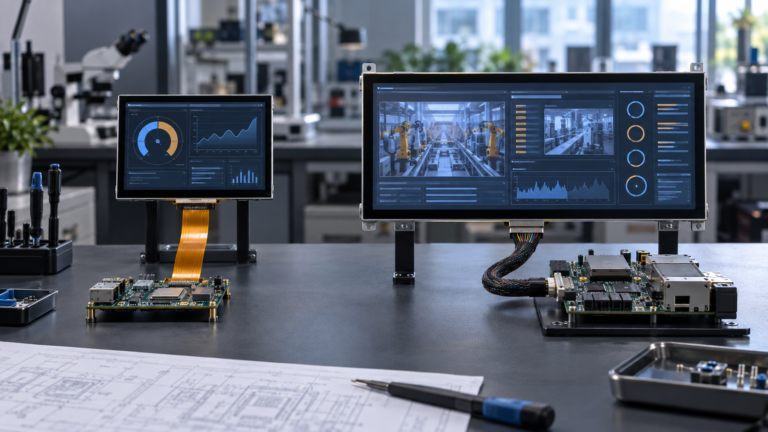
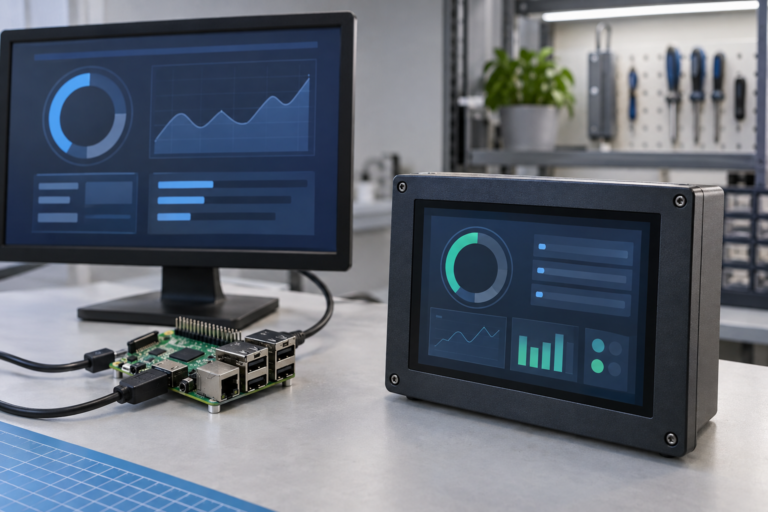
Placa estilo Arduino conectada a una pantalla LCD pequeña para pruebas de prototipos simples
STM32 vs Arduino vs Placa controladora de pantalla
Para muchos proyectos con LCD, la decisión real no es solo STM32 vs Arduino. Algunos productos deberían usar una placa controladora de pantalla dedicada o una placa de control embebida en lugar de manejar la pantalla LCD directamente desde un microcontrolador.
Un microcontrolador puede ser adecuado para pantallas simples o interfaces embebidas compactas. Pero las pantallas TFT LCD de mayor resolución, pantallas con entrada HDMI, paneles basados en Android, interfaces táctiles complejas o interfaces multimedia pueden requerir una placa controladora o un procesador embebido más potente.
Por ejemplo, si el proyecto necesita una entrada HDMI, interfaz Android, salida de pantalla LVDS, salida de pantalla MIPI, soporte táctil o adaptación de firmware, una placa controladora compatible puede ser más práctica que desarrollar todo desde un MCU pequeño.
Por eso, la selección de la pantalla debe considerar el sistema completo: módulo LCD, interfaz, placa controladora, firmware, panel táctil, alimentación, carcasa y software de aplicación.
Errores comunes en proyectos LCD con STM32 y Arduino
Un error común es elegir la placa antes de elegir la pantalla LCD. La resolución de la pantalla, la interfaz, el IC del controlador, el voltaje, la retroiluminación, la interfaz táctil y la temporización deben revisarse antes de finalizar la plataforma.
Otro error es asumir que una biblioteca de pantalla garantiza compatibilidad a nivel de producto. Una biblioteca puede funcionar para una demostración, pero los productos finales también necesitan temporización estable, cableado confiable, control de EMI, diseño de alimentación, precisión táctil y mantenibilidad a largo plazo.
Un tercer error es subestimar los requisitos de memoria. Una pantalla que parece pequeña puede requerir más RAM o flash de lo esperado cuando se incluyen fuentes, íconos, imágenes y búferes.
Un cuarto error es usar Arduino para un proyecto que realmente necesita una placa controladora o una plataforma de sistema embebido. Si la interfaz de la pantalla es LVDS, MIPI, HDMI o eDP, un enfoque básico de Arduino puede no ser apropiado.
Cómo elegir la plataforma adecuada para un proyecto LCD
Antes de elegir STM32, Arduino o una placa controladora, revise primero los requisitos de la pantalla. La pantalla determina muchos de los requisitos de la plataforma.
Las preguntas clave incluyen:
¿Cuál es el tamaño de la LCD?
¿Cuál es la resolución?
¿Cuál es la interfaz de la pantalla?
¿La pantalla necesita soporte táctil?
¿Cuál es la interfaz táctil?
¿La interfaz de usuario necesita gráficos, animación o video?
¿Qué velocidad de actualización se requiere?
¿Cuánta RAM y flash se necesitan?
¿El sistema necesita un búfer de cuadro completo?
¿Qué otras tareas debe manejar el MCU?
¿El producto es un prototipo o un dispositivo comercial?
¿El proyecto requiere una placa controladora?
¿Se requiere personalización del firmware?
¿Cuál es el volumen de producción objetivo?
Estas preguntas ayudan a evitar elegir una plataforma que sea demasiado débil, demasiado compleja o inadecuada para el producto final.
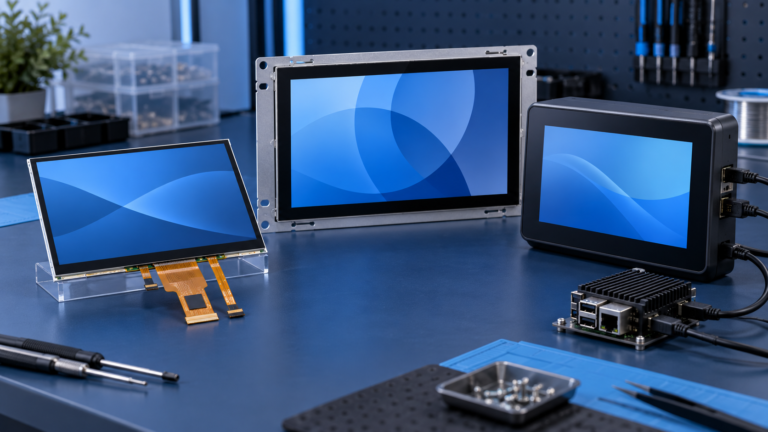
Módulo TFT LCD con placa de microcontrolador y placa controladora LCD para selección de plataforma
Soporte de RJY Display para proyectos LCD y de placas controladoras
RJY Display admite módulos TFT LCD, placas controladoras y pantalla personalizada Discusiones de soluciones para proyectos impulsados por ingeniería. Para proyectos LCD, la elección de la plataforma debe basarse en la interfaz de la pantalla, la resolución, el requisito táctil, las necesidades de la placa controladora, las necesidades de firmware y el entorno de aplicación final.
RJY Display puede ayudar a revisar si un proyecto debe usar un módulo LCD simple, un TFT LCD con panel táctil, una placa controladora compatible o una solución de pantalla más completa. Las placas controladoras pueden discutirse junto con módulos TFT LCD compatibles según la interfaz del panel, la resolución, el firmware, el táctil y los requisitos del proyecto.
Si su proyecto involucra un módulo TFT LCD, pantalla táctil, placa controladora, Placa de control Android, soporte de firmware o integración de pantalla, prepare el modelo de LCD, tamaño, resolución, interfaz, requisito táctil, plataforma anfitriona y detalles de la aplicación antes de la consulta.
STM32 vs Arduino no es una cuestión de qué plataforma es universalmente mejor. Arduino es más fácil de usar y funciona bien para proyectos LCD simples, prototipos, aprendizaje y experimentos rápidos. STM32 ofrece un rendimiento más sólido, más control periférico, opciones de DMA, depuración profesional y una mejor idoneidad para proyectos avanzados de pantallas embebidas.
Para LCD de caracteres básicos y prototipos pequeños con SPI, Arduino suele ser suficiente. Para módulos TFT LCD, interfaces táctiles, gráficos en tiempo real, equipos industriales y desarrollo embebido a nivel de producto, STM32 suele ser la mejor dirección.
Para pantallas de mayor resolución, entrada HDMI, interfaces Android, LVDS, MIPI, eDP o interfaz gráfica de usuario compleja, la mejor solución puede ser una placa controladora LCD compatible o una placa de control embebida en lugar de un microcontrolador pequeño por sí solo.
La plataforma adecuada depende del sistema de pantalla completo: tamaño de LCD, resolución, interfaz, carga de trabajo gráfica, requisito táctil, memoria, alimentación, firmware, placa controladora, etapa del producto y plan de producción.
Preguntas frecuentes
¿Cuál es la principal diferencia entre STM32 y Arduino?
STM32 es una familia de microcontroladores de 32 bits de STMicroelectronics, mientras que Arduino es una plataforma de desarrollo de código abierto centrada en la facilidad de uso. STM32 suele ofrecer un control de hardware más profundo, mientras que Arduino es más fácil para principiantes y prototipado rápido.
¿Es STM32 mejor que Arduino para proyectos LCD?
STM32 suele ser mejor para proyectos avanzados de TFT LCD, interfaces táctiles, gráficos en tiempo real y desarrollo a nivel de producto. Arduino suele ser suficiente para LCD de caracteres básicos, pantallas SPI pequeñas, y prototipos simples.
¿Puede Arduino manejar un TFT LCD?
Sí, Arduino puede manejar muchas pantallas TFT SPI pequeñas y módulos LCD simples utilizando bibliotecas disponibles. Sin embargo, las placas Arduino básicas pueden tener limitaciones para pantallas más grandes, alta resolución, actualización rápida o interfaz gráfica de usuario compleja.
¿Puede STM32 manejar TFT LCD de alta resolución?
Algunos dispositivos STM32 pueden soportar proyectos de TFT LCD más avanzados, dependiendo del MCU específico, la interfaz, la memoria, el DMA, la temporización de la pantalla y el diseño del software. No todos los STM32 pueden manejar todas las pantallas de alta resolución.
¿Qué es más fácil de aprender, STM32 o Arduino?
Arduino es más fácil de aprender porque tiene un IDE simple, muchos ejemplos y un amplio soporte de bibliotecas. STM32 tiene una curva de aprendizaje más pronunciada, pero proporciona más control sobre el hardware embebido.
¿Debería usar STM32, Arduino o una placa controladora para mi proyecto LCD?
Use Arduino para prototipos simples, STM32 para control avanzado de pantallas embebidas y una placa controladora cuando la pantalla requiera HDMI, LVDS, MIPI, eDP, Android, soporte táctil complejo o integración de interfaz de usuario de alto nivel.
¿Es Arduino adecuado para productos comerciales?
Arduino puede ser útil para prototipado y algunos productos simples, pero el desarrollo comercial generalmente requiere una revisión cuidadosa del diseño del hardware, suministro, confiabilidad, mantenibilidad del firmware, costo y necesidades de certificación.
¿Qué información debo preparar antes de elegir una plataforma para una LCD?
Prepare el tamaño de la LCD, resolución, interfaz, IC del controlador, requisito táctil, requisito de retroiluminación, necesidades de actualización, requisitos de memoria, sistema anfitrión, entorno de aplicación y volumen de producción esperado.
¿Aún no sabe qué pantalla se adapta a su proyecto?
Hable con el equipo de ingeniería de RJY para obtener asesoramiento sobre compatibilidad de pantallas, revisión de placas controladoras y discusión sobre personalización.